
If you are like most preparedness minded people, then you probably remember how hard it was to find ammo a couple of years back. With each newly introduced piece of gun-control legislation, panic buying sweeps through the gun market and ammo prices either quickly skyrocket, or in some cases ammunition becomes impossible to find.
If you’re trying to build a stockpile of ammunition, either for long-term emergency preparedness or simply to protect yourself from the wild market swings that happen every time people start to get a little fidgety, then you need to know how to correctly store your ammunition for long-term survival.
Does Ammo Have a Shelf Life?
Most manufacturers recommend that ammunition should not be stored for longer than ten years, but these recommendations are in large part written by corporate lawyers trying to protect the company from lawsuits. With the proper storage techniques you should be able to safely store your ammo for much longer than that — probably decades.
In the Pacific region, some armed groups are still using old .303 and .50 Browning Machine Gun (BMG) cartridges that date back to the Second World War. With proper storage (i.e. stable temperature and low humidity combined with properly sealed packaging), small arms ammunition can last 50 years or more without significant deterioration.
If you plan on storing ammunition for an extended period of time, you need to take environmental conditions like temperature and humidity into account. Improperly stored ammunition can and will deteriorate. In some cases, that could make your stockpile of ammunition unreliable, or worse yet dangerous to fire.
Improper Storage Can Cause a Whole Host of Problems
- Primers can lose their sensitivity
- Excessive and frequent variations in temperature can be damaging to powder
- Charges can deteriorate over time
- Cartridges can weaken and even rupture when fired
- You also have to watch out for corrosion problems that can change the size or characteristics of the ammunition, making it dangerous to fire
What’s Actually Happening Inside the Cartridge
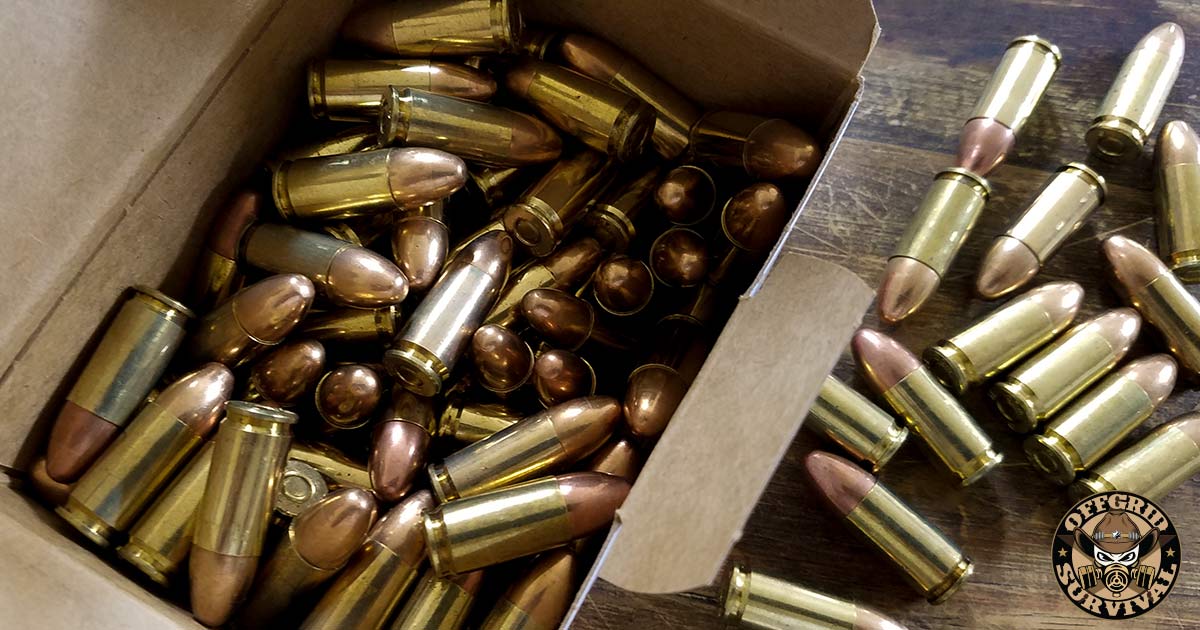
To understand why storage conditions matter so much, it helps to understand what you’re actually trying to protect. A modern cartridge is three separate chemical and mechanical systems sitting inside one brass case, and each one fails in a different way.
The primer. Modern centerfire primers use a shock-sensitive compound — most commonly lead styphnate-based in commercial ammunition — that ignites when struck by the firing pin. This compound is sensitive to moisture. A primer that’s absorbed even small amounts of water vapor over years of storage can become a “dud,” failing to ignite when struck, or it can ignite weakly enough to produce a hangfire (a dangerous delay between trigger pull and the round firing) rather than a clean detonation. This is also why old military ammunition typically uses sealed primers, with a lacquer or varnish ring around the primer pocket — a detail worth looking for if you’re buying surplus ammunition intended for long-term storage.
The propellant. Smokeless powder is itself a chemical compound (typically nitrocellulose-based) that begins breaking down from the moment it’s manufactured — slowly, under proper conditions, but it never fully stops. Heat dramatically accelerates this breakdown. As a rough rule of thumb, many propellant chemists cite that the rate of chemical degradation in nitrocellulose-based powders roughly doubles for every 10°C (18°F) rise in storage temperature — meaning a hot attic or an un-shaded shed during summer can age your powder’s chemical stability years for every season it sits there. Some smokeless powders are manufactured with stabilizing additives specifically to slow this process, but those additives deplete over time too, and once they’re exhausted, degradation accelerates rapidly.
The brass case. Brass is a copper-zinc alloy, and it’s vulnerable to a specific, well-documented failure mode called season cracking (technically, stress corrosion cracking) — fine cracks that form in brass under sustained mechanical stress when exposed to certain atmospheric compounds, most notably ammonia. Ammonia is present in trace amounts in normal air, but concentrations are much higher near cleaning products, fertilizer, or anything with ammonia-based chemistry — which is exactly why long-term ammo storage spaces should be kept well away from cleaning supply closets, garages where fertilizer is stored, or anywhere ammonia-based solvents are used.
Understanding these three failure points is what separates “I heard humidity is bad” from actually knowing what you’re defending your stockpile against.
Tips for Protecting Your Ammunition Stockpile
Storing Ammo in the Original Boxes
In most cases, the paper boxes that your ammunition was sold with are going to be more than adequate when storing ammo in your house. In fact, it’s my preferred method for a couple of reasons.
- I know exactly what type of ammunition is in the box and how many rounds are in the container.
- I write the date directly on the packaging so I know when I bought it, and I can then use an oldest bought, first out method of rotation.
- There is less chance of the cartridges becoming banged up by dumping them into another container.
Storing Ammo in Military-Style Storage Cans
If you are looking for something that is designed for long-term storage, then look no further than the military-style containers that are now sold in most outdoor gear shops. These things are designed to sit out in a warzone, often sitting for weeks at a time in extreme heat, torrential downpours, and a host of other weather conditions that your ammo will likely never encounter while stored inside your home.
One word of caution: If you are buying used ammo cans then you need to thoroughly inspect the rubber gaskets on the lids. These gaskets are what keeps the moisture out, so if they are old and cracked they need to be replaced.
How the Military Actually Specifies This
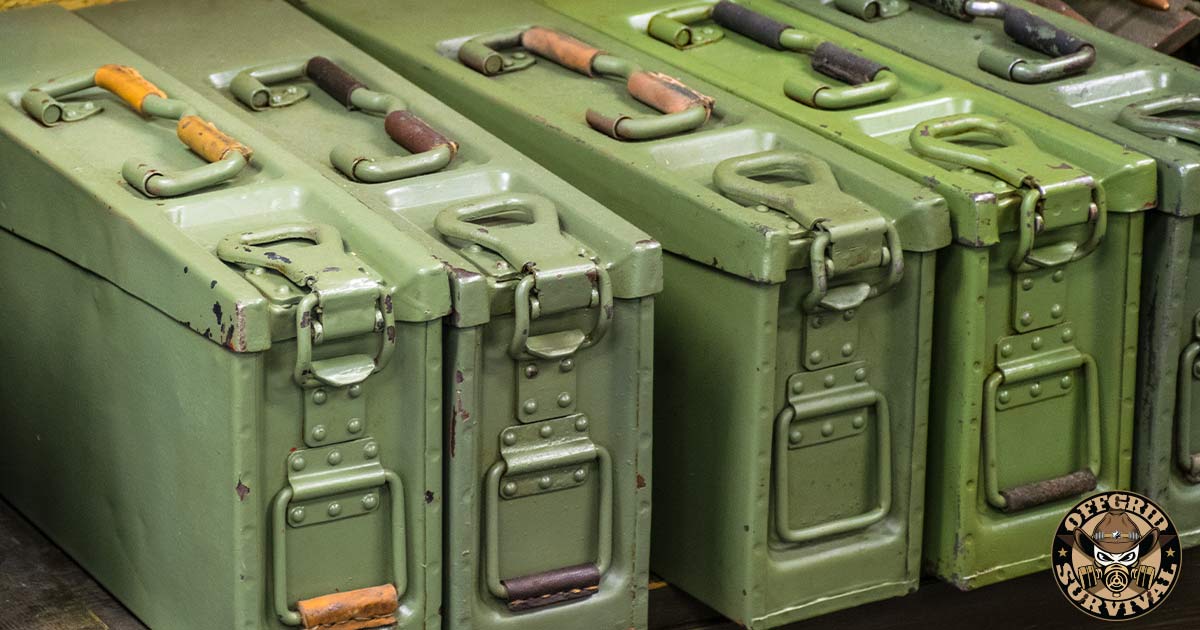
It’s worth knowing the standard the gear you’re buying is supposed to meet, because not every “military-style” can sold online actually meets it. Genuine NATO-spec ammunition cans are built to MIL-STD-1472 and related defense packaging standards, which call for sealed, gasketed steel construction capable of protecting contents through repeated submersion, drop testing, and extreme temperature cycling. The real-world giveaway of a properly sealed can is simple: when you close the latch on a genuine ammo can with a good gasket, you should feel air resistance and hear a faint pop or hiss as the seal compresses — if the lid closes with zero resistance, the gasket isn’t doing its job anymore.
Ammunition Taken into the Field Should Not Be Returned to Your Stockpile
Rounds that have been taken into the field, exposed to moisture, or left in extreme conditions should not be stored with your long-term supplies. Once a box has been removed from your stockpile for use, it should be quickly used or stored separately so as not to introduce moisture or compromised rounds into your stock.
If You Plan on Storing Your Rounds for Longer Than a Couple Years, or plan on burying it underground, you need to take a couple of precautions.
- Vacuum Seal – Vacuum sealing your ammunition can help protect it from water, rust, and even burying it underground.
- Rotation – Just like long term food storage, the key to successfully storing ammo is to rotate your ammunition as often as possible. Make sure you mark purchase dates on your ammo cans, so you use the oldest ammo first.
- Humidity Kills – Humidity is probably one of the biggest things you need to worry about. Try to keep your ammo in a low humidity location, or use some sort of dehumidifying equipment in your storage area.
- Periodic Checks – If you’re not regularly firing your ammo, it’s a good idea to check your supplies at least once every six months for signs of corrosion. Doing periodic checks will help ensure your stocks are ready to fire when you need them.
- Silica Packets – Those little silica gel packets that come in just about everything these days, are a great way to keep your ammo in top notch condition. Silica Gel, or desiccant packets, should be placed in your ammo cans to help get rid of moisture.
The Real Numbers: Humidity and Temperature Targets
“Keep it dry and cool” is good general advice, but it helps to know what dry and cool actually mean in numbers you can check with a cheap hygrometer.
| Storage Condition | Target Range | Why It Matters |
|---|---|---|
| Relative humidity | Below 50%, ideally 30–50% | Above this range, primer and case corrosion risk rises sharply |
| Temperature | Stable, ideally 50–70°F (10–21°C) | Stability matters more than absolute temperature — swings cause condensation |
| Temperature swings | Minimize day-to-night and seasonal swings | Rapid swings cause condensation inside sealed containers, even in low-humidity climates |
| Direct sunlight / UV exposure | None | UV accelerates polymer and lacquer breakdown in case sealants and synthetic-hulled shotgun shells |
That last point about temperature stability mattering as much as the absolute number is one people miss constantly. A storage shed that swings from 40°F at night to 95°F in direct sun during the day is often worse for your ammunition than a basement that holds a steady 65°F year-round, even though the shed’s average temperature might look similar on paper. Every time air inside a sealed container cools rapidly, it can reach its dew point and condense moisture directly onto your cartridges — which is exactly the silent failure mode silica gel and good gaskets are designed to prevent.
Don’t Forget: Magazines and Springs
This is a topic that generates a lot of bad information, so let’s set the record straight using actual spring metallurgy rather than range mythology.
The old myth: Storing a magazine fully loaded for years will “wear out” or “set” the spring, weakening it permanently.
The reality: Modern magazine springs are made from spring-tempered steel alloys specifically engineered to hold a static compressed load indefinitely without meaningful loss of tension. What actually fatigues a spring is repeated cycling — compressing and releasing it over and over — not sustained static compression. This has been demonstrated repeatedly in both armorer testing and amateur long-term storage tests: magazines loaded for 10, 15, even 20+ years and then tested have shown negligible measurable difference in spring tension compared to unused magazines of the same model.
What this means practically: you do not need to “rest” your loaded magazines or cycle them periodically to “save” the springs — that practice actually does more harm than the static storage it’s meant to prevent, since it’s the repeated compression cycling that causes fatigue over time. The exception worth noting is genuinely old or already-degraded magazines, particularly military surplus magazines that have already seen decades of hard use; metal fatigue is cumulative, so a spring with significant prior cycling history is closer to its fatigue limit than a fresh one, regardless of how it’s stored from here.
A Word on Rimfire and Shotgun Ammunition
Most long-term storage advice focuses on centerfire rifle and pistol ammunition, but .22 rimfire and shotgun shells have their own storage quirks worth knowing.
Rimfire (.22LR and similar): Rimfire priming compound is distributed around the inside rim of the case rather than in a separate primer cup, and it’s generally considered more moisture-sensitive than centerfire primers. Rimfire ammunition is also typically more sensitive to being stored loose in bulk containers where cartridges can knock against each other — keeping rimfire in its original packaging is even more important than it is for centerfire.
Shotgun shells: Modern shotgun shells use a plastic (polymer) hull rather than brass, which sidesteps the season-cracking problem entirely, but introduces a different vulnerability: UV degradation. Polymer hulls left in direct sunlight or in hot, UV-exposed storage for years can become brittle and crack, especially at the crimp. Older paper-hulled shotgun shells are even more vulnerable to humidity, since the paper hull itself absorbs moisture directly. If you’re storing shotgun ammunition long-term, prioritize keeping it out of light entirely, not just out of humidity.
Tips for Protecting Your Ammunition Stockpile — Quick Reference
| Storage Method | Best For | Key Risk to Manage |
|---|---|---|
| Original factory boxes | Short-to-medium term, in-home storage | Physical damage if boxes are crushed or stacked carelessly |
| Military-style steel ammo cans | Long-term, multi-year storage | Gasket degradation on used/surplus cans |
| Vacuum-sealed bags inside cans | Burial or extreme long-term storage | Puncture risk; combine with a rigid outer container |
| Loose bulk storage (any caliber) | Not recommended for long-term storage | Cartridge-on-cartridge wear, no rotation tracking, primer exposure |
The Lowdown on Ammo Storage
None of this requires exotic equipment or a climate-controlled vault. A handful of genuine military surplus ammo cans with good gaskets, a box of silica gel packets recharged in the oven every year or two, a stable spot in the house away from temperature swings and ammonia fumes, and a Sharpie to mark purchase dates — that’s a system that will comfortably outlast you, let alone the ammunition inside it.
The Pacific Theater veterans still running 80-year-old .303 through working rifles didn’t get there with luck. They got there because someone, decades ago, understood that ammunition isn’t inert. It’s a small, sealed chemical system, and like every other chemical system you depend on for survival, it rewards the people who actually understand what’s degrading it — and quietly fails the people who assumed a metal box was protection enough on its own.
Store it like it’s going to save your life one day. Because if you’ve done this right, it still will.
Building out the rest of your defensive setup? Check out our breakdown of why a shotgun belongs in your home defense arsenal, and make sure you’ve actually worked through a proper threat assessment before deciding what calibers and quantities make sense for your situation — the right ammo stockpile looks very different depending on what you’re actually preparing for.








take 2 tablespoons of dry uncooked rice and wrap it in a piece of nylon and tie it shut. Drop one in each ammo can and your ammo will stay dry as a bone.
In your experience, has the rice method worked well? How long have you used it? Thanks for the info.
Roy
Think about it. Rice might not be the best choice. However, there are many people that have used rice to absorb moister out of a phone or other electronic device for a reason as a last chance to restore it. Some people still use rice in their salt shaker…hmm.. for what reason?? To keep the salt in good condition of course.
Here is a survival tip. If you are limited on water supply. And you have rice that needs to be cooked. Soak it in water first overnight. Then when you cook it hot. A lot less time is needed to finish cooking the rice. Less boiling time means less water being boiled into the air.
Great idea but an even better desiccant is to mix one part salt with three parts white rice (get the KOKUHO from an asian grocery store – cheap and very moisture absorbant and does not attract bugs!) This is better than silica and it’s cheaper.
I’d like to meet anyone who wants to have a survivors’ group in Florida.
You can email me your number if you want to get in touch.
It is killiansredbeer at gmail dot com.
If you don’t like guns or the idea of being armed, don’t bother me.
I spray down my ammo with rem oil, I also spray inside the magazine then place my ammo inside the ammo can.
:)
Seems to me that the Rem oil might seep into the cartridge and render it useless . Have you had any problems with that ?
Not, I repeat not a good Idea
This seems like an incredibly bad idea. Oil WILL seep into cartridges over time. If your intent is to prevent corrosion, oil will work to form a barrier on most metals. Hence oil isn’t a bad plan on firearms themselves, though I prefer a more proactive approach like Zerust. For ammunition, oil is worse than useless. You don’t care os the brass tarnishes. What you care about is deterioration of the primer and the charge. Oil will exascerbate both of those issues.
The best way to store ammunition long term is to vacuum seal it and use a good desiccant. That’s what the US Military does.
Rem Oil is for your weapon, not your ammo. Hate to say it but for long term storage, spraying oil on your ammo can make most, if not all of it useless. Oil will find it’s way into the primers and to the powder, rendering both, unable to perform. I’d suggest using that ammo up asap while it still fires and replacing it with new brass case ammo such as Lake City Arsenal or plain old Winchester in an airtight container with a few dessicant packages. Oil will ruin your ammo. Humidity is your only enemy. Good luck.
be sure you clean and oil all magazines that you keep loaded every two weeks to keep the springs from being “set”
What the…?? A very light oil on magazine springs is all you would want on a magazine. Too much oil will attract discharged gun powder dust and crud into tons of magazines out there.
There seems to be no need to take the magazine apart over and over if its loaded. That weakens the springs more than anything.
When I left my m16 mags fully loaded in Iraq without using them for longer than a month the ammo would not chamber I ended up putting 25 rounds in each mag which eliminated the problem the last thing I wanted was to need to chamber a round and it wouldnt I’m not sure if it was the spring or magazines
Active duty here as well, that cause you’re talking about issued equipment. Some inventory magazines are decades old and have been filled, emptied, and refilled so many times that prolonged compression will cause already tired metal to be useless. You’re definitely not wrong on any point, but consider that we’re talking about magazine usage with limited, up to no-use conditions. Metal is still fresh, and even in heavy use range-type magazines, they’re not Grenada-era old.
Great information! There’s a prettygood networking site over alt-market.com PulpFiction where I am sure you will be able to find a shooter or two.
Good lord, there is some BAD information out here on the world wide interwebs. @Luis, why on earth would you cover your ammunition in any kind of oil before storing it? That will almost certainly guarantee that it will be useless when you need it. Oil will seep into the primer and the power charge. Rem oil is especially prone to this, since it’s very thin. Want a foolproof way to kill your ammunition? Spray it with penetrating oil.
Modern ammunition is designed for long term storage, even at relatively extreme temperatures. The thing that will kill ammunition is moisture. In fact, the real problem with temperature extremes is condensation. There are some easy rules to follow when storing ammunition, but the overriding rule is this: KEEP IT DRY. I personally always use desiccant, and I vacuum seal the desiccant bags in with the ammunition. Vacuum packing absolutely is not necessary, but it’s cheap and easy and you’re assured that you’ve removed most of the possibly moisture-laden air.
By the way, those little desiccant bags you get in your electronics have been absorbing moisture since they left the factory. You’ll want to “recharge” them in an oven before you use them. The manufactures specify 350F for 3 hours for metal desiccant cans. The larger desiccant bags, which are usually made of cotton, can also withstand that kind of heat. Most of the smaller desiccant bags are made of Tyvek. Be careful with these. Tyvek melts rapidly at 275F. These need to be recharged at 225F for a longer period. One manufacturer suggests up to 12 hours.
New 10 gram desiccant packs are between 25 and 50 cents each at Amazon. Cheap considering the price of ammo these days.
Purchase a couple ammo cans and keep your ammo in them along with some silica packets. Rubbing a tiny amount of petroleum jelly along the rubber liner to ensure an air proof seal. It is simple, cheap, and very effective. Don’t spray oil on it or anything of the sort. The idea is to keep moisture out of the ammo, not keep it looking pretty. I have fired ammo with the brass nearly black from corrosion, but it had been kept dry.
I live in the southwest and it is hot and usually dry. Can ammo be safely stored in a shed where temps are above 100 degrees inside? If not why? thx
Heat will accelerate the chemical breakdown of your ammo. The powder itself will begin to breakdown immediately after manufacture. The short term results maybe noticed in variations in accuracies of the bullet. Long term – powder will become unstable. many variables can effect life span.
There is some advice here both good and otherwise. The genetleman with the Rem oil is perhaps overdoing it a little. But then considering some Wolf ammo i;ve seen, perhaps not. I do know WD40, for instance, has been accused more then once of soaking around primers and killing them. But WD40 and guns is not a good combination anyway except perhaps, for wet guns and short term storage of guns. WD40 I use occasionally as a cleaner or to wipe off fingerprints, but no more then that. Despite what many think it is NOT a lubricant (nowhere on the can does it make this claim either) and Remoil, well, there are better lubes AND rust inhibitors around, i think some people use it because it’s everywhere and its cheap and your spouse probably won’t grumble about the smell. Other then that, I forget the WD40. But fact is, if you are concerned about ammo corrosion, Eezox is what you want. The company itself says you can use it as a lubricant, for installing primers in reload shells! So I admit, i have put Eezox on ammo case and bullet for long term storage and not worried about it. The worst corroding ammo i have ever seen is Wolf steel. Mostly the 7.62 x 39. I have wolf in 380, 9m, and 5.56 and only the 7.62 has rusted. I have pulled out wolf 7.62, gently painted with Eezox and stored loose bulk in a zcorr bag, that was so corroded you’d think it came from a sunken ship. If you have a bunch of wolf 7.62 either leave it in its box, or store in a plastic case with dividers…I suspect it was the steel on steel that accelerated the corrosion because the ammo i stored in the plastic boxes still looks fine!
.22 rimfire and my .22 pellets for my PCP marauder, are a concern. Having opened more then one tin of older .22 pellets, to find them covered in that grey powder, I decided to soak them in Eezox since there is nothing to lose. I’ll dribble some in the tin and roll them around til they’re all covered with it and use a paintbrush to lubricate what i missed. Considering the cost of good pellets ($8-12 for a box of 500) I figured it was worth a try. So far, so good, havent shot my Marauder in 2 years and the pellets still look new. Same goes for .22 rimfire, especially because it is no longer easy or cheap to get! Dont worry about the case, worry about the bullets, the lead, especially on non copper washed bullets, does crumble and get white powdery after a time. I paint the bullets with eezox, let them dry for several hours, and store them away. Then i write the date of storage and the word “EEZOX” on the box and store em in a zip lock bag, with dessicant packets if i have them (then cross my fingers).
Lets face it, ammo has now become too, well, precious to take for granted that more will ALWAYS be available or even affordable! So anything that might prevent it self-destructing is worth a try, by my thinking.
Living in the South, humidity is a huge problem, especially during the summer months. I will have to keep in this in mind when storing ammo. I’ll also make sure to check on my ammo occasionally to prevent any mishaps. Thanks for sharing!
KITTY LITTER
The better kitty litter is 100% silica, some litter has clay in it ( that is a bad thang ). Just check back label for ingredients.
I put it in 20 cup coffee filters, fold top a couple of times and staple shut. If you are using smaller boxes use smaller filters.
I keep my ammo in non working refrigerators with powder and primers in freezer part. If you have limited space maybe use one of the small one’s that are about 2 x 3 feet. I use one just for buckshot.
Rotation and twice annual checks will really ensure that your ammo is properly used or disposed of. Thanks for these tips!
Salt?!? in a Ammo can?!? Was this a joke? Just sounds bad.
If you want to store ammo store it and reload it as clean as possible ,clean your cases in and out reload then wipe off the ammo not even finger oil should be left,factory ammo is loaded clean by machine no fingers military primers are sealed and crimped .lacquer painted over the primer will seal it but wipe off the excess , just leave a bit in the crevices to seal , personally ,painting the lead tips might be a good idea then box and pack in clean boxes then in ammo cans wear cotton gloves while loading ,fresh silicone sealant wiped on the rubber won’t hurt before you close the military ammo can ,with a desiccant pack inside or the bag of rice thing ,then you have food stored also,remember you want this to last long time nothing is overkill.
I have stored ammo since I returned from the military in ‘72, in ammo cans, in the homes I’ve lived in at room temp., along the Gulf Coast, doing my best to keep it dry, cool, away from moisture the best I could, never corroded, turning green, etc. some ammo is over 50 years old and still firing accurately. Store some in a barn with de-moisture ingredients and still firing greatly. It has been a hobby and an experience, This is my advice, you get what you pay for, you buy cheap, you get cheap!