
Globally, we produce about 2.12 Billion tons of waste every year. If you’re having a hard time picturing that much waste, how about this – if that garbage was put into trucks they would circle the globe 24 times!
But what the hell does garbage have to do with preparedness?
Well, it’s probably one of the biggest threats you will face during a long-term disaster or collapse. In fact, in areas of the world that do not have regular trash collection, the threat to the environment, health, and safety is monumental. From pollution issues and dirty waterways to toxic discharge from trash and disease, these issues are very real and they are issues that will hit Americans very hard during a long-term disaster or collapse.
Often, people who talk about urban survival worry about things like raiders and roaming gangs, but the real danger may actually come from something that you already have in your home: Garbage
What are the threats and ramifications of trash during a collapse or long-term disaster?
Unfortunately, this is topic that’s often ignored be so-called preparedness experts. But it’s a topic that you can’t afford to ignore, especially if you live in a big city.
The average American throws away a lot of stuff, so much stuff that if you added up all the waste that’s produced each year in the United States, you would be able to fill over 2.3 million 747 jumbo jets.
That’s a lot of Garbage!
With so much waste being produced in America, you really need to start thinking about what things might look like during a long-term collapse scenario. If the country ever collapsed, and basic services like garbage removal stopped, people who live in big cities are going to be in for some major trouble.
Here is what you can expect.
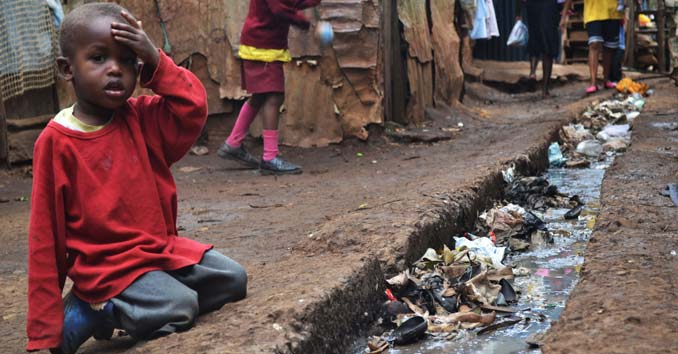
When waste stops being collected, the frequency of illness such as diarrhea and acute respiratory infections are going to skyrocket. In many parts of Africa, where waste management is almost non-existent, improper garbage disposal already causes devastating epidemics of mosquito-borne malaria, Lassa Fever, Yellow Fever, and other grave diseases.
First, the fleas and flies will move in; followed by ants, cockroaches, and then rats and other rodents. But the real danger will be one that’s a little harder to see.
Garbage will become a huge public health issue. The growing waste problem will likely spread infectious diseases throughout the community. This one problem has the potential to kill more people than any other part of the crisis.
Don’t think it can happen in the U.S.? It Already is!

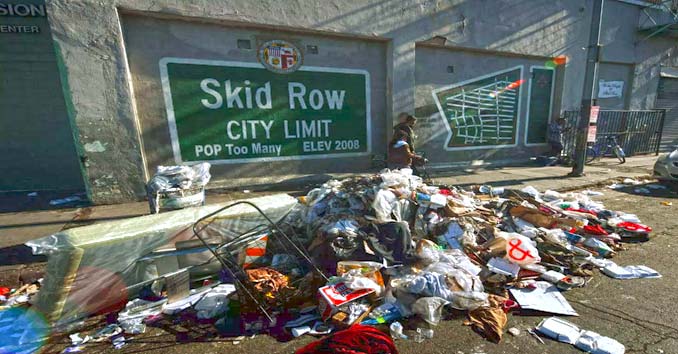
In hellholes like Los Angeles, where mentally ill liberals have allowed their city to be taken over by drug addicts and scumbags, people are illegally dumping trash, used syringes, and human waste throughout the city. The problem is so bad that the city is starting to see outbreaks of typhus throughout the homeless community.
Los Angeles city officials actually declared downtown’s skid row — roughly 54 square blocks where more than 4,000 homeless congregate — a “typhus zone.”
“The Pasadena Public Health Department is reporting epidemic levels of typhus fever this year,” read a statement from that city on Friday.
“With increased rat density, diseases like typhus are very likely to occur,” said Dr. Lee W. Riley, an infectious disease researcher at the University of California, Berkeley.
Remember, this is happening during the so-called “Good Times”! What happens when the system completely breaks down?
What to do with Garbage when the SHTF?

If you live in a city, there may not be a lot that you can do. Even during short-term disasters like Hurricane Katrina, garbage became a huge problem for people living in the city of New Orleans. The Louisiana Department of Environmental Quality estimated that the hurricane resulted in 22 million tons of garbage.
If you live in a rural area, you might be in better shape:
Burning your garbage: Although it’s not the healthiest solution in the world, for thousands of years it was about the only solution that people had to remove waste from their homes. To this day, a number of people in rural areas of the United States still use it as their primary source of waste removal.
If this becomes your only option, you want to do it late at night to minimize your exposure. The last thing that you want to do is draw attention to your bug out location, by advertising the fact that you have stuff to burn to begin with. Burning at night makes it harder for people to see the smoke, and will make it harder for them to find your location.
Burying your Trash: Another option that you may need to consider during a long-term disaster situation is burying your trash. Burying your waste can help prevent the spread of disease, and can keep rodents and predatory animals away from your home.
Just remember, never bury trash close to a water source, and never dig a garbage pit below the water table level.
Creative uses for your garbage: Like it or not, stuff that you normally would have thrown away during the good times will now have to be recycled, and I’m not talking about placing it in the big green bin. You will have to find creative uses for everything that you have, including things that might seem like garbage.
Animal Feed. Most of your scrapes, vegetable peels, and other inedible foods can be easily turned into feed for your animals. This will help not only minimize your waste but is also a great way to feed helpful animals like chickens, goats, and rabbits.
Composting – Composting is easy and is another great way to turn your organic wastes into a valuable resource. Composting produces nutrient-rich material that can be used to help your survival gardens thrive.
Have you prepared to deal with health and sanitation issues during a long-term disaster? Now is the time to make a plan and stock up on Sanitation supplies!


We burned are waste when I was stationed in iraq I wouldn’t suggest this in any situation alot of guys myself included have long term health issues from it including IBS and COPD I would suggest burying it just make sure you do so far from your water source
If you have to burn toxic items you should definately have some sort of breathing and eye protection, i personally have a carbon filtered mask and sealed goggles
I was thinking the same thing. Dig a hole and when it is full.ury it, then start another hole. I think I could do that behind my house in the woods.
main goal would be to have an exit plan, i divided rubbish from food scrap composting keeps rubbish hazardfactor down i only use public garbage services once to twice per month also i can not imagine what citys would be like after a month best chance is to get what seeds of food u like an start to grow them get used to what u can grow an get some gm free seeds i found out about that the hard way so u chances are u need to ho have a seed bank that u create from what ever u grow best
Thanks for the heads up. And thank you for your dedication and service! All blessings to you and your family.
I volunteered in Haiti last year and one thing that will forever be imprinted on my mind was the lack of garbage disposal. This was a preexisting problem but with added upheaval caused by the earthquake it was just an unbelievable problem. It was compounded by the NGO’s use of plastic water bottles, plastic bags and tons of styrofoam containers. It all was just tossed to the ground. I came home swearing I would never intentionally buy styrofoam or plastic water bottles again. In the short time we were there we attempted to teach composting, recycling and proper way of disposing of some products-it was like spitting in the wind.
I agree with Josh. compost the organic garbage and bury any plastic/glass/metal. Any paper or wood can be burned. Make sure the material is buried far away from any water sources or livestock. Keep track of the burial spot, so it can be dug up and disposed of later if the opportunity arises.
Also, try to minimize the amount of such material brought to a bug out site. Avoid items meant for one-time use or anything considered “disposable”. Repack food or other items from disposable packaging to reusable packages/containers. This will reduce waste and weight for transporting as well.
you got to realize when the garbage truck stops the stores will be out of nicely rapped food stock the trash stops coming in as well. most of the trash in the common house hold is warping material.
That’s absolutely true. People have no idea what problems garbage would bring about in any lengthy disaster scenario. Thanks for reminding us.
well i burn alot of my waste i know its not good for the environment but it gets rid of rubbish fast, we also put most of it down to the recycling center so it gets recycled
Burning trash at a bug out location day or night is a poor plan. Smell will give you away anytime. A lit cigaret is visible for miles at night, what about a trash fire? Smoke during the day. Too many problems with burning if your goal is a low profile.
Compost or directly bury organic materials. Don’t know about you but in a SHTF situation, I don’t plan on having a lot of left overs so only talking about the inedible portions of fruit or vegetables. For short term SHTF situations, everything else can be stored, rinse out and flatten food containers to eliminate fly and vermin infestations. In a long term SHTF, there is even less “garbage” as most of it becomes “resources”.
I recently saw pictures from Egypt. Since the dawn of the Arab Spring, much of their infrastructure has collapsed and trash has piled up in the streets. If the pictures were accurate, there is disease looming.
Our family produces a fair amount of waste (we have a sizable family). However, we have a system of disposing of it. Some is fed to dogs and cats, some goes to the hog, chickens, turkeys, and ducks. Some is used to start fires in the wintertime. And some does go to the trash drop-off station. It’s the latter that we’ll need to be concerned with should TEOTWAWKI find its way to our house.
Joe
Use to take all the table scraps and spoiled food and feed the hog with it. The rest was burned mainly paper and cardboard, but the glass and plastic would get buried. Getting a large store of baking soda, kitty litter, and shovels will help with fecal stuff, but garden composting is the best. Will neighbors follow suit? The only good thing is that people will run out of garbage. In a bug out mode people will eat even their crumbs and hang on to their containers for a second use.
Great point.
Long term trash disposal could be a huge problem. If society really does collapse for long term (months and years), than production will stop as well, but there will still be TONS of consumable stuff on shelves and in cabinets that needs to be disposed of somewhere…
I have found that the biggest disposal problem is plastics – primarily packaging – and plastic water bottles or jugs are the worst. Everything else is materials or compost. Burning plastics is out of the question, for me.
So who has the knowledge of how to easily, cheaply, and discretely process #1 & #2 plastics into something useful?
also:
“burning” cans that contained food is a reasonable way to “clean them to keep down insect pests.
cover any stored containers – plastic or metal – to keep them from accumulating rainwater and becoming breeding grounds for mosquitoes.
smokey fires are pretty good at driving away mosquitoes – use fresh (green) branches herbs if you’ve got ’em – rosemary seems to be particularly effective.
This is in a semi-urban setting – not much buffer zone, or cover.
Their is a way to turn plastic back to its original state (oil) seen it on You Tube. It can be used in diesel engine’s as well.
What about re-purposing stuff. I live in an old house. If I had a way to shred the plastic, I wonder if I could just stuff it in walls spaces where insulation would be if my house wasn’t 100 years old. Styrofoam definitely.
Unreasonably labor intensive solution? Or do you suppose I have less space in my walls and roof than I suspect?
I grew up in the woods of central Ma and now live in Brooklyn, NY for the past three years (hating it and plan to move soon) and one of the things I am seeing here is that most of us chatting here have an interest and some basic and advanced knowledge, but in a real situation we will be living amongst thousands of people who will not have a clue and won’t be listening to our advice. So all these ideas are very nice but the reality is you will be on your own doing it. Trying to sequester yourself in an out of the way area will not be easy either because you won’t be the only one thinking that, and in a city or normal suburban area those places are few and far between. The majority of our population in the US live in densely populated city or suburban areas and when the shtf a metric ton of those people are going to bug out to the more rural areas overwhelming people who thought they were safe and out of the way. As time passes even those who are in “the middle of nowhere” will find roving groups coming in looking for game to hunt as their areas become ‘hunted out’. Garbage in a real situation will be a problem for those caught in areas like this; long island NY, staten island, etc… Otherwise you will see people (whether they know what they are doing or not) packing up and trying to take their families to what they think will be safer areas. Look for the book “one second after” written by William R. Forstchen a professor and historian. This book was recognized by congress as a realistic portrayal of the potential damage rendered by an emp attack on the continental United States. This of course is only one type of shtf situation, but it demonstrates the mentality of people that you may face, and the type of no tech scenarios we may have to deal with. Just my 2 cents…. :)
A lot of them can’t even tie their shoe laces. Imagine them without Uncle Obama to take care of them
Google: HUMANURE & HAITI… this is a simple, brilliant, effective, healthy & non-smelly way to deal with human waste… not a theory… fact!
You use the incredible heat of composting to cook down, kill and break up human waste using weeds, lawn clippings…organics… but DO NOT USE ON GARDENS!!! Protects the same ground water you will drink… eliminates disease threats.
If not safe? For gardens?
Garbage won’t be as big a concern as sewage. Toilets won’t work. People will be going in buckets and dumping it in different places like rivers and streams. That’s one reason you don’t want to depend on a water source like that. Better to store it in 55 gallon food-quality barrels in your basement.
i dunno. when i lived in rural asia we had virtually no garbage. food scraps went to the pigs. other industrial trash (plastic bottles and newspapers) were recycled. when TSHTF niceties like po and the newspapers aren’t going to be around. we used the outhouse and that was that. it was refreshing on many levels to see how little garbage a “green” (LOL)community created.
we live in a small market town in England, we will compost all our waste, both food and human. dont intend to burn anything as it gives away our location.
back in the day, when I was a kid… we had our OWN garbage HOLE.. dad had dug. was next to the OUTHOUSE. yeah.. back in them days. was about the size of a 48 Buick, the hole that is. Compost.. didn’t go in.. just Glass and Tin. Glass was smashed, Tin flattened. Didn’t have a lot of plastics to deal with. Paper was burned. Compost went into the Compost Bin which was OUT by the Garden. Plastics is the only thing I see would be a problem these days, but if you are reusing as much as possible, you’d not have a lot to toss anyways.
Little late in reading this and all that I have read has been good information. Right now I live in the city and burning would do no good. As far as how to get rid of things that you think are not usable think again. I saw where a man was making brooms from old 2liter plastic coke bottles. I for one right now am using cans that my veggies came in to start seeds and will keep the plants in some of them if they are not big plants. I am using #10 cans that I got from a school lunch room to plant herbs in. I also saw where someone had taken plastic bags that you get at Walmart nailed or tied them to fences and was growing in them. So you could use the wrappings that come on things and come up with a way to grow something in it. Everyone talks about how bad plastic is for the environment and I don’t want that buried in my yard unless you think it would be there for only a short period of time.
Lots of good ideas here. Wife and I lived off the grid in Alaska for 8 years, often many months before we could haul out non-burnable trash. We used locking lid, 55 gal drums for metal and glass, all smashed before or when putting in the drums. Amazing how much you can get into one of those drums. An outhouse is trouble-free plumbing, composting bins are easy. Living in a city is not smart. Environmental aspects of burying or burning plastic will be the least of your concerns.