
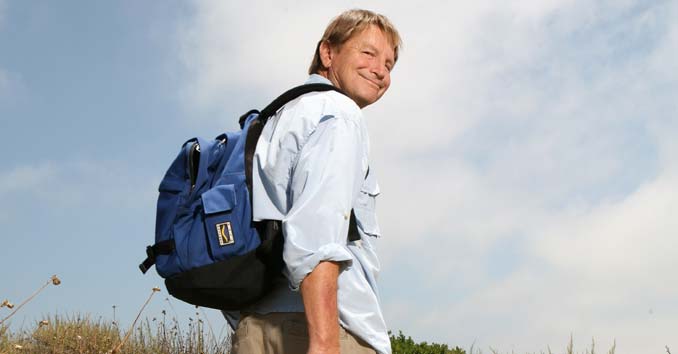
This week we are bringing you some hiking & trail safety tips from The Trailmaster, John McKinney
 Having written 25 books on hiking and authoring a weekly hiking column in the L.A. Times for 18 years, I’ve found myself on the “expert source” list of a fair amount of media folks. And often the calls I get aren’t to talk about the beauty of nature or the joys of hiking but to comment on yet another tragedy where a hiker has lost his or her life on the trail. While I appreciate the opportunity of spreading the word about hiking safety I wish the circumstances were different…and less frequent. It seems each year more hikers are either finding themselves unprepared in the wild or taking unnecessary risks for which they pay the ultimate price. Hiking is a safe activity but to think about nature as if it were a theme park is to make a potentially tragic mistake. But with some simple rules, and a bit of common sense, hiking can be safely enjoyed by most anyone.
Hike Sensibly
The Boy Scouts got it right when they said “Be prepared.” And that starts with the 10 essentials that should be in every hikers pack each time their boots hit the trail. They are: A good map, a compass, more water than you think you’ll need, extra food (don’t skimp on the calories) extra clothing in case of bad weather, a First-Aid kit, a pocket knife, a flashlight, sun protection and waterproof matches along with a fire starter as back-up.
Forrest Gump also got it right when he said, “Stupid is as stupid does.” Being smart on the trail includes being prepared on the trail.
Hike Comfortably
Nothing can spoil a good hike like painful feet. Take the time to research and invest in a good pair of boots based on the kind of hiking you’ll be doing. When you try on the boots make sure to wear the kind of socks you’ll be wearing on the trail and spend enough time walking around the store, or an incline the store may have set up, to properly gauge the fit. Pay special attention to the toe box. If it’s tight it can lead to extreme discomfort later on, particularly when treading downhill.
Hike Responsibly
Don’t cut switchbacks. Ever. Hikers that do can cause serious erosion beyond missing the point of hiking which is an appreciation of the journey – not just the destination. To do your part to curtail switchback cutters, move some rocks, brush or a fallen tree branch in front of the shortcut. It will send a message. And while this goes without saying for anyone who enjoys the outdoors; Pack It In – Pack It Out.
Hike Sensibly
One of the most common mistakes by hikers is misjudging the time and ending up on the trail after dark which, if someone isn’t prepared to spend the night, can be disastrous. So before you head out know exactly what time the sun sets and plan your return accordingly. Also, make sure to consider the elevation gain or loss of the trail. Heading uphill to get back to the trailhead? Then give yourself extra time to compensate for the slower pace.
Hike Alertly
When you’re on the trail keep your eyes open. That, along with always staying on the trail of course, are the best preventative measures to avoid getting lost. Stop every once in a while and take in your surroundings. Where’s the sun? How close is the stream? Are you walking towards or away from the fire lookout on the ridge? If all you see are your boots you aren’t just missing out on possibly valuable landmarks but also the beauty of your surroundings.
Even with preventative measures, poorly signed junctions or paths covered by impediments or snow can send a hiker off track. If you do feel you’re lost you need to stop, think and don’t panic. Return to the last point you remember being on the trail and you’ll probably see you missed a switchback or turn. Above all else don’t get more lost by blinding walking in search of the trail. Pinpoint your location by memorizing distinctive features of the terrain or plant life before setting out.
 Considered the nation’s authority on hiking, John McKinney has written 25 books and trail guides on the subject including the recent “The Hiker’s Way: Hike Smart. Live Well. Go Green.




very nice article a lot of info. love this website
Great article. It’s truly unfortunate that many do venture off unprepared. I am a fan of having too much just in case.
I agree with your list of 10 things, but I always carry an 11th. A whistle. I have a fear of being lost, hearing rescuers, but them not hearing me. I do like reading about what others consider a “must carry”. It helps me stay that much safer.
Thanks for posting.
I completely agree. A whistle can be a true life-saver.
And, if you can find a vital use for it, and you can carry it, then you should take it.
It’s better to have it and not need it, than need it and not have it.
Love hiking even at 69 yrs. but can’t get my wife into it anymore she’s only 58. Had three kind of bad but funny (now) experiences when we were younger – she just couldn’t see the enjoyment in them.
Take way to much space here to recite them so let it just be said I sure miss the Boy Scouts and it’s a shame the way this country has forgotten such a wonderful organization.
Another issue about safe hiking: I have a friend who didn’t pay attention to where she put her feet on the trail. She fell, and as she fell, somehow twisted a leg and fractured her leg. I suspect her backpack was overloaded, as she overloaded her pack on a hike I did with her. Anyone on the trail needs to pay more attention to where they put their feet than on the scenery. When I want to look at scenery, I stop walking and look, then put my eyes on the trail when I start moving again. This is especially important when we are over 50 (way over 50).
I agree about watching where you walk. Stop when you want to look around, but watch your step. I always carry a walking stick. Always. And the most important thing you can do (sounds like common sense, but some forget) is tell someone where you’re going, and when you expect to be back. If you get hurt, you are not going to see help if no one knows you are gone. I would also add orange reflective tape to your kit. If you must venture off trail, leave breadcrumbs. Either to find your way back, or so someone can find you.
i allways take my night vision,my compass and maps mean everything.
I enjoy a 5 mile walk with my dog every morning. My socks are full of holes and I tend to wear my shoes loose. I have developed impressive callouses on my heals that don’t get sore with my loose shoes or holey socks. I’m ready to walk all day and I never use boots. I hate boots.
Good overview of common sense items that people may forget. I’d definitely add a whistle, shelter, first aid. Also, in addition to knowing when the sun sets CHECK THE WEATHER. T-storms frequently come in the afternoons on peaks so start your hike early. You should have a really good quality survival kit with survival and first aid. AXP sells them at http://www.axpkits.com.