Trump’s childhood friend says “there would have to be martial law” if the election is rigged. There’s no evidence it will be, and the first people to feel it would be voters, not politicians.
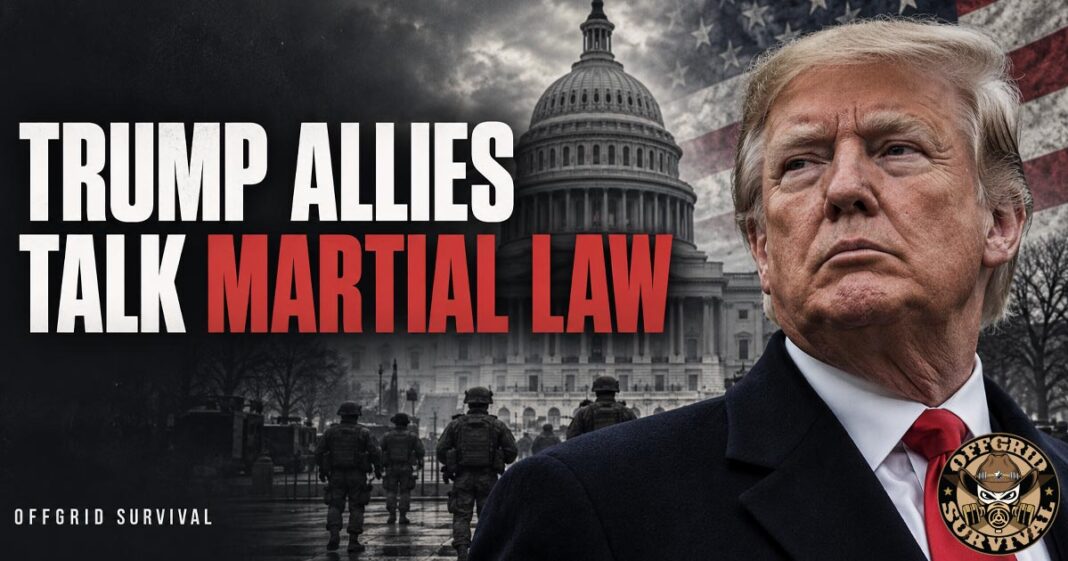
Some of President Trump’s closest outside allies are now openly talking about martial law if they decide November’s midterms were rigged. On a September 30 video call for MAGA election activists, Peter Ticktin, Trump’s childhood friend and Tina Peters’ attorney, said “there would have to be martial law” in the event of another rigged election, according to an Axios report published Friday. He later told Axios that ballots and election equipment would probably have to be seized. Axios found no evidence the election will be rigged, and the White House hasn’t endorsed any of it.
The real issue is who gets to decide when the rules stop applying. If losing an election counts as proof of fraud, the side that lost gets to declare the emergency and then run it. For anybody who says they believe in limited government, this should be the easiest call of the year.
The election is November 3, 18 days from now. If anyone acted on this talk, the first places to feel it would be your polling place, your county election office and the ballot you may have already mailed in. Those are the few parts of government you still have a direct hand in, and they’re exactly what Ticktin is talking about taking control of.
What Axios Reported
Let’s be straight about who’s saying this. Ticktin isn’t a White House official. He’s a Florida attorney who went to military school with Trump as a teenager. He represents Tina Peters, the former Colorado county clerk convicted in 2024 of crimes tied to a breach of election equipment. Colorado Gov. Jared Polis commuted her sentence this year. Peters met with Trump this month, and she and Ticktin visited him at the White House in late June. These are outside activists, but they have the president’s ear.
Ticktin wasn’t the only one on the call pushing for drastic steps. Gregory Stenstrom, who testified about alleged irregularities in Pennsylvania in 2020, said he most wanted the election paused. His fallback was for Trump to use the National Emergencies Act to force states to change how they run elections. Peters has been promoting a plan since August to switch to hand-marked paper ballots and hand-count every vote where possible. The call’s host, Steve Stern, is telling viewers to sign up through the Republican Party as poll workers and observers.
The White House gave Axios a general statement that every legal vote must count and Americans should have confidence in the results. It didn’t mention martial law.
In fairness, Ticktin has denied advocating martial law to run the elections. In the same interview, he said martial law would be preferable with “our side in control of the armaments.” That’s not much of a denial.
Some posts online are claiming Trump has already decided to declare martial law. He hasn’t, and there’s been no announcement from the White House. What we have is a group of politically connected activists pitching it, loudly, less than three weeks before an election.
This Didn’t Start This Week
The Atlantic first reported the push on September 23. Ticktin laid out three ways the fall could go, and the last one ended with Trump declaring martial law on or around November 3. Asked about riots if Trump tried to overturn the results, he said, “Believe me, our armed forces are a lot bigger than they are.”
When conservative host Wayne Allyn Root pushed Trump in August to declare a national security emergency over voter ID and citizenship checks, Trump didn’t rule it out. He told Root stranger things have happened, according to The Atlantic. The same report said White House and Cabinet advisers have spent months trying to steer Trump away from these fraud theories, while people in his inner circle admit acting on them remains possible.
Some of that thinking is already inside the government. Heather Honey, best known for denying the 2020 results in Pennsylvania and Arizona, is now the Homeland Security Department’s deputy assistant secretary for election integrity and a senior advisor to the ICE director.
The law here isn’t on the activists’ side. Derek Tisler of the Brennan Center told Axios that Congress sets the date of federal elections, so Trump can’t delay the midterms on his own. States choose their voting systems and how votes get counted. And martial law wouldn’t give the president authority to seize election materials or override federal and state election laws. Federal law also makes it a crime for any federal official to bring troops or armed men to a polling place, except to fight off armed enemies of the United States. That carries up to five years in prison.
We’ve Seen Martial Law Before
The last time Americans lived under full martial law, it lasted almost three years.
On December 7, 1941, hours after Pearl Harbor, Hawaii’s territorial governor suspended habeas corpus and handed his powers, along with the powers of the territory’s judges, to the Army’s commanding general. President Roosevelt approved it two days later. Military tribunals replaced civilian courts. Lloyd Duncan, a civilian shipfitter at the Pearl Harbor Navy Yard, was tried by one of those tribunals after a fight with two Marine sentries. The regime didn’t end until October 1944.
In 1946, the Supreme Court ruled in Duncan v. Kahanamoku that martial law in Hawaii never authorized replacing the courts with military tribunals. That was a real invasion with a real enemy, and it still took more than four years for the court to say the government had gone too far. By then, the people tried by those tribunals had already served their time.
The rule from Ex parte Milligan after the Civil War is even plainer. Martial rule can’t exist where the courts are open and working. Every court in America will be open on November 3.
Where We’ve Always Stood
We’ve been writing about martial law in the United States for years, through Democratic and Republican administrations. Our worry has always been the same: a government using a crisis to grab power over ordinary people that it never gives back. That worry doesn’t switch off because the guy in the White House is someone you voted for.
We made a similar argument about MAGA socialism and federal stakes in private companies. Government owning a piece of a business and soldiers controlling an election aren’t the same thing. What ties them together is the excuse for accepting more federal power, which is to trust the man using it.
Try this test. Picture the politician you trust least holding the same power. Picture that administration deciding your objections are dangerous, your news sources are suspect and your county needs federal intervention. If that sounds intolerable, it should sound intolerable now.
Prepare for disruption without feeding the panic
Keep your planning practical. Have enough food, water and necessary medication to avoid unnecessary trips during unrest. Know alternate routes home and agree on a family meeting place. Keep important documents accessible and have a way to receive local information if your usual connection fails.
Watch actual orders, local conditions and confirmed events. Check alarming claims before sharing them. A recycled video or an anonymous prediction can send people into the very crowds and confrontations they should be avoiding.

Preparedness should give you room to make your own decisions. Political loyalty should never require you to surrender that independence. If your defense of freedom ends the moment your favorite politician wants more power, you were defending a politician all along.