
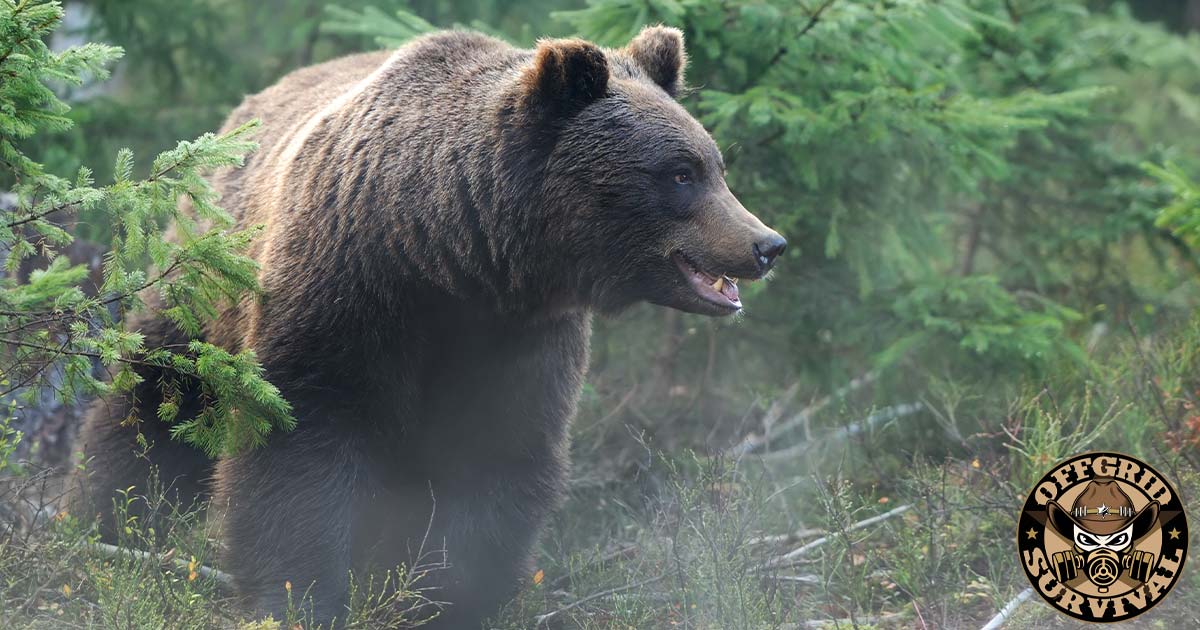
Somewhere in your house there is probably a backpack packed with a ferro rod, folding saw, tarp, water filter, snare wire, first-aid kit and several days of food. The idea behind it is simple: when everything falls apart, you load the family into the truck, drive until the road ends, shoulder the bag and disappear into the national forest.
Once you are out there, you will build a shelter, collect water, forage for plants, trap small game and hunt deer. You will avoid the crowds, live off the land and wait for civilization to settle down.
It sounds good because the person imagining it is always healthy, well-rested and standing in a climate-controlled house with a full stomach. The forest in that fantasy is empty, the weather is manageable, the animals are everywhere and nobody else had the same idea.
The real problem is not that living in the wilderness would be difficult. The problem is that the calorie math does not work for almost anyone who walks into the woods without a large food supply, an established camp and a reliable way to resupply.
The wilderness is not an endless pantry waiting for someone with enough bushcraft knowledge to unlock it. It is a place where nearly everything you do burns energy, while most of the food you can realistically gather provides very little in return.
You Will Burn Thousands of Calories Before You Find Anything to Eat
Carrying a loaded pack over rough ground is one of the most energy-intensive things most people will ever attempt. The Pandolf equation, which the U.S. military has used for decades to estimate the cost of carrying loads, places a reference hiker at roughly 555 calories per hour under certain conditions.
Six hours of walking can burn more than 3,300 calories before accounting for the energy your body uses simply to remain alive. Military research involving conditioned young soldiers carrying heavy loads through mountains commonly puts daily expenditure between 4,000 and 6,000 calories.
You are probably not a conditioned 22-year-old soldier moving with a trained unit and a supply system behind you. You may be carrying a heavier pack than you have ever trained with, sleeping badly, drinking less water than you need and trying to keep children or older family members moving.
Once you reach the supposed bug-out location, the work does not stop. You have to gather and treat water, cut wood, build or improve shelter, prepare food, scout the area and keep moving farther from camp as nearby resources disappear. Cold weather raises calorie needs. Poor sleep, stress and constant movement make everything harder.
Using 4,000 calories per adult per day is not an outrageous estimate under those conditions. It may be conservative.
That number is the starting point for the entire plan. Every berry, root, squirrel, fish and deer has to be measured against the amount of energy you are spending to obtain it. If you burn 4,000 calories and bring back 800, you did not have a successful day of foraging. You lost another 3,200 calories.
Do that long enough and you starve, no matter how impressive the shelter looks.
Most Wild Plants Will Not Keep a Working Adult Alive
Wild edible plants are useful. They can provide vitamins, minerals, variety and small amounts of food when supplies are running low. They are worth learning because correctly identifying plants can supplement stored food and occasionally provide a meaningful seasonal resource.
They are not a dependable replacement for a pantry.
Most wild greens contain large amounts of water and very few calories. Cattails are often described as one of the most useful wild plants in North America, but some estimates place certain edible portions at around seven calories per ounce.
At that rate, reaching even 1,400 calories would require eating more than twelve pounds. Covering a 4,000-calorie day could require more than 35 pounds, depending on the portion and preparation method.
That does not include the work of locating the stand, wading into cold or muddy water, harvesting the plants, carrying them back, cleaning them and cooking them. Your body may spend a significant portion of the energy you gain simply obtaining the food.
Berries create the same problem. Blackberries contain approximately 12 calories per ounce. You would need roughly 21 pounds to reach 4,000 calories.
Anyone who has picked wild berries understands how ridiculous that number is. Even in an excellent patch during peak season, you are competing with birds, insects, bears and every other person who knows where the berries grow. A couple of quarts can represent a productive morning. Twenty-one pounds every day is not a survival strategy.
Spring is often imagined as a time of natural abundance because everything turns green. Historically, it was frequently called the starving season. Winter food stores were running out, game animals were lean and the new plant growth provided far less energy than people needed.
Winter is even worse. Plants disappear, available game becomes harder to find and your body may require additional calories to remain warm. The season when the land provides the least is also the season when exposure can kill you fastest.
Acorns Contain Real Calories, but They Are Not Waiting in Bags
Tree nuts are one of the few wild plant foods in North America that can provide substantial calories. Acorns can contain approximately 112 to 142 calories per ounce, depending on the species and source.

For the first time, the numbers begin to look useful. Several pounds of processed acorn meat could provide a meaningful portion of an adult’s daily calories.
That does not mean you can arrive in the woods during a crisis and begin eating acorns off the ground.
First, you must be in an area with productive oak trees during the relatively short period when the acorns are dropping. Mast production varies from year to year. Some seasons are heavy, while others produce far less.
You are also competing with deer, bears, turkeys, squirrels and every other animal that depends on the same crop. Those animals live there all year and know exactly where the productive trees are. You are arriving late with a backpack and a YouTube education.
The acorns you collect must then be sorted, cracked and shelled. Many will contain insects, mold or undeveloped meat. The usable portion is smaller than the weight you carried back to camp.
Most acorns contain tannins that make them bitter and can cause digestive problems if they are not processed correctly. Leaching requires containers, clean water and time. Depending on the method, you may need to change the water repeatedly or maintain a steady heat source. After that, the acorns must be dried, ground and cooked.
It is valuable knowledge, and people successfully used acorns as a staple food for thousands of years. They did it with established communities, tools, storage systems, seasonal knowledge and generations of experience tied to a particular landscape.
That is very different from showing up in October with a survival manual and expecting the oak trees to feed your family.
There Are Not Enough Deer to Feed Everyone
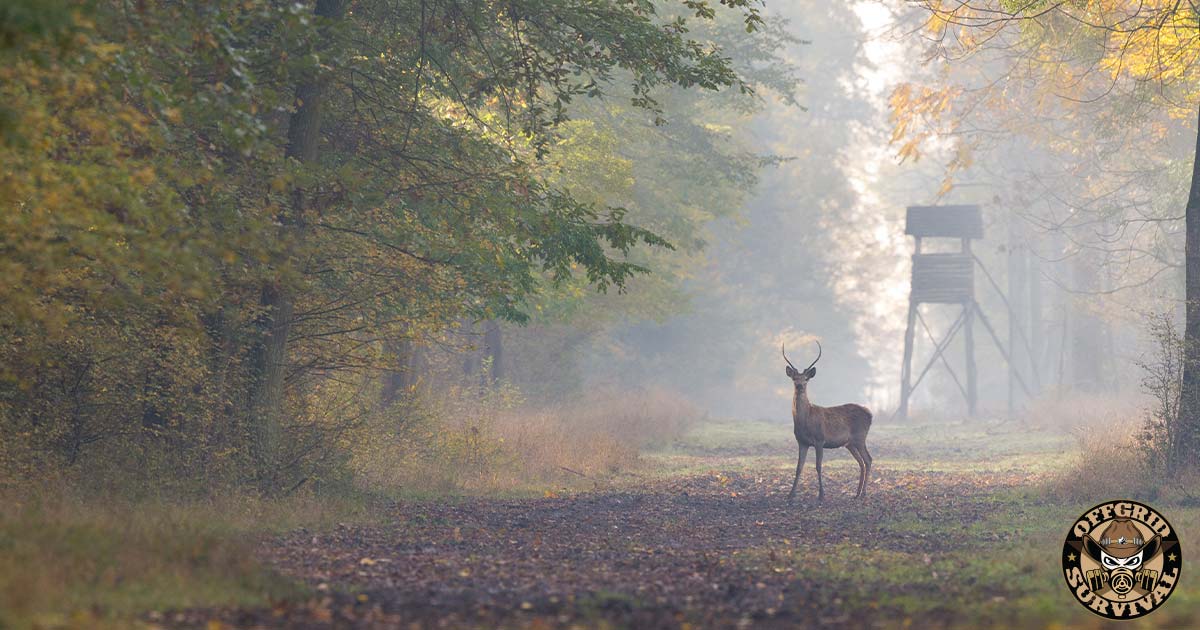
When the plant numbers fall apart, the usual answer is hunting.
At the individual level, hunting can provide a tremendous amount of food. A deer placed in a freezer may feed a household for months when combined with other supplies. At the population level, however, wild game cannot come close to replacing the modern food system.
American hunters take roughly six million deer during a typical year. Give each animal a generous average of 50 pounds of boneless meat and assume venison provides around 700 calories per pound.
That produces approximately 210 billion calories from the entire annual deer harvest.
The United States has around 340 million people. At a modest 2,000 calories per person, the country consumes approximately 680 billion calories every day.
Every deer harvested in the entire United States during an entire year would therefore provide less than one-third of one day’s national calorie requirement.
That calculation assumes perfect distribution, no spoilage, no waste and an equal share for everyone. None of those conditions would exist during a collapse.
This is why the idea that millions of people will simply hunt for food is impossible. The animals do not exist in sufficient numbers. Agriculture supports modern populations because farming produces enormous quantities of food from controlled land. Hunting and gathering never supported anything close to the number of people alive today.
Estimates for the worldwide human population before agriculture generally range between two million and 15 million people. The planet did not contain billions of people living comfortably from hunting, fishing and gathering. It contained scattered populations limited by the amount of food the natural environment could produce.
Most Licensed Hunters Do Not Kill a Deer
Even before millions of desperate people begin flooding public land, hunting success is far lower than survival fantasies suggest.
During the 2022–23 season, approximately 41 percent of American deer hunters killed at least one deer. Success rates varied widely, from about 18 percent in New Hampshire to around 71 percent in South Carolina.
That means most deer hunters nationwide did not kill a deer.
Western big-game hunting can be even more difficult. Colorado’s elk harvest rate across all weapon types was reported at approximately 20 percent in 2024. Four out of five hunters went home without an elk.
Those hunters had advantages you will not have during a serious emergency. They had vehicles, fuel, maps, optics, modern rifles, manufactured ammunition and access to weather forecasts. Many had scouted the area, studied movement patterns and planned the hunt for months.
Hunting seasons are also deliberately timed to give hunters a reasonable chance of success. Animals may be moving more frequently because of the rut or seasonal migration. Hunters can travel roads, return to established camps and go home to a stocked refrigerator after an unsuccessful day.
A person trying to survive in the woods cannot shrug off an empty day. Every hour spent hunting is an hour of energy burned without food coming back.
Most deer harvest also occurs on private property. According to reporting cited by Outdoor Life, approximately 88 percent of deer taken in the Midwest, Northeast and South are killed on private land.
The public land you plan to escape into is already the more difficult ground. It is often steeper, more remote and under heavy seasonal pressure. The best agricultural edges, food plots and managed habitat are frequently located on private property where you may not legally or safely have access.
Now add thousands of hungry people who are ignoring seasons, limits and regulations. Gunfire will push surviving animals into thick cover and remote terrain almost immediately. Within days, the easiest game will either be dead or gone.
You would be trying to outperform experienced hunters while hungry, exhausted, unfamiliar with the land and unable to waste ammunition.
That is not a dependable food source.
Small Game Cannot Close the Calorie Deficit
The next answer is usually trapping. If deer are scarce, the plan shifts to rabbits, squirrels and other small animals caught with snares or primitive traps.
Small game can provide food. Trapping can also produce calories while you perform other work, which gives it an advantage over actively hunting all day. The problem is the quantity required.
Squirrel meat provides around 120 calories per 100 grams. A gray squirrel may provide roughly half a pound of usable meat, or somewhere near 270 calories.
To cover a 4,000-calorie day with squirrel meat, one adult would need approximately fifteen squirrels.
At estimated rural densities of around two squirrels per acre, killing every animal available would strip several acres per person each day. A family could exhaust the nearby population within weeks, assuming it could catch that many in the first place.
Traps also require materials, construction, placement, checking and maintenance. Empty traps still cost energy. Animals learn, populations decline and productive locations become less productive as pressure increases.
Rabbit creates another problem because it is extremely lean. A three-ounce serving of cottontail may provide around 147 calories, 28 grams of protein and only three grams of fat.
The human body cannot safely obtain unlimited calories from protein. The liver has a practical limit on how much nitrogen waste it can process, and some estimates place the upper sustainable range near 35 percent of total calories.
A diet made up almost entirely of lean meat can cause the condition historically called rabbit starvation or mal de caribou. Symptoms include nausea, diarrhea, headaches, weakness and an overwhelming craving for fat. Without another source of calories, the person can continue deteriorating despite eating large amounts of meat.
On a 4,000-calorie workday, 35 percent amounts to approximately 1,400 calories from protein. The remaining 2,600 calories must come from fat or carbohydrates.
Catching additional lean rabbits does not solve that shortage. You still need fat, nuts, roots, stored grain or another substantial source of energy.
Wild animals tend to carry the most fat during particular seasons, especially before winter. The organs, marrow and fatty deposits of larger animals become extremely valuable, but those are the same animals everyone else will be hunting.
The forest may provide protein. The calorie shortage remains.
You Will Not Be Alone Out There
The bug-out fantasy usually places one capable person in an empty wilderness. That may be the most unrealistic assumption in the entire plan.
The U.S. Forest Service manages approximately 193 million acres and records around 164 million recreational visits each year. The country has approximately 15.2 million licensed hunters, many of whom own rifles, understand local terrain and already know the public lands near their homes.
Estimates of the American prepper population range from roughly five million to 23 million people, depending on how preparedness is defined.
Not all of them plan to flee into the woods, but enough do that the supposedly isolated national forest could become crowded very quickly.
Most people would travel to familiar locations. They would use the same highways, Forest Service roads, campgrounds, trailheads and water sources. Vehicles would be abandoned wherever traffic, fuel shortages or road conditions stopped them.
The average person carrying a heavy pack is not going twelve miles into steep backcountry. Most will remain within a few miles of roads and parking areas. They will camp near obvious creeks, lakes, meadows and game trails because those are the easiest places to reach and the locations survival books recommend.
That concentrates large numbers of people into a relatively small amount of usable terrain.
They will cut the same wood, collect from the same water sources, hunt the same animals and set traps along the same trails. Sanitation will deteriorate. Garbage and human waste will contaminate water. Fires will escape. Injuries and illness will increase while medical assistance disappears.
Many of those people will be armed. Some will be frightened, desperate and poorly trained. As supplies run out, the contents of another person’s pack may become more attractive than spending another day searching for food.
At that point, the primary threat is no longer wildlife or exposure. It is a large population of hungry strangers competing over resources that were never sufficient to support them.
Running to public land does not remove you from society. It may place you inside one of its worst and least controlled concentrations.
Experienced Survivalists Still Lose Weight at Dangerous Rates
The television series Alone has provided years of evidence showing what happens when highly experienced people attempt to live from the land.
The contestants are not random office workers who bought survival kits online. Many are wilderness guides, hunting experts, homesteaders, survival instructors and primitive-skills teachers. They choose ten items, enter areas selected for available natural resources and face no competition from other contestants for their exact camp.
They do not have to protect children or elderly parents. Nobody is shooting at them, stealing their traps or contaminating their water. Medical teams monitor them, and rescue is available through a satellite device.
They still starve.
Season three winner Zachary Fowler lasted 87 days and reportedly lost around 70 pounds, approximately one-third of his starting body weight. Another contestant was removed when his blood pressure fell to 80 over 60. Runner-up Carleigh Fairchild was medically removed at 101 pounds with a body-mass index below the show’s safety threshold.
During season eight, Colter Barnes reportedly lost 86 pounds in 67 days. He was actively fishing and using maggots as bait, yet went approximately 20 days without food at one point.
These people knew how to build shelters, identify plants, fish, trap and make fire. They were placed in productive environments and allowed to focus almost entirely on survival. Their bodies still consumed stored fat faster than they could replace it.
The difference between their experience and a real collapse is that a medical team removes them before permanent damage or death. You would have no one measuring your blood pressure, body weight or organ function.
There would be no rescue boat when your body crossed the line.
Chris McCandless Had More Than Most Bug-Out Plans Provide
Chris McCandless entered the Alaskan wilderness in 1992 carrying a rifle and approximately ten pounds of rice. He eventually found an abandoned bus, giving him a permanent shelter far better than the tarp most bug-out bags contain.
He hunted small game and survived for 113 days in relatively productive country without thousands of other refugees competing for food. He still died from starvation.
When hunters found his body, he reportedly weighed approximately 67 pounds, down from around 140. His journal described increasing weakness and his recognition that death had become a serious possibility.
People have argued for decades about exactly what contributed to his decline, including possible issues involving plants he consumed. None of that changes the larger lesson.
He had a rifle, ammunition, rice, shelter, wild game and months of time. It was not enough.
The average bug-out plan contains less food, more people and far more competition.
Staying Home Is Usually the Better Survival Plan
The practical alternative is far less exciting than disappearing into the mountains.
Stay home when the house remains physically safe and the local threat does not require evacuation. Your home already provides walls, a roof, insulation, sanitation, storage space and a locking door. It may contain tools, clothing, bedding, medical supplies and hundreds of other useful items that cannot fit in a backpack.
Stored food does not need to be tracked, chased, trapped or dug out of frozen ground. Rice, beans, pasta, sugar, oats, peanut butter, canned meat, honey, lard and cooking oil sit still until you need them.
Cooking oil contains approximately 240 calories per ounce. A gallon can provide around 30,000 calories, depending on the oil. That is more than a week of calories for one adult at a 4,000-calorie workload and much longer when combined with grain, beans and other stored food.
A gallon of oil costs less than many tactical knives.
Wild food can supplement stored supplies, but it cannot compete with the calorie density and reliability of food already sitting in your pantry. The forest will make you work for a few hundred calories. The bucket of rice in your house only requires a pot, water and fuel.
Your home also places you near people who know you. Neighbors can share tools, information, labor, security and medical knowledge. A community has a far better chance of solving problems than several individuals hiding in separate camps and guarding their remaining food from one another.
There are situations where remaining home becomes impossible. Wildfire, flooding, chemical releases, violence or structural damage may force you to leave. In those cases, evacuation should have a destination.
Wilderness Skills Still Matter
None of this means wilderness skills are useless.
Learn to identify edible plants. Learn to process acorns, purify water, make fire in poor weather, catch fish, build emergency shelter and set legal traps. Those skills can extend supplies, solve temporary problems and keep an unexpected night outdoors from becoming fatal.
They can help a stranded traveler survive until rescue arrives. They can support someone moving between two safe locations. They can supplement stored food and reduce the amount of fuel or equipment required.
The mistake is believing those skills create an unlimited supply of calories.
A ferro rod helps you make fire. It does not create food. A water filter reduces certain waterborne threats. It does not guarantee a water source. A snare may catch an animal. It does not guarantee enough fat and calories to feed a family every day.
Bushcraft skills are tools within a larger plan. They cannot replace logistics, food storage, shelter and community.
Stop Planning to Walk Your Family Into Empty Country
The bug-out-to-the-woods plan survives because it allows people to imagine that a backpack solves the entire problem.
Buying gear feels productive. Storing months of food, building relationships, maintaining water supplies and arranging a real evacuation destination require space, money and uncomfortable conversations. The backpack is easier.
The industry encourages the fantasy because it sells knives, filters, axes, tents and tactical pouches. It does not sell the less exciting truth that your family will probably survive longer behind a locked door with a pantry than beside a creek with four days of freeze-dried meals.
Run the numbers honestly.
A working adult may burn 4,000 calories per day. Wild greens and berries provide very little energy. Acorns are seasonal and labor-intensive. Most hunters do not kill a deer even with modern equipment and months of planning. Small game provides limited calories and often very little fat.
The best survivalists on television lose dangerous amounts of body weight in environments chosen specifically to give them a chance. They do it without children, crowds, armed strangers or any need to defend their camps.
Now place your family two miles from a packed trailhead with four days of food, uncertain water and every animal in the area already being chased by hundreds of other people.
That is not a survival plan. It is an extended starvation plan with more walking.
Build the pantry. Store water. Keep the house defensible. Know your neighbors. Arrange somewhere real to go when staying home is no longer possible. Learn wilderness skills, but use them to support a plan instead of allowing them to become the plan.
The woods may help you survive a night or bridge the distance to safety. They are not going to feed millions of people who arrive carrying the same backpack and expecting the same miracle.




I don’t think I’ve ever heard it better put than that, bravo!