
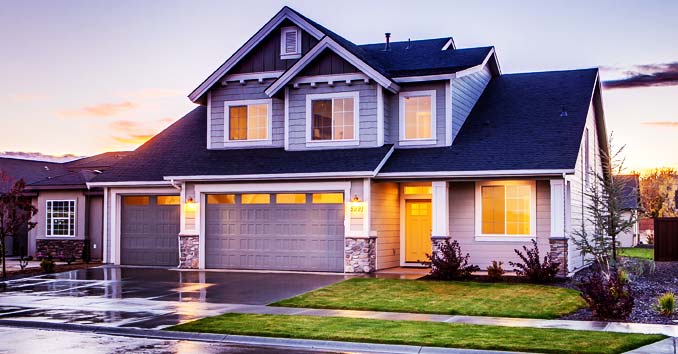
Most people think about home security the wrong way. They picture the Hollywood version — a ski-masked stranger casing a mansion at midnight. So they buy a $30 alarm sticker for the front window, feel good about it, and move on.
Meanwhile, a burglar is reading their Facebook posts.
Home invasions have become one of the most consistent criminal threats facing American families. And unlike a lot of dangers that feel distant or abstract, this one shows up on ordinary streets, in ordinary neighborhoods, during ordinary afternoons. According to law enforcement, a home invasion or burglary occurs nearly every 15 seconds in the United States.
Not every hour. Every 15 seconds.
Some quick stats on Home Invasions:
- Every year, there are over 2 million burglaries in the US
- Most home invasions happen between 10 a.m. and 3 p.m. — when most people are at work or school
- According to the FBI, 1 in every 36 homes will be burglarized
These aren’t fringe events. They’re routine. And a significant number of them happen because the homeowner unknowingly made it easier for the criminal than for themselves.
That’s what this article is about. Not abstract threat theory — the specific behaviors that signal to a criminal that your home is worth hitting, and the concrete fixes that change the math in your favor.
The Burglar Isn’t Who You Think He Is

Before we get into the five behaviors, we need to dispel the stereotype, because it’s costing people.
The shady stranger casing your street at 2 a.m. is a movie character. In reality, a significant percentage of burglars are people who have some level of familiarity with their target — a former contractor, a neighbor’s acquaintance, someone who was in your house professionally and noticed things. Studies consistently show that 65% of burglaries are committed by someone the victim knows or has had some prior contact with.
This matters because it changes the threat model entirely. It’s not just about keeping strangers out. It’s about being careful what you reveal, what you show, and what signals you send — to everyone.
5 Things You’re Doing That Could Be Inviting a Criminal to Burglarize Your Home
1. You Have a Big Mouth
Burglars aren’t always the shady guy in the Hollywood movie. A lot of times it’s either someone you know or someone you recently interacted with. From the guy installing your new entertainment system to the handyman who fixed the clog in your kitchen sink, you need to be careful about what you say to people you invite into your home.
The conversation that seems innocent — “Yeah, we just got a new 75-inch TV, the whole setup cost a fortune” — is a sales pitch to the wrong audience. Contractors, service workers, delivery drivers, and casual acquaintances are not your enemy. But they talk to people who talk to people, and information has a way of traveling in circles you don’t control.
What you can do:
Keep valuable purchases quiet, especially with people you’ve just met or service workers visiting for the first time. Don’t leave high-value items visible through windows or in the driveway. If you have a gun safe, a gun collection, or significant amounts of cash or jewelry, that’s information that never needs to leave the house — not as a brag, not as a warning, not as casual conversation.
Your home defense setup is especially something to keep private. If a burglar knows there are firearms in the home, that can escalate a property crime into something much more dangerous — either because they want the guns or because they show up armed and ready for resistance.
2. You Share Too Much on Social Media
In an age where everyone shares far too much information online, criminals are quick to take advantage of how open our society has become. Modern criminals spend significant time on social media looking for targets. From posting photos while you’re at a restaurant to broadcasting that vacation you’re about to take, you’re handing a criminal everything he needs to know about his next target — the empty home you just told the internet about.
This isn’t paranoia. Police departments across the country have documented cases where burglars used Facebook, Instagram, and even Google Street View to plan break-ins. They weren’t hacking anything. They were just paying attention to what people voluntarily made public.
- Don’t RSVP publicly on social media platforms to parties, concerts, or events. Every public RSVP is a public announcement that you won’t be home.
- Stop using location check-ins in real time. If you need to share where you ate, do it after you’re back home.
- Stop publicly sharing photos that show your home’s interior. How many images you’ve posted reveal your TVs, computers, game systems, artwork, or safe location? Go look. You might be surprised.
- Be careful about travel announcements. “Leaving for two weeks in Cancun tomorrow!” is an invitation. Post the vacation photos when you get back.
The online safety threats families face today extend far beyond what most people consider — and home burglary from social media oversharing is one of the most preventable.
3. You Leave Your Windows and Doors Unlocked
According to law enforcement, a third of all burglars enter through an unlocked door or window.
Not a kicked-in door. Not a smashed window. An unlocked one.
After knocking to confirm no one’s home, a criminal’s next move is almost always to simply test the doorknob and the nearest accessible windows. Law enforcement reports are full of cases where a burglar walked in through an unlocked door while the homeowners were in the backyard or upstairs — they believed that because they were home, they were safe to leave doors unlocked.
That belief gets people hurt.

What you can do:
Make locking doors and windows a non-negotiable habit — even when you’re home, even during the day, even if you’re only stepping out back for twenty minutes. It’s not about being paranoid. It’s about eliminating the easiest path.
Beyond basic locking, door security is worth a serious investment. Most standard door frames fail long before the lock does — a hard kick concentrates force on a two-inch area of softwood trim, and average interior-grade door frames give way in one or two attempts. Reinforcing your door frames with longer screws (3″ to 3.5″ wood screws instead of the standard ¾” screws) into the actual wall studs is a $5 fix that dramatically increases kick-in resistance.
A door wedge or door security bar is another underrated and wildly effective tool for home defense. Braced at floor level against the door, they make forced entry almost impossible — even when the lock itself fails. For under $30, it’s one of the highest-value security investments available, and almost nobody has one.
For sliding glass doors and windows, use a simple wooden dowel or security bar in the track. A locked sliding door latch is one of the weakest points in most homes; the track brace costs nothing and makes it virtually impossible to force the door open from outside.
4. You Think Your Home Alarm Will Save You
Home alarms are not the deterrent most people believe them to be. In fact, a lot of sophisticated burglars actively seek out alarmed homes.
Here’s why. First, they assume a home with an alarm system has something valuable worth protecting. Second, when an alarm trips, they know two things immediately: nobody is home, and they have roughly 5 to 10 minutes before law enforcement responds. In many urban and suburban areas, the average police response time to a residential burglar alarm is closer to 12 to 20 minutes — more than enough time to grab what they came for and be gone.
The alarm industry has trained people to believe that a monitoring sticker on the window is a shield. It isn’t. It’s a flag.
This doesn’t mean go without security — it means invest smarter.
Video doorbells and cameras change the equation in a more meaningful way. If you’re going to spend money on a security system, something like the Ring Video Doorbell allows you to see, hear, and speak to anyone at your door from your phone, tablet, or PC — from anywhere. Criminals have no way to know whether you’re home or at work when you respond. That uncertainty is a real deterrent, because it removes the most important variable from their calculation.
Exterior cameras covering driveways, entry points, and the perimeter serve double duty: they deter, and they document. Footage leads to arrests. Arrests lead to convictions. Criminals know this.
Motion-activated lighting is another overlooked layer. The last thing a burglar wants is to suddenly be illuminated in bright white light while trying to work a lock. Motion lights cost $25–$60 per fixture and cover the psychological deterrence angle that alarm stickers no longer do.
And if you’re serious about home defense, situational awareness starts before any alarm goes off. Knowing what’s normal in your neighborhood — which cars belong, which faces you recognize, which behaviors are routine — lets you identify problems before they become emergencies.
5. You Make It Easy for Them to Hide
Many people believe a fence provides protection for their home. It usually does the opposite.
A fence can offer privacy for you, but it also gives a criminal somewhere to work unseen. The same is true of dense shrubs along your foundation, mature trees with low branches near windows, and overgrown vegetation that creates concealed corridors from one side of your property to the other.
The last thing a criminal wants is to be seen. They target homes where they can move without exposure — big fences, overgrown hedges, covered side yards, poor lighting. When evaluating your property, step outside and ask: where could someone stand without being visible from the street or neighboring windows? Wherever the answer is “right here,” that’s your vulnerability.
What you can do:
Trim hedges and shrubs so there’s clear sightline visibility along the front and sides of your home. The standard security recommendation is to keep foundation plantings below 3 feet in height and tree canopies above 7 feet — this eliminates the concealment band where a person can actually hide.
Consider your lighting. Dark side yards, unlit back gates, and shadowy corners aren’t aesthetic choices — they’re cover for someone who knows how to use them. Exterior lighting doesn’t need to be glaring or expensive; consistent low-level coverage is more effective than a single spotlight with black gaps around it.
Fencing itself isn’t the enemy — but a solid 6-foot privacy fence with no visibility through or over it is a gift to anyone who gets over it. Decorative fencing that provides a perimeter without concealment (wrought iron, split rail, low pickets) is a much better security choice than a solid wood privacy fence if concealment is your concern.
What to Do If Someone Gets In Anyway
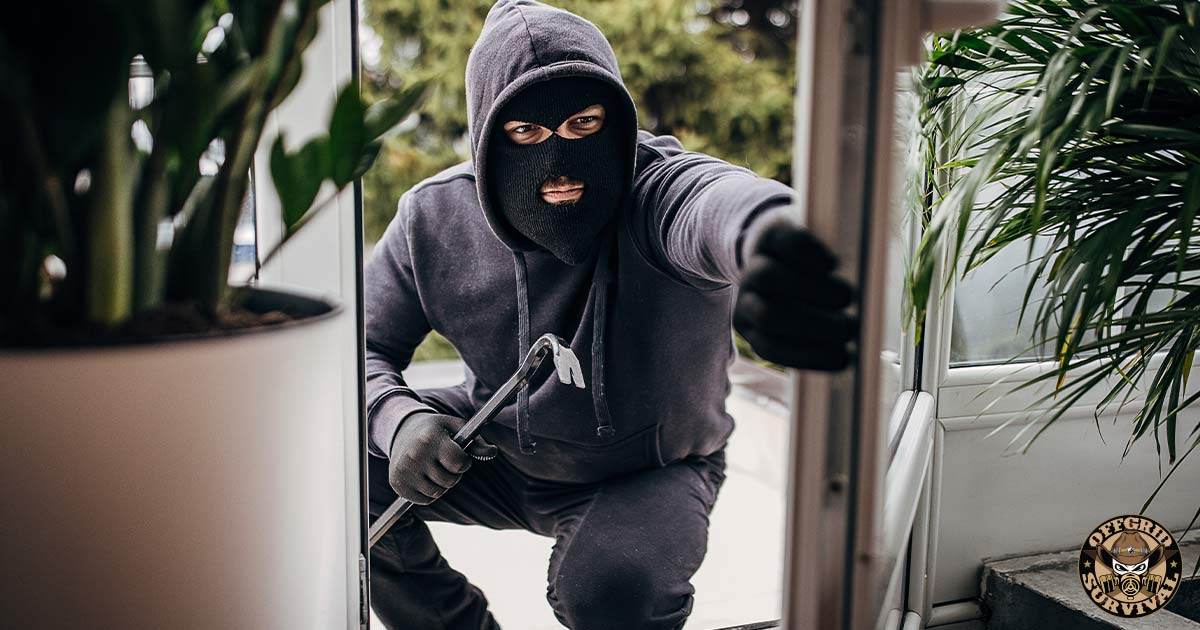
Prevention is the goal. But preparation assumes prevention sometimes fails.
If a burglar enters while you’re not home: The damage is property-based. Your priority on returning is to not enter if you have any reason to believe someone is still inside. Call 911 from outside. Let law enforcement clear the premises. Don’t contaminate the scene before documentation.
If a burglar enters while you’re home: The situation is entirely different, and it’s one of the most dangerous scenarios a civilian can face. A burglar who believed the house was empty and discovers it isn’t is unpredictable — panic, aggression, or the presence of a weapon become immediate variables.
This is why knowing how to defend yourself is not optional for anyone who is serious about home security. Prevention layers reduce risk dramatically. They don’t eliminate it. The 30% of burglars who enter through locked doors are not reading your security tips.
A shotgun remains one of the most effective home defense weapons available to civilians — manageable, reliable, and the sound of racking one is among the most universally understood warnings in existence. That said, any firearm in the home requires proper storage (keeping it away from children and unauthorized users) and training. An untrained, panicked person with a firearm is a danger to everyone in the house, including themselves. If you own guns for home defense, train with them, store them properly, and know your state’s laws on use of force.
For those who want a non-firearm option, a tactical flashlight is a legitimate close-quarters defense tool that doubles as a general-purpose survival item. A 1,000+ lumen beam pointed at an attacker’s eyes in a dark room is seriously disorienting. Combined with verbal commands and awareness of your exits, it can create the window you need to get your family safe without an armed confrontation.
The broader point: urban survival scenarios — including home invasions — require layered thinking. No single tool, no single tactic. The people who handle these situations best are the ones who thought through the options before the night it happened.
The Social Engineering Angle: It’s Not Just About Physical Security
One thing most home security guides skip over entirely is the social dimension of burglary.
Criminals gather intelligence. They might follow your routine for several days before acting. They know when you leave for work, when your kids leave for school, and when the dog stops barking. They notice the FedEx box that sat on your porch for three days while you were out of town. They read the “We’re in Cabo!” comment your friend left on your Instagram post.
Social engineering — gathering information through observation and open sources — is how most residential burglaries begin.
This means your security posture extends into your daily behavior and your digital life, not just your physical home. Think about what you’re broadcasting:
- A mailbox stuffed with three days of mail signals vacancy better than a sign on the door.
- Leaving your garage door open for hours while you work in the backyard shows off your tools, bikes, and anything else stored inside.
- A car you never move that’s been sitting in the same spot for a week tells anyone watching that you’re out of town.
- A social media account set to “Public” with location services on is a real-time map of your absence.
The isn’t paranoia. It’s awareness. Understanding the threat landscape around you — and making conscious decisions about what you reveal — is the same skill that applies in every other area of preparedness.
One more angle that rarely gets mentioned: your neighbors. A good relationship with two or three immediate neighbors is one of the highest-value home security investments you can make, and it costs nothing. Someone who knows your car, your routine, and your face will notice when a stranger is spending twenty minutes in your driveway. Someone who has your number can text you when something looks wrong. This isn’t a neighborhood watch with clipboards and meetings — it’s just the basic awareness that comes from knowing the people around you. Communities where neighbors actually know each other have dramatically lower property crime rates than anonymous subdivisions where everyone pulls into their garage and disappears. That’s not a coincidence.
Layering Your Home Defense: The Full Picture
Prevention. Detection. Deterrence. Response.
No single element does all four. That’s the point. A strong door with reinforced frame stops the casual kick-in. A video doorbell creates uncertainty about occupancy. Trimmed sightlines eliminate concealment. Exterior lighting removes the cover of darkness. A firearm or other self-defense tool provides a last-resort option if everything else fails.
Each layer is cheap relative to what it protects. Reinforcing door frame screws: $5. A motion-sensor light: $30. A door wedge or security bar: $25. A video doorbell: $100–$200. These aren’t major investments. They’re exactly the kind of practical, low-cost hardening that changes your home’s profile from “easy target” to “not worth the trouble.”
Think of it the way a burglar does. He’s not trying to break into Fort Knox. He’s looking for the path of least resistance — the home with the unlocked side door, the dark back yard, the three-day-old Amazon boxes on the porch, the Instagram post confirming the owners are in Florida. He’s comparing your house to your neighbor’s house. The goal isn’t to make your home impenetrable. The goal is to make it clearly harder than the alternative.
That’s all it takes.
Make them move on.
Don’t wait until after your front door has been kicked in to realize your deadbolt was held in place by a single ¾-inch screw in a hollow door frame. Don’t wait until you come home from a two-week vacation to find your house emptied because your Facebook announced your departure date to the world.
The window between reading this and needing it is the only window that matters.
Related Resources
- Home Security Guide: Why You Need a Simple Door Wedge to Protect from Home Invasions
- Defending Yourself from an Attacker
- Prepper Guns: Why a Shotgun Should Be Part of Your Home Defense Arsenal
- Urban Survival: Navigating Threats in the City
- Online Safety in 2026: The Real Threats to Kids on the Internet
- Your Credit Cards and IDs Are Not Safe
- Best Tactical Flashlights: Our Favorites Reviewed
- The Ultimate Situational Survival Guide: Self-Reliance Strategies for a Dangerous World






Not true. Home alarms like Protect America can be set to an “at home” mode. Disabling motion sensors. The alarm will still go off and you can be at home. The statement that intruders seek out houses with home alarms is just not true. Also, IP cameras can catch pictures of the face and license plates of intruders. Ring cameras are a good choice so is KUNA and Arlo.
TIME TO RIG THE 12 GAGE SHOTGUNS UP AROUND THE HOUSE- WHEN YOUR NOT HOME LOAD THEM COCK THEM AND MOVE ON!
Nice idea to dream about, but not according to law enforcement. There was a farmer in northwest iowa a quite a few yrs ago that set a 12 gage shotgun to catch a burglar that been braking and entering. The bad guy lost both legs and sued the farmer, who ended up losing the farm and his ability to make a living. Good idea, but not legal in this day and age.
The farmer’s mistake was calling the police, he should have made fertilizer out of the criminal.
I remember that happening, yes the farmer lost his farm, but the neighbors all went together ( people for a large radius chipped in enough money ) and helped the farmer get his farm back. Also the bad guy was counter sued by the farmer and received a partial settlement. the prep / what ever you called burglar had been hitting a quite a few farms in the area, so local were on the look out for the guy.
Door stops are extremely under utilized yet cheap and easy to install. I am particular to a device called the door club. It amazing how much people don’t inspect thier door frames. Especially with older homes a good kick can knock a lot of locks right out of the frame if the door itself doesn’t give but a good brace at floor level can do wonders.
You’re right, I’ve replaced all the screws in my door frames with 3″ to 3 1/2″ wood screws, it makes a big difference.
You are right about the way door frames are made and put together. some yrs ago I got or was locked out of the house at 1 AM ( seeing my wife off to take care of a sick grandson ), it only took 5 minutes to kick the door in ( entry door to house from garage ), but took about 2 hrs to fix. Now I don’t know if longer screws would do any good in that door frame.
I have two dogs I call “Mouth” and “Muscle”. Mouth is a Jack Russell who misses nothing and sounds an alarm better than a motion detector. Muscle is a large dog who can scare you even hearing him bark…the kind of dog most people will try to avoid getting too close to. These two, along with a doggie door and a chain link fence seem to be as effective a deterrent as a home alarm would be. If someone attempts to come into our back yard uninvited, they will meet with loud and painful resistance. And every time I answer my front door, Mouth and Muscle are right behind me.
I hope you also have some fire power with you as well.
I had to laugh at Mouth and Muscle. For I have Detect and Protect. A shit-zue and a Great Dane.
Really doesn’t hurt having a big dog around the house.
I have heard so many stories about people posting on Facebook about going on holidays, then getting robbed while they are away.