
The Complete Guide to Camping Outside the System
Dispersed camping, sometimes referred to as renegade camping, primitive or backcountry camping, and boondocking, is basically:
- Camping OUTSIDE of designated campground areas.
- Camping with no power, no services, and no modern luxuries.
- Camping with no crowds. It’s just you, and the great outdoors.
As a general rule, this type of camping is usually done on public lands well away from any established roads. Scattered throughout the United States there are millions of acres of public land where you can set up and camp, most of which won’t cost you a single cent. This isn’t a niche hobby anymore — it’s a legal right that comes baked into the same laws that created the modern public lands system, and once you understand the actual rules, you can use it almost anywhere in the American West.
Just How Much Land Are We Talking About?
People hear “public land” and picture a handful of scattered state parks. The actual number is bigger than most Americans realize, and it’s worth seeing the scale before you start planning a trip.
| Agency | Surface Acres Managed | Share of U.S. Land Base |
|---|---|---|
| Bureau of Land Management (BLM) | ~245 million acres | ~10% (1 in every 10 acres) |
| U.S. Forest Service (USFS) | ~193 million acres | ~8.5% |
| Fish & Wildlife Service (refuges) | ~150 million acres | ~6.6% |
| National Park Service | ~80 million acres | ~3.5% |
| Combined federal land managed by these four agencies | ~608–610 million acres | ~27% of the entire United States |
Sources: BLM “What We Manage” (blm.gov), U.S. Department of the Interior, Ballotpedia federal land ownership data.
The BLM alone administers more surface land than any other agency in the country — 245 million acres, or about one-eighth of the land in the United States, plus roughly 700 million acres of subsurface mineral estate. Nevada is the most federally-owned state in the country at roughly 80% federal land, and Alaska has more federal acreage than any other state at over 222 million acres. Almost all of that BLM and Forest Service acreage allows dispersed camping somewhere on it, unless it’s specifically posted otherwise.
Where to Camp for Free: Boondocking and Backcountry Camping
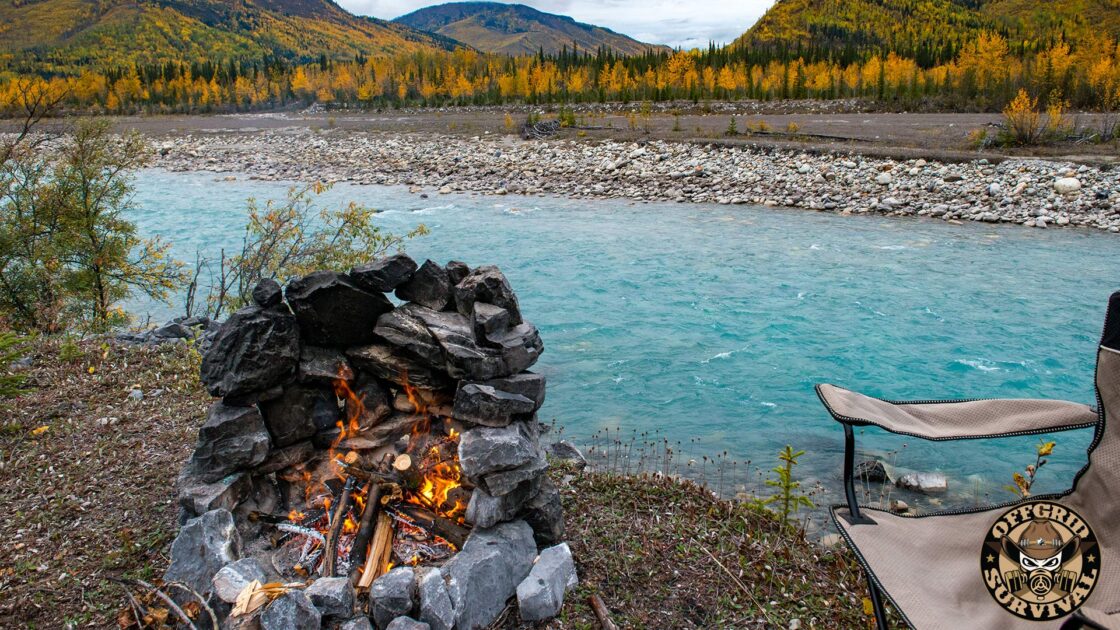
Most people who camp off the grid will pick a road in the National Forest or some other piece of public land, and then keep on driving. When the road ends, the real adventurers won’t stop until they find the perfect spot.
Free Campsites — While this might be a little less adventurous than finding a secluded spot in the backcountry, it still beats paying for a campsite or having to deal with a bunch of degenerates at the local KOA. Free campsites are usually very primitive, but there are some that have basic services.
For those adventurous souls who just want to get away from it all, I recommend choosing a road that’s not often traveled. Roads with signs usually mean there will be too many people, and might not be the best spots to set up camp. Old dirt roads and old abandoned rail lines are some of the best places to look. I’ve found some great spots by just wandering around in the backcountry.
- BLM and other public lands are almost always free to camp at unless otherwise posted.
- All National Forest land is open to camping unless otherwise posted, but some areas do have limits on how long you can stay in one spot, so make sure to check with the rangers.
- Some private landowners will allow people to camp on their land, so it never hurts to ask.
- The USFS — USDA Forest Service and the BLM — Bureau of Land Management websites are a good start when looking for areas to camp. The USFS offers free travel management maps called MVUM (Motor Vehicle Use Map) that show exactly where dispersed camping is restricted and which roads are open for travel.
How the MVUM Actually Works
The Motor Vehicle Use Map isn’t just a courtesy document — it’s the legal definition of where you’re allowed to drive and camp on National Forest land, and ignoring it is how people end up with citations. Here’s what it’s actually telling you:
| MVUM Symbol or Feature | What It Means for You |
|---|---|
| Solid line, no dots | Road is open to motor vehicles; you can camp roadside, generally within about 30 feet, though this is custom, not codified law on most forests |
| Dotted corridor along the road | Vehicles can leave the road surface and travel cross-country up to 300 feet from the centerline (some forests use 150 feet) specifically to reach a dispersed camp |
| No symbol at all | That route is not open to motorized dispersed camping access — stay on the road |
| “Dispersed Camping” label on a specific corridor | Confirms motorized access is allowed in that exact stretch; check the corridor width listed in the MVUM’s table, since it varies by forest |
On the Black Hills National Forest alone, dispersed camping with a motor vehicle is permitted on roughly 135,500 acres under this exact system. The rule is consistent enough across the National Forest System that it’s worth memorizing: the camp itself usually isn’t restricted to a fixed distance, but the vehicle is. You can walk gear further than 300 feet from a road if you want privacy; you generally can’t drive there.
A Few Things to Be Aware Of
If you’re new to camping, then you might want to start off slow. Dispersed camping means you need to be fully self-sufficient.
- Don’t forget to find out if you need a fire permit or if you need to pay fees to camp in the area.
- Unless you’re boondocking in an RV, then you need to remember that there are no bathrooms.
- Anything that you’re going to need at your campsite needs to be brought in. Make sure to pack extra water, food, and emergency supplies.
The Actual Stay Limits — By the Numbers
This is the part most people get wrong, usually because they read one blog post and assume the rule is identical everywhere. It isn’t. The 14-day figure is the default, not a universal law, and it changes by agency, forest, and sometimes by district within the same forest.
| Land Type | Standard Stay Limit | Relocation Requirement | Source / Authority |
|---|---|---|---|
| BLM land (most western states) | 14 days within any 28-day period | Move at least 25–30 miles away before the clock resets | 43 CFR § 8365.1-2; BLM “Camping on Public Lands” |
| National Forest (typical) | 14 days, though some districts use 16 days within 30 days | Varies by Forest Order; check locally | 36 CFR § 261.58(a) |
| Tahoe National Forest (example) | 14 days per calendar year, per Ranger District | N/A — annual cap, not rolling | USFS Forest Order No. 17-24-02 |
| Coronado National Forest (example) | 14 days per 60-day period | No camping within 1 mile of a developed campground | USFS Coronado NF dispersed camping page |
| Mittry Lake Wildlife Area, AZ (changed Nov. 1, 2025) | 14 days within 28 days (previously 10 days/calendar year) | Standard BLM relocation rules now apply | BLM Yuma Field Office rule update |
| BLM Long-Term Visitor Areas (LTVAs), desert Southwest | Up to 7 months, Sept. 15–Apr. 15, with paid permit | N/A — designated exception to standard rule | BLM LTVA program |
The takeaway: assume 14 days until you’ve confirmed otherwise with the specific field office or ranger district you’re headed to. Forest Orders get updated, individual districts post their own exceptions, and rangers do check license plates and revisit popular dispersed sites — this gets enforced more consistently than most people expect, and personal property left unattended for more than 10 days on BLM land (12 months in Alaska) is subject to impoundment.
Long-Term Visitor Areas: The Legal Way to Stay Longer
If 14 days isn’t enough, the BLM has a built-in answer for that, concentrated mostly in the Arizona and California desert. Long-Term Visitor Areas like Imperial Dam (near Winterhaven, CA) and La Posa (near Quartzsite, AZ) let you stay through the entire winter season for a flat fee instead of bouncing between sites every two weeks.
| LTVA Permit Type | Coverage Period | Cost |
|---|---|---|
| Seasonal permit | September 15 – April 15 | $180 |
| Short-visit permit | Up to 14 days | $40 |
These areas exist specifically to accommodate snowbirds and long-term RV travelers, and they’re the one place in the BLM system where the 14-day rule simply doesn’t apply, provided you’ve paid for the permit. Outside the LTVA season, standard stay limits and day-use fees kick back in.
Distance Rules: Water, Roads, and Neighbors
Beyond how long you can stay, there are hard distance requirements that show up across nearly every agency’s dispersed camping rules. These aren’t suggestions — they’re written into Forest Orders and BLM regulations specifically to protect water quality and reduce habitat damage from concentrated camping.
| Rule | Typical Distance | Why It Exists |
|---|---|---|
| Camp setback from lakes, rivers, streams | 150–200 feet (varies by forest; Coronado NF uses 200 ft, Rio Grande NF uses 150 ft) | Protects riparian habitat and prevents water contamination |
| Vehicle travel off designated roads (MVUM corridor) | Up to 300 feet from centerline (some forests cap at 150 ft) | Limits soil compaction and habitat fragmentation to a defined strip |
| Setback from developed campgrounds | Often 1 mile, unless posted otherwise | Keeps free dispersed camping from cannibalizing paid campground use |
| Cathole for human waste | 6–8 inches deep, at least 200 feet from water, camp, and trails | Leave No Trace standard, adopted by USFS and BLM alike |
Leave No Trace: The Seven Principles, In Full
“Take only photographs, leave only footprints” is the slogan everyone knows, but the actual framework behind it has seven specific, codified principles, developed by the Leave No Trace Center for Outdoor Ethics in partnership with the Forest Service, National Park Service, and BLM going back to the mid-1980s. These aren’t vague good intentions — land management agencies actively teach and enforce them.
| # | Principle | What It Actually Requires |
|---|---|---|
| 1 | Plan Ahead and Prepare | Know area regulations, prepare for weather and hazards, visit in small groups, repackage food to cut down on waste |
| 2 | Travel and Camp on Durable Surfaces | Stick to existing roads, trails, and previously-used sites; durable surfaces include rock, gravel, sand, and dry grass; camp at least 200 feet from lakes and streams |
| 3 | Dispose of Waste Properly | Pack out all trash; bury human waste in catholes 6–8 inches deep and 200 feet from water; pack out toilet paper |
| 4 | Leave What You Find | Leave rocks, plants, and historical artifacts exactly as found; don’t build structures or dig trenches |
| 5 | Minimize Campfire Impacts | Use a lightweight stove when possible; where fires are allowed, keep them small and use only dead, downed wood that breaks by hand; burn to ash and scatter cool ashes |
| 6 | Respect Wildlife | Observe from a distance, never approach or feed animals, store food and trash securely |
| 7 | Be Considerate of Other Visitors | Keep noise down, yield on trails, and let nature’s sounds prevail |
Source: Leave No Trace Center for Outdoor Ethics (LNT.org); U.S. National Park Service.
When you leave your campsite, there should be no trace that you were ever there. Things like fire rings, trash, or anything else that you had needs to be taken with you, and the land that you camp on needs to be returned to the original condition that you found it in.
Where to Actually Look: Real Tools, Not Guesswork
You don’t have to drive aimlessly hoping to stumble onto a good spot, though that’s still half the fun. There are actual government resources built for exactly this.
| Resource | What It’s For | Cost |
|---|---|---|
| BLM.gov “Camping on Public Lands” | Field office contacts, general rules by state | Free |
| USFS Motor Vehicle Use Maps (MVUM) | Legal road and dispersed camping corridor maps, per forest, updated annually | Free, downloadable per-forest |
| Recreation.gov | Reservations for some designated dispersed sites and developed BLM/USFS campgrounds | Free to browse; site fees vary |
| Local Ranger District / BLM Field Office (phone) | The single most reliable source for current fire restrictions and stay-limit exceptions | Free |
A Realistic Pre-Trip Checklist
None of the legal framework above matters if you show up unprepared. Dispersed camping means full self-sufficiency — there’s no camp host, no potable water spigot, and often no cell signal to call for help.

- Water: Pack more than you think you need. There are no water sources at dispersed sites.
- Fire permit / current restrictions: Call the local office before you leave. Fire bans change fast during dry seasons and aren’t always reflected on outdated websites.
- Navigation: Download the MVUM for the specific forest before you lose signal — cell service disappears fast once you’re off the highway.
- Waste plan: Bring a trowel for catholes, and pack out everything else, full stop.
- Trip plan left with someone: Tell a person not on the trip exactly where you’re headed and when you’ll be back. This is the single most repeated piece of advice from people who camp alone, and it’s repeated for a reason — search and rescue can’t look for you efficiently if nobody knows where to start.
Hundreds of millions of acres of this country sit open and waiting, governed by rules that are public record and a phone call away from being fully understood — and almost nobody bothers to actually read them before they go. That’s the real advantage here. It’s not the secrecy of a hidden spot or some insider trick; it’s that the information is sitting in plain sight on a .gov website, and most people would rather guess. Don’t be most people. Pull the MVUM, call the field office, and go find the dirt road that ends somewhere nobody else bothered to check.



I’m 57 yrs young. My children are grown and I’m now alone on my own. My husband passed away years ago. I’m receiving social security and going to sell my home. I grew up doing lots of camping and wilderness activities. I also have survivalist training, know herbs, how to my own food, and well rounded with being on the road. Even though I’m disabled I’m strong and adventurous. Next spring I want to sell my nice mobile home and hit the road, live full time in an RV or travel trailer off the grid yet I have no clue where to start. All ideas will be helpful. Thxs Shelley
Excuse the typos lol
I’m looking for someone with a little land I could live off grid on. It’s my dream. I am willing to work to earn my keep around your homestead I’ve been a carpenter for 25 years as well as plumbing electrical and I’m also a very good mechanic. I’m a widow raised my two children who are now of to college. I’m 42 years old and just tired of the rat race. I’m very good in the woods and go boondock camping for days even weeks sometimes. Please if you have land and are interested email me back. I’m not a bum or anything I have a great job just want to live my dream. Thanks for reading hope to hear from someone.
looking for someone interested in taking an off road trip.Ilive in southern oregon. Christian 50 year old male.
I’ll be heading out after Labor Day on an extended “(tent) camping” trip throughout the desert Southwest. National forests and BLM land, all mapped out. I used to rely on freecampsites.net for info on dispersed campsites, but the website has nothing but text and blog entries now. All the maps are gone.