
Your feet can really take a beating out there on the trail. From blisters to sprained ankles, hiking can present a whole host of foot related problems. Here are a couple of tips that can make your hike more enjoyable.
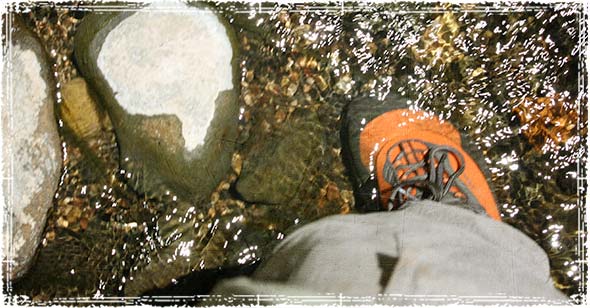
Train Your Feet for the Hike:
Don’t underestimate the importance of conditioning your feet for hiking with a heavy pack, especially if you’re new to hiking. Before setting out, start taking short hikes, gradually increasing the weight in your pack until it is fully loaded.
The Right Fit:
Your boots or hiking shoes are probably the most important part of keeping your feet feeling good. Hiking socks are often thicker than normal socks; so before trying on new boots at the store, make sure that you’re wearing the same socks that you’ll be wearing out on the trail. A good fit is essential, and should never be overlooked.
Break In Your Boots:
Don’t hit the trail with brand new boots. Wear them around the office, the store, and around the house for a few days to make sure they have time to stretch and soften up.
Hiking Socks:
Put Down the Cotton! Moisture-wicking wool or synthetic hiking socks can help your feet stay cool and dry out on the trail. Wearing the wrong socks can make things miserable and can increase your chances of getting painful blisters.
Manage those Blisters:
The moment you feel a blister coming to the surface, STOP! Now is the time to fix the problem. Check out our tips for preventing blisters.
Keep Them Clean:
Many hikers neglect their feet. Take the time to massage, air out, and wash your feet throughout the day. And don’t forget to trim those nail.
Rest:
Take it easy! If your feet feel tired or start to hurt, find a cool place to sit down and rest. When you stop for the night, a cool pair of sandals can help keep your feet cool and aired out.



During the summer I sometimes change my socks out 3 timees per day. Of course – I am wearing cotton sport socks – so that is probally part of the reasoning. But putting fresh socks on really makes my piggies feel good.
Rourke
It is important when trying hiking or climbing shoes on, to wear them for at least 15 minutes. This ensures that the leather is warmed up. Remember to walk around during this time. While most stores will not let you leave the premises, you should have enough room to flex the shoe in different positions that simulate the terrain that you will be on. If a store won’t allow you to do this, then they are not the store you want to buy from. A tip from an old Uncle Eyeballs Mountain Traveler’s Emporium employee.
To echo what Rourke said, changing socks at frequent intervals can save your feet. Some of my favorite backpacking trails in north Georgia incorporate frequent river crossing, and the dampness of wet shoes and socks can soften your feet and cause blisters quicker. I like to change my socks and tie my wet ones on the outside of my pack to air dry as I hike.
Over the years I have found the absolute best way to avoid that cold clammy feeling you all have is by first putting on a pair of nylon or silk dress socks followed by your boot socks. This serves three functions. 1st is it provides another albeit small air space for insulation, but also a barrier from moisture. Nylon does not absorb moisture but sheds it to the outer sock away from your skin. Lastly the nylon is slippery. It protects your skin from the rubbing of the outer sock which causes blisters… Try it. I works. I learned this from having cold feet in the Army.
The same applies to gloves. Those super warm gloves SUCK! quickly your hands will sweat and become clammy and cold. Then when you take them off the lining wants to turn inside out and you all know what a bitch it is to put it back. Choose a glove with a nylon liner or invest in a set of silk glove liners from Cabelas. Silk liners make a huge difference when it comes to keeping warm dry fingers..
holding your feet over campfire smoke will help illiminate foot fungus.
Simple! Always have a liner support sock of light wool or simple nilone under your hiking socks. This is the Only way too stop friction that Will the blisters on your foots.
Never have cotton socks Only wool and you have happy feet with 2 pare of socks Only. And when you need 2 Clean them simpy take some hair shampoo and some water 2 Clean by hand.