
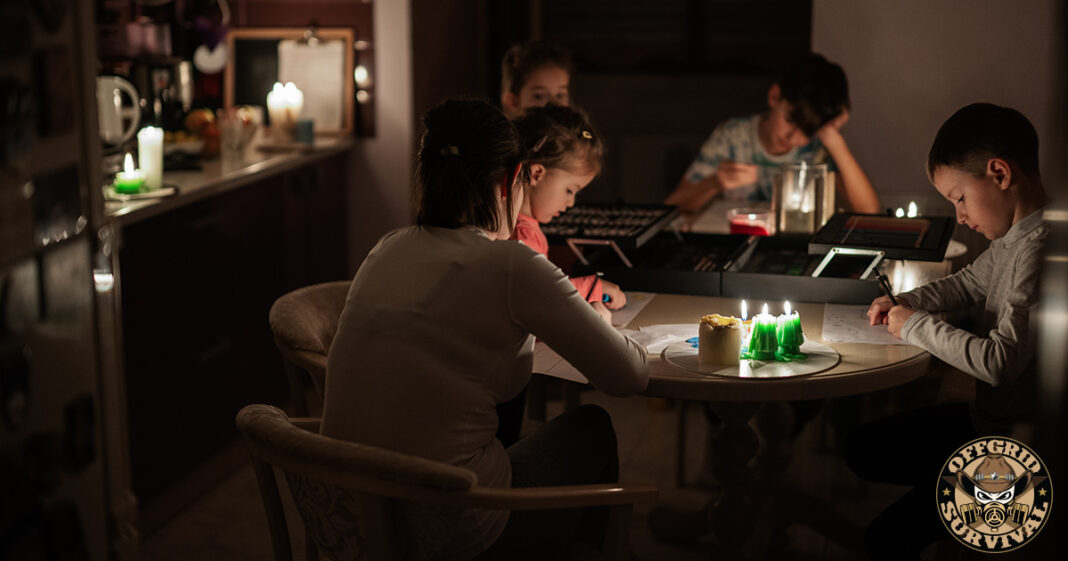
The power’s out, the storm’s still rattling the windows, and you’re standing in front of the fridge wondering if that pound of ground beef is a meal or a trip to the ER. It’s one of the most common questions we get after every major outage — ice storms, hurricanes, grid failures, doesn’t matter. People don’t know what’s safe, what’s a gamble, and what needs to go straight in the trash.
Here’s the short version: your fridge buys you 4 hours. Your freezer buys you 24–48 hours. After that, the clock isn’t on your side anymore.
The rest of this guide breaks down exactly why those numbers hold, how to stretch them, and how to make food-by-food calls instead of guessing.
The 4-Hour Rule (Refrigerator)
A closed refrigerator holds a safe temperature — 40°F or below — for about 4 hours once the power cuts out. That number doesn’t change much whether you’ve got a half-empty fridge or one stuffed to the gills, because refrigerators aren’t designed to hold cold the way freezers are. There’s no mass of frozen food acting as thermal ballast — just air, and air loses cold fast.
Every time you open the door, you’re spending down that 4-hour budget faster. Treat the outage like a cooler: grab what you need in one trip, and keep the door shut the rest of the time.
Past the 4-hour mark, perishables — meat, poultry, fish, dairy, eggs, leftovers, cut produce — move into the danger zone. Bacteria like Salmonella and Listeria don’t change the color, smell, or texture of food in any way you can detect, which is the whole reason “it looks fine” isn’t a safety test. When in doubt, throw it out isn’t a slogan, it’s the only rule that actually protects you here.
The 24–48 Hour Rule (Freezer)
Freezers are a different story, because frozen food is its own insulation. A full freezer holds a safe temperature for about 48 hours. A half-full freezer holds for about 24 hours. The fuller the freezer, the longer it survives — solid blocks of frozen food melt much more slowly than air-cooled space.
This is also why we tell people to keep freezers packed even when they’re not prepping for a storm. Pack the gaps with water. Fill empty space with plastic jugs of water (leave room — water expands when it freezes) or bags of ice. It costs nothing, it extends your safe window by a full day in some cases, and once it thaws it becomes drinking water — a real asset if the outage is tied to a wider water-system failure.
Don’t open the freezer to check on things. Every open-and-close cycle dumps cold air and pulls in warm air, and you can’t get that cold back without power. If you want to track what’s happening inside without opening the door, the dollar-store ice cube trick works: freeze a cup of water, drop a coin on top once it’s solid, and leave it in the freezer. If you come back and the coin has sunk, you know the freezer fully thawed and refroze at some point — which means everything in it needs to be evaluated for safety, not just eyeballed.
Do the Math Before You Trust “It’s Probably Fine”
People consistently underestimate how fast freezers warm once that ice mass is gone. Once a freezer is opened repeatedly or the door doesn’t seal, the safe window shrinks fast — sometimes to a fraction of the 24-48 hour range. If you don’t know exactly when the power went out, or you’ve been in and out of the freezer multiple times, don’t assume you’re still inside the safe window. Check for ice crystals and temperature, not vibes.
Buy an Appliance Thermometer — It’s the Cheapest Insurance You’ll Ever Own
This is the single biggest gap in most people’s outage prep, and it costs about $8. An appliance thermometer left inside your fridge and freezer year-round tells you the actual temperature the moment power comes back — no guessing, no math based on “the storm started around 6.”
- Refrigerator: should read 40°F or below.
- Freezer: should read 0°F or below.
Once a thermometer shows your fridge above 40°F, or your freezer above that line for an extended stretch, that’s your answer. No detective work required. At $8–15 for a basic dial model, this is one of the best returns on investment in your entire kitchen.
How to Stretch Your Window Before and During an Outage
If you’ve got any warning at all — a storm forecast, a planned utility shutoff, rolling blackout notices — these moves buy real time:
Drop the temperature first. Turn your fridge and freezer down to their coldest settings a few hours before the outage hits. Colder food takes longer to climb into the danger zone once the cooling stops.
Group food together. Mass holds cold better than scattered single items. Cluster freezer items into a dense block rather than spreading them across shelves.
Freeze what you can spare. Milk, fresh meat, leftovers you’re not using today — move them to the freezer ahead of time. You’re trading a 4-hour clock for a 24-48 hour one.
Have a cooler staged and ready. Once you’re past the 4-hour refrigerator mark, or it’s clear the outage will run long, transfer perishables into a cooler packed with ice or frozen gel packs. A well-packed cooler with enough ice can hold safe temperatures for days, far outlasting an unpowered fridge.
Know where to get dry ice before you need it. Dry ice is the heavy-duty option for extending a freezer’s safe window during a multi-day outage, and it’s far more effective than regular ice for this purpose because it sublimates at -109°F instead of melting at 32°F. Use 2.5–3 lbs of dry ice per cubic foot of freezer space — that works out to roughly 25 lbs for a 10 cubic foot freezer, enough to hold it for about two days. A few rules that matter:
- Never handle dry ice with bare hands — it causes burns instantly.
- Don’t seal it in an airtight container or cooler with the latch locked; the gas needs somewhere to vent, or pressure builds dangerously.
- Crack a window if you’re using dry ice indoors. Carbon dioxide is heavier than air and pools low, and a closed room is not where you want it accumulating.
Generators: The Real Way to Solve This, and the Mistakes That Get People Killed
If you live somewhere that loses power regularly — storm-prone coastlines, rural lines, wildfire-adjacent grids — a generator is the actual fix, not a workaround. You don’t need to run it 24/7. Run the generator a few hours at a time, drop the fridge and freezer to their coldest settings, then shut it down and let the cold coast. Cycling power like this stretches a tank of gas across days instead of hours.
A few non-negotiables if you go this route:
- Never run a generator indoors, in a garage, or near open windows. Carbon monoxide from generator exhaust kills more people after disasters than the disasters themselves in some events. Run it outside, well away from the house, pointed away from doors and windows.
- Use a transfer switch, not a extension cord through a window. Backfeeding power into your home’s wiring without a transfer switch can electrocute utility workers repairing the line outside — it’s not just a code violation, it’s genuinely dangerous to people you’ll never see.
- Size it for what actually matters. A fridge and freezer combined typically draw less than most people assume — a mid-size generator can run both along with a few lights and a phone charger without issue. You don’t need a whole-house unit just to save your food.
If you don’t have a generator yet and you’re shopping for one, that’s a separate decision with its own tradeoffs in fuel type, run time, and noise — worth its own research before you buy.
The Food-by-Food Breakdown: What to Keep, What to Toss
Once the clock has run out — 4 hours for the fridge, 24-48 for the freezer — go through what’s left item by item. Don’t trust smell or appearance as your test; some of the most dangerous bacteria produce zero detectable warning signs.

Refrigerator: Held Above 40°F for More Than 2 Hours
| Food | Status |
|---|---|
| Raw or cooked meat, poultry, fish, seafood | Discard |
| Thawing meat or poultry | Discard |
| Egg, chicken, tuna, or shrimp salad | Discard |
| Lunchmeat, hot dogs, bacon, sausage | Discard |
| Gravy, stuffing, broth | Discard |
| Soft cheeses (brie, cottage, cream, mozzarella, ricotta) | Discard |
| Hard cheeses (cheddar, Swiss, parmesan, provolone) | Safe |
| Milk, cream, sour cream, yogurt, eggnog | Discard |
| Butter, margarine | Safe |
| Fresh eggs, egg dishes, custards | Discard |
| Casseroles, soups, stews | Discard |
| Cut fresh fruit | Discard |
| Canned or jarred fruit, opened | Safe |
| Mayonnaise, tartar sauce (opened) | Discard if above 50°F for 8+ hrs |
| Peanut butter | Safe |
| Ketchup, mustard, pickles, jelly, olives | Safe |
| Bread, rolls, tortillas, muffins | Safe |
| Cooked pasta, rice, potatoes | Discard |
| Fresh vegetables, whole | Safe |
| Pre-cut or pre-washed greens | Discard |
| Vegetables, cooked | Discard |
Freezer: Thawed and Held Above 40°F for 2+ Hours
| Food | Still has ice crystals | Fully thawed |
|---|---|---|
| Beef, pork, lamb, ground meats | Refreeze | Discard |
| Poultry | Refreeze | Discard |
| Fish, shellfish | Refreeze (texture loss) | Discard |
| Casseroles, soups, stews | Refreeze | Discard |
| Milk | Refreeze | Discard |
| Hard cheese | Refreeze | Refreeze |
| Ice cream, frozen yogurt | Discard | Discard |
| Juices | Refreeze | Refreeze* |
| Bread, rolls, plain cakes | Refreeze | Refreeze |
| Pies, pastries with custard | Refreeze | Discard |
| Flour, cornmeal, nuts | Refreeze | Refreeze |
*Discard fruit/vegetable juices that develop mold, a yeasty smell, or sliminess after refreezing.
The pattern underneath this whole chart: anything that depends on refrigeration to stay below the danger zone for bacterial growth gets discarded once it’s spent too long warm. Anything shelf-stable or low-moisture survives. Once you internalize that logic, you don’t need to memorize the chart — you can make the call on items that aren’t listed.
What to Eat Instead of Gambling on the Fridge
The smartest move during a multi-day outage isn’t trying to save everything in your fridge — it’s not needing to. Build your short-term emergency food around things that never depended on power in the first place: canned goods, dried staples, shelf-stable meals, and anything that doesn’t require refrigeration or extensive cooking.
Once the outage starts, grab a cooler and your frozen water jugs and pull out only what you’ll actually eat in the next stretch — this keeps you from repeatedly opening the fridge or freezer to “just check.” Pair that with a way to cook off-grid — a propane camp stove, a rocket stove, or a grill — and you’re not dependent on the fridge holding out at all.
Frequently Asked Questions
How long is food safe in the fridge without power? About 4 hours, as long as the door stays closed. After that, perishables like meat, dairy, and leftovers need to be discarded even if they look and smell normal.
Can I refreeze food that thawed during an outage? Yes, but only if it still contains ice crystals or reads 40°F or below on a food thermometer. Quality may suffer, but it’s safe. Fully thawed food that’s been above 40°F for more than 2 hours should be discarded, not refrozen.
How long does a freezer stay cold without power? About 48 hours if full, 24 hours if half full. A chest freezer typically holds longer than an upright because cold air sinks and stays put when you open it.
Is it safe to eat food that was in a cooler with ice during the outage? Yes, as long as the food stayed at 40°F or below the entire time. Use a food thermometer to check rather than guessing — a cooler that’s been opened repeatedly may not be holding temperature as well as you think.
Does the freezer compartment inside a fridge work the same as a standalone freezer? Roughly, but it’s usually less insulated and opened more often, so lean toward the shorter end of the safe window for fridge-top or bottom freezer compartments.
A thermometer, a packed freezer, and a cooler staged before the storm hits will get you through almost any outage without losing a single meal — or risking one.





We now have a generator and the plan is to keep the fridge and freezer running with it. You don’t have to keep them running constantly. We plan to set both to their lowest temperature and run the generator every few hours to keep things cold. Obviously, we can not do this forever, so if it looks like it is a long term outage we will start consuming what is in them first and save our emergency supplies for later. Prior to getting a generator, if we had warning that a bad storm was coming, we would turn the temps down to their lowest setting and just not open the doors while the power was out. We also took extra frozen water jugs from the freezer and put them in the fridge.
Being a hunter I learned a little trick to keep my game from getting freezer burned that also happens to work real nice for preserving the meat when the power goes out. I take my pheasants and ducks (skinned not plucked because I hate dealing with feathers)and take an old cardboard 1/2 gallon milk container and hang the bird in the container then fill it with water so the entire bird is submerged and drop it into the freezer. Then I can date the carton close it up. None of the meat is exposed outside the block which eliminates freezer burn and will also help keep the rest of the goods in the freezer cold since they are blocks of ice. In an emergency situation that block of ice that it is encased in can also supplement your soup base, drop the block into a pot of water and start cooking. Not long ago I was cleaning out the chest freezer and found a carton that had a pheasant that was 5 years old in it. I was curious and thawed it out. I was stunned that the meat still seemed just like it was before it froze so I cooked it up and it was still amazing and I experienced no ill effects either.
one way to keep your meat safe is to dry it an salt it. have a jerky bonanza!
Why would you throw the eggs? If the shell’s intact, they’ll keep just fine for at least a week, usually longer.
Aside from jerking or salting, one could can the thawing meat. Takes a while, but once you’re done, you can eat it out of the jar without further preparation. Plus, the flavor is great (with lesser amounts of spices used). Toss some of your excess, perishable veggies in with the meat when you can it and you’ve a two-fer.
While yes, we have freezers and an emergency generator for them, canning our meat as time allows helps with not worrying about freezer burn and allows us to have “ready to eat meat”.
One of the best ideas I have seen is using a temperature controller to turn a small chest freezer into a refrigerator. The superior insulation of a chest freezer combined with a higher temperature results in very low power use. In fact, about 1/10th of what your normal refrigerator uses. This means you can refrigerate your food with just a small solar panel or very little generator run time. Youtube has some videos on this subject.
Eggs coated in mineral oil will keep for quite a while.
Question? What about feta, And other goat cheeses?
Man, just looking at some of these posts reminds of how much I still need to learn.
About food, I am always the “worst case scenario” kind of prepper so most of the time the food I have stored always includes stuff that can go without refrigeration for 1-2 months like:
– potaotoes/yams (great stowed with apples or onions)
– onions (cooked onions keep amazingly long)
– winter squash and garlic
Again, thanks for the great info