A year’s supply of commercial survival food can run you thousands of dollars — for one person. Multiply that across a family of four and most people would be hard-pressed to find that kind of money just sitting around the house.
We hear from readers about this constantly. For a lot of folks, the sticker shock on commercial survival buckets is the single thing that stops them from prepping at all. They see a $2,000 price tag for a year of freeze-dried meals and just… give up before they start.
Here’s the truth: you don’t need commercial survival food to be prepared. Everything you need is already sitting on the shelves of your local grocery store — you just need to know what to look for, and you need a plan for getting there before the shelves go empty.
That second part matters more than people think. Most grocery stores carry no more than a three-day supply of inventory on hand at any given time. No warehouse out back, no reserve pallets — just-in-time delivery trucks keep the shelves stocked, and that system breaks fast. A bad hurricane forecast, a panic-buying news cycle, even a regional trucking disruption, and the bread aisle is bare within hours. That’s not a hypothetical. It’s happened in every major weather event of the last decade.
Building Your Stockpile Without Going Broke
The good news is that building a real food reserve doesn’t require a survivalist budget. It requires a system.
- Buy foods with a long shelf life. Hard grains, dry beans, rice, and canned goods can sit for years — some for over a decade — if stored properly. We’ve put together a full breakdown of 60+ long-term survival foods you can buy at a regular grocery store, broken down by category and shelf life, so you’re not guessing.
- Buy what you already eat. This is the single most important rule on this list, and it’s the one most people ignore. A disaster is not the time to discover your kid is allergic to a freeze-dried lasagna you’ve never tried. Buy a couple extra cans of what’s already in your pantry every time you shop, and rotate it.
- Stock up around the holidays. Thanksgiving and the weeks around it are some of the best times of year to stock a freezer. A 20-lb turkey for under $5 isn’t unusual during a holiday sale, and for around $100 you can fill a chest freezer with enough meat to carry a family through a job loss or a temporary income hit.
- Bulk beans and rice. This combination alone can sustain a person for a remarkably long time. For under a hundred dollars you can build a stockpile that lasts for months, and both store for years if kept sealed, cool, and away from oxygen.
Why Most People Fuck this Up
The survival food industry wants you to believe preparedness means a $2,000 bucket of mystery meals with a 25-year shelf life. We’ve tested a lot of that stuff. Some of it’s fine. A lot of it tastes like wet cardboard, and none of it teaches you a single skill you’ll actually need when it matters.
Building your own stockpile from the grocery store does two things the commercial buckets don’t: it saves you money, and it forces you to learn how to cook from real ingredients — something an alarming number of people genuinely can’t do anymore. Hard wheat, rice, dried beans, and basic flour aren’t useful to you in a crisis if you’ve never cooked with them. Learn now, while it’s a weekend project and not a survival situation.
For the foundational pantry items — the grains, beans, oils, and shelf-stable staples that form the base of nearly every long-term food storage plan — we’ve laid out exact shelf-life numbers (some of these last 10-12 years sealed properly) in our complete grocery store survival food guide. It’s worth a full read before you start buying in bulk, because knowing the difference between an 8-year shelf life and a 2-year shelf life changes how you organize your rotation.
Don’t Forget Water — It’s the Half of This Equation People Skip
You can survive weeks without food. You won’t make it more than a few days without water, and yet water storage is the thing we see preppers neglect more than almost anything else.
The baseline number to plan around is one gallon of person per day, for drinking and basic sanitation combined — and that number needs to go up if you live somewhere hot and dry, or if anyone in your household is pregnant, nursing, elderly, or managing a medical condition. A short-term, 7-day emergency means you need at least 7 gallons per person, minimum, before you’ve covered anything else.
For a real disaster — the kind that drags on past two weeks — bottled water from the store isn’t going to cut it. You need an actual system: 55-gallon food-grade barrels, rain catchment off your roof, or at minimum a rotation of refilled containers stored somewhere cool and dark. We cover the full breakdown of containers, storage timelines, and what to avoid (don’t store water on bare concrete, and skip old milk jugs) in our guide to long-term emergency water storage.
And water storage is only half the job — you also need a way to filter and purify whatever you find once your stored supply runs low. A good filter is genuinely one of the highest-value pieces of gear you can own, full stop.
Having Food in a Survival Situation Means Learning to Be Self-Sufficient
Stockpiling is step one. Step two — the part people skip — is learning how to find, grow, capture, and cook food without relying on a pantry at all.
Hunting: At minimum, pick up a .22 rifle. They’re cheap, ammo is cheap and easy to stockpile in bulk, and a basic level of competence with one gives you a real fallback for small game that a lot of other options don’t.
Fishing: If you live anywhere near water, a rod and a basic tackle box is one of the best dollar-for-dollar investments in this entire list. For under $50 you can own enough gear to put food on the table indefinitely, and unlike a stockpile, it never runs out.
Gardening: Growing your own food is the closest thing to a permanent solution on this list, but it has a real learning curve and a real timeline — expect months, not days, before a garden is producing anything you can actually eat. Don’t wait until you need it to figure out how to do it. If you’re short on yard space, our guide to container gardening for a survival garden covers how to grow real food even from an apartment balcony.
Bartering: In a long-term breakdown, food and supplies become currency. Items like salt, alcohol, and canned goods hold trade value the dollar won’t. We go deeper on what’s actually worth stockpiling for trade in our SHTF bartering guide.
When Commercial Survival Food Actually Makes Sense
We’re not against commercial survival food entirely — there are real scenarios where it’s worth having some on hand, particularly for a fast bug-out situation where weight and shelf life matter more than taste or cost. If you want to know which brands are actually worth the money (and which ones we’d skip), we broke it down in our guide to the best emergency food supplies on the market, covering everything from 72-hour kits to full one-year supplies.
The honest answer is that a smart food storage plan uses both: a DIY grocery store stockpile as your foundation, with a small amount of commercial freeze-dried or bar-style food set aside specifically for bugging out, when you need calories that weigh almost nothing and require zero prep.
Start Small, Start Now
A four-figure bucket of mystery food isn’t what makes you prepared. A rotation system is. Knowing which foods actually last is. A real water plan — one most people skip entirely — is. So is at least one non-grocery-store skill, hunting, fishing, growing, that doesn’t run out when the stockpile does.
Buy a few extra cans every trip to the store. Learn to cook the beans and rice you’re storing before you need to live on them. Treat your water plan with the same seriousness as your food plan, because that’s the part that gets neglected first and costs the most when it does.
For more on building out the rest of your preparedness plan, check out our guides on food self-sufficiency and off-grid living, our full Food & Water resource hub, and our breakdown of which liquors are worth stockpiling for trade and medicinal use.

Have a tip that’s worked for your own food storage setup? Drop it in the comments below — some of the best advice on this page over the years has come from readers, not us.


You can also get into canning and dehydrating too. They do take some time and a bit of effort to begin with but will pay off over the long haul AND likely save money as well.
do not forget if your canning using jars ,you might want to stock up on the sealable lids.
just a thought,
I would also cook a few meals for practice. What’s the use of having all those beans if you do know how to cook them.(tip on the beans soak them overnight, it will save cooking time/and fuel, goes great with some chopped up beef jerky). Print out recipes and make notes for subitutes that you can use. And spices can made a big difference between a meal and grub, stock up on those to went they are on sale too…you could always trade the extra spices.
Also…learn techniques for reducing fuel use, and get high-efficiency devices like a rocket stove that can cook with little fuel and/or alternate fuel. Cooler corn and cooler beans require less fuel to prepare for example.
TwoCor8b11 -please what do you mean by theses terms cooler corn and cooler beans.never heard that term before.
Great post!
I agree with your comments on the “survival food.”
More and more, survival food is becoming a big commercial business. This means that it is DEFINITELY NOT the cheapest route.
Plus, it’s even more expensive because you are buying a year’s worth of stuff all at once.
If you are stocking up little by little, you can easily purchase a few extra cans and/or non-perishables a little at a time.
And then when you can more easily and naturally rotate your storage in and out (i.e. if you have a box of food that expires every month, it’s a lot easier than 9 buckets that all expire at the exact same time).
I was raised a city kid, but I’m becoming more and more keenly aware of the need to know how to hunt and fish–for emergency food during disasters, as well as cheaper food in the meantime.
Finally–GARDENING. Gardening is a great way to eat cheaper produce. Produce can be expensive, which is a bummer, because it deters a lot of people from eating healthy food. Gardening is a good way to combat that. And Millenium Fly has the right idea with canning. You can grow all summer long, can your crops and then eat them until spring!
Party on.
One thing I have learned, when stocking for SHTF situation buy and or package your food in one meal quantities, and learn to cook to where there is no left overs. By doing this you won’t have to store left overs, less food goes to waste, and as you add to your supply you will have a better idea of just how fast or slow you and your family go through particular items.
All good ideas but growing a garden can mean stocking up on larger, better quality foods in huge volumes and made to your liking by growing what you love to eat. Don’t wait until you HAVE to know how to grow some food or your crop could turn into a miserable failure.
One of my favorite tips to beginner gardeners is grow some potatoes in a pot or barrel by placing the “seed” around the bottom on 8″ of sand or soil and add mulch as the plant grows. Adding some wood ash layers helps make larger potatoes. Kennebec are good producers. People could live on good potatoes.
also, if you happen to spot the wire racks, that store cans, rolling them out one at a time (oldest first) it would be useful if your stockpiling by buying a few cans at a time, by allowing you to easily rotate and consume the oldest first, extending your expiration time.
Also recommend, dried pasta’s, and if you have a garden, canning is a great what to be prepared, and at the least, save a little shopping money that can be spent to buy addition food stuffs.
if you have an an extra freezer, many stores have a buy one get on offer on meats and other items that have been on the shelves for a while, but not yet expired, stocking up a little and cooking the older items, as you buy new ones, will do the same, buy extra time with more stuff in the freezer.
Fishing, hunting, either by yourself, or when other go and have extra, stocking the freezer before needed is also a way to go, along with stocking up on seeds for gardening,
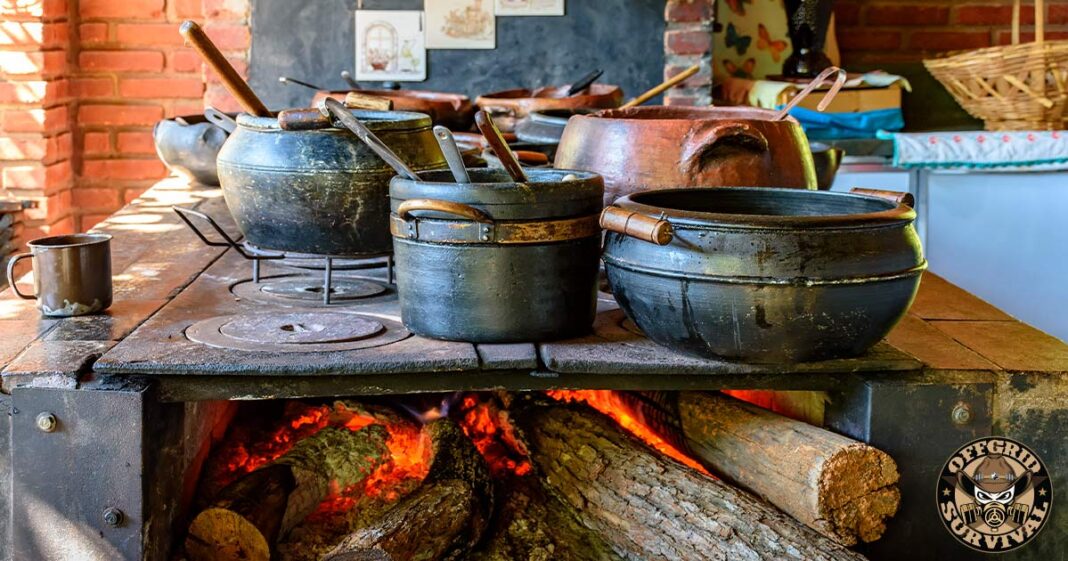
I am 65 yrs. old, have lived in the country all of my life, I would just like to make a couple of comments. Because the electric grid will probably go down when the shtf one might want to invest in a good camping stove and a supply of fuel also invest in a dutch oven, pots and pans that can be used over an open fire and learn how to use them, all the food in the world will do you no good if you can’t cook it. Along the same lines, can and/or dehydrate your food, freezing it is great but if the electric goes down you will have a freezer full of spoiled food.
Gardening is great for making cheap easy food and for when your surviving, but gardens take a while to grow. What will you eat while waiting for that food? I for one would definetly would be hunting, fishing, and one that most people miss is scavenging or gathering. Look for bird eggs or other local plants. Learn to set traps…A LOT!!! And learn your local plants, which to eat and which not to eat.
Another tip would be to get a 3-5000 watt genset or if u can find a diesel 10k set, used, cheap…jump on it. Then start stockpiling fuel with an additive that will keep it for years. YES, U’ll need the containers as well.
If u use ur genset only when needed it could last for years.
Growing ur own food is a very smart project. U can start anytime even indoors in the winter. Try to hide ur garden from prying eyes so as not to encourage poaching ur stuff. Bye some “Danger Poison” signs to post near the garden…this could slow’m down a bit.
And YES, learn to fish dammit. It’s relatively easy to do. Get the equipment and learn!!!!
Gotta go now……..
A human can die just hours after dehydration and most food sources could be wiped out very quickly if you are not prepared. Check labels on cans before you buy and then periodically after. Freeze dried foods do work extremely well. Dried beans can work very well also, as long as you have a heat source.
This is a great post. I think so many of us are so used to living only for the moment that the thought of not being able to buy food for a few days can cause panic.
We need to change our lifestyle especially in the area of buying groceries. It takes very minimal effort and money to start stockpiling food on a tight budget. Simply buy one or two more of whatever is on sale, and stick it on the shelf. Keep rotating your foods as they accumulate and that way everything will stay dated and fine to use.
For most of us, when the SHTF, we will be stuck at home until a plan emerges, so having a good supply of food on hand will be extremely valuable.
Be Prepared!
I upgraded my dehydrator, and really love it. I love how you can condense your food down into something much smaller when you take the water out of it. I have done a lot of canning, but I find that the jars take up a lot of space. I highly recommend and excalibur dehydrator if you can find one that is reasonably priced.
Dontvforget your oils, veggie or whatever a little oil can go along way and open yourself to many many new recipes in my family we have always saved our bacon grease and we use it in a lot of stuff green beans, popcorn, great to fry eggs in may also help with food fatigue and it’s free if u eat bacon and you can save now
If the shtf we will all suffer. Learning to live off the grid now would take some of the sting out of the bite. Get the Mylar bags and start prepping. Learn how to cook on an open fire. Practice making candles and soap and learn how to sew. Prices of food are creeping higher and higher. Closing our eyes to whats coming is foolish. We must prepare for ourselves and teach our children to do the same.
My suggestion; buy and learn to shoot a good-quality air rifle. It will be more than capable of killing small game animals and birds and can be a lifesaver in dire emergencies. A good supply of pellets can be bought for nearly nothing and is easier to carry or conceal than rounds for a powder burner.
Growing easily-stored items such as winter squash and pumpkins is also beneficial; they need only an area that stays cool without freezing to last all winter if you have the right varieties.
Set up a top-bar hive or two of honeybees; the honey can be used in so many ways, including bartering for other items. The wax can be used for candles, lube for hand loaded ammo or bartered to others for needed items. They also provide pollination services for your crops, although the resulting seeds may not grow true to type if you have more than one variety growing.
Just my thoughts on the situation.
It’s also a lot quieter than a powder burner! Won’t attract any unwanted attention!
Next time you have a holiday weekend or a few days off switch off ALL of your utilities and see how you get on. If you’re really brave pack your BOB and pitch your tent in the backyard. Try living rough NOW before you have no way back.
Then take stock of what worked and what didn’t. You’ll be surprised how much you learn about prepping from doing instead of just theorising.
When you can do it for a weekend, try it for a week. Then go camping for a fortnight with minimal food.
Start building your skills now. You’ll be glad you did.
And if nothing happens, you’ll have a kickarse time.
Amazing no one mentions solar cookers! They are easy & cheap to make and do a great job. Many styles & instructions are on the web.
I fully agree with you on this one. One can save many resources suring the summer, esp. here in Texas. A person needs more than one way to cook their food. Even if you have to use the manifold on your vechicle to warm up a can of beans.
Wild game isnt going to last long with 300 million people running around looking to eat them.
Austin is right – it takes a while to get that garden up and rolling so that no matter what day it is, something can always be harvested — I’m more than fortunate as gardening can be done 365 in my neck of the woods.
I’d say it takes at least 4 months before you can waltz out of the kitchen and grab a meal from the garden. That of course assumes there is no two-year drought or crop failure. Hmmmm. We all need a lot of freeze dried, beans, rice, canned goods and home canned veggies, meat and fish to get us through what is coming.
Another factor — gardening has a learning curve. It does require some luck — Living Under Correct Knowledge. Get some basic gardening books with lots of pictures to inspire and help you along. When the internet goes away we’ll all need our knowledge resources (books) close at hand.
Good luck prepping to one and all.
The Seed Lady
I live in a 2bed apt in the suburbs of Rhode Island…what is the best way to start prepping when you have no space for extra freezer, generator, etc? I love all the great ideas above but they seem suited for someone who lives in a rural area or has their own land. thanks
Hi sara, i live in RI as well. You will have to make due of the space you have or possibly get a storage unit close by.
There is maybe room under your beds to store stuff and in closets or bookshelves. I would get canned food easy to heat that needs little cooking, spam, chilis,fruits, soups etc. also you can dehydrate foods too. Get a little grill or camp stove and some canned propane. If you have any windows you can have window gardens, if you have a patio you can container garden?