
Originally published August 27, 2009
Updated July 31, 2026
By Robert Richardson
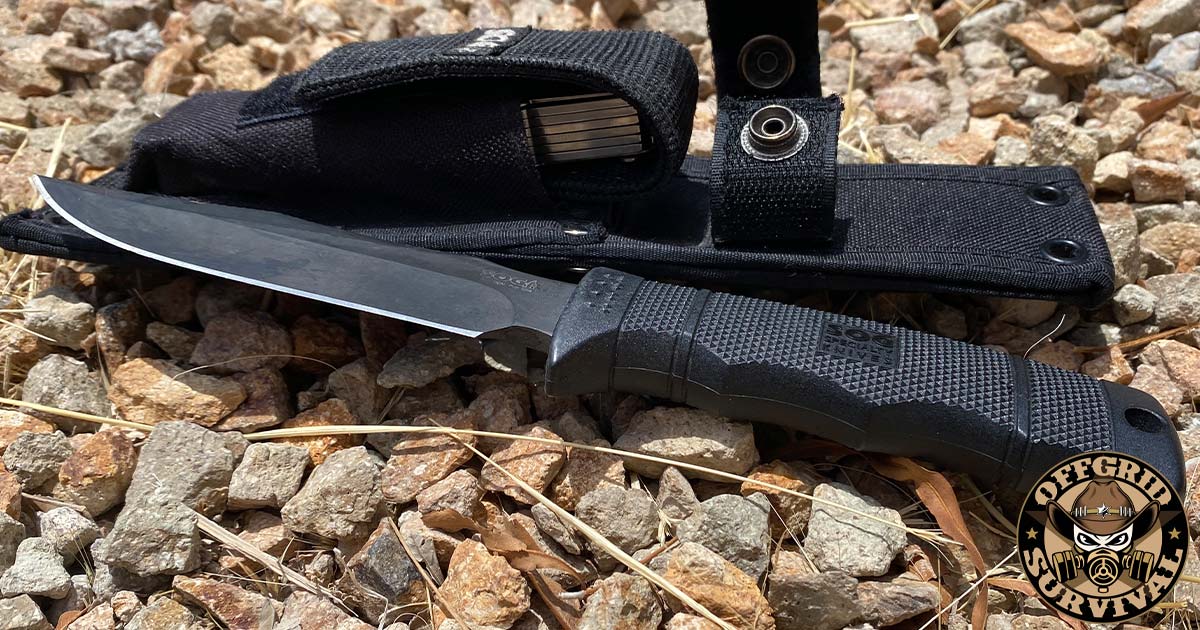
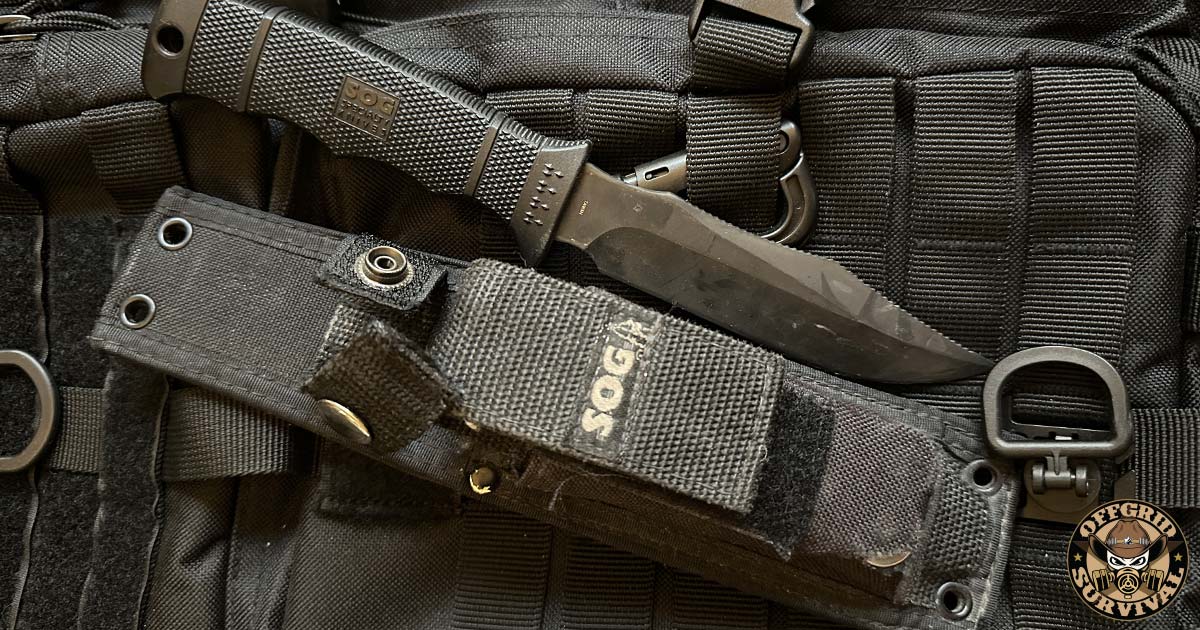
If I had to pick one knife to keep on me at all times, it would be the SOG Seal Pup Elite. It’s sharp — very sharp — and it holds an edge better than most knives anywhere near its price. The knife in these photos has been my everyday carry since 2009. Same knife. Seventeen years of hunting, fishing, shop work, camp work, and abuse that no reasonable person would call normal use, and I’ve never found a good enough reason to replace it.
That’s the short version. Here’s everything you need to know before you spend the money.
What It Costs and Which Version to Buy
SOG lists it at $119.95 on their own site. The Kydex-sheath version runs about five dollars more than the nylon.
For under a hundred bucks you’re getting a full-tang fixed blade with a lifetime warranty against defects. Put that next to what you’d spend on a decent pair of boots or a week of groceries and it stops being a hard decision. This is a knife you buy once and hand down.
There are two configurations to consider:
Buy the plain edge. Serrations chew through rope and webbing fast, and if you’re cutting seatbelts or climbing line for a living, get them. Everybody else is giving up close to two inches of usable cutting edge and buying a section of blade they can’t sharpen at home. Batoning, food prep, carving, skinning — all of it wants plain edge.
Seal Pup Elite Specs
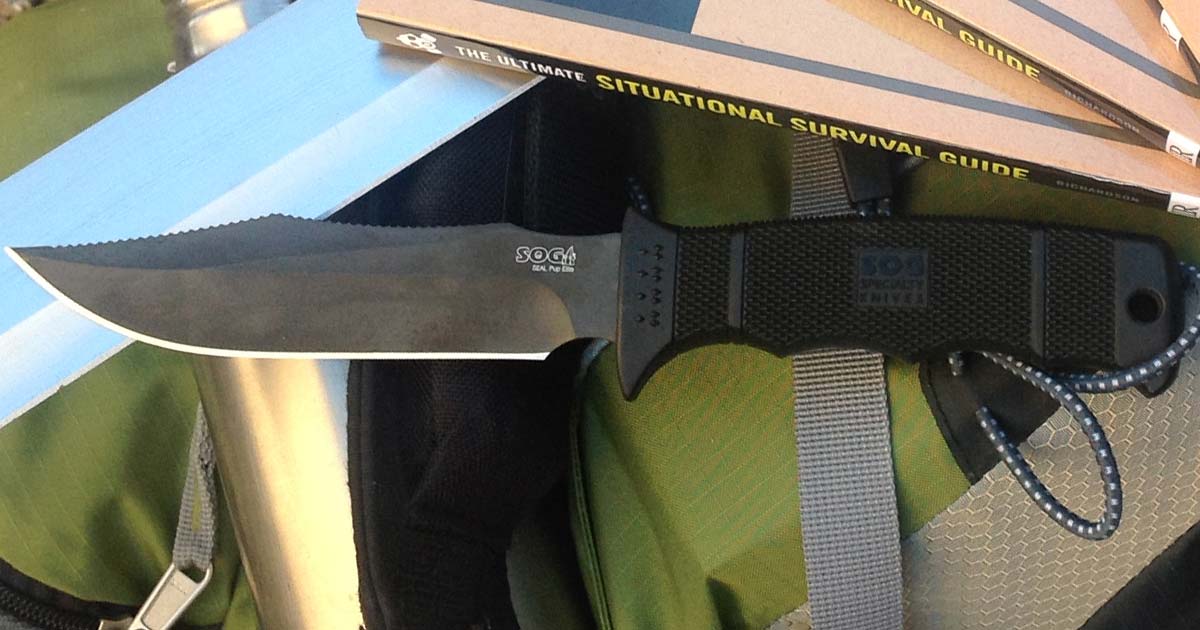
THE BLADE: The knife has a full-tang, 4.85-inch AUS-8 stainless steel blade, .185 inches thick, that’s undergone SOG’s proprietary cryogenic heat treatment process. SOG says this process strengthens the steel on an atomic level, increasing the blade’s durability and edge retention. After that treatment, the blade is coated in titanium nitride (TiNi), which adds corrosion resistance and cuts down on glare in the field.
Where AUS-8 actually sits, honestly: AUS-8 is a Japanese-made stainless steel, and it’s worth being straight about what it is and isn’t. AUS-8 is not considered a premium steel anymore, especially compared with newer steels such as MagnaCut and S35VN. It will not hold an edge as long as those steels, but it resists corrosion, is tough enough for hard field use and is easy to sharpen without specialized equipment. After more than 16 years with this knife, I have never felt that the steel prevented it from doing what I needed it to do.
THE SIZE: The overall length of the blade comes in at 4.85 inches, with the whole knife measuring 9.5 inches long. It weighs in at a comfortable 5.4 ounces, making it easy to carry for just about anyone.
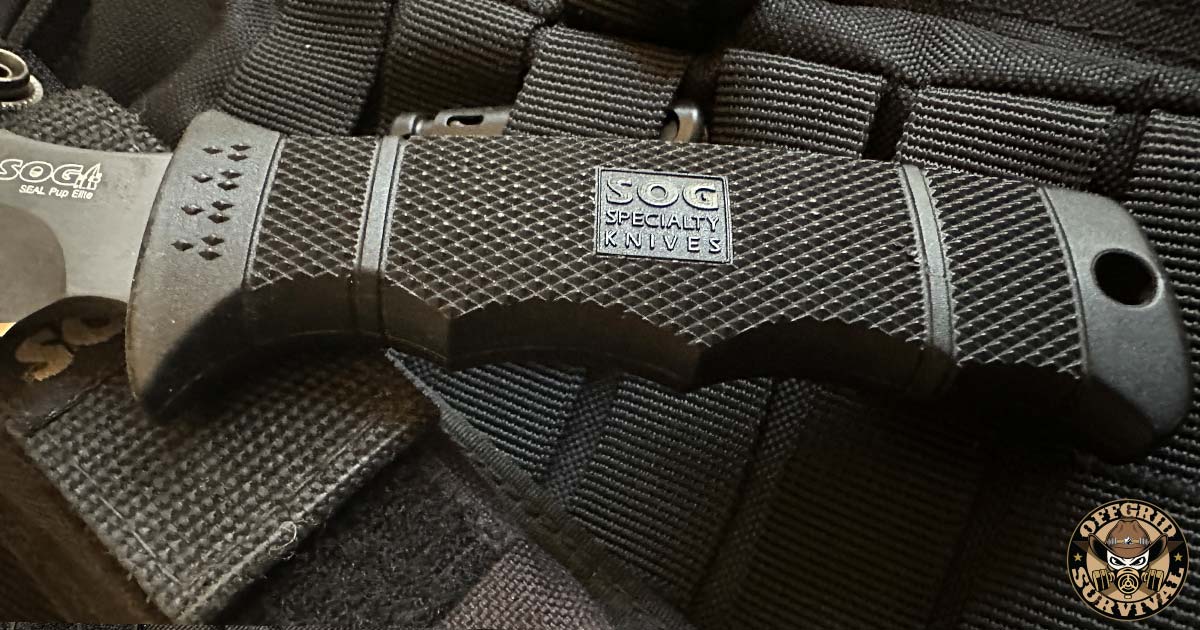
THE HANDLE is made with glass-reinforced Zytel (a nylon polymer), with added finger grooves to give it a better ergonomic feel. It’s very comfortable in the hand, and the design helps prevent fatigue and hot spots even after long periods of use. The textured scales make it extremely easy to grip, even in the water or during wet conditions. It’s my go-to knife when I’m out on the water because the grip is probably one of the best I’ve found when wet.
THE SHEATH: It may sound strange to get this excited about a knife sheath, but this one has earned it. I have worn through plenty of sheaths over the years, yet the original SOG sheath has held up better than almost all of them.
I first reviewed this knife back in 2009. The photos above and below were taken in 2026, after more than 16 years of carrying it just about everywhere. A small hole is finally starting to form in the pouch where I keep my multi-tool, but considering the amount of use and abuse this sheath has taken, that is pretty damn impressive.
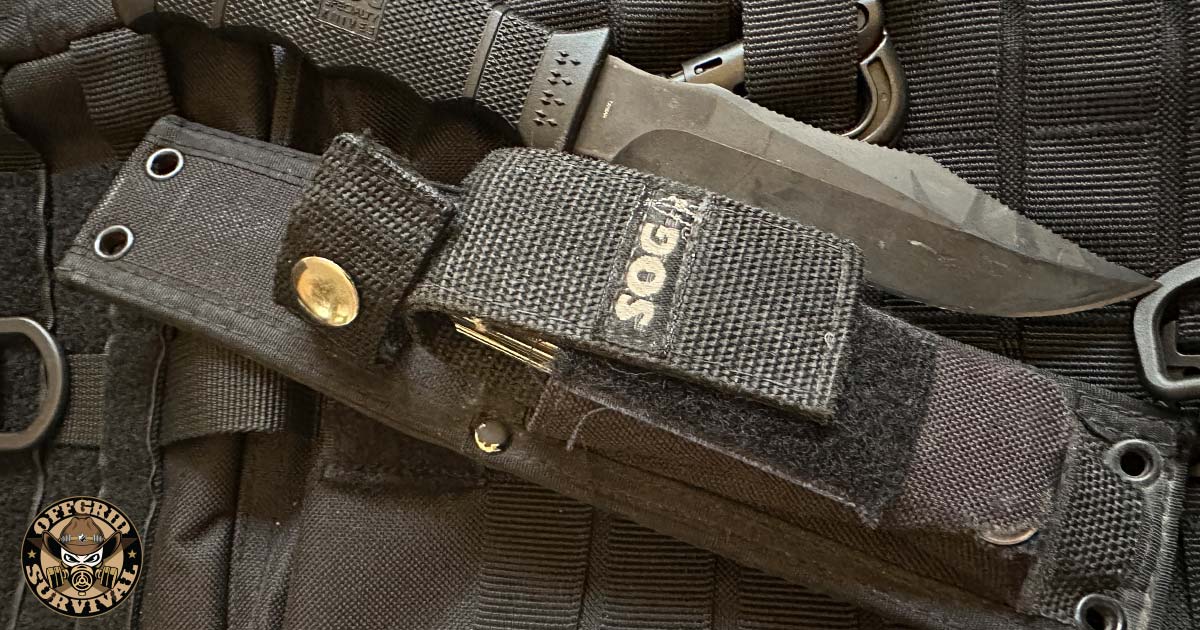
It’s made with reinforced nylon, with a Kydex insert that protects the blade and stops it from moving around inside the sheath. It also has a pocket large enough to hold a multi-tool and a small flashlight or lighter. A separate Kydex sheath version is also available if you’d rather skip the nylon entirely.
Where It’s Actually Made (And Why the “Made in China” Rumor Is Wrong)
This comes up in the comments on this review constantly, so it’s worth settling clearly: the Seal Pup Elite is made in Taiwan, not China. The original Seal Pup was produced in Seki, Japan, until around 2006; when SOG introduced the Elite version and expanded the Seal Pup line, production shifted to Taiwan, where it remains. SOG does manufacture some of its lower-priced “Fusion” line in China, and that’s likely where the confusion comes from — but the Seal Pup Elite itself has never been a China-made knife.
One update worth flagging since the original review: SOG was acquired by GSM Outdoors (which also owns Cold Steel and TruGlo, among others) in December 2021, and GSM Outdoors was itself acquired by Platinum Equity in 2024. SOG’s original Lynnwood, Washington facility closed as part of that transition. None of this changes where the Seal Pup Elite is manufactured, but it’s relevant if you’re weighing brand loyalty or company history into your buying decision — this isn’t the same small, founder-run SOG it was when this review was first written.
Is It Actually a “Navy SEAL” Knife?
SOG markets the Seal Pup line hard on its connection to Navy SEALs, and there’s real history behind that claim, even if it gets oversimplified in marketing copy. SOG’s original SEAL Knife 2000 went through the U.S. Navy’s 1992 SEAL knife trials, competing against more than a dozen other submitted designs in tests that included two-week saltwater immersion, blade toughness, edge retention, and prying and twisting limits — and it came out as one of the knives SEALs actually carried. The smaller Seal Pup line followed as a lighter, more packable version of that lineage.
What it isn’t is a single, standard-issue blade that every SEAL is required to carry. Modern Navy SEALs generally have latitude to choose their own personal knives, and individual operators carry a range of brands. So “designed with input from SEAL trials and carried by some SEALs” is accurate; “the official Navy SEAL knife” oversells it a bit. Worth knowing if part of what’s drawing you to this knife is the military pedigree.
How It Stacks Up Against the Usual Suspects
If you’re cross-shopping survival and combat knives, you’ll eventually land on a short list that includes the Ka-Bar USMC fighting knife, the Gerber LMF II, the Cold Steel SRK, and the Ontario Spec Plus SP2 (also sold as an Air Force survival knife clone). Here’s honestly where the Seal Pup Elite fits among them:
- Vs. the Ka-Bar USMC: The Ka-Bar is the classic — full carbon steel, made in the USA, and it’s earned its reputation over decades of military use. It needs more maintenance to avoid rust than the SOG’s stainless blade does, and some users have reported tang failure under serious abuse. The Seal Pup Elite trades a bit of that old-school toughness for a stainless blade that doesn’t need babying.
- Vs. the Gerber LMF II: The LMF II is widely regarded as a tougher beater knife with a hammer pommel and a built-in sharpener in the sheath, but it’s also bulkier and heavier. Several experienced users describe it as the toughest of this group for hard abuse, at the cost of finesse for finer cutting tasks.
- Vs. the Cold Steel SRK: The standard SRK uses SK-5 high-carbon steel and has a longer six-inch blade. It is larger, heavier and better suited to heavy chopping and rough work, while the Seal Pup Elite is easier to carry and requires less attention around moisture.
None of these is strictly “better” in every category — they trade off steel type, country of origin, weight, and price differently. The honest takeaway from people who’ve owned several of them: the Seal Pup Elite is a strong middle-ground choice — easier to maintain than the carbon-steel options, tougher than its size suggests, and priced below most of the premium offerings — without being the single best knife in any one category.
This Knife Has Held Up to Everything I’ve Thrown at It
- Cutting. Wood, meat, leather, rope, cardboard, hose, roofing felt, and a thousand things I’ve forgotten. It’s been my primary blade hunting and fishing and my go-to for cutting material down in the shop. Seventeen years in, it still takes an edge as well as it did new, with no fracturing and no chipping along the edge.
- Batoning. I’ve split more logs with this knife than I can count and it’s never chipped, cracked, or loosened at the tang. Every survival knife should survive batoning or there’s no point carrying it. But know the limit: with a 4.85-inch blade you’re realistically splitting rounds up to about 3.5 inches thick. Go bigger and the blade buries with no spine sticking out to strike, and now you’re just beating on a tool that can’t help you. Inside that size, this knife will split wood all day.
- Point work. Opening cans, notching wood, punching into logs to see if the tip would snap. It hasn’t. That said, it’s a clip point — thin, sharp, built to penetrate. It is not a pry bar. SOG’s own warranty language says prying can void your coverage and bent tips aren’t covered. Use a screwdriver.
- Salt water. I fish with this knife constantly and it’s always getting wet, and I’ve also tried the Salt water test when I forst got it and left it sitting in a bucket of salt water for weeks at a stretch with no rust and no pitting. That’s the chromium in the AUS-8 plus the TiNi coating doing their jobs. Wipe it and put a drop of oil on it after saltwater and you’ll never have a problem.
Sharpening and Upkeep
This is the easiest part of owning this knife.
AUS-8 at 58 HRC comes back with basic gear. A cheap two-sided stone, a ceramic rod, or a guided system all work fine — you don’t need diamond plates and you don’t need to be good at it. Keep it around 20 degrees per side. Shallower gives you a scary edge that rolls when you baton. Steeper costs you slicing performance you paid for. A few passes on a ceramic rod every couple of outings means you’ll almost never need to do a full sharpening.
After hard use, especially salt water, wipe the blade and oil the edge bevel. The coating protects the flats. Nothing protects the sharpened edge but you.
And if you’d rather not deal with any of it: SOG will sharpen your knife for free. You pay $10 shipping and handling and call their customer service for a return authorization number first. Genuine SOG blades only.
What This Knife Is Bad At
I like it enough to give you the honest list.
It’s not a chopper. Five ounces and under five inches of blade means you’re not felling anything, and if your plan involves processing serious firewood, carry a hatchet or something in the 9-to-10-inch class. It’s not a dedicated bushcraft carver either — a Mora Garberg’s scandi grind will out-carve it on feather sticks and fine woodwork all day long. Under sustained heavy cutting, AUS-8 goes dull faster than D2 or 1095, so you’ll be sharpening more often than the guy running an ESEE. The TiNi coating scuffs and goes blotchy with time. And it’s a molded scale over a full tang, so if you drop it hard enough, enough times, the handle can loosen — mine never has, but it’s a fair thing to keep an eye on.
The fair criticism from the D2 crowd is that for the same money you can get an American-made knife in harder steel that holds an edge longer. True. You’re also trading away toughness, corrosion resistance, and easy field sharpening to get it. On a knife I’m going to soak in salt water and beat through logs, I don’t want that trade.Why I Still Recommend the SOG Seal Pup Elite
Why I Still Recommend the SOG Seal Pup Elite
I have owned, carried and abused this knife for more than 16 years, so my recommendation is not based on a few backyard tests or a weekend camping trip. This is a knife that has been thrown in packs, exposed to bad weather, used around camp, carried on the road and put through more abuse than most knives ever see. After all that time, it is still one of the first knives I grab when I need something dependable.
- It takes a sharp edge and is easy to keep that way. The Seal Pup Elite was extremely sharp when I bought it, and the AUS-8 steel has been easy to maintain over the years. It may not hold an edge as long as some of the newer premium steels, but I can touch it up quickly without turning sharpening into a project.
- It is one of the most useful all-around knives I own. I have larger knives that are better for chopping, smaller knives that are easier to carry and more expensive knives made from newer steels. The Seal Pup Elite sits in the middle of all of them. It is large enough for real survival and camp work, but not so large that it becomes a pain to carry.
- It is light enough that I actually bring it with me. A heavy knife may look impressive, but it does not do much good sitting at home because you did not want the extra weight. The Seal Pup Elite is light enough to disappear on a belt or in a pack while still feeling like a serious fixed-blade knife when you need it.
- The sheath has proven itself. I have worn out and replaced sheaths on other knives, but the original nylon sheath that came with this one is still going after more than 16 years. It is finally starting to show some wear around the multitool pouch, but that is after years of being carried, dragged around and stuffed with extra gear. I keep a multitool, lighter and small flashlight in it, which turns the whole setup into a compact emergency kit instead of just a knife.
- The handle still gives me a solid grip. The glass-reinforced Zytel handle is not fancy, but it works. The texture and deep finger grooves give me a secure grip when my hands are wet, dirty or tired. I have always preferred the thicker handle on the Seal Pup Elite over the standard Seal Pup because it feels more substantial and gives me better control during harder use.
There are newer knives with better steel, heavier blades and more expensive materials, but that does not make the Seal Pup Elite obsolete. Mine has been with me for more than 16 years, has taken everything I have thrown at it and is still ready to go. That is why I continue to recommend it.
Where to get one: SOG Seal Pup Elite Knife with Kydex Sheath
Seventeen years, one knife, still the one on my belt. It’s under a hundred dollars, it’s covered for life against defects, and SOG will put a fresh edge on it for the cost of shipping. There isn’t much left to talk yourself out of.




here another thing, american made products ,the machinery to make them was almost certainly made in china.but i forgot about buck my dad owns one or two and he says there great.
Nico, if you do a double check, you will find not all Buck knives are being made in America. They are in fact farming out production as well to overseas plants. Sad but true.
I love SOG. I don’t buy any other knives if I can help it. They are a bit pricey but I’ve had my Sog twitch (fold knife) for many years and it’s still durable and good at whatever I throw at it.
I also bought the SOG Tactical Fusion Tomahawk. It’s great as a multi tool and clearing camps and doesn’t take up much room. Fun to throw too. I have not bought a SOG PUP yet. But definately plan too.
Great review.
Sounds like the knife to have – I believe we have at least one…
Just one little note —- its SEAL when refering to the Special Navy guys…..
BADASS! Wonderful blade. Mine was forged in Sekia, Japan so its doubly badass. SEAL approved so it will save ur live a few times over! Great for SEAR & E&E & a mean lil death dealer she is too! Only others I’d be caught dead with is the larger version, my TOPS Tom Brown Tracker, & my CRKT M-16SF!
Great knife, but I have a personal affection of my KA-BAR.
I’ve had my kabar for 15 years and I’ve taken it everywhere, and it has taken a pounding. I love it and it is my favorite of my 20 knives.
The SOG Seal Pup Elite, with TiNi coating, kydex sheath, and plain edge, is the absolute best knife you can get – for the money (about $85 on Amazon when I purchased it about a year ago).
One caviat: DON’T get the serrated version of any knife. The serrated part just gets wrecked, especially if you use the knife to chop wood.
I myself am a big fan of the Becker Crewman. I have had mine since about 2003 and have no complaints what so ever. Its a little big and slightly heavy but I knew that before I bought it. Great nylon sheath with kydex insert and front pocket with slight bellow big enough for a GI magnesium fire starter.
For the record the US Navy SEALs do not have an official SEAL knife. In BUD/S they use the Cold Steel SRK. SOG may be American owned, but may of their knives are made in Japan and other Asian countries. I would rather have a Kabar or Kabar BKT some alleged Specwar knife.
Well, as a survival / prepper knife I would go with Kabar as this is missing several key features including a workable quillon to protect your hand when stabbing, or blocking and enough of a pummel on the handle to get positive pressure when extracting the knife.
this knife is one of the best if not the top. ive had my eye on this for about three years and its still top of the market. ive used it many times and ive yet to sharpen it. another great tip for this knife is to wrap some 550 paracord around the handle. makes the handle even more comfortable than before and having extra 550 cord speaks for itself. GREAT KNIFE!
I have carried my seal pup elite for 5 years now and put it through absolute hell for abuse. Though well maintained it has seen very rough times. There is no other like a seal pup. This knife is the definition of tough and reliable. It holds an edge extremely well, hasn’t rusted in the least bit even being covered in mud and shoved back in the sheath for days at a time on long adventures in the woods. Very comfortable handle, Great size of both handle and blade, tough sheath, and black TiNi finish is the most durable I have ever seen! Over all I would recommend this knife to absolutely anyone! and IF something were to happen to the one i currently have I would not hesitate to own another.
Between the SOG Seal Pup, my KABAR, my Cold Steel Recon 1, and my Leatherman Supertool, I’m ready to take on anything. admittedly, the Seal Pup is going to be my last resort knife. The KABAR will still be the work horse of my knives.
I like this knife too. But I think it could be a little longer. About an inch. If you have the money. I’d say Randel knife Co.Florida makes the best. And for a really good cheap knife that is strong and can take a punishing it is the Buck knife hunter with the Black grips and bowie style blade. It comes in three different sizes. Chuck noris had one attached to his web harness in one of those Vietnam movies he did when he went back and rescued some POWs. But definitely stay away from the Gerbers. Their blades are brittle and the tang is just epoxied into the handle. The guards on the aluminum handles even snap off under pressure.
I went back and read all these tweets or whatever you call them. Yeah I too agree that the K-bar is a great workhorse. I had one from world war II that I refurbished . It was practically indestructible. But you know you can still get a Buck knife sharper. And a Randel looks great on your belt.
SOG’s are great knifes, but anybody who knocks gerber(Brian kudalis) hasn’t tried the LMF 2 ASEK, or just simply the LMF2. But none the less that’s why I have both a SOG seal pup and a Gerber so I don’t have to worry about that. But a lot has to do with your knowledge of bushcraft. It wouldn’t matter if you had a million dollar knife with you in the woods. Your ability to use it will determine whether you survive or not
I don’t trust Gerber any more.
They refuse to tell you what type of steel they use and they do break. No thanks. I will stick to my USMC KA-BAR. Looks like the SOG is a winner as well, but I don’t have one yet.
I got the KaBar BK&T BK7. Handle fits my paw better than the SOG. I like the 1095 steel better then the AUS8.
Gerber BMF Big and tough Rember 2 is one and one is none
Knife brands… “which one is better?” is the common thing I hear. It really depends on the model. I have the seal pup elite with a kydex sheath and it is a good one. I can use it in the backcountry or at depth in the ocean, with equal ease. Most of my knives are different brands, because in each knife type category there are a couple companies that make the best options. In fact, most of these companies have more than one designer, and some even have joint collaboration with others. This can make for some really great models. What exactly do you expect your knife to do, and what are you going to use it for. Answer these questions first, then you will make a better decision.
I have a SOG Pentagon. I love it and have carried it for years…horrible thing is that the leather sheath finally wore out. Anyone know where i can get just the sheath for it? Thanks for any help you can give me.
Try ebay. Or you could contact a leatherworker to make one for you.
2 years late, but try sogs website they sell sheaths for all their knives
the regular SOG seal pup is made in taiwan.
…is the elite U.S. made?