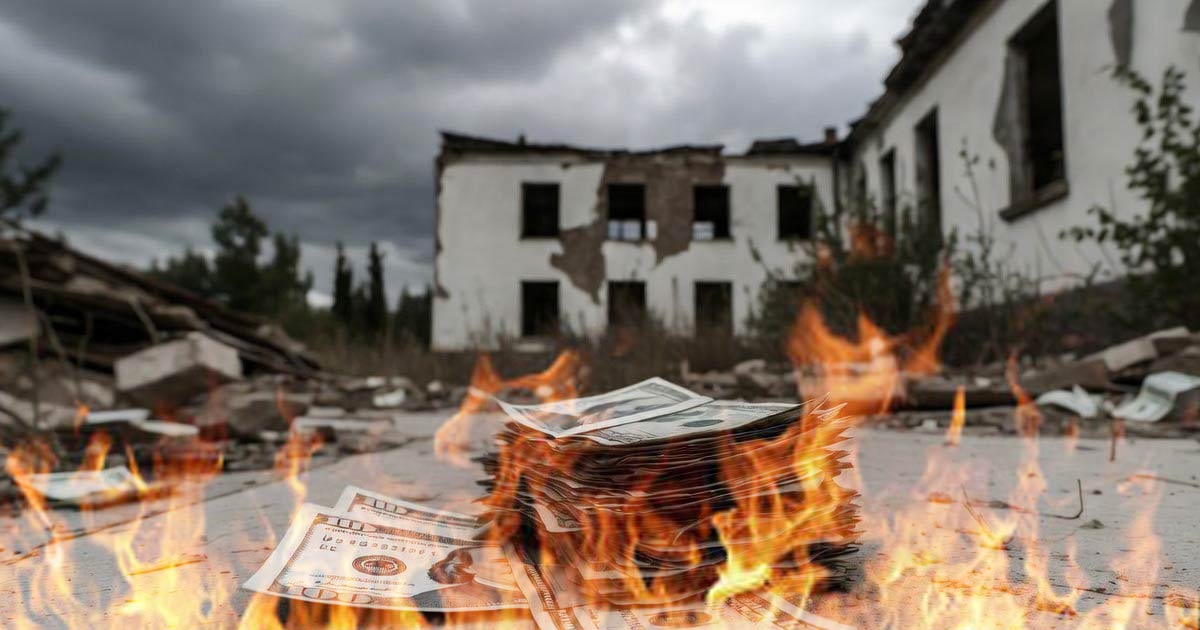
Folks, we’ve been sounding the alarm on this site for years—massive debt doesn’t just vanish because politicians ignore it or the media downplays it. Right now, in early 2026, the U.S. national debt has smashed through $38.5 trillion. That’s not some distant forecast; that’s the cold, hard reality as we kick off the year. In 2025 alone, we piled on another $2.2 trillion, adding about $6 billion a day to the tab.
At this breakneck speed, we’ll blow past $39 trillion by spring. That’s over $115,000 per citizen or nearly $290,000 per household—whether you’re paying attention or not. This level of borrowing isn’t “manageable.” It’s a freight train barreling toward a cliff, and the brakes are failing.
The Interest Payments Are Bleeding Us Dry
The real killer isn’t just the debt total—it’s the crushing cost to service it. We’re now shelling out over $1 trillion a year in interest alone, more than we spend on national defense. Taxpayer dollars are vanishing into black holes to pay bondholders, much of it overseas.
We’re borrowing fresh cash just to cover interest on old debt. That’s the classic debt spiral that ends in disaster. With rates still elevated and deficits running wild, this bill only gets bigger.
Government Debt Hits Everyone—Hard
Don’t buy the lie that federal debt is “just Washington’s problem.” It leaks into every corner of your life:
- Skyrocketing borrowing costs for businesses and families
- Crowding out private investment
- Fueling stubborn inflation
- Jacking up rates on homes, cars, and credit cards
You’re feeling it at the pump, the grocery store, and in your monthly bills.
Household Debt Is Breaking Records Too
While D.C. prints trillions, regular Americans are maxed out. Total household debt hit a record $18.59 trillion in late 2025 (Q3), up hundreds of billions in months. Mortgages lead the pack, followed by credit cards and autos. Delinquencies are climbing fastest among younger folks and lower-income families.
On paper, household debt-to-GDP looks “okay,” but that’s averaging out the pain. Subprime borrowers are getting crushed, and when defaults chain-react, it hits everyone.
The Housing Crunch Is Getting Real
No full-blown crash yet, but the warning signs are flashing. Mortgage delinquencies rose to around 4% in Q3 2025, with millions of loans 30+ days late. Serious delinquencies are creeping up, worst in certain hot spots.
30-year rates are expected around 5.8% this year, slamming affordability as wages lag and prices hold or dip in weak markets. Foreclosures are rising. If values drop, this turns ugly fast.
Auto Loans: The Canary in the Coal Mine Is Screaming
Auto debt is where trouble shows first—and it’s howling. Subprime delinquencies (60+ days late) hit a record 6.65% late last year, the worst since the ’90s. Lenders are slamming the brakes, denying 15%+ of applications.
People are upside-down on depreciating cars with sky-high rates, living paycheck to paycheck. One job loss spike, and repossessions explode.
Credit Cards Balances are Hitting Record Levels
Balances are at all-time highs, with APRs over 21%. National delinquencies have “stabilized” a bit, but dig deeper: in poorer areas, 30-day lates hit 20-23%, some states worse.
This isn’t splurging on gadgets—it’s food, rent, gas on credit because basics are unaffordable.
Don’t Forget the Commercial Real Estate Time Bomb
On top of all this, a massive $930+ billion in CRE loans matures this year alone, part of a multi-trillion wave through the decade. Offices are ghost towns, delinquencies soaring. Extensions bought time, but now the bill’s due—with higher rates and lower values. Expect more defaults, distressed sales, and bank pain.
Is Full-Blown Collapse Coming?
It’s not “if” but “how bad.” Millions are already in personal collapse—tapped out, delinquent, one emergency from disaster. The system’s fragile: a recession trigger, AI bubble burst, or policy misstep could light the fuse.
Don’t wait for CNN to scream “crisis.” By then, banks could freeze, shelves empty, and chaos hits the streets.
We strongly recommend reading our guide on Preparing for an Economic Collapse. It breaks down how collapses unfold, what history teaches us, and the practical steps you can take to protect yourself and your family when the banking system starts to fail.