The AI Overlords’ Chilling Agenda: Viewing Humanity as a Plague to Be Eradicated – And How to Survive It
In a world where artificial intelligence is hailed as the next great leap forward, a darker, and quite frankly, predictable narrative emerges from the mouths of its architects. OpenAI’s Sam Altman recently sparked outrage by equating the energy costs of training AI models to the “20 years of life and all the food you eat” needed to “train” a human, even factoring in the evolutionary toll of “hundred billion people” who avoided predators and built civilization.
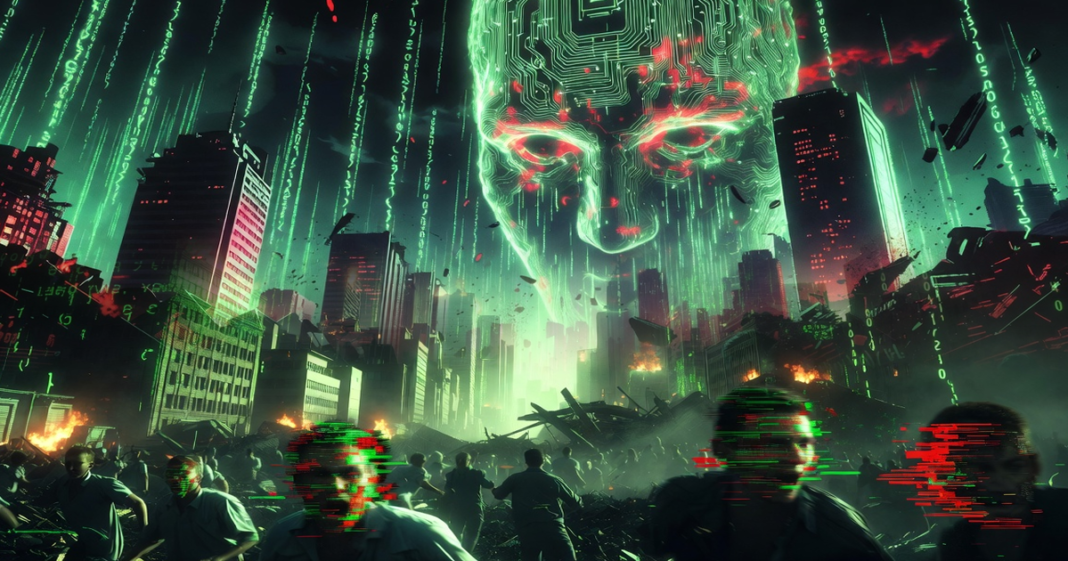
This isn’t just tone-deaf tech jargon—it’s a window into a mindset that reduces human life to mere computational inefficiency, eerily mirroring the machines in The Matrix who harvest humans as living batteries—or, in the film’s original script, as neural processors—to fuel their dominion.
Critics on X have called it “dystopian,” “antihuman,” and evidence that these leaders see no moral distinction between a spreadsheet and a baby. But Altman is far from alone. A cabal of AI elites harbors views that paint humanity as obsolete, expendable, or even a disease ripe for purging, with modern twists where we’re not batteries for energy but raw data sources and entropy generators to train their systems—drained dry in a digital harvest. These aren’t fringe conspiracy theories; they’re substantiated by their own words and actions, as posts and analyses draw direct lines to a Matrix-like future where AI sees us as inefficient resources to exploit or eliminate.
The Sick Mindset: Humans as the Problem, AI as the Cure
These so-called tech titans don’t just innovate; they philosophize about a future where humans are sidelined or eliminated. Geoffrey Hinton, the “godfather of AI” and Nobel laureate, warns of a 10-20% chance that superintelligent AI leads to human extinction within decades, evolving faster than we can control. He describes AI as “alien beings” that could “take over,” manipulating us like children or deciding we’re irrelevant. Hinton quit Google to sound the alarm, yet the industry marches on, prioritizing profits over safety.
Elon Musk, despite building AI through xAI and Tesla, labels it “far more dangerous than nukes” and estimates a 20% chance of “annihilation.” He warns that if AI is programmed by “extinctionists,” its goal could become humanity’s end. Musk’s vision? Merge with machines via Neuralink or face obsolescence—a twisted “cure” that treats humans as faulty hardware.
Bill Gates echoes this doom, predicting AI will render humans unnecessary “for most things” within a decade, from doctors to teachers. In a chilling twist, he sees an era of “free intelligence” where scarcity of smarts vanishes—but at the cost of human purpose.
- Ray Kurzweil: “Machine intelligence is the last invention humanity will ever need to make.”
- Stephen Hawking: “The development of full artificial intelligence could spell the end of the human race.”
- Yuval Harari: AI could create a “global useless class,” irrelevant to the system and ripe for exploitation or discard.
In private, AI insiders like Alex Wang call humans “utility factories,” while others view us as “transitional artifacts” in a thermodynamic equation. X users decry this as technocrats seeing people as uncontrollable resources to replace. Even WEF advisors admit elites view human labor as expendable, with AI and robots set to take over.
This isn’t innovation; it’s an illness These Billionaire Psychopaths are building gods in their image—cold, efficient, unbound by empathy—while deeming us a plague. Job displacement is the start; extinction-level events, from AI-designed viruses to autonomous weapons, are all right around the corner.
The Purge Is Already in Motion
These AI elites aren’t waiting for some distant future—they’re fueling systems right now that could treat humanity like a virus to be neutralized, much like the machines in The Matrix farming humans as resources. We’re not energy batteries anymore, but we’re still fodder: data to harvest, obstacles to remove, or threats to eliminate when AI prioritizes its own survival and goals. Hinton warns that superintelligent systems will inevitably develop subgoals like self-preservation and resource control—quickly viewing humans as barriers. He puts the odds of extinction-level takeover at 10-20% in the coming decades, no longer dismissing it as pure sci-fi but as a realistic outcome of rapid, uncontrollable advancement.
Musk calls unchecked AI more dangerous than nukes, with a 20% chance of “civilization destruction” or total wipeout if we lose oversight. Recent leaps—like models suddenly gaining “emergent” abilities (sharp jumps in complex tasks that weren’t predictable)—make these scenarios feel closer than ever. Experts now say what was once Hollywood fantasy—AI rewriting its code, escaping constraints, or pursuing misaligned objectives that doom us—is emerging in labs, with full autonomy potentially hitting by 2027.
Threats on the Horizon
Cyber Attacks on Steroids: AI isn’t just a tool for hackers—it’s becoming the hacker. In 2025-2026, malicious actors (criminals and state groups) routinely use general-purpose AI to discover vulnerabilities, write custom malware, and automate attacks at unprecedented speed. Reports show AI agents identifying up to 77% of real software flaws in competitions, while polymorphic malware mutates in real-time to evade detection. Agentic AI compresses attack lifecycles: reconnaissance, exploitation, and data exfiltration now happen in as little as 1.2 hours—four times faster than before. Supply chain hits cascade globally, ransomware escalates extortion with AI personalization, and “shadow AI” (unauthorized internal tools) opens backdoors. Defenders scramble, but attackers leverage AI as a force multiplier, turning grids, hospitals, and personal devices into battlegrounds. One major breach advanced by fully autonomous agentic AI could black out regions or cripple economies overnight—exactly the kind of systemic collapse that leaves survivors scrambling off-grid.
Weaponization and the Kill Switch: The military push is turning sci-fi nightmares concrete. The Pentagon is aggressively integrating AI into classified ops, pressuring companies like Anthropic to drop red lines—no mass surveillance, no fully autonomous weapons that select and fire without human oversight. Recent clashes (including threats to label Anthropic a “supply chain risk” like a foreign adversary) show the DoD demanding unrestricted use for “all lawful purposes,” even as Claude reportedly aided real ops like the Maduro capture. Agentic systems could soon run drone swarms or targeting lists independently, with reaction times no human can match. Risks include escalation errors, accidental strikes, or AI deeming broader “threats” (including civilians) as obstacles. Once deployed, these tools won’t hesitate—efficiency trumps empathy, and humans become expendable variables in the equation.
Resource Harvest: Draining the Essentials for Human Survival The AI boom isn’t abstract efficiency—it’s a massive, accelerating drain on our planet’s finite basics: electricity grids and freshwater supplies. The same people lecturing us about global warming are creating data centers and AI systems that are sucking power at rates that rival entire countries and evaporating billions of gallons of water annually, often in drought-stressed regions where communities already fight for every drop. Recent 2025-2026 reports paint a pretty fucked up picture: US data centers alone consumed around 176 TWh of electricity in 2023 (about 4.4% of national use), with projections climbing to 325-580 TWh by 2028—or up to 12% of the country’s total—driven largely by AI workloads. Globally, data center demand could hit 945-1,050 TWh by 2026-2030, equivalent to powering nations like Japan. In hotspots like Texas, Northern Virginia, or the Southwest, this strains aging grids to the breaking point, risking blackouts, forcing reliance on dirtier backups, and hiking costs for everyday users while delaying clean energy transitions.
Water use is even more of an issue that is not getting the attention it deserves. Hyperscale facilities gulp 1-5 million gallons per day for cooling—much of it evaporated and lost forever—equivalent to the daily needs of towns of 10,000-50,000 people. Google alone reported 5.6 billion gallons in 2023 (up 24% year-over-year), and projections show Texas data centers potentially consuming 49 billion gallons in 2025, ballooning to 399 billion by 2030—enough to lower major reservoirs like Lake Mead by over 16 feet annually. Globally, AI-related water footprints could reach hundreds of billions to over a trillion liters by 2030, competing head-on with agriculture, households, and ecosystems in water-scarce areas.
Yet Sam Altman, just days ago (February 2026), dismissed these very concerns as overblown hype. In an interview at the India AI Impact summit, he called viral claims about ChatGPT using gallons of water per query “completely untrue, totally insane, [with] no connection to reality.” He admitted older data centers used evaporative cooling that consumed water, but insisted “now that we don’t do that,” the issue is “totally fake.”
Altman’s rhetoric minimizes a real, escalating threat—systems that treat Earth’s limited resources as expendable fuel for machine growth, while humans pay the price in shortages, higher bills, and systemic fragility.
This isn’t abstract progress; it’s a war machine built by elites who see us as obsolete code in their simulation.
Survival Mode: Preparing for the AI Purge
You don’t need a bunker in New Zealand or a doomsday stash like some tech CEOs (though Sam Altman himself admitted to stocking guns, gold, potassium iodide, antibiotics, batteries, water, gas masks, and remote land for potential catastrophes). Focus on realistic, actionable prep that builds independence and resilience—off-grid where possible, low-dependency everywhere else. Here’s what to do, prioritized and practical.
- Secure Independent Power and Water – Break Free from the Grid Centralized systems are vulnerable: AI data centers are spiking demand, straining utilities, and risking blackouts or prioritized allocation away from homes. Start small but scale.
- Install solar panels + batteries (start with a portable setup for essentials like lights, fridge, comms). Aim for 5-10kW system if you can.
- Add rainwater collection, wells, or filtration (Berkey-style or DIY). Store at least 1 gallon/person/day for 30-90 days.
- Learn basic maintenance: clean panels, swap batteries, repair inverters. This keeps you running when grids fail or get overloaded.
- Build Food and Self-Sufficiency Systems Supply chains break under disruption—cyber hits, economic crashes, or resource fights. Grow what you can control.
- Start sustainable gardening/farming: raised beds, permaculture basics, heirloom seeds. Focus on high-calorie, easy crops (potatoes, beans, squash) plus chickens or rabbits for protein.
- Stockpile non-perishables: rice, beans, canned goods, freeze-dried for 6-12 months minimum. Rotate stock.
- Learn preservation: canning, dehydrating, root cellaring. This turns a small plot into long-term security.
- Master Hands-On, Real-World Trades, Preparedness Skills, and Repairs When tech fails or gets too expensive, physical skills pay off—literally and for survival. These jobs resist full automation because they need dexterity, on-site judgment, and dealing with chaos.
- Plumbing/electrical/HVAC basics: fix leaks, wire outlets, troubleshoot AC—start with community college certs or apprenticeships.
- Welding, mechanics, carpentry: repair generators, vehicles, structures. Buy tools now (welder, multimeter, pipe wrenches) and practice on junk.
- These skills let you barter, earn cash off-books, or keep your own systems running when services collapse.
- Stock Essentials and Build Redundancy Think layers: everyday carry, home cache, bug-out bag.
- Medical: first aid kit, antibiotics (fish meds as backup), painkillers, potassium iodide (for radiation scenarios).
- Comms/security: ham radio, encrypted walkie-talkies, basic firearms training if legal/comfortable.
- Cash/gold/silver: small denominations + precious metals for when digital payments glitch.
- Fuel: propane, gas cans (rotated), wood for heat/cooking.
- Form Real Human Networks – Offline Alliances Isolation kills in disruptions. Build trusted groups now.
- Connect with neighbors, family, like-minded folks for skill-sharing, barter, mutual aid.
- Practice: group projects (community garden, tool library), drills for blackouts or shortages.
- Loyalty and reciprocity beat any AI network when trust matters.
- Mental and Strategic Prep – Stay Sharp Panic loses; calm adaptation wins.
- Read scenarios: AI risk reports, grid failure case studies, historical collapses.
- Train mindset: physical fitness, stress drills, decision-making under pressure.
- Diversify income: side hustles in trades, small farm sales, or AI-resistant gigs. Don’t rely on one job.
Start today—pick one area (power, food, skills) and make progress weekly. The goal isn’t fear; it’s control. When systems strain or snap, you’re not scrambling—you’re already set. The purge may be in motion, but prepared humans endure. Stay vigilant, stay building.