
The Complete Guide to Camping Outside the System
Dispersed camping, sometimes referred to as renegade camping, primitive or backcountry camping, and boondocking, is basically:
- Camping OUTSIDE of designated campground areas.
- Camping with no power, no services, and no modern luxuries.
- Camping with no crowds. It’s just you, and the great outdoors.
As a general rule, this type of camping is usually done on public lands well away from any established roads. Scattered throughout the United States there are millions of acres of public land where you can set up and camp, most of which won’t cost you a single cent. This isn’t a niche hobby anymore — it’s a legal right that comes baked into the same laws that created the modern public lands system, and once you understand the actual rules, you can use it almost anywhere in the American West.
Just How Much Land Are We Talking About?
People hear “public land” and picture a handful of scattered state parks. The actual number is bigger than most Americans realize, and it’s worth seeing the scale before you start planning a trip.
| Agency | Surface Acres Managed | Share of U.S. Land Base |
|---|---|---|
| Bureau of Land Management (BLM) | ~245 million acres | ~10% (1 in every 10 acres) |
| U.S. Forest Service (USFS) | ~193 million acres | ~8.5% |
| Fish & Wildlife Service (refuges) | ~150 million acres | ~6.6% |
| National Park Service | ~80 million acres | ~3.5% |
| Combined federal land managed by these four agencies | ~608–610 million acres | ~27% of the entire United States |
Sources: BLM “What We Manage” (blm.gov), U.S. Department of the Interior, Ballotpedia federal land ownership data.
The BLM alone administers more surface land than any other agency in the country — 245 million acres, or about one-eighth of the land in the United States, plus roughly 700 million acres of subsurface mineral estate. Nevada is the most federally-owned state in the country at roughly 80% federal land, and Alaska has more federal acreage than any other state at over 222 million acres. Almost all of that BLM and Forest Service acreage allows dispersed camping somewhere on it, unless it’s specifically posted otherwise.
Where to Camp for Free: Boondocking and Backcountry Camping
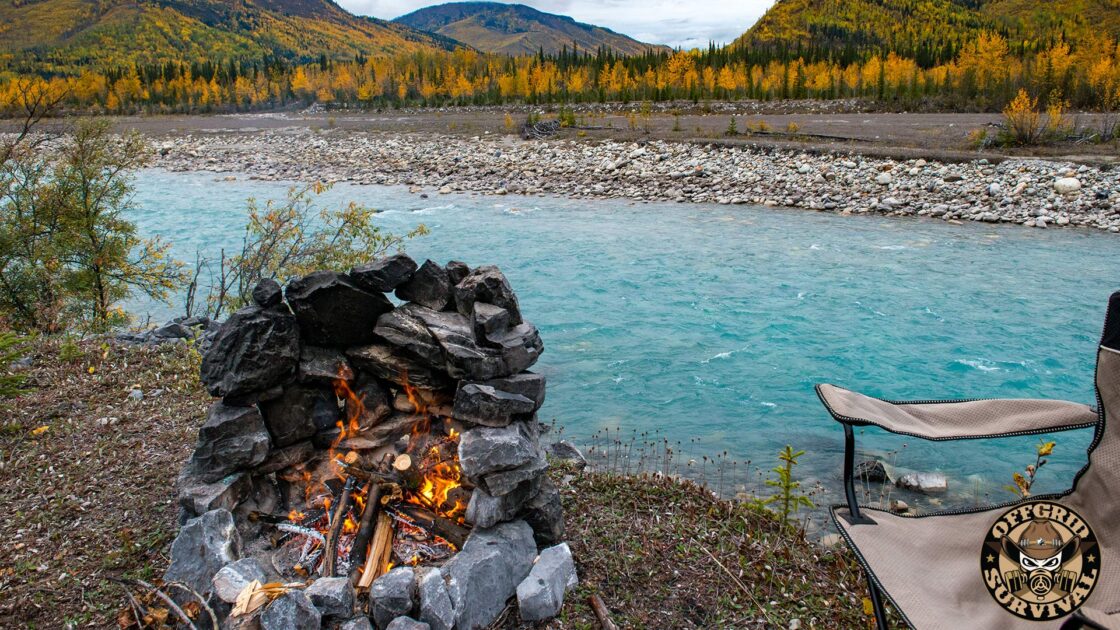
Most people who camp off the grid will pick a road in the National Forest or some other piece of public land, and then keep on driving. When the road ends, the real adventurers won’t stop until they find the perfect spot.
Free Campsites — While this might be a little less adventurous than finding a secluded spot in the backcountry, it still beats paying for a campsite or having to deal with a bunch of degenerates at the local KOA. Free campsites are usually very primitive, but there are some that have basic services.
For those adventurous souls who just want to get away from it all, I recommend choosing a road that’s not often traveled. Roads with signs usually mean there will be too many people, and might not be the best spots to set up camp. Old dirt roads and old abandoned rail lines are some of the best places to look. I’ve found some great spots by just wandering around in the backcountry.
- BLM and other public lands are almost always free to camp at unless otherwise posted.
- All National Forest land is open to camping unless otherwise posted, but some areas do have limits on how long you can stay in one spot, so make sure to check with the rangers.
- Some private landowners will allow people to camp on their land, so it never hurts to ask.
- The USFS — USDA Forest Service and the BLM — Bureau of Land Management websites are a good start when looking for areas to camp. The USFS offers free travel management maps called MVUM (Motor Vehicle Use Map) that show exactly where dispersed camping is restricted and which roads are open for travel.
How the MVUM Actually Works
The Motor Vehicle Use Map isn’t just a courtesy document — it’s the legal definition of where you’re allowed to drive and camp on National Forest land, and ignoring it is how people end up with citations. Here’s what it’s actually telling you:
| MVUM Symbol or Feature | What It Means for You |
|---|---|
| Solid line, no dots | Road is open to motor vehicles; you can camp roadside, generally within about 30 feet, though this is custom, not codified law on most forests |
| Dotted corridor along the road | Vehicles can leave the road surface and travel cross-country up to 300 feet from the centerline (some forests use 150 feet) specifically to reach a dispersed camp |
| No symbol at all | That route is not open to motorized dispersed camping access — stay on the road |
| “Dispersed Camping” label on a specific corridor | Confirms motorized access is allowed in that exact stretch; check the corridor width listed in the MVUM’s table, since it varies by forest |
On the Black Hills National Forest alone, dispersed camping with a motor vehicle is permitted on roughly 135,500 acres under this exact system. The rule is consistent enough across the National Forest System that it’s worth memorizing: the camp itself usually isn’t restricted to a fixed distance, but the vehicle is. You can walk gear further than 300 feet from a road if you want privacy; you generally can’t drive there.
A Few Things to Be Aware Of
If you’re new to camping, then you might want to start off slow. Dispersed camping means you need to be fully self-sufficient.
- Don’t forget to find out if you need a fire permit or if you need to pay fees to camp in the area.
- Unless you’re boondocking in an RV, then you need to remember that there are no bathrooms.
- Anything that you’re going to need at your campsite needs to be brought in. Make sure to pack extra water, food, and emergency supplies.
The Actual Stay Limits — By the Numbers
This is the part most people get wrong, usually because they read one blog post and assume the rule is identical everywhere. It isn’t. The 14-day figure is the default, not a universal law, and it changes by agency, forest, and sometimes by district within the same forest.
| Land Type | Standard Stay Limit | Relocation Requirement | Source / Authority |
|---|---|---|---|
| BLM land (most western states) | 14 days within any 28-day period | Move at least 25–30 miles away before the clock resets | 43 CFR § 8365.1-2; BLM “Camping on Public Lands” |
| National Forest (typical) | 14 days, though some districts use 16 days within 30 days | Varies by Forest Order; check locally | 36 CFR § 261.58(a) |
| Tahoe National Forest (example) | 14 days per calendar year, per Ranger District | N/A — annual cap, not rolling | USFS Forest Order No. 17-24-02 |
| Coronado National Forest (example) | 14 days per 60-day period | No camping within 1 mile of a developed campground | USFS Coronado NF dispersed camping page |
| Mittry Lake Wildlife Area, AZ (changed Nov. 1, 2025) | 14 days within 28 days (previously 10 days/calendar year) | Standard BLM relocation rules now apply | BLM Yuma Field Office rule update |
| BLM Long-Term Visitor Areas (LTVAs), desert Southwest | Up to 7 months, Sept. 15–Apr. 15, with paid permit | N/A — designated exception to standard rule | BLM LTVA program |
The takeaway: assume 14 days until you’ve confirmed otherwise with the specific field office or ranger district you’re headed to. Forest Orders get updated, individual districts post their own exceptions, and rangers do check license plates and revisit popular dispersed sites — this gets enforced more consistently than most people expect, and personal property left unattended for more than 10 days on BLM land (12 months in Alaska) is subject to impoundment.
Long-Term Visitor Areas: The Legal Way to Stay Longer
If 14 days isn’t enough, the BLM has a built-in answer for that, concentrated mostly in the Arizona and California desert. Long-Term Visitor Areas like Imperial Dam (near Winterhaven, CA) and La Posa (near Quartzsite, AZ) let you stay through the entire winter season for a flat fee instead of bouncing between sites every two weeks.
| LTVA Permit Type | Coverage Period | Cost |
|---|---|---|
| Seasonal permit | September 15 – April 15 | $180 |
| Short-visit permit | Up to 14 days | $40 |
These areas exist specifically to accommodate snowbirds and long-term RV travelers, and they’re the one place in the BLM system where the 14-day rule simply doesn’t apply, provided you’ve paid for the permit. Outside the LTVA season, standard stay limits and day-use fees kick back in.
Distance Rules: Water, Roads, and Neighbors
Beyond how long you can stay, there are hard distance requirements that show up across nearly every agency’s dispersed camping rules. These aren’t suggestions — they’re written into Forest Orders and BLM regulations specifically to protect water quality and reduce habitat damage from concentrated camping.
| Rule | Typical Distance | Why It Exists |
|---|---|---|
| Camp setback from lakes, rivers, streams | 150–200 feet (varies by forest; Coronado NF uses 200 ft, Rio Grande NF uses 150 ft) | Protects riparian habitat and prevents water contamination |
| Vehicle travel off designated roads (MVUM corridor) | Up to 300 feet from centerline (some forests cap at 150 ft) | Limits soil compaction and habitat fragmentation to a defined strip |
| Setback from developed campgrounds | Often 1 mile, unless posted otherwise | Keeps free dispersed camping from cannibalizing paid campground use |
| Cathole for human waste | 6–8 inches deep, at least 200 feet from water, camp, and trails | Leave No Trace standard, adopted by USFS and BLM alike |
Leave No Trace: The Seven Principles, In Full
“Take only photographs, leave only footprints” is the slogan everyone knows, but the actual framework behind it has seven specific, codified principles, developed by the Leave No Trace Center for Outdoor Ethics in partnership with the Forest Service, National Park Service, and BLM going back to the mid-1980s. These aren’t vague good intentions — land management agencies actively teach and enforce them.
| # | Principle | What It Actually Requires |
|---|---|---|
| 1 | Plan Ahead and Prepare | Know area regulations, prepare for weather and hazards, visit in small groups, repackage food to cut down on waste |
| 2 | Travel and Camp on Durable Surfaces | Stick to existing roads, trails, and previously-used sites; durable surfaces include rock, gravel, sand, and dry grass; camp at least 200 feet from lakes and streams |
| 3 | Dispose of Waste Properly | Pack out all trash; bury human waste in catholes 6–8 inches deep and 200 feet from water; pack out toilet paper |
| 4 | Leave What You Find | Leave rocks, plants, and historical artifacts exactly as found; don’t build structures or dig trenches |
| 5 | Minimize Campfire Impacts | Use a lightweight stove when possible; where fires are allowed, keep them small and use only dead, downed wood that breaks by hand; burn to ash and scatter cool ashes |
| 6 | Respect Wildlife | Observe from a distance, never approach or feed animals, store food and trash securely |
| 7 | Be Considerate of Other Visitors | Keep noise down, yield on trails, and let nature’s sounds prevail |
Source: Leave No Trace Center for Outdoor Ethics (LNT.org); U.S. National Park Service.
When you leave your campsite, there should be no trace that you were ever there. Things like fire rings, trash, or anything else that you had needs to be taken with you, and the land that you camp on needs to be returned to the original condition that you found it in.
Where to Actually Look: Real Tools, Not Guesswork
You don’t have to drive aimlessly hoping to stumble onto a good spot, though that’s still half the fun. There are actual government resources built for exactly this.
| Resource | What It’s For | Cost |
|---|---|---|
| BLM.gov “Camping on Public Lands” | Field office contacts, general rules by state | Free |
| USFS Motor Vehicle Use Maps (MVUM) | Legal road and dispersed camping corridor maps, per forest, updated annually | Free, downloadable per-forest |
| Recreation.gov | Reservations for some designated dispersed sites and developed BLM/USFS campgrounds | Free to browse; site fees vary |
| Local Ranger District / BLM Field Office (phone) | The single most reliable source for current fire restrictions and stay-limit exceptions | Free |
A Realistic Pre-Trip Checklist
None of the legal framework above matters if you show up unprepared. Dispersed camping means full self-sufficiency — there’s no camp host, no potable water spigot, and often no cell signal to call for help.

- Water: Pack more than you think you need. There are no water sources at dispersed sites.
- Fire permit / current restrictions: Call the local office before you leave. Fire bans change fast during dry seasons and aren’t always reflected on outdated websites.
- Navigation: Download the MVUM for the specific forest before you lose signal — cell service disappears fast once you’re off the highway.
- Waste plan: Bring a trowel for catholes, and pack out everything else, full stop.
- Trip plan left with someone: Tell a person not on the trip exactly where you’re headed and when you’ll be back. This is the single most repeated piece of advice from people who camp alone, and it’s repeated for a reason — search and rescue can’t look for you efficiently if nobody knows where to start.
Hundreds of millions of acres of this country sit open and waiting, governed by rules that are public record and a phone call away from being fully understood — and almost nobody bothers to actually read them before they go. That’s the real advantage here. It’s not the secrecy of a hidden spot or some insider trick; it’s that the information is sitting in plain sight on a .gov website, and most people would rather guess. Don’t be most people. Pull the MVUM, call the field office, and go find the dirt road that ends somewhere nobody else bothered to check.


It might be a good thing to go out and look some of these places over…you just never know!
I really prefer the “Renegade” camping. Most of my time camping out is done this way and by myself. There are a few things to consider before going out on your own. Don’t over pack!Most people will over pack and half the stuff they take, they really don’t need. A good general rule for beginners is 1/4 of your own weight. You could go about 10 lbs heavier. Any heavier than the 10 lbs over limit for hiking in will soon turn enjoyment into a hateful struggle and will defeat your moral quickly. Research the planned area and let someone know where you are with longitude and latitudes of the planned campsites. Find out what types of animals are out there and how to counter the predator animals. Also keep a good two way radio or a 2 meter UHF/VHF radio on you or in your pack. The 2 meter UHF/VHF radio requires a FCC Amateur Ham Radio License to transmit but anyone can call for help on a 2 meter. A 30-45 dollar Baofeng 2 meter radio always goes with me on my trips for those unforeseen problems.
Renegade camping, dispersed camping, boondocking or maybe more simply put… backpacking into remote wilderness is the type of get away that I usually seek out. But one rule that many forget whom participate in this type of activity is… they forget to tell someone where they are going! A recent movie and story that was covered in Outside Magazine is a prime example on what can happen when you do not follow that simple rule. Be safe… be smart… enjoy the outdoors!
T2
I love stuff like this its just i dont have the time to do it as much i would like too.
The problem that I have encountered in telling someone where I am, is the fact that they usually google or GPS my location. I have come home from combat and I really do not like being around “Big Brother” and its ways to pry into my life. The people I know, they just arrive from out of nowhere, even if I leave the state. I am soo frustrated when these people come back into my life and drag my wife and I back into some kind of reality of feeling guilty about going anywhere. If they like to work their way to have a fancy phone or work to pay for a peice of isolation where you can never leave (except for weekends or vacations), that is no way to live. I should not have to feel guilty about being free. And nor should I be forced into following the leader, if I may, never going anywhere.
We all go to school or an institution that tells us to go to college, then we go to college to get this fancy job with our three degrees, and next thing you know, we are on top of the world (so to speak), but they forgotten something, How many of us have to “Support” those on top of the pyramid? We need skilled laborers to support them smart people on top. Guess what, I am going to go out and support myself living freely on my own peice of land and not pay for all of my amenaties.
Leave those people behind who want to just know where you are to either snitch on you, report you, bug you, get you into beleiving that doing what everyone else is doing is the “Right” way to live. Ever hear of Right to privacy, or Standing Upon Your Land? No one needs to know where I am or see what I am doing every minute of the day nor know how much I spend or where I spend it at.
Have Food Stamps, A bike, or a sailboat, will travel. (Of course you have to have lots of free time, oh wait, I do have free time, I am unemployed from the service, ha-ha-ha!) Even a bit of common or what should be common outdoor skills on how to be a bit of a mountain man/woman..
So you don’t work by CHOICE, yet you have no problem taking food stamps? F you, buddy. Work enough to feed yourself, but quit eating my taxes just so you can be a lazy F. Leave the food stamps to people who actually need them, I don’t have a problem with those folks. If you have a boat, you don’t need them. You’re just a leach. Just go to the wilderness and disappear. We don’t need your type.
I’m the kid from the big city back east. always love going backpacking. move out to the mountain west and fell in love with the open space. when ever get a chance I’m out there in the wilderness and enjoying every moment of it.
If you dream of doing this, do it now. I have waited until I’m too old, too broke, too unhealthy to try these adventures. If I could find a companion my fear of accidents or worse would be less, but I don’t think that’s in the cards. I have acquired a kayak and do some exploring on local lakes and rivers but still dream of hitting the back roads and trails. My favorite pastime is learning basic survivor skills. The way the political scene around the world is escalating, I might need them. Do it now!
Sad old explorer.
Hey, unless you are bed ridden, you are never
to old to camp. Just go light and easy and if
possible find a partner to share the trip.
Good luck !!!!
You made my day!!! I’d just been thinking to myself, “I’m too old to go boondocking…”
we are both 59 years young, and just purchased 10 acres in south central oregon, and are moving off grid in april of this year, 2015. we enjoy wilderness and our property is surounded by national forest. Never to old to live off grid. we have a big cabin tent, and our property is secluded.we never know if u dont try. we have been planning for years, and now we are taking the plunge.
I am disabled Vet, 55 years old. I have income. I live near Seattle and it’s driving me nuts.Too many cars/people. Your situation sounds awesome. Good luck with it.
I live SW of Louisville KY. I plan on kayaking and primitive camping from this area going west on the ohio river this spring exploring any caves spotted from the river. Dining on fresh fish, wild greens or squirrel on a stick. I am another sad old explorer just learning or relearning survival skills and would welcome company if any live near. Just safer to travel with others. Also gonna try out land between the lakes in SW KY primitive camping. Have heard so many good things about it.
I am also from ky amd i am looking for a place to go test my skills of survival. Do you know any areas where i can do this.
love some information this help thank you of your time
Yes, the road in that second picture could be a good ambush, or defensive spot depending on your perspective.
During exploration adventures (after I inform someone of the general area I will be and when they should hear back from me else they call SAR) with my dog and Personal Locator Beacon just in case, and GPS, I like finding places to store on my GPS. If one place is not available, another one may not be too far away.
Check this one in south Spain:
quemaoviejo.com
You’re correct,with excellent points made.
However, sometimes the thrill, excitement, and alluring silence of going it alone is THE point!
Surely there’s the associated risks with making the decision to go into the wild by one’s self.
Risks can be minimized along with the inherent dangers. And sometimes a camper changes his/her mind while on the way to a previously determined camping spot, and cannot let anyone know of the change in plans. In certain situations, OPSEC may determine that a person doesn’t disclose the location and route of their camping destinations.
I do a lot of primitive remote area camping. The kind of areas whereupon if you break down or are stranded for some reason, it may be 2-4 weeks before anyone finds you. (or a longer period of time). This is why when I go into the wilds of our country I prepare myself mentally and gear-wise just in case I may experience “Murphy’s Law” while back of beyond. My point is to be prepared for anything while enjoying the wild lands.
to get away and experience the remoteness and one on one survival is the excitement of it. not giving someone all the info to gps and trace your habits…LIVE FREE OR DIE.
I’m curious. Is it illegal to have a campfire on state land while disperse camping?
Don’t confuse state owned land with Federal land.
It is legal to primitive camp in Federal forest
areas and to build a campfire………unless a fire ban has been issued due to dry weather. State
parks and conservation areas etc. have rules that very, so check out each location separately. Happy trails !!!
For those who think I can’t sleep in a tent or be exposed, I say come home .
My wife and I are reaching that stage in life where this kind of adventure may be fast leaving the realm of possibility. Before it does, we want to find (for rent) a four wheel drive vehicle and towable live-in trailer (tear drop or larger) capable of negotiating those wilderness roads that haven’t been graded by a state DOT! Does anyone know of some business/person that rents vehicle/trailer for folks like us who drive on the flat and smooth; preferably in the four corner’s area of Utah, Colorado, New Mexico and Arizona? Thanks.
Check out intothewildexpeditionrentals.com located in / near Denver.
AMEN to this! Where are likeminded folks in stodgy NEW ENGLAND? is the idea of an “off-grid”, “boondock” or otherwise “alternative” community in stodgy NEW ENGLAND that far fetched?? Or perhaps a ‘town’ of tiny houses? I am a rehabilitated former government-paper-pushing-drone, thankfully divorced from my mortgage and SUV. Now, i am ready to go to LIVE! (ironic, they call us ‘survivalists!) Problem is, humans need community. We just do! Anyone here from New England??
I’m 61 and the secret(for me) was to marry a young slim, healthy, woman, Filipina, Catholic, from the Provinces (or as we Americans would say a farm girl). My wife was 20 years old when we married and she is now 30 and we have 2 little young’uns, 4 and 8. She says I am not old, but wise, not fat, but healthy. She is smart, quick, aware, a good Wife and Mom, good cook, frugal, neat/tidy, can clean fish/game (she’s a farm girl), a bit religious (and I am a bit of a heathen, regrettably) and she’s fearless. We spend a lot of time camping, hunting, fishing, traveling and my little 8 year old boy is getting very good with woods craft and tools. We always have a garden and try to build/craft as many things as possible with as little as possible. You old f*cks can do more than you think. Drink less, eat less, smoke not at all and have as much sex as possible. That’s my remedy for dementia and aging. BTW there are a thousand young pretty Filipinas who would love to meet an older American man.
Trying to find free campground or to go camping around Harrisburg Carlisle like a state forest for a RV to go camping can you help us out please get back to me
Hello my family own the historic camp bison prison farm we offet camping . This is off grid there is an outhouse. We will boat you in and you can fish on the whanipitae river. Hunting is possible in fall MUST have firearms cert. For ontario and valid tag.there are rooms inside prison but fee is more of the hotel type fee.