
10 Tips for Preppers to Prepare for SHTF Situations
Being prepared really isn’t that complicated. It just takes a willingness to do something about your situation instead of talking about it. Most people who call themselves preppers have a closet full of gear and zero plan for using it. That’s not preparedness — that’s hoarding with extra steps.
If you haven’t started prepping, it’s time to stop reading other people’s bug-out bag lists and start taking the decisive actions that actually keep you and your family alive when things go sideways.
Here are 10 ideas that can help get you started:
1. Threat Assessment
Part of truly being prepared for anything means knowing exactly what threats you’re going to face, not the threats you’ve seen in a movie. By performing a realistic threat assessment, you get a clear picture of what’s actually likely to hit you — your region, your job, your house, your family — and you can stop wasting money prepping for things that will never touch your life.
Most people skip this step entirely. They buy gear first and figure out what it’s for later. That’s backwards. A threat assessment forces you to sit down and ask the boring questions: What disasters actually happen where I live? What’s my evacuation route if the highway’s jammed? What happens to my income if my employer shuts down for two weeks? Do that work first, and every dollar you spend on gear after that actually means something.
2. Planning for the Most Likely SHTF Scenarios
When you’re just getting started in the world of prepping, building a bunker for an asteroid strike is probably not the best use of your first $500. Both EMPs and asteroid strikes are terrifying to think about, but the probability of either one hitting your specific household this year is low. That’s not a reason to ignore them entirely — it’s a reason to prep for them last, not first.
Start with what’s statistically going to happen to you. Power outages, job loss, severe weather, regional supply disruptions — these aren’t dramatic, but they’re the ones that show up. A guy who spends $3,000 on a Faraday cage setup before he has two weeks of food and water in the house has his priorities backwards. Prep for the boring stuff first. The boring stuff is what actually happens.
3. SWOT Analysis
Performing a SWOT Analysis is a great way to find out how prepared you actually are instead of how prepared you feel. A SWOT Analysis is a simple but useful method of pinpointing your Strengths and Weaknesses, while also identifying Opportunities you can exploit and Threats you might face in an SHTF situation.
This isn’t a corporate buzzword exercise — it’s a gut check. Sit down with a notebook and actually write it out. Strengths might be that you’ve got land, a truck, and basic first aid training. Weaknesses might be that you’re 40 pounds overweight and haven’t fired your rifle in two years. Opportunities might be a neighbor with a well, or a skill you could trade. Threats might be that you live in a flood zone or that your only exit route crosses one bridge. Write it down. Most people never do, which is exactly why their plans fall apart at the first real test.
4. Living Debt Free… Is It Part of Your Survival Plan?
It’s great to be prepared for an end-of-days scenario, but what happens when you’re faced with foreclosure or the real possibility of losing your house over a stack of bills? Is that not a survival situation? Because it is — and it’s one a lot more people will face than a grid-down event.
To be truly prepared for the worst, you have to think about your financial security with the same seriousness you think about your bug-out bag. That means paying off debt, living within your means, and starting an emergency fund instead of dumping every spare dollar into gear. A fully stocked pantry doesn’t mean much if you lose the house it’s sitting in. Three to six months of expenses in cash or liquid savings will get most families through almost any short-term disaster — job loss, medical emergency, regional disruption — better than another case of MREs will.
5. Get in Shape NOW
No matter what survival situation you ultimately find yourself in, there’s one thing you’ll discover fast: survival is hell on your body. One of the best things you can do to improve your odds in just about any scenario is make sure your body and your mind are trained and ready to handle stress, exertion, and sleep deprivation — sometimes all three at once.
That means motivating yourself to get off the couch and get in shape, starting now, not after the next disaster makes the news. You don’t need to train like a Navy SEAL. You need to be able to carry a loaded pack a few miles, climb a flight of stairs without gassing out, and lift something heavy without throwing your back out. If you can’t do that today, that’s your starting line, not a reason to put it off another year.
6. Train with Repetition
To really be able to rely on your knowledge when things go bad, you need to run through your survival techniques in real-world scenarios and real environments, not just read about them online. The more you train under actual conditions — wet, cold, tired, frustrated — the more likely it is that you’ll be able to perform those skills when it counts.
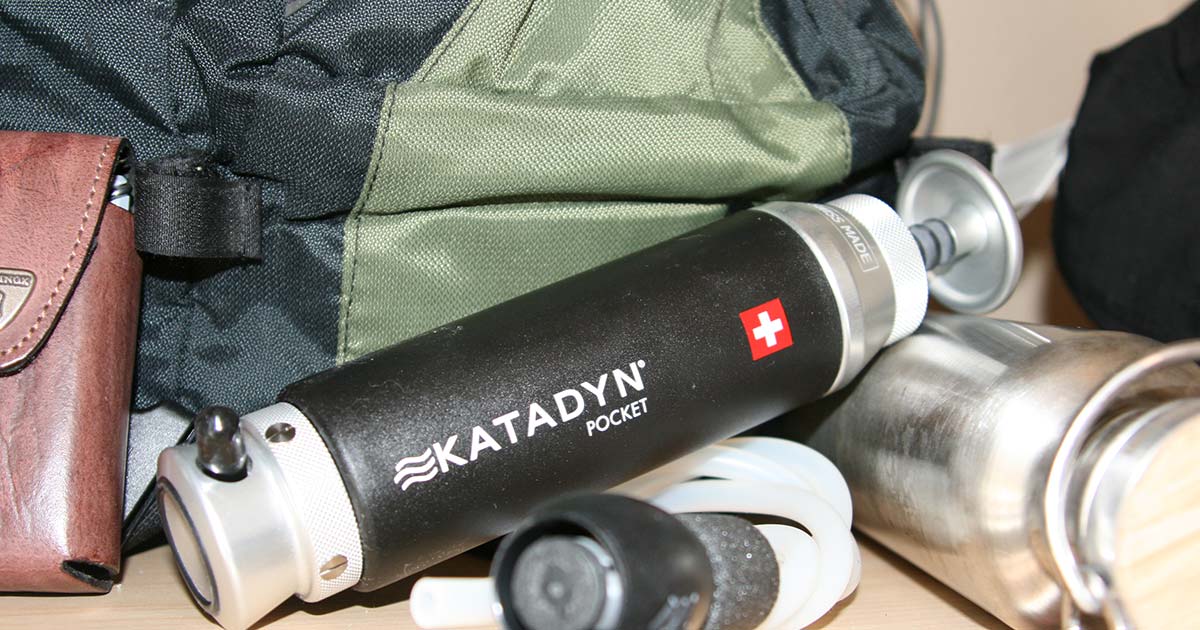
Reading about how to start a fire with a ferro rod is not the same as doing it in the rain with numb fingers. Watching a YouTube video on water filtration is not the same as setting up your filter at 6 a.m. before you’ve had coffee. Skills you’ve only practiced once, in good conditions, in your backyard, are not skills you can count on. Repetition under realistic stress is what separates someone who can actually survive from someone who just owns the gear.
7. Train Your Mind
Survival isn’t glamorous, and it’s nothing like what gets shown on TV survival shows. It’s brutal. It will wear you down physically and emotionally in ways that are hard to predict until you’re in it. Don’t overlook the importance of cultivating a mindset that can face life’s worst days without falling apart.
This is the tip people skip because it’s the hardest one to shop for. You can’t buy mental toughness on Amazon. What you can do is deliberately put yourself in uncomfortable situations now — cold, hunger, exhaustion, frustration — in a controlled way, so your mind already knows what that territory feels like before a real emergency forces you into it. People who fall apart in a crisis usually aren’t lacking gear. They’re lacking the mental rehearsal.
8. Survival Intelligence – Power of Information
In a survival situation, knowledge is going to be a critical factor in determining the outcome. The ability to predict what’s coming, and react before everyone else does, is one of the most underrated parts of being prepared. Start building a list of trusted resources and information sources now, before you need them in a hurry.
That means knowing where to get reliable local emergency information, having a way to receive it when the internet and cell towers go down, and knowing the early warning signs for the disasters most likely to hit your area. A NOAA weather radio costs less than $30 and doesn’t care if the power grid or the cell network is up. Information you can access without the internet is worth more than information you can only get with it.
9. Be Prepared to Bug Out
Many preppers talk a big game about bugging out, but how many of them actually have the skills or the physical strength to pull it off? It’s one thing to talk about it over coffee. It’s another thing entirely to carry a loaded pack 10–15 miles a day, on foot, in dangerous and unforgiving conditions, with people depending on you.
If you’ve never actually shouldered your bug-out bag and walked five miles with it, you don’t know if your plan works. You know if your plan sounds good. Those are different things. Test it. Walk it. Find out your pack is too heavy or your boots aren’t broken in before a real evacuation teaches you the hard way.
10. Bugging Out with Kids
During an SHTF situation, maintaining a sense of normalcy becomes a serious concern when you’ve got children depending on you. Comfort items can go a long way toward helping a kid feel safe and in control when the adults around them clearly aren’t. Don’t overlook how important it is to give them stability during a stressful situation — a familiar stuffed animal or a deck of cards weighs almost nothing and can be the difference between a manageable night and a meltdown you don’t have time for.

Kids also need their own gear, sized for them, that they’ve practiced carrying and using. A bug-out bag built only for the adults in the family is a plan that assumes the kids are dead weight. Build them in. Practice with them. They’ll handle the real thing better if the gear and the routine already feel familiar.
Ten tips. None of them require a bunker, a generator the size of a refrigerator, or a four-figure gear haul. What they require is the thing most people avoid: actually doing the work instead of buying your way around it. Gear sitting in a closet doesn’t know how to use itself, and a fat emergency fund doesn’t build itself either.


Good article . Preparedness and awareness are really important to secure our lives . Pampering kids will reduce trauma. thanks for the additional info.
I think it is a wise thing to find out where there are food pantries close to where you live. It could save your life and the stranger who wanders into your area looking for food. Instead of shooting him/her, direct him/her to the pantry. I’m thinking about this because I was well acquainted with several in the city I left, but I don’t know the where abouts of one where I’m currently residing. I was admiring a freeze dryer for home use but it cost’s five thousand dollars. A substantial investment I can’t justify. However, I am considering, after some deliberation, should I take the information to a local church and make the suggestion that they make the purchase and give them a small donation toward that end. I’ld probably through in a bag of beans as well. It’s partly altruism on my part as I really am a good ol soul, or a sucker, depending how you look at it. But mostly it’s the way I view survival. The more we can do now to prepare for economic collapse or what have you, the better off me and my loved ones will be. At least it gives us a little more time before we have to defend what we may or may not have. I believe in taking care of self first, family second, friends third, and the neighbors fourth. After the neighbors comes the rest of the people in my vicinity. People call it community but I don’t like that word much. Strangers who live near by. I’m not particularly friendly. Maybe it’s because I don’t want to have to refuse someone I’ve befriended. It would be a blessing and some relief if I knew that the entire “community” was at least doing something toward prevention. I guess it’s out of the question but it sure would be nice.
Looking for preppers in NRV of Virginia. Meet at Radford, Va. Library 2nd and 4th Saturdays each month. Exchange ideas, practice skills.
If you have a deer cart of some kind figure out how to attach it to a pack frame back pack or harness that way your hands are free that’s what I’ve done you can put your gear and small children on it to bug out
Awesome content. I just get a lot of useful info and I love what you write and I am startting to learn about this. Thanks
Yeh, Banker, I want to buy Lot PIN@ 00193759887, THE ONE WITH BLOOD ALL OVER IT.
Can I pay with my Bureau of Bureacracies VISA Mastercard?