
During most outdoor survival situations, shelter is going to be one of your top concerns. In fact, when it comes to common ways that people die during a wilderness emergency, hypothermia, a drop in core body temperature, and hyperthermia, an increase in the body’s temperature, are right at the top of the list.
That’s why knowing how to construct a wilderness shelter is such an important skill for anyone who spends any amount of time in the great outdoors.
Here are some actual real-world Survival Shelters; these shelters should give you a good idea of what’s possible and can give you a good starting point to go out there and practice.
A-Frame Shelters
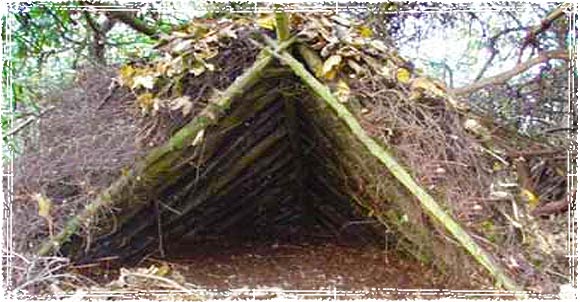
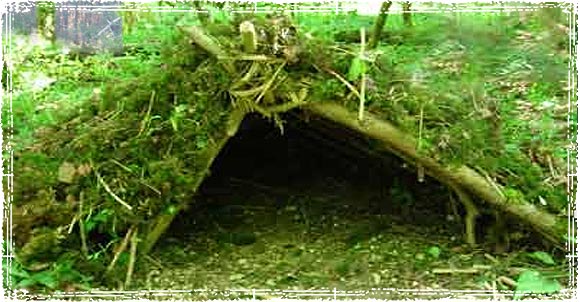
One of the most common, and easy to build types of shelters is the traditional A-Frame. They are easy to construct, and can be as simple as a tarp draped over a single line, or a more elaborate design using local materials.
Here is a great example of an easy A-frame shelter, covered with leaves and debris for added insulation and waterproofing.
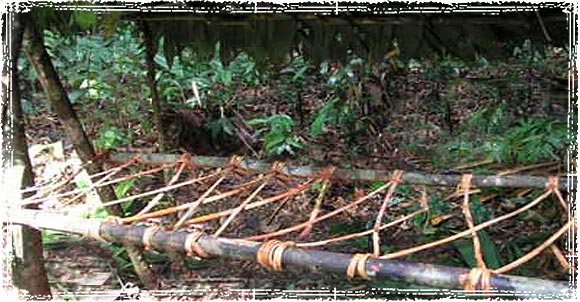
Swamp Bed Under a Lean To
Here’s a quick and easy swamp bed that can help get you up off the ground in cold, wet, or damp environments. It’s also a great way to get you up off the ground in areas where poisonous critters might be poking around at night.
Lean-To Shelter with Reflector Wall
A good fire reflector helps maximize heat retention and minimizes the amount of firewood you use.
Here is a good example of a Lean-To Shelter with a Reflector wall for bouncing heat back into the shelter. A small fire can be built in between the wall and the Lean To, which allows heat to be reflected back into the shelter.
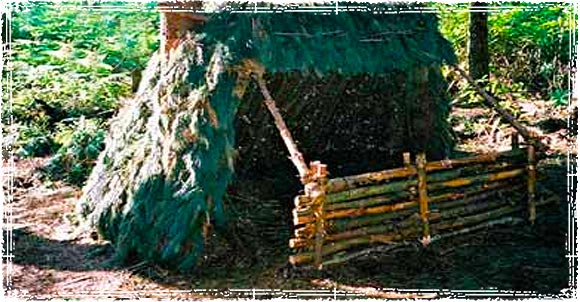
Debris Hut using Natural Land Features
A survival shelter doesn’t have to be fancy to work, and it can often be improvised with existing structures and random materials sourced from the area. This Debris shelter uses natural trees and debris that was already in the area to construct a quick and warm place to lie down for the night.
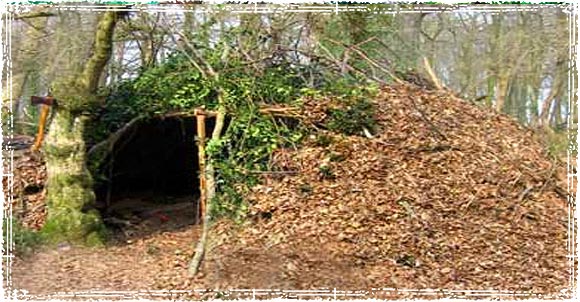
Lean-To Shelter with Raised Bed
Here is another example of a Lean-to with a Bed that’s integrated into the shelter’s design.
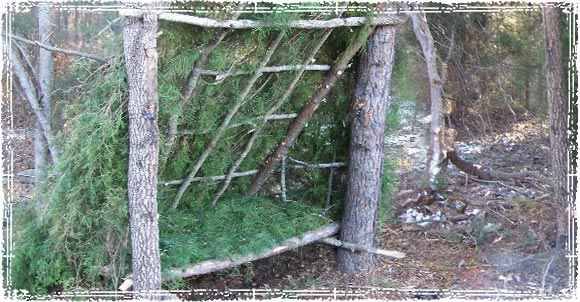
Debris Aframe
Do you have pictures of shelters that you’ve built? Share them with us and we’ll add them to a future story.





Those are some nice looking shelters, some of them look very comfy!
Except for number one, all the rest assume one has adequate line and cutting tools. Not likely when accidently lost during a day hike or seperated from a group.
The cordage for the bed is roots by the look of it and if a person does not have a knife on them while hiking in the woods, they really should stay home.
the cordage could be made from materials found in the wild, if you use brittle dead fall, most of the timber could be broken to length. it is hard work to do with out the proper tools, but possible.
I have made shelters 4 and 6 with nothing more then a pocket knife which I always have on me. when your life depends on it you will find a way.
I never go in the woods without basic survival gear. Matches, knife, road, first aid kit, not even in a short day hike. Even with a group, I am prepared to survive alone.
Why any human being doesn’t have a knife with them at all times is beyond this 66 year old man’s understanding.
I made shelter a lot like the 5th one and I’m only 15 it only took a saw/hatchet so if I can do it anyone can. But you have to practice it took me an hour to make so good luck!
take small sapplings that are green and strip the bark down in long narrow sections…it works to fasten logs or anything else together just as well as rope. the greener the better!
Nice shelters…Its something every outdoors person should know how to build..
damn nice shelters
that is a true statement right there
If you use spruce root you can tie down nearly anything, a basic fixed blade survival knife you can use to make all the shelters above. I teach my friends and family to always be prepared when going on hike, if your not always prepared your never prepared. So at least always carry a knife with you.
Crow’s foot also works very well when one is lacking rope. Still need a knife, though. I built a version of the lean-to one time for scouts. Never got a chance to take photos, but it was pretty cool. Basically, you build two lean-tos, one opposite the other. Using soft local ground cover, build a bed underneath. Take a tarp, trash bag, or more other local cover and cover over the whole of one end with a small extension. This is for your gear. cover the other end only part way. This is to keep rain that is slanting/falling off of your roof from hitting you or your sleeping arrangements. The open part in-between the two lean-tos is actually an area for your fire to be put at. Always be sure to put it out, and try and cover over as much area on the roof that you can when you sleep.
every one shoukd try a snowshelter THERE SO WARM
when using snow shelter only use one candle as the snow might weaken and become an icy tomb for the unwary hiker or survivalist..
nice son
What do you build as a shelter when none of those things (forrests) are available to you? I’ve seen lost of survival techniques on how to build shelters in the woods, but some people are in desolate, arid climates with little vegitation.
In desolate environs you can make shelters from rock and scrub brush. Just need to watch out for nasties slithering around on the ground.
Tall, conical shaped shelter (tee-pee style) with fire inside to heat and cook out of the wind, rain or snow. Native Americans were ultimate survival environmentalists. Agree that everyone should have reliable EDC Blade.
6 different types of shelters that are useful for different types of situations. Really cool. I haven’t try building the ‘Swamp Bed Under a Lean To’ shelter before. What do you guys think about this shelter in terms of warmness?
Awesome stuff broo
Lolollollolo im a dead meme