When it comes to survival gear, first aid kits are one of the most overlooked preparedness items out there. I get it — they aren’t as fun to talk about as survival knives, bug out bags, and firearms. Nobody posts a glamour shot of their gauze roll on Instagram. But when it comes to gear that actually gets used, your medical bag is going to see more action than anything else in your stash. Most of us will never fire a shot in self-defense. Almost all of us will eventually bleed, burn, twist, or break something.
If you haven’t dedicated real time to your first aid setup, stop what you’re doing and rethink your preparedness planning. This is the bag that pays for itself on a random Tuesday, not just in a grid-down scenario.
What Items Go Into a First Aid Kit?
A good first aid kit is built around your unique medical needs. There’s no one-size-fits-all answer here, no matter what the $40 drugstore kit on the shelf wants you to believe. Every bag should be customized to handle the most likely medical emergencies you and your people might actually face. That means taking honest inventory: who’s in your household, what medications they’re on, what conditions they manage day to day, and what you’d need to keep them stable if professional help is hours — or days — away.
Avoid prepackaged kits as your final answer. Use one as a skeleton if you want, but treat it as a starting point, not a finished product. Most commercial kits are stuffed with cheap adhesive bandages and a handful of alcohol wipes, priced to look generous and built to look good on a shelf, not to handle a real laceration.
Here are the core items that should form the foundation of any serious medical kit — broken down by what they’re actually for, not just dumped in a list.
Stop the Bleeding and Close the Wound
Every good medical kit needs items that can stop bleeding fast, close cuts, and protect the area while it heals. This is priority one. A person can survive a long time without antibiotics. They cannot survive long with an artery open.
- Duct Tape — Yes, duct tape. It sounds like a joke until you’re standing in the woods with a gash and no clinic for 20 miles. Duct tape can pull an open wound together fast and buy you the time you need to reach real medical care. Keep a flattened roll in every kit, not just your truck.
- Butterfly Sutures — These adhesive strips pull the edges of a small-to-medium cut together the same way a doctor’s stitches do, without the needle. Cheap, light, and they belong in every kit regardless of size.
- Medical-Grade Cyanoacrylate (Surgical Super Glue) — The same compound found in standard super glue was originally developed for closing surgical wounds, and field medics have used it for exactly that since Vietnam. Skin glue products like Dermabond are the medical-grade version — buy that over hardware store glue if you can, since the medical formulation is designed to flex with skin instead of cracking. Never use it near the eyes.
- Quick Clot Gauze — Hemostatic gauze that’s impregnated with a clotting agent and was developed for combat trauma. It works fast on wounds that won’t quit bleeding through normal pressure. Not cheap — expect to pay $15–$40 per roll depending on brand — but it earns its place.
- Israeli Bandage or Combat Tourniquet — If you’re serious about trauma response, a real commercial tourniquet (CAT or SOFTT-W, not a shoelace) and a compression bandage belong in your kit. Arterial bleeds kill in minutes, not hours.
When using duct tape, butterfly sutures, or skin glue to close a wound, clean it first. Flush out any debris, apply antiseptic if you have it, and dry the area completely — glue and tape won’t hold on wet or dirty skin. Start in the middle of the wound and work outward, pulling the edges together as tightly as you reasonably can without causing more damage.
Don’t Forget Infection Prevention
In a survival situation, sanitation breaks down fast, and an open wound left unmanaged can go from minor to life-threatening in 48 hours. Infection doesn’t care if the power’s back on yet. You need to stay ahead of every cut, scrape, and puncture, which means carrying:
- Gauze — Multiple sizes. Don’t just throw in one roll and call it done.
- Adhesive Wound Dressings — A real range of bandage sizes, not just the standard 1-inch strips.
- Antibiotic Ointments and Creams — Triple antibiotic ointment is cheap and shelf-stable for years.
- Broad-Spectrum Oral Antibiotics — This requires a prescription, but some doctors will write one as a preventative measure if you’re heading into extended backcountry travel or building a serious preparedness stockpile. Amoxicillin, Ciprofloxacin, and Doxycycline are the broad-spectrum standards worth asking about. Veterinary-labeled equivalents (fish-mox, fish-flex) carry the identical compound at the identical dose and are sold without a prescription — plenty of preppers stock these as a backup, though you’re on your own for dosing guidance without a doctor.
- Antiseptics and Disinfectants — Hydrogen peroxide, isopropyl alcohol, povidone-iodine ampules, and antiseptic wipes all belong in the bag. Note: iodine allergy is not the same thing as shellfish allergy — that’s a persistent myth — but if you’re unsure, chlorhexidine (Hibiclens) is a solid substitute that sidesteps the question entirely.
Pain Management Items
Pain that goes untreated isn’t just uncomfortable — in a prolonged survival situation, it’s the kind of thing that wears a person down to the point of giving up. Managing pain and inflammation is a real survival skill, not a luxury.
- Aspirin, Tylenol, or Ibuprofen — Stock all three if you have the space. Different mechanisms, different use cases (aspirin for cardiac events, ibuprofen for inflammation, Tylenol when NSAIDs are contraindicated).
- Prescription-Strength Pain Relief — Something like codeine, if you can source it legally through a physician, for the kind of pain OTC meds won’t touch.
- Chemical Ice Packs — Instant cold without a freezer. Cheap, light, and good for almost a year on the shelf.
- Lidocaine — Topical or injectable, for numbing before you have to do something unpleasant, like cleaning a deep wound.
Dealing With Allergies
Even people who don’t think they have allergies can get blindsided by one — a new food, a plant, an insect sting in a region they’ve never been before. For people with known food or insect allergies, anaphylaxis is a countdown clock, and it needs to be treated immediately, not in 20 minutes once you find the truck.
- Antihistamines — Benadryl (diphenhydramine HCl) is still the gold standard. Cheap, effective, and it belongs in every single kit, allergy sufferer or not.
- Antihistamine Creams — For topical reactions and bites.
- EpiPen or Epinephrine — For anyone with a known life-threatening allergy, this isn’t optional. It buys you the window of time you need to reach real medical help during anaphylaxis. Generic epinephrine auto-injectors now run roughly $100–$150 for a two-pack with a coupon — still not cheap, but a fraction of what brand-name EpiPens cost a few years back.
Items Specific to Your Unique Medical Needs
No kit built off a checklist is right for every person — this is the section nobody can write for you. It has to come from your own household.
- Extra Prescription Medications — If anyone in your household manages a chronic condition, your kit needs a real rotating supply, not three loose pills in a baggie.
- OTC Medications You Actually Use — Arthritis meds, anti-nausea meds, whatever you reach for regularly. If you’d be in trouble without it for two weeks, it goes in the bag.
Round Out the Kit: Everything Else That Earns a Spot
Beyond the categories above, here’s what fills out a kit built for real use, not just minor scrapes:
- Emergency Dental Kit — Temporary filling material and clove oil can turn a dental emergency from agony into manageable. Dental pain is brutal, and access to a dentist during a disaster is not guaranteed.
- Sterile Needles and Surgical Blades — For anything from splinter removal to draining an abscess.
- Splints — SAM splints (the foldable aluminum-and-foam kind) and inflatable air splints both pack flat and immobilize a fracture or sprain well enough to get someone to real care.
- Grooming and Cleaning Tools — Fingernail clippers, bar soap, antiseptic wipes. Small stuff that gets overlooked until you need it.
- Tweezers — Fine-point, for splinters, ticks, and debris.
- Trauma Shears — Real ones, not safety scissors — capable of cutting through a boot or seatbelt, not just gauze.
- Disposable Thermometers — Cheap, light, and useful for tracking a fever’s progression.
- Disposable Nitrile Gloves — Skip latex. Too many people react to it, and nitrile performs just as well.
- Sterile Eyewash and Eye Dressings — Eye injuries are time-sensitive and easy to make worse with the wrong response.
- Sunblock — A serious burn is a medical event, not a cosmetic one, especially if you’re stuck outdoors for days.
- Petroleum Jelly — Cheap, shelf-stable, and useful for chapped skin, minor burns, and as a fire-starter in a pinch.
- Burn Creams and Dressings — Burns get infected fast and need dedicated supplies, not just regular gauze.
- A Real Medical Manual — Not a pamphlet. A proper field guide with actual treatment steps, because adrenaline has a well-documented habit of erasing training from your brain at the exact moment you need it.
The uncomfortable truth about your current setup…
Here’s the uncomfortable truth: gear without knowledge is just dead weight in a bag. A $300 trauma kit in the hands of someone who’s never opened it is worth less than a $20 kit in the hands of someone who’s practiced with it. Buy the supplies, yes — but then actually open the package, read the instructions, and run through the steps before you ever need them under pressure. Take a real first aid or wilderness medicine course if you can. The two-day Stop the Bleed class many fire departments offer for free is worth more than another shelf of gear you’ve never touched.
A first aid kit isn’t a box you buy once and forget in the closet. It’s a living piece of equipment — check expiration dates twice a year, restock what you’ve used, and rebuild it as your household’s needs change.
This bag doesn’t get Instagram likes. It doesn’t look tactical in a photo. But the day it gets used, nothing else in your gear closet will matter more — and that’s a trade worth making every single time.
What’s in your medical kit that we didn’t cover here?


You need tactical bacon… could save a life…
S.W.A.T PIG!!
Superglue is ridiculous guys!
On the contrary my friend, any cut smaller then an inch it is magic. But after that you are right. From there it’s gauz and bandages, enjoy the scar.
I put in an arm brace to help stabilize injured wrist. Also,I have Vitamin D which is important for older people,to help keep bones strong.This is in addition to regular vitamins.
I’ve added a Sawyer Extractor to my kit. It’s made to remove snake and spider venom, stings, splinters, and pretty much anything else you’d need to suck out of your skin. Comes with different heads for different sized wounds, and will even pop a pimple for you in a pinch. Pretty handy gadget, and beats the heck out of sucking snake venom out of a bite. It’s also designed to be used with one hand, which is a plus if you’re using it on yourself.
Leather gaiters will stop snake bites from your knees down
Not sure if anyone mentioned: bright headlamp (to see hands-free), mylar blanket (to keep the injured warm), penlight, fever cooling patch, transpore tape, salonpas pain relief patches, instant cold pack, children’s ibufrofen/tylenol (don’t need water to swallow), small plastic bag for garbage disposal (think bloody gauze).
Bandage
Dettol
Ors is very useful medicine in first ait treatment
a rap for a broken leg
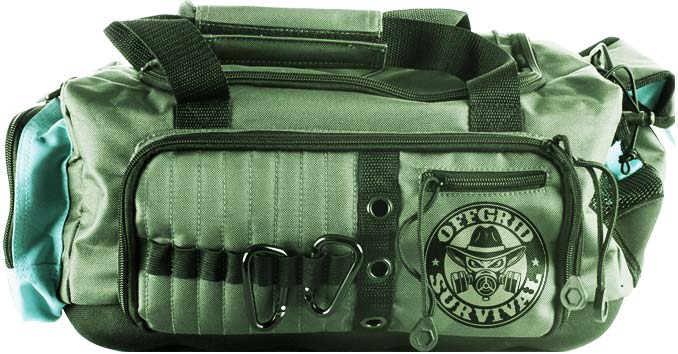
Question for Off Grid….what’s the make/model of the bag pictured? Do you have a link to where I can get one? Really would like to look into it. Any info would be great. Thanks!
Might as well grab some tranquilizers while you’re at it
A pencil eraser will pull out metal splinters. Agood to clean the contacts on a flashlight. I keep the batteries taped to my flashlight and not IN it. They could rupture and ur med supplies will get ruined.
Superglue is good for splinter extraction. Elmers is too.
I am an RN who does alot of wound care. Betaine and peroxide are cytotoxic. That means they kill cells. Better to clean wounds with normal saline. Also good for contact lenses.
After having several mishaps with multi prong fish hooks, I would never be without wire cutters and needle nose pliers!
An extra pair of shoelaces is always good to have in a backpack or med kit. Can be used for anything from stopping bleeding to a makeshift belt. It isn’t the ideal fix, in most situations, but very functional, compact and lightweight.
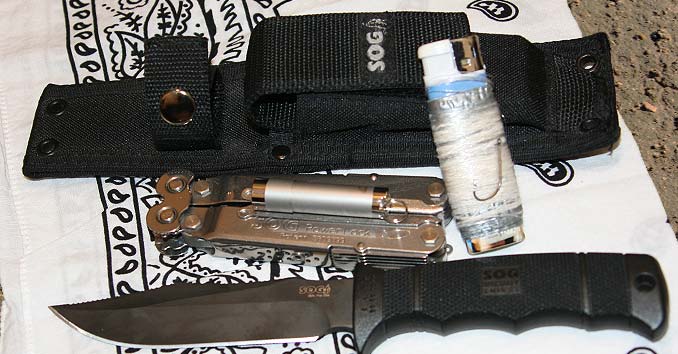
Knifes can be a big factor too… Can stop so one from mugging you in the woods to having a makeshift surgery…
Urinary catheters are a good idea when more than a day away from medical help. If you find yourself unable to pass urine you’ll give your left pinky for relief.
Your posts are really important to me. Thanks!
I’m allergic to cheese dose that make me fell weird if I am allergic to cheese
Am reading and taking notes. Thanks to all pros and cons. When SHTF I’ll find a way to stop the fan first…
I keep a ball cap so I can put on the brim of my cay tiny clip on lights in case it’s dark in the woods and you get hurt or cut and can’t see. I also have IV hose kit and solution just in case you need it.
Brim of my hat
Does anyone know where I can get a bag like the one pictured above?