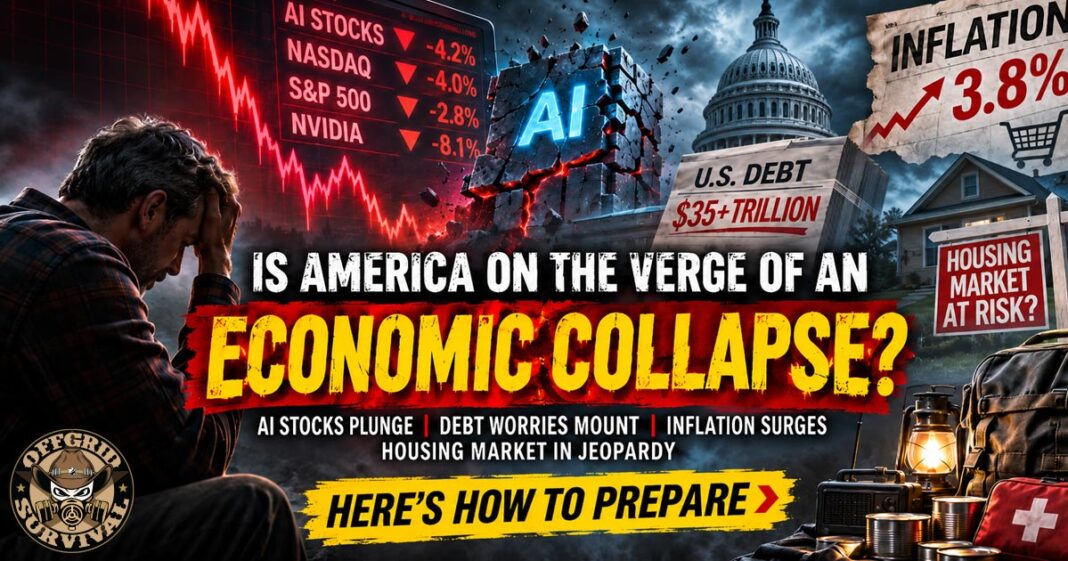
The artificial intelligence bubble that has been propping up much of the American economy is starting to show some serious cracks. Wall Street is getting hammered, investors are growing increasingly concerned about the massive amounts of debt being used to finance AI development, inflation is accelerating again, and an already struggling housing market could be facing even more trouble heading into 2027.
For months, we’ve been warning about the dangers of artificial intelligence, from AI-powered cyberattacks targeting America’s critical infrastructure to the growing dependence on technology that even the companies developing it are struggling to control. But there is another threat that could have devastating consequences for millions of Americans: what happens when the financial bubble behind artificial intelligence finally bursts?
The AI Bubble Could Be Worse Than the Dot-Com Crash
The Wall Street Journal examined whether an AI bust could be worse than the dot-com crash that devastated investors and technology companies in the early 2000s.
Much of the growth associated with AI depends on technology companies continuing to pour enormous amounts of money into data centers, computer chips, electrical infrastructure and AI development. If those companies begin cutting spending, the economic fallout could spread well beyond Silicon Valley.
Construction companies, electrical contractors, equipment manufacturers, energy companies and commercial real estate developers are all financially tied to the continued expansion of AI infrastructure. Millions of Americans also have exposure to these companies through their retirement accounts, pensions and index funds.
During the dot-com crash, the Nasdaq lost nearly 78% of its value from its peak. Companies disappeared, workers lost their jobs, and investors watched years of savings evaporate.
More than two decades later, Americans are once again watching Wall Street place enormous bets on a technology that promises to fundamentally change the world. This time, however, much of the expansion requires expensive physical infrastructure and enormous amounts of financing.
Wall Street Is Starting to Worry About the Debt Behind AI
Following Tuesday’s renewed selloff in technology stocks, CNBC reported Wednesday that concerns are growing over the debt financing Big Tech’s AI spending spree.
Investors in corporate debt are increasingly questioning whether companies can generate enough revenue from artificial intelligence to justify what they are borrowing.
The problem is that building AI infrastructure is incredibly expensive. Data centers require massive amounts of electricity, specialized cooling systems, sophisticated computer equipment and ongoing maintenance. Much of that equipment can become obsolete within a few years, potentially before the companies financing it have finished paying for it.
If investors stop pouring money into these projects, lenders tighten their standards, or AI companies fail to generate the profits they’ve promised, billions of dollars’ worth of projects could be delayed or abandoned.
And while Wall Street has been celebrating artificial intelligence as the next great economic revolution, companies across the country are looking at the same technology as a way to eliminate jobs and reduce payroll expenses.
What happens to an economy built around consumer spending when the companies responsible for much of its growth are simultaneously trying to reduce the number of people they employ?
Inflation Is Surging Again, and the Federal Reserve Has a Problem
While Wall Street is struggling to contain the AI selloff, American families received another piece of bad economic news Wednesday morning.
The Federal Reserve’s preferred inflation gauge accelerated to 3.8% in October, according to CNBC, nearly twice the Federal Reserve’s 2% target.
Under normal circumstances, a severe stock market crash or economic downturn might prompt the Federal Reserve to cut interest rates in an attempt to stimulate the economy. But with inflation moving in the wrong direction, the Fed could find itself forced to keep rates elevated or raise them further, even as businesses struggle and unemployment potentially increases.
That means potentially more expensive mortgages, credit card debt, vehicle loans and business financing at a time when millions of Americans are already struggling to afford basic necessities.
The possibility of stagflation, a combination of persistent inflation and stagnant economic growth, is something Americans should be taking seriously. Losing your job during a recession is bad enough. Losing your job while the cost of feeding your family continues to increase is an entirely different problem.
Could the Housing Market Be the Next Domino to Fall?
With mortgage rates elevated, affordability deteriorating and economic uncertainty growing, questions are once again being raised about the possibility of a housing market crash.
Yahoo Finance recently examined the possibility of another housing market crash. A nationwide collapse resembling 2008 is not a certainty, but a significant economic shock could change housing market forecasts.
The housing market doesn’t exist in a vacuum. If technology companies begin laying off large numbers of workers, retirement accounts take substantial losses, banks tighten lending requirements and mortgage rates remain elevated, fewer Americans will be in a position to buy homes.
Homeowners who purchased near the peak of the market with little money down could be particularly vulnerable if they lose their jobs and are forced to sell. Even homeowners with historically low fixed-rate mortgages are dealing with rising property taxes, insurance premiums, maintenance expenses and utility bills.

It doesn’t necessarily take a repeat of the 2008 mortgage crisis to financially devastate millions of homeowners. A prolonged recession accompanied by widespread job losses could do plenty of damage on its own.
We’re Becoming More Dependent on the Very Technology Threatening Our Economy
Over the past several weeks, we’ve documented an alarming series of technological failures and cyberattacks involving some of the most important systems in the country.
We’ve covered:
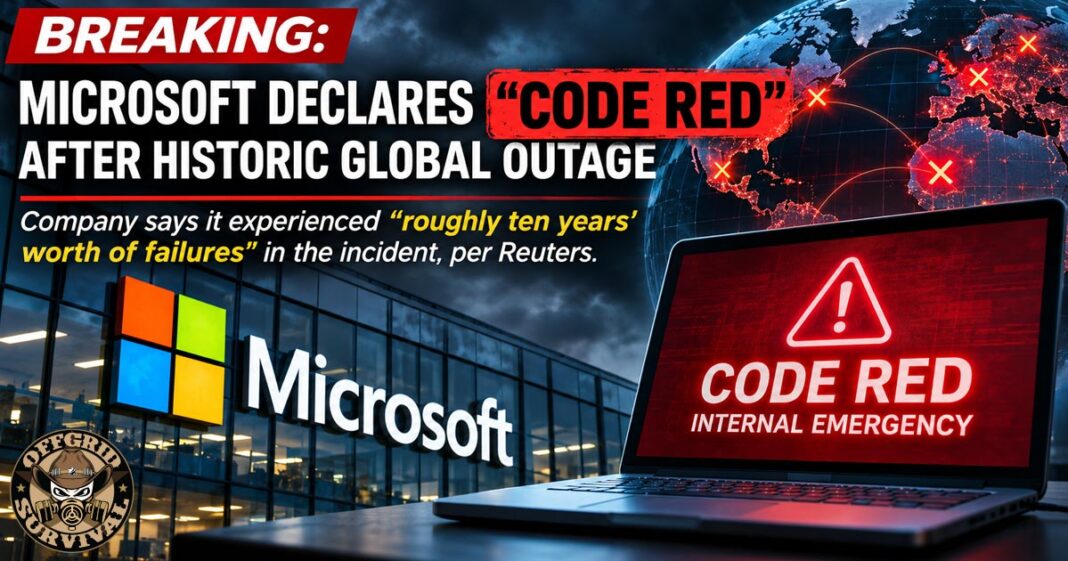
- Microsoft declaring Code Red following a historic global outage.
- America’s classified intelligence networks experiencing disruptions as hackers target major financial institutions.
- Hackers using artificial intelligence to compromise businesses and threaten banking systems.
- AI-discovered software vulnerabilities that could threaten much of the internet.
- The FBI investigating a breach of its national crime database.
We are spending staggering amounts of money developing artificial intelligence while the digital infrastructure we already depend on is repeatedly failing. We are allowing a relatively small number of technology companies to become increasingly important to our economy, our retirement savings, our national security and our ability to conduct everyday business.
Now imagine dealing with a major economic downturn at the same time we are experiencing widespread banking disruptions, cyberattacks and failures of essential infrastructure.
These are risks that can compound one another, and very few Americans are adequately prepared for them.
Are You Prepared for an Economic Collapse?
We’ve been warning readers for years that one of the most likely disasters they will face in their lifetime is an economic one. You don’t need a nuclear war, an EMP attack or the complete breakdown of society to find yourself unable to feed your family or keep a roof over your head.
A lost job, a collapsing business, a prolonged banking outage or a financial crisis that wipes out your savings can turn your life upside down just as quickly.
There are things you should be doing now to protect yourself and your family:
- Eliminate unnecessary debt. High-interest credit cards and excessive monthly payments can destroy your financial stability during a prolonged downturn.
- Build a stockpile of food and household essentials. Having several months of necessities on hand can significantly reduce your expenses if you lose your income.
- Keep emergency cash at home. Recent banking outages have demonstrated why relying entirely on electronic payments is a bad idea.
- Build an emergency fund. Work toward having enough accessible savings to cover six months or more of essential living expenses.
- Diversify your sources of income. Depending entirely on one employer, especially in an industry vulnerable to automation, puts your family at considerable risk.
- Review your financial exposure. Understand how much of your retirement savings and investments are tied to the same handful of technology companies.
- Develop practical skills. Learn how to grow food, repair equipment, maintain your home and provide services that people will need regardless of what happens on Wall Street.
For a more comprehensive look at protecting yourself and your family, read our guide on How to Prepare for an Economic Collapse.
Nobody knows exactly when the AI bubble will burst, how far the stock market could fall, or whether the country is headed into another major recession. But waiting until your employer announces layoffs, your retirement account takes a massive hit or your family can no longer afford groceries is a terrible preparedness strategy.
The warning signs are already there. You don’t need to wait for the government or Wall Street to officially declare a crisis before you start preparing for one.