
Being cold while you’re camping really sucks. It also ruins the next day, since a bad night’s sleep tanks your judgment and energy right when you need both. Here’s the full picture on staying warm overnight outdoors — including a neat, cheap trick involving an old water bottle, but built around the bigger system that actually keeps you warm in the first place.
The Mistake Almost Everyone Makes: Ignoring the Ground
Most people assume a warm sleeping bag is the whole answer to staying warm at night. It isn’t, and this is the single biggest gap in most beginner advice on the subject. Here’s the problem: the insulation in a sleeping bag works by trapping warm air in loft — that puffy thickness you see when a bag is fully fluffed out. The second you lie down, your body weight crushes the insulation directly underneath you flat. Flat insulation doesn’t trap air, so it does almost nothing to stop heat from draining straight out of your body into the cold ground beneath you. You can have a sleeping bag rated for well below freezing and still wake up shivering if you’re lying on bare ground or a thin pad.
This is exactly why a proper sleep system has three parts, not one: a sleeping bag (insulates you from the cold air), a sleeping pad (insulates you from the cold ground, which loses you far more heat than the air does), and your clothing (a layer you can add or remove to fine-tune the whole system). Skip the pad, or use one that’s too thin, and the warmest bag in the world won’t save you.
If you’re shopping for a pad, look for its R-value, a standardized rating of how well it resists heat loss to the ground. Higher numbers mean more insulation, and R-values are additive if you stack pads — a foam pad with an R-value of 2 placed under an inflatable pad with an R-value of 3 gives you a combined R-value of 5. As a rough guide, an R-value of 1.5 to 2.5 is fine for mild summer nights, 3 to 4 covers most three-season camping, and anything below freezing really calls for 5 or higher. If you only remember one thing from this article, make it this: your sleeping pad matters as much as your sleeping bag, arguably more, and it’s the piece most people skimp on.
The Hot Water Bottle Trick
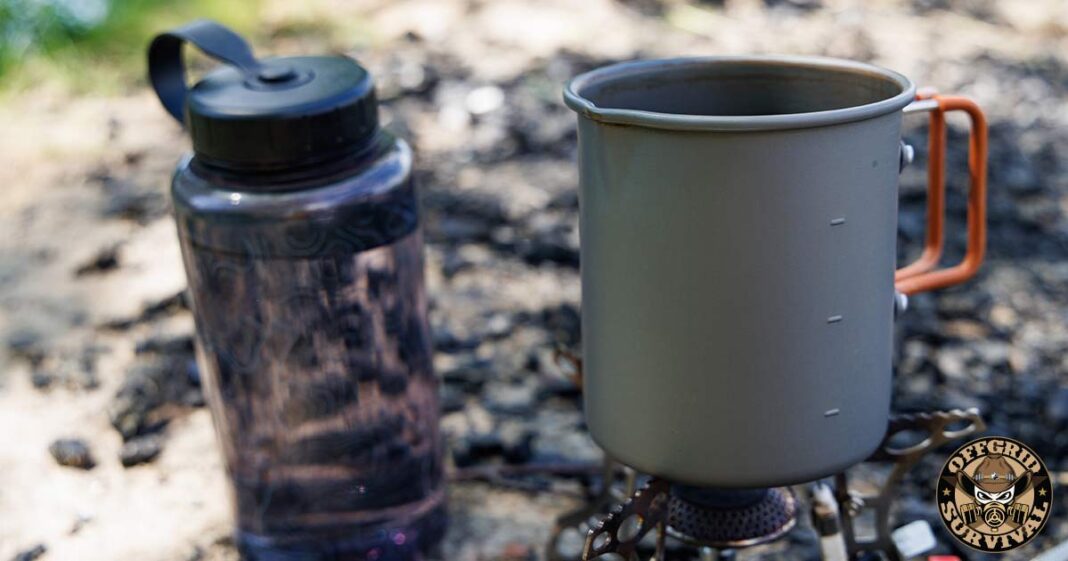
While some people swear by chemical hand warmers, a cheaper and reusable way to add real heat to your sleeping bag can be found in an old plastic water bottle.
To do it right:
- Heat water over your campfire or stove until it’s hot, but not boiling.
- Pour it into a sturdy water bottle, filling it about three-quarters of the way. Make sure the cap is on tight and doesn’t leak.
- Wrap the bottle in a sock, a piece of clothing, or a small towel before putting it in your sleeping bag. This isn’t optional — more on why below.
- Slide it down near your feet or core before you get in, and let it pre-warm your bag for a few minutes before you climb in yourself.
- Smile, because you’re nice and toasty warm.
The wrap step matters more than the original version of this tip let on. A bottle filled with truly hot water held directly against bare skin for an extended period can cause a real, if low-grade, burn — your skin doesn’t always register gradual heat damage the way it registers a quick scald, especially once you’re drowsy and drifting off. A sock or thin layer between the bottle and your skin solves this completely while still letting plenty of heat through. Also double-check the cap before it goes anywhere near your sleeping bag; a hot water bottle is a great trick, a leaking hot water bottle in your only sleeping bag on a cold night is a genuinely bad night.
This trick works because it adds active heat to a system that’s otherwise only working to retain the heat you’re already generating. Put the bottle near your core or between your thighs (where major blood vessels run close to the surface) rather than your feet alone, and you’ll warm up faster, since your body will circulate that heat outward to your extremities on its own.
The Hot Rocks Method
A reader on the original version of this article mentioned using hot rocks from the outer ring of a fire, and it’s a solid technique worth covering properly, since it works on the same principle as the water bottle but doesn’t require carrying a bottle at all.
Rocks that have been sitting at the edge of a fire (not directly in the flames, which can cause some rock types to crack or even explode from trapped moisture) hold heat for a genuinely long time once they’re warmed through. Wrap a fist-sized rock or two in a thick cloth, several layers if you can manage it, and place them in your sleeping bag before you climb in, the same way you would with the water bottle. Like the water bottle, never put a hot rock directly against skin — the surface temperature on a rock that’s been near a fire can be high enough to burn, and unlike a water bottle, you can’t easily judge its temperature by feel before it’s already too late.
The advantage of rocks over a water bottle is that they don’t require carrying anything extra or risk leaking, which makes this a genuinely useful trick if you’re traveling light or your only water bottle is needed for actual drinking water. The downside is that rocks lose their heat faster than water does once removed from the fire, so this works best as a “warm the bag right before bed” trick rather than something that’ll still be putting out useful heat hours into the night.
Building the Rest of Your Sleep System
The water bottle and hot rocks tricks both work better, and matter less, once the rest of your setup is solid. A few fundamentals worth getting right:
Don’t sleep in the clothes you wore all day. Sweat and moisture trapped in your daytime layers will actively pull heat away from your body overnight. Change into dry clothes, even just a clean base layer, before getting into your bag. This single habit makes a bigger difference than most people expect.
A hat matters more than people think. You lose a meaningful amount of body heat through your head and neck, and a simple beanie or warm hat worn to bed is one of the cheapest, lightest ways to noticeably improve how warm you sleep.
Eat something before bed on a cold night. Digestion generates real metabolic heat, and going to sleep on an empty stomach gives your body less fuel to work with overnight. A small snack with some fat and protein before bed, not a huge meal, helps your body keep generating warmth through the night.
Don’t bury your face inside the sleeping bag. It feels warmer in the moment, but the moisture from your breath condenses inside the bag’s insulation over the course of the night, which reduces how well that insulation lofts and traps air. Use a hat and, if needed, pull a jacket hood up rather than breathing directly into your bag.
Loosen up, don’t bundle tight. A sleeping bag works by trapping a layer of warm air around your body. Wearing so many bulky layers that you compress the bag’s loft from the inside actually works against you. Dress in reasonable layers, not everything you own at once.
Use your tent or shelter to block wind, even if it doesn’t add much insulation on its own. Wind dramatically accelerates heat loss compared to still air at the same temperature, so cutting wind exposure is one of the highest-value, lowest-effort things you can do for an exposed campsite.
Common Myths Worth Retiring
A few pieces of common camping wisdom around staying warm don’t actually hold up, and they’re worth clearing up since they tend to get repeated as confidently as the advice that’s actually correct.
“Alcohol before bed will warm you up.” It does the opposite over the course of the night. Alcohol causes blood vessels near your skin to dilate, which creates a brief feeling of warmth while actually accelerating heat loss from your core. It also dulls your judgment about how cold you’re actually getting, which is a genuinely dangerous combination in a real cold-weather situation.
“A bigger fire right before bed is always better.” A roaring fire right before you turn in burns through your fuel fast and leaves you with nothing but coals a few hours later, right when temperatures usually drop the most. A smaller, well-banked fire that burns slow and steady, or coals raked into a bed you can sleep near, often outperforms a big blaze for overnight warmth.
“Tents make you significantly warmer than the outside air.” A tent’s main job is blocking wind and trapping a thin layer of slightly warmer, calmer air, not generating real warmth. Don’t expect a tent alone to compensate for an inadequate sleep system — it helps at the margins, but it’s not a substitute for proper insulation above and below you.

“You can power through feeling cold.” Feeling persistently cold isn’t something to just tough out — it’s useful information your body is giving you that your system isn’t working. Treat it as a signal to actually fix something (add a layer, address the ground insulation, eat something) rather than something to ignore until morning.
Know the Difference Between Uncomfortable and Dangerous
A cold, restless night is miserable but not dangerous. It’s worth knowing where the real line is, because hypothermia doesn’t require extreme temperatures to set in — it can happen at temperatures well above freezing if you’re wet, windy, and not generating enough body heat overnight.
Early signs worth taking seriously include uncontrollable shivering that doesn’t stop even after adding layers, noticeable clumsiness or fumbling with simple tasks like a zipper, and confused or slowed thinking. If you or someone in your group starts showing real confusion, stops shivering after having shivered heavily (a sign the body’s losing the fight, not winning it), or becomes difficult to rouse, that’s no longer a “tough out the night” situation — it calls for active rewarming, dry insulation, and, if symptoms are serious, getting to real medical help rather than waiting until morning.
A properly insulated pad, dry sleep clothes, and a hat solve the vast majority of cold-night discomfort before it becomes anything more serious. Pay attention to how you’re actually feeling rather than assuming a “warm enough” sleeping bag rating guarantees a safe night regardless of conditions.
A Quick Pre-Bed Checklist
Putting it all together, here’s the sequence worth running through before you settle in on a genuinely cold night:
- Change into dry sleep clothes if your daytime layers picked up any sweat or moisture.
- Get a properly insulated pad under your full sleeping bag, not just under your torso.
- Heat water or warm a couple of rocks at the fire while you’re doing everything else, so they’re ready right when you need them.
- Wrap your heat source — bottle or rocks — in cloth and tuck it into your bag a few minutes before you get in, positioned near your core.
- Put on a hat, eat a small snack if it’s genuinely cold, and climb in wearing reasonable, not excessive, layers.
- Make sure your shelter is actually blocking wind, not just providing a roof.



I like using hot rocks from the outer ring of my fire. Stays warm for hours