

The American Discovery Trail (ADT) is a long-distance hiking trail that spans 6,800 miles across the United States from the Atlantic to the Pacific Ocean. The trail passes through 15 states and offers an unparalleled opportunity to experience America’s diverse landscapes, cultures, and history.
Hiking the ADT is a journey of a lifetime that can take several months or even years to complete. Hikers will encounter rugged mountains, rolling hills, vast prairies, and expansive deserts along the way. They will also travel through small towns, big cities, national parks, and historic sites, gaining a unique perspective of the country and its people.
The ADT was created in 1989 by the non-profit organization the American Discovery Trail Society, to provide a cross-country trail system that would promote outdoor recreation, healthy lifestyles, and cultural and economic development. The trail is open to hikers, cyclists, and equestrians.
Let’s take closer look at the American Discovery Trail, its history, route, highlights, challenges, and tips for hikers planning their adventure.
History of the American Discovery Trail
The idea of a national trail system that would connect the East and West coasts of the United States was first proposed in the 1960s by hiker and outdoor enthusiast Benton MacKaye. MacKaye envisioned a trail linking the Appalachian Trail (AT) in the East with the Pacific Crest Trail (PCT) in the West, forming a continuous hiking route from Maine to California.
In the following decades, several long-distance trails were established across America, including the Pacific Northwest Trail, the Continental Divide Trail, and the Florida Trail. However, no unified trail system linked all these trails together.
In 1989, the American Discovery Trail Society was founded by a group of outdoor enthusiasts and advocates who shared the vision of a cross-country trail system. The Society’s mission was to create a trail connecting existing trails and incorporating new routes to form a continuous hiking trail that crossed the entire length of the United States.
Over the next few years, volunteers and trail organizations worked tirelessly to scout, survey, and build the trail. Finally, the ADT was officially launched in 1999, connecting the Cape Henlopen State Park in Delaware with Point Reyes National Seashore in California.
Since then, the trail has undergone several improvements and modifications, with new sections added and existing sections rerouted to avoid hazards or improve hiker safety. Today, the ADT is a well-established but still evolving national trail system that attracts thousands of hikers annually.
Only a few people have actually completed the entire trail; most notably was Mike “Lion King” Daniel who was the first person to backpack the entire 6,800 miles in one continuous hike.
American Discovery Trail Routes

The American Discovery Trail is divided into two main sections: the Eastern half and the Western half. The dividing point is the small town of La Junta, Colorado, which is located in the southeastern corner of the state.
The Eastern half of the trail starts at Cape Henlopen State Park in Delaware. It continues through Maryland, West Virginia, Pennsylvania, Ohio, Indiana, and Illinois before reaching the Mississippi River at St. Louis, Missouri. The total length of the Eastern half is approximately 3,070 miles.
The trail’s western half starts at the Mississippi River and continues through Missouri, Kansas, Colorado, Utah, Nevada, and California before ending at Point Reyes National Seashore in California. The total length of the Western half is approximately 3,730 miles.
As mentioned earlier, the ADT combines existing and new trails that were established specifically for the ADT. Some of the trials that make up the ADT include:
- The Ohio-to-Erie Trail in Ohio
- The Cardinal Greenway in Indiana
- The Katy Trail State Park in Missouri
- The Santa Fe Trail in Kansas and Colorado
- The Pony Express National Historic Trail in Utah and Nevada
In addition to these trails, the ADT includes numerous connecting routes linking the main trail to nearby towns, landmarks, and other points of interest. These connecting routes can vary in length and difficulty, and hikers should consult the official ADT maps and guidebooks to plan their routes accordingly.
Highlights of the American Discovery Trail

One of the most exciting aspects of hiking the American Discovery Trail is the vast array of landscapes, cultures, and history that hikers will encounter along the way. The ADT has something for everyone, from pristine beaches to snow-capped mountains, from bustling cities to quaint towns, and from ancient ruins to modern museums.
Here are some of the highlights of the American Discovery Trail:
- The Chesapeake & Ohio Canal National Historical Park in Maryland
- The New River Gorge National River in West Virginia
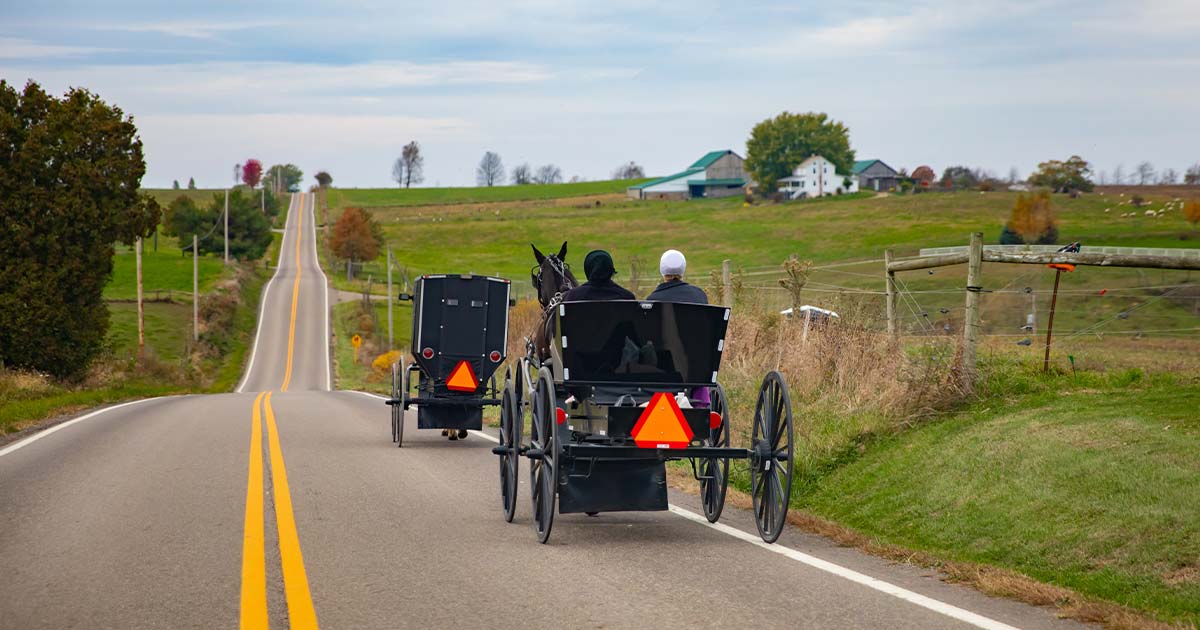
- The Amish Country in Ohio
- The Indiana Dunes National Park in Indiana
- The Gateway Arch National Park in St. Louis, Missouri
- The Rocky Mountains in Colorado
- The Arches National Park in Utah
Hiking Resources:
- Your Hiking and Backpacking Adventures Await – Are You Prepared? A Comprehensive Guide to Planning Your Next Outdoor Adventure
- Major U.S. Hiking Trails: A List of the Longest Hiking Trails in America
- 7 Common Wilderness Survival Mistakes
- Hiking Safety Tips: Before you ever step foot on the trail…
- Navigation: How to Read Topographic Maps
- Light Hiking – Tarp Shelters
PNT Hiking Resources






The American Discovery Trail is not designated as a National Scenic Trail and does not qualify as one because it passes through many towns and cities. You can read more about the American Discovery Trail at their website https://discoverytrail.org.
Bob Palin
Vice President,
American Discovery Trail Society.