
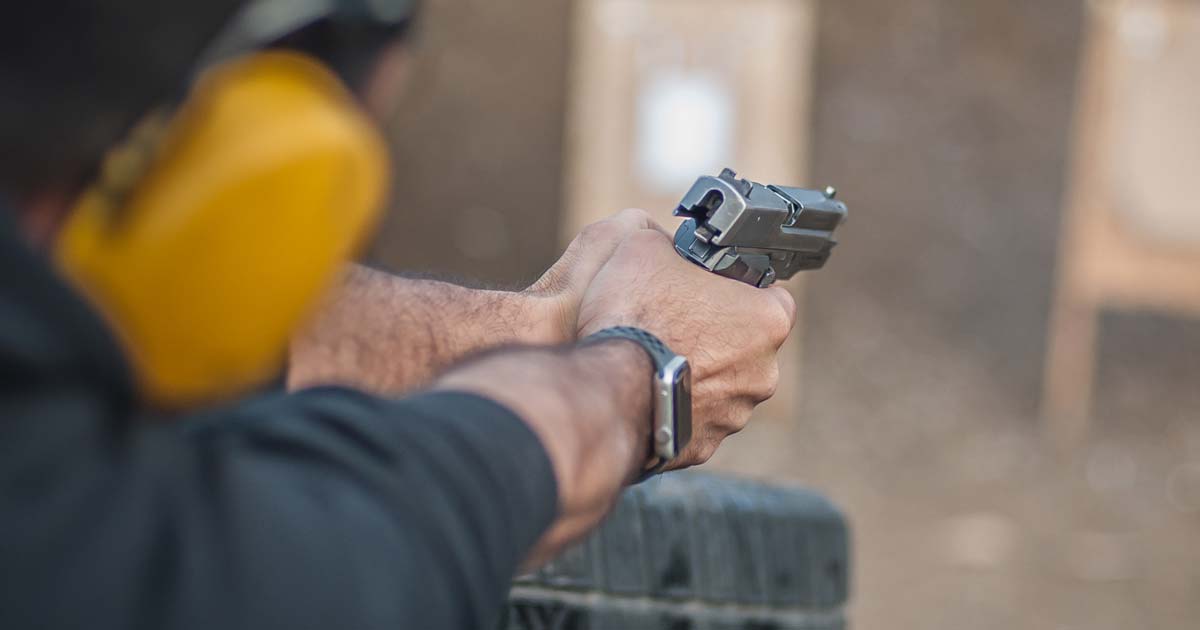
A beginner’s guide to safe gun handling, and a refresher for the guys who think they don’t need one.
As firearms owners, we bear a responsibility that needs to be taken seriously; it’s literally a matter of life and death. Since every gun is different, before handling any firearm you need to thoroughly familiarize yourself with that gun. Even if you consider yourself an expert, before handling a new firearm you need to understand the particular characteristics of that gun.
All too often, I see gun owners who let their ego get in the way of good common sense safety practices. These are guys who have been shooting for years, but are too proud — or too stupid — to ask for help. For instance, I can’t tell you how many times I’ve seen someone at the range take an unfamiliar firearm from a friend, without ever asking a single question about that firearm.
They take the gun, and their hand goes straight to where the safety is on their gun. Not this one. This one puts the safety somewhere else, or has a decocker where they expect a safety, or has no manual safety at all. Ten seconds of asking would have solved it. Ego is what stopped them from asking, and ego is what puts a round through the roof of the range.
NEVER ASSUME YOU KNOW THE GUN!
In the situation I mentioned above, there should have been a number of things that happened before ever touching that firearm.
Ask if it’s Unloaded: You should always ask if it’s unloaded before ever putting your hands on it. If the person answers yes without checking, tell them to show you. A guy who says “yeah it’s empty” without looking is telling you he doesn’t know. He is guessing, and he is guessing with your life.
Check For Yourself: It’s your responsibility to check for yourself.
- Point the muzzle in a safe direction, and if the firearm has a safety make sure it’s on.
- You should then immediately check to see if it’s loaded. Just because your friend told you it was unloaded doesn’t mean it’s unloaded. There is no such thing as being too safe.
- Always treat every firearm as a loaded weapon. Live by the saying, “There is no such thing as an unloaded gun.”
Ask for Help: Don’t be the guy that was too proud, or too stupid, to ask for help; that guy is a danger to himself and everyone around him. When taking an unfamiliar firearm, you should always ask the owner to show you the particular characteristics of that gun. They are all different; from the location of the safety to how it handles, never assume you know how it works.
How to Actually Check That a Gun Is Unloaded
Telling somebody to “check it” is useless if nobody ever showed them how. This is the step most beginner articles skip, and it is the one that gets people killed.
Get the ammunition source out first, then check the chamber. The order is not optional and it is the single most common mistake in this entire article. If you rack the slide on a semi-automatic while a loaded magazine is still in the gun, you eject the round that was in the chamber and immediately feed another one out of the magazine. Drop the magazine after that, look at the empty magazine in your hand, and you will swear the gun is empty. It has a live round in it. Magazine first. Chamber second. Every time.
Semi-automatic pistol or rifle: Point it in a safe direction. Drop the magazine and set it aside. Lock the slide or bolt to the rear. Look into the chamber. Then stick a finger in there and feel it, because in bad light your eyes will lie to you and your finger will not.
Revolver: Open the cylinder and look through every single chamber. Not most of them. All of them. Push the ejector rod to be sure, and keep the cylinder open while the gun is out of your hands.
Pump or semi-auto shotgun: Cycle the action and count the shells coming out until nothing else comes out, then lock the action open and look into both the chamber and the magazine tube. Tube-fed guns hide a shell more easily than anything else you will handle.
Bolt action: Remove or empty the magazine, run the bolt to the rear, and look into the chamber and the magazine well.
Break action: Break it open and look at the face of the barrels. This is the easiest one on the list, which is exactly why people get lazy with it.
Once the gun is clear, leave the action open. An open action is a visual statement to everyone in the room that the gun is safe, and it means nobody has to take your word for it.
How to Hand a Gun to Another Person
One of the readers on the original version of this article described a drill he ran at home, passing different firearms around the living room and teaching everybody how to handle, clear, and properly hand off a gun. That is a better family training exercise than most of what gets sold as a class, and the handoff is worth spelling out.
Clear it first, in front of the person. Leave the action open and the magazine out. Hand it over with the muzzle pointed in a safe direction and your finger nowhere near the trigger. Do not let go until the other person has a solid grip and tells you they have it.
Then that person clears it again. Not because you are a liar, but because that is the rule. Every firearm is loaded until you have cleared it yourself, and passing it to somebody else resets the clock. If your buddy takes offense that you double-checked the gun he just handed you, the problem is his ego, not your manners.
Safe Firearm Handling and Practices
There are some basic rules that should always be followed, no matter what you are holding or how long you have been shooting.
Always point the Muzzle in a safe direction: If people followed this one rule, virtually all firearm accidents would be eliminated. Your firearms should never be pointed at anything you don’t intend on shooting. That includes the walls of your house, the guy at the next bench, your own hand, and your own leg. Before you handle a gun anywhere, decide where the safe direction is in that specific room and keep the muzzle there.
Never Rely on your Guns Safety: While your safety should always be on when you’re not shooting, it should never be counted on to prevent the gun from firing. A safety is a mechanical device that can and will fail; it should never be 100% relied on to stop an accident. It is a chunk of metal held by a spring, and it wears out, breaks, collects gunk, and gets put back together wrong just like every other part in the gun.

Keep your finger off the Trigger: If you’re not in the process of firing your gun, at no time should your finger ever be inside the trigger guard. The internet is loaded with pictures of morons posing with their finger on the trigger. This practice is not only stupid, it’s likely to get someone killed. Your finger rides flat along the frame above the trigger guard, and it stays there until the sights are on the target and you have decided to shoot.
There is a reason this rule matters more than people think. Under stress your hands clench without you telling them to. If you stumble, if something startles you, if you catch your balance with the gun in your hand, whatever your finger is touching is going to get squeezed. If it is the frame, nothing happens. If it is the trigger, the gun fires.
Practice, Practice, Practice: If you can’t remember the last time you went shooting, you’re doing yourself and your family a disservice, and you’re putting your lives at risk. To be a good and safe marksman, you need to practice your shooting skills. Practice not only makes you a better shooter, it also ensures your gun is in good working order when you need it. The last thing you want to find during a self-defense situation is that you have a gun that’s not in condition to be fired.
The original version of this article quoted a safety instructor saying “don’t fear the man with many guns, fear the man with one,” and used it to describe guys with almost no experience. A reader named Adam pointed out in the comments back in 2015 that the saying means the opposite, and he was right. “Beware the man with one gun, because he probably knows how to use it” is a compliment to the guy who has run ten thousand rounds through the same pistol and knows every quirk it has. He’ll beat the guy with a safe full of hardware and a hundred rounds a year through all of it every time. That correction sat in the comments for eleven years, so consider it made.
The underlying point stands and it stands harder with the adage pointed the right way. Owning guns is not a skill. Shooting them is. Buy fewer and shoot them more.
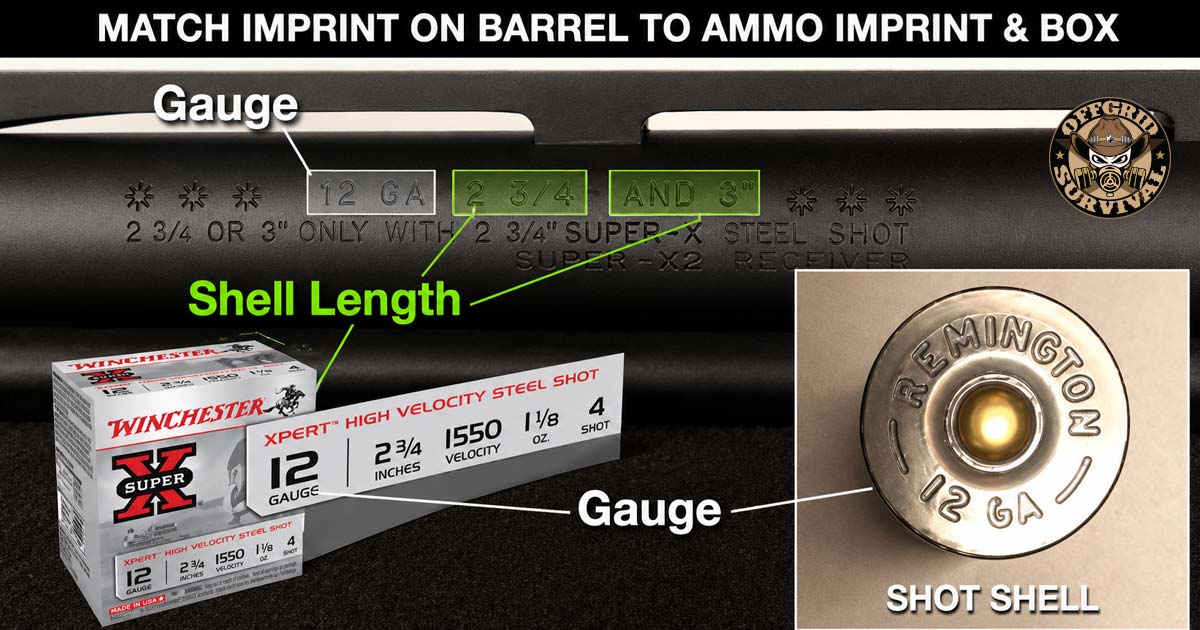
Make sure you are using the Right Ammo: Using the wrong type of ammunition can seriously damage your gun, and can cause serious injury to yourself and those around you.
Although this seems like common sense, it’s actually a very common mistake that even some seasoned hunters have made out in the field. The classic example is accidentally loading a 20 gauge shell into a 12 gauge shotgun. The 20 gauge shell is too small to stay in the 12 gauge chamber, so it drops forward and lodges in the barrel where you cannot see it. The gun feels empty. The action closes on a 12 gauge shell behind it. When you pull the trigger, the barrel has nowhere to send that pressure and it comes apart in your hands.
This happens often enough that the industry built a warning system around it. SAAMI reserves the color yellow for 20 gauge ammunition and prohibits it on any other gauge, for exactly this reason. If you shoot both gauges, that yellow hull is the only thing standing between you and a blown barrel, so pay attention to it and never mix gauges in the same pocket, the same bag, or the same shell belt.
The problem is not limited to shotguns. A .380 will chamber in some 9mm pistols. A .40 S&W will drop into a 10mm. Firing 5.56 NATO in a barrel marked .223 Remington raises pressure past what that chamber was built for. Read the stamp on the barrel, and buy the ammunition that matches it.
Watch for squib loads and bore obstructions: A squib is a round that goes off weak, usually from a light or missing powder charge, and leaves the bullet stuck inside the barrel. It sounds wrong. There is a pop instead of a bang, almost no recoil, and often no hole in the target. If that happens, stop. Do not clear the gun and keep shooting. Unload it, lock the action open, and look down the bore from the breech end. Fire another round behind a stuck bullet and you will destroy the gun and probably your hand.
The same goes for anything else that can get into a barrel. Mud, snow, a cleaning patch you forgot about. If your muzzle goes into the dirt on a hunt, stop and check the bore before the next shot.
Know where you are firing, and what’s beyond your target: Once you pull that trigger, you can never get that shot back. Unless you know exactly what you’re shooting at, and what lies beyond that target, you should never take the shot.
Even a small round like a .22 LR bullet can travel a distance of about 1¼ miles, which means you had better be darn sure of what’s beyond your intended target. A .223 can carry well over two miles. A missed shot does not stop at the edge of your property, and “I didn’t think it would go that far” has never once helped anybody in court.
Inside a house, the same rule applies at a much shorter distance. Common defensive handgun rounds and buckshot will punch through multiple layers of interior drywall and keep going. If you have a home defense plan, part of that plan is knowing which walls in your house are exterior walls, and where everybody in the family sleeps.
THERE’S NO SUCH THING AS AN UNLOADED GUN: Drill that saying into your head, because it’s probably the most important safety advice that you’ll ever receive. Every firearm you touch should always be considered a loaded weapon; therefore, it needs to be given the respect due a loaded gun.
Wear Eye and Ear Protection Every Single Time
This gets left out of most gun safety lists because nobody dies from it, so it does not feel like a safety issue. It is one anyway, and it is the one that will follow you for the rest of your life.
Hearing damage from gunfire is permanent, it is cumulative, and there is no fixing it later. A gunshot runs somewhere between 140 and 165 decibels depending on the gun and the load. Damage risk starts right around 140 dB for a single impulse, which means one unprotected shot can cost you hearing you never get back. Indoor ranges are worse than outdoor ones, because all that sound bounces off concrete and comes back at you.
Foam plugs run up to about 33 NRR and good muffs run in the low twenties to low thirties. Wearing both at once does not add the numbers together, but it does buy you roughly another 5 dB, and under a muzzle brake or indoors that is worth doing. Plugs only help if they are seated correctly. Roll them down tight, pull the ear up and back, and hold them until they expand.
Eye protection needs to be rated, not just tinted. Look for ANSI Z87.1 on the frame. Sunglasses are not eye protection. Hot brass, unburned powder, fragments coming back off steel targets, and the occasional case head failure are all normal range events, and your eyes do not grow back either.
Most Negligent Discharges Happen When Nobody Is Shooting
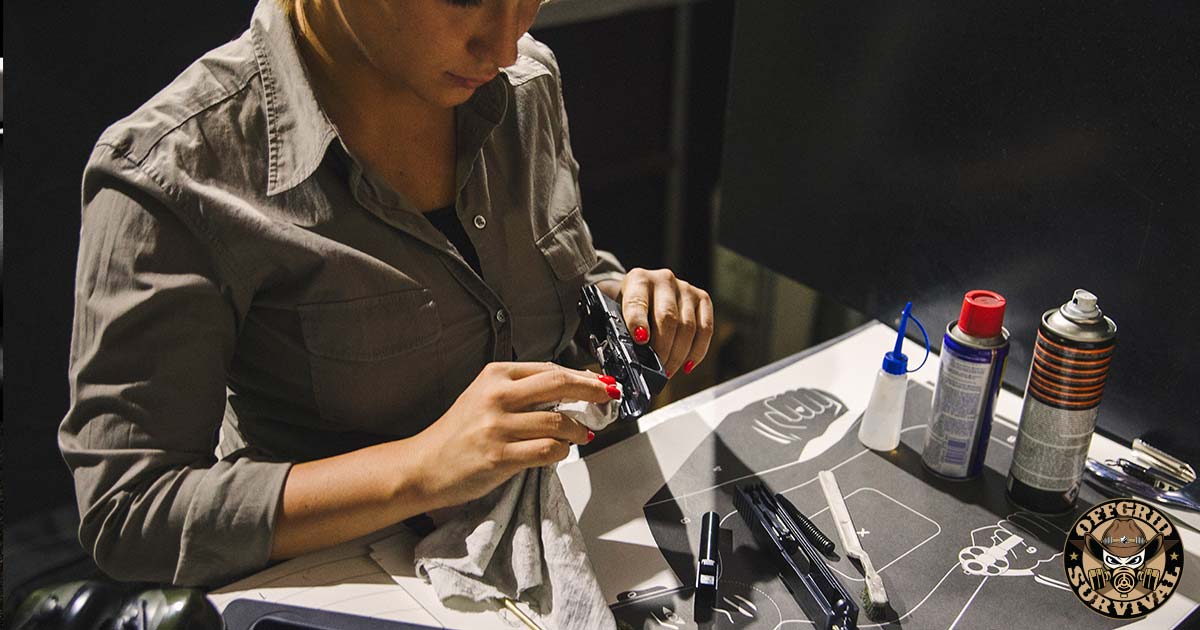
Look at how these actually happen and a pattern shows up fast. People do not shoot themselves while aimed at a target. They shoot themselves while loading, unloading, cleaning, holstering, unpacking, or showing the gun to somebody.
All of that is administrative handling, and it is where your guard drops because you are not thinking of yourself as shooting. You are thinking of yourself as tidying up. That is exactly when the muzzle drifts across your leg and your finger finds the trigger without permission.
Cleaning: Unload the gun, then physically remove every round of ammunition from the room. Not the table. The room. Then clear it again before you start. The number of people who have put a round through a wall while cleaning a gun they were certain was empty would fill a stadium.
Holstering: Slow down. Look the gun into the holster if you can. Make sure the holster mouth is clear and nothing has gotten inside it, because a drawstring, a jacket hem, or a folded piece of soft holster can push the trigger for you on the way down. A quality rigid holster that fully covers the trigger guard is safety equipment, not an accessory, and a cheap floppy one is a liability strapped to your hip.
Dry fire: Ammunition leaves the room. Every round. Then pick a backstop that would actually stop a bullet, aim at that, and clear the gun again when you are done. Most dry fire accidents happen on the last rep, after somebody reloaded the gun and then decided to do “just one more.”
Alcohol: Guns and drinking do not mix, and neither do guns and anything else that dulls your judgment or slows your hands. Shoot first, drink later, and never both in the same afternoon.
The Four Rules Are Layered on Purpose
People treat the safety rules like a list to memorize. They are actually a system, and the system is built so that no single mistake kills anybody.
If the muzzle is pointed somewhere safe and the gun goes off, you lose a floorboard. If your finger is off the trigger and you stumble, nothing happens. If you treated it as loaded when it turned out to be loaded, you were already right. Every rule is a backup for the failure of another rule.
That is why “I broke one rule but the gun was unloaded” is not a defense. It means the whole system was down to a single point of failure and you got lucky. People who get seriously hurt with firearms almost never break just one rule. They break two or three at once, and the layers that were supposed to catch the mistake were already gone.
Store Them Like Somebody Might Find Them
A gun you cannot control is a gun somebody else can. Storage is where most gun owners quietly do the least.
Anything not on your body should be locked up. A real safe if you can afford one, a quality lockbox if you cannot, and cable locks as the bare minimum on anything else. If you keep a gun accessible for defense, a quick-access safe with a mechanical lock or a good biometric gets you speed without leaving hardware sitting in a nightstand drawer where a curious ten-year-old will find it within a week of you forgetting about it.
Store ammunition separately from anything a child or a guest could get into. Know exactly how many guns you own and exactly where every one of them is, right now, without going to check. If you cannot do that, you have a problem worth fixing this weekend.
Teach Your Kids Before Somebody Else’s Kid Shows Them
A reader named Echo left a comment on the original version of this article that was better than the article. The gist of it: teach children about guns as early as they can hold a conversation. Answer every question they ask. Do not make it a mystery, and do not glamorize it. Satisfy the curiosity, and it stops driving them to go find out on their own while you are at work.
That is exactly right, and the reasoning is worth stating plainly. “Don’t touch” is not a safety plan. It is a rule with no explanation behind it, which makes the gun more interesting, not less. A kid who has been shown the gun, been allowed to hold it under supervision, been walked through what it does and why it is dangerous, and been taken shooting when he is old enough, is a kid with nothing left to sneak around for.
Teach them the response to finding a gun anywhere, including at a friend’s house: stop, don’t touch it, leave the room, tell an adult. Then run it as a drill instead of a lecture, because a rule your kid has practiced is worth ten rules he has only heard.
And ask the question nobody likes asking. Before your kid goes to a sleepover, ask the other parents whether there are guns in the house and how they are stored. It is an awkward thirty seconds. It is also the only version of this conversation that happens before something goes wrong.
Learn the Range Rules Before You Get There
Ranges run on a small vocabulary and everybody is expected to know it.
Cease fire means stop shooting immediately, take your finger off the trigger, and put the gun down. It does not mean finish the magazine. Anybody on the line can call it, including you, and if you see something dangerous you are supposed to.
Cold range means all guns are unloaded with actions open and nobody touches a firearm for any reason, because people are downrange changing targets. Hot range means the line is live. When the line is cold you stay behind the bench, and you do not handle a gun, adjust a scope, or pack a case until the line goes hot again. That last one catches people constantly.
Muzzle discipline does not stop when the gun is on the bench. It points downrange, always. Take a new gun out of the case with the muzzle pointed downrange, and put it away the same way.
Wash your hands before you eat. Range surfaces and spent brass carry lead residue, and a lot of shooters pick up a burger on the way home without giving it a thought. Cold water and soap, every time.
THERE’S NO SUCH THING AS AN UNLOADED GUN
You will handle a firearm thousands of times over your life and it will be uneventful thousands of times, and that is the actual danger. The gun does not get safer with familiarity. You get sloppier. Complacency is what turns a guy with thirty years of experience into a headline.
So check it yourself. Every time, every gun, no matter who handed it to you, no matter how sure they were, no matter how stupid you feel doing it in front of somebody who is watching you do it. The two seconds it costs you are the cheapest insurance in the world.
Every firearm you touch is loaded until you have personally proven otherwise. Not your buddy. Not the guy at the counter. You.
Firearm Resources:
- How a gun works and a look at the basic parts of a firearm
- Stress Response Training: The missing ingredient in Firearms Training
- Prepper Guns: Your weapon of choice when the SHTF
- Best Takedown Survival Rifles
- Prepper Guns: Why a Shotgun should be part of your Home Defense Arsenal



excellant article, complacency is deadly
Yes! If you always treat it like it’s loaded, you can never accidentally shoot someone else or yourself. That’s what my father taught me. Great article.
“Never assume you know your weapon.” Well that just sums it up pretty well. When it comes to guns, you can ill afford to drop your guard. Always treat your weapon as loaded and don’t forget to stack them safely in sturdy gunsafes.
Very good article. I would like to add something about kids and guns.
The earlier you teach a child about guns the better it will be. As soon as a child is old enough to listen for more than 5 minutes you can teach more than just the words, “don’t touch”. Always answer your child’s questions about guns. Don’t make it a mystery or glamorize it. Don’t brush off a kids question or curiosity. Doing so will only make them more determined and more curious. With my 2 kids as soon as they could hold my .22 I had them out practicing with it. I made sure that their curiosity was satisfied and i feel that in doing so it nipped any dangerous exploring that they might have tried to do on their own.
Very well written article! I believe you’ve misinterpreted the “beware the man with one gun” sentiment, however. That saying is meant to imply that, in a gunfight, someone whose entirety of experience is focused on one firearm is likely to be far more confident, competent, natural, and familiar with all of the intricacies and idiosyncrasies of their gun than the typical guy who wheels his cart to the range and “dabbles” with a little bit of everything.
well said every firearm is loaded until you clear it yourself. Once you pass it to someone else it is still loaded until they clear it as well. We had a exercise at the house where we passed different firearms around the living room and tough everyone how to handle, clear, and properly hand the firearm to the next person. This was done to get the kids and women fimilar as well as comfortable with them.
The adage of guns dont kill people , people kill people needs revising , the gun WILL kill , you me or anyone in the line of fire , at any time , UNLESS cleared and made safe! …great article , ob by the way , if that video is advanced training , then I am invincible ! Registered lethal weapon myself ! … be smart , ASK and stay alive !
When it comes to firearms lessons, it’s good to have an age basis upon when and what to teach kids. My daughter is already 5, so I’ll try to enroll her in a class for gun safety. Thanks for the help! Hope this shall serve my daughter well in times of dire needs.
What my question is, how do i learn about the parts of guns learn everything because i’m wanting to make my career out of gunsmithing and i’m trying to learn everything i can.
I Love this site,it is so hard to find information that is understandable.Or information that is needed to help when getting your CCW. I knew basic knowledge of some things but there is a lot of things i knew nothing about.I am serious about owning a handgun and what to make sure I am aware of the knowledge that goes with it.
Thank You
Great read! I really like how this breaks everything down in simple steps. Too many people think “it won’t happen to me” and skip the basics. The reminder that every gun should be treated as loaded is so true — it’s the one rule that can prevent almost every accident. Thanks for stressing practice too; safety and skill go hand in hand.