

It’s the middle of the night; your kids are tucked away in bed, your wife is fast asleep, and then you hear it. The sound of shattering glass downstairs; you have seconds to respond:
- What do you do?
- What are your kids doing?
- What is your wife doing in response to the threat?
Well if you don’t have a plan, and you haven’t conducted some sort of training drills then the answer to those questions are probably a bit murky. Unfortunately, the guy who just broke into your house knows exactly what he’s doing and has probably prepared for every aspect of the crime.
You need a plan, and you need to conduct periodic disaster drills.
I can’t tell you how many people I’ve talked to who think they’re prepared but have never actually taken the time to test their level of preparedness. When it comes to real-world preparedness, your ability to survive a crisis comes down to two things: Your Planning and your Training.
Gear doesn’t save you. Plans on paper don’t save you. What saves you is having already made the decision, already walked the route, already found out that the back gate sticks — before the night it actually matters.
Why Drills Work: MORE THAN GEAR
There’s a reason the military, fire departments, and airline crews drill relentlessly, and it isn’t paperwork. It’s because of what happens to the human brain under acute stress.
Normalcy bias is the real killer. When something goes catastrophically wrong, most people’s first instinct isn’t to act — it’s to explain the problem away. That’s not the smoke alarm, it’s the battery. That’s not a gunshot, it’s a car backfiring. Researchers who study disaster response call the delay between “something is wrong” and “I am now doing something about it” the milling phase, and in real events it routinely eats up more time than the evacuation itself. People stand around. They gather belongings. They ask each other what’s happening.
A drill collapses that delay. When you’ve physically rehearsed a response, your brain has a file to pull instead of a blank page. You skip the debate and go straight to movement.
Fine motor skills fall apart, gross motor skills hold up. Under a real adrenaline dump you’ll lose fine dexterity, your hearing narrows, your vision tunnels, and your ability to do complex multi-step reasoning drops off a cliff. Anything in your plan that requires calm problem-solving in the moment is a plan that will fail. Drills let you find those failure points — the combination lock nobody can work in the dark, the window that takes two hands and a shoulder — while you still have the luxury of being calm.
Your family will not know what you’re thinking. This is the one that gets people. You’ve read the articles, you’ve thought about scenarios, you have a plan in your head. Your kids and your spouse have none of that. If you’ve never said it out loud and walked through it, you don’t have a family plan — you have a private daydream.
Modern homes give you three minutes or less to get out once the alarm sounds, and the Red Cross puts it closer to two minutes in some cases. Synthetic furniture, open floor plans, and lightweight engineered construction burn hotter and faster than the homes those old escape-time numbers were based on. Three minutes is not enough time to figure out a plan. It’s barely enough time to execute one you already know.
Creating your Survival Plan: Emergency Planning for SHTF threats and disasters

The first step in planning is figuring out what you’re actually planning for. It may sound a little simplistic, but far too many people make preparedness plans without actually knowing or understanding what threats they’re really preparing for.
Put together a list of the most likely threats you will face based on:
- Historical data on past disasters that have affected your region.
- Local crime stats and dangers that are specific to your geographical location.
- Anything that is unique to your situation, such as economic problems, medical issues, local dangers, and people in your group who require extra attention.
Be honest here, and be boring. The threats that will actually hit you are the mundane ones: a house fire, a job loss, a car wreck, a three-day power outage, a burst pipe, a medical emergency at 2 a.m., a wildfire evacuation order. Nobody wants to drill for a busted water heater. Everybody wants to drill for the collapse. The collapse is not what’s going to get you this year.
Pull real data instead of guessing:
- FEMA’s National Risk Index (hazards.fema.gov/nri) gives you county-level risk scores for 18 natural hazards.
- The FBI’s Crime Data Explorer lets you pull burglary and violent crime numbers for your specific city rather than the national average, which is close to useless for planning.
- Your county emergency management office publishes a hazard mitigation plan. It’s dry reading and it’s free, and it will tell you exactly which disasters your local government expects to deal with.
- Your utility’s outage map history tells you how often and how long the power actually goes down where you live.
Based on the identified threats, you need to put together the following plans.
- A Home Evacuation Plan: This is a basic plan that lists the steps you will take during an emergency that would make your home unsafe; this includes planning for things like a fire, an earthquake or home invasions.
- A Bug Out Plan: Your bug out plan takes your evacuation plan to the next level. It takes into consideration disasters that would cause you to have to leave not only your home but your neighborhood, city, and possibly even state.
- A Get Home Plan: If you work away from home, travel, or even drive to the local grocery store you should have some sort of plan that accounts for disasters that happen while away from home.
- A Communication Plan: During a disaster, it’s very likely that most communication channels will go down. You need to develop an Emergency Communications Plan, so you can immediately get ahold of those you love.
- A Shelter-in-Place Plan: Not every disaster means leaving. Chemical spills, civil unrest, severe weather, and boil-water orders all mean staying put and sealing up. Know which rooms you’d use, how you’d cut off outside air, and how long your supplies hold.
- A Medical Plan: Who’s trained, where the trauma kit is, which prescriptions are critical, what the nearest ER is versus the nearest urgent care, and what you do when 911 has a two-hour wait time — which happens in real disasters more often than people believe.
Write these down. A plan that only exists in your head can’t be handed to a babysitter, a grandparent, or a fourteen-year-old who’s suddenly in charge of his little sister.
Safety Drills: Conducting Routine Safety Drills
Once you have your plans in place, you need to figure out if those plans actually work. One of the best ways to prepare yourself and your family for disasters and threats, as well as discover any holes in your plans, is to conduct periodic emergency safety drills.
These drills should be based on the threats you identified in your planning. While everyone’s drills will be a little different, here are some ideas to get you started.
The Three Levels of Drilling
Not every drill needs everyone in body armor at 3 a.m. There’s a progression, and skipping to the hard stuff is how you end up with a family that hates preparedness and quietly stops participating.
Level 1 — The Tabletop. Everyone sits at the kitchen table. You say “there’s a fire in the garage, walk me through what you do.” Nobody moves. You just talk it out. This is where you catch the big holes — the kid who says he’d go back for the dog, the wife who assumed you’d grab the documents, the fact that nobody actually knows where the meeting point is. Tabletops cost you twenty minutes and catch maybe 60% of your plan’s problems.

Level 2 — The Walkthrough. Same scenario, but now everyone physically does it. Slow, deliberate, no time pressure, talking as you go. This is where you find out the fire escape ladder is still in the box, the back door deadbolt is painted shut, and the flashlight in the nightstand has dead batteries.
Level 3 — The Live Drill. Full speed, minimal warning, realistic conditions. Lights off, phones off, someone doesn’t cooperate on purpose. This is the one that tells you the truth, and it’s the one you only run after the first two have gone clean.
Run them in that order. Every time you introduce a new scenario, start over at Level 1.
Home Fire Drills
When it comes to likely threats, fires should be at the top of everyone’s list. The NFPA estimated roughly 329,500 home structure fires in the U.S. in 2024, causing around 2,920 civilian deaths and 8,920 injuries — a home fire reported about every 96 seconds, and roughly $11.4 billion in property damage.
Here’s the number that should get your attention: fire deaths hit a record low back in 2012 and have been climbing since. The 2024 civilian fire death toll was up nearly 7% from the year before, and the rate of deaths per 1,000 home fires is now about 25% higher than it was in 1980. Fewer fires, deadlier fires. That’s the modern construction and modern furnishings problem in a nutshell.
And working smoke alarms cut your death rate by about 60%. Nearly three out of five fire deaths happen in homes where the alarm was missing or didn’t work. Almost every American household has an alarm; a meaningful chunk of them have one that doesn’t function, and only about half of households could correctly say how old theirs were.
If you have children who attend public school, they’re probably already pretty familiar with fire drills; so having one at home might be a good place to start.
The first time you conduct the drill, everyone in your home should be aware of the exercise. The first one should not be a surprise; you want to go through every step of the process in a slow and deliberate manner.
Once you’ve gone through the drill, and you’re sure everyone knows what they are supposed to do, you should then schedule a surprise drill early in the morning before everyone wakes up. The shock will help simulate a real emergency, and can give you a good idea how they will respond during a real fire.
Things you should include in your drill.
- To start the drill, press the test button on your fire alarm and scream “FIRE DRILL, FIRE DRILL.” The noise from the alarm will help simulate the real deal.
- Based on your evacuation plan, everyone in the home should follow their emergency routes out to your predetermined meeting point (usually somewhere right outside your home).
- Time it. Put a stopwatch on it. If you can’t get everyone out and accounted for in under two minutes, you don’t have a plan yet — you have a wish.
- Practice touching the door to see if it’s hot, and make sure everyone has an alternative route out in case the door is blocked by fire. If you have a two-story home or live in an upper-level apartment, buy an emergency fire escape ladder — and actually deploy it once. Hanging a ladder out a window is harder than it looks, and the first time your kid does it should not be during a fire.
- Practice what to do in case there is smoke. Grab something to cover your mouth, Get Low and Go.
- Drill it in the dark. Real fires kill the power and fill the house with smoke you can’t see through. Do a version blindfolded, or at night with the lights off, hands on the wall, counting doorways.
- Throw a monkey wrench into the plan, and practice alternative routes out of the home.
- Practice the “stay out” rule. More people die going back in than most folks realize — for pets, for laptops, for photo albums. Say it out loud, every drill: once you’re out, you’re out.
- Assign the pets and the dependents. If someone has to carry the toddler or leash the dog, that person needs to know it’s their job and needs to practice doing it while moving fast.
While you’re at it: test every alarm monthly, replace batteries annually, and replace the entire unit every ten years. Check the manufacture date printed on the back — most people find at least one alarm that’s aged out. Add CO detectors near sleeping areas, and make sure at least one extinguisher lives in the kitchen and one in the garage. Teach PASS: Pull, Aim, Squeeze, Sweep. And know when not to fight it — if it’s bigger than a trash can, you leave.
Natural Disaster Drills: Safety Drills for Earthquakes, Tornadoes, Hurricanes, and Wildfires
While your exact plans will vary, based on the actual disaster, these types of drills are not much different than the fire drill. The primary purpose of all of these drills is to go through the steps that you identified in your emergency planning phase, and test those plans in a mock scenario.
The key difference is that natural disasters split into two very different categories, and you need drills for both:
- No-notice events (earthquakes, flash floods, tornado-warning-with-minutes): the drill is about immediate protective action. Drop, cover, hold on. Get to the interior room. Get off the low ground.
- Notice events (hurricanes, wildfires, river flooding, winter storms): the drill is about decision points and loadout. When do you leave? Who decides? What goes in the truck, in what order, and how long does it take?
Things you should include in your disaster drill.
- Make sure the drill is realistic. Try to simulate things that would happen during the disaster. Shut off the power, turn off cell phones, and conduct yourself as if you are actually in the middle of the disaster.
- Practice your evacuation routes — and practice the second and third ones. The single most common evacuation failure is everyone in the county taking the same highway. Drive your alternates on a normal Saturday so you actually know them.
- Practice your communication plan. Go through your list, and make sure you can contact people without using your cell phone.
- Practice what you would do if disaster hit while away from home.
- Make sure you go through the steps you would actually take during the disaster. That means doing things like grabbing your bug out bag and going through all of the steps you plan on taking during a real disaster.
- Load the vehicle for real. Not “we’d put the totes in the back” — actually put them in the back. Half of all bug out plans die the moment someone discovers the gear, the kids, the dog crate, and the water don’t physically fit in one vehicle.
- Set a departure clock. Give yourself a hard number — 15 minutes from decision to rolling — and see if you make it. Then find out what slowed you down.
- Practice the utility shutoffs. Gas, water, main breaker. Everyone old enough should know where they are and be able to do it. Keep the gas shutoff wrench zip-tied to the meter so nobody’s hunting for a tool.
- Include the “grab list.” Documents, meds, hard drives, cash. Pre-stage what you can. A fireproof document bag that’s already packed beats a frantic filing cabinet search every time.
Free ways to get reps in: The Great ShakeOut (shakeout.org) runs a national earthquake drill every October and it’s free to register a household. NOAA and most states run tornado and hurricane preparedness weeks in the spring with scheduled test drills. Piggyback on them — it’s an easy way to make drilling feel routine instead of paranoid.
The Power Outage / Grid-Down Drill
This is the drill almost nobody runs, and it’s the one most likely to pay off. Extended outages are the most common “real” disaster most American families will actually experience.
Pick a weekend. Flip the main breaker. Live on your preps for 24 hours, then work up to 72.
You will learn things you cannot learn any other way:
- How fast your phones and power banks die when they’re your only light, clock, and radio.
- Whether your family can actually cook a meal on the camp stove without a YouTube video.
- That your well pump doesn’t work without power, and neither does your tankless water heater, your garage door, your electric gate, your CPAP, or the fridge full of insulin.
- How loud and thirsty the generator is, and whether the neighbors can hear it.
- Whether anyone can find anything in the dark.
- How miserable your family gets, and how fast — which is the single most underrated variable in any survival plan.
Do one in the summer and one in the winter. Heat and cold are entirely different problems, and passing one tells you nothing about the other.
Get Home & Vehicle Drills
Most disasters won’t have the courtesy to wait until everyone’s home. Kids at school, spouse at work, you forty miles out on a job site.
- Walk it. Not all of it — but walk the first five miles of your route home from work, in the shoes you actually wear to work. This is the drill that convinces people to put real boots in the trunk.
- Time an alternate route. Assume the interstate is closed and the bridges are jammed. Can you get home on surface streets? Have you driven it?
- Run the school pickup scenario. Know your school’s actual reunification policy, know who’s on the authorized pickup list, and know the alternate reunification site — most districts have one and most parents have never read the letter.
- Test the vehicle kit. Change a tire in the driveway. Jump the car. Find out that the spare’s flat and the jack is missing its handle now, not on the shoulder of I-15 at midnight.
Communication Drills
Cell networks fail in exactly the situations you need them. They get congested, they lose backhaul, they lose power once the tower batteries run down — typically in hours, not days.
- Run a “no cell phone” drill. Everyone has to reach the out-of-state contact by another means.
- Set up an out-of-area contact. Local circuits jam before long-distance does. Everybody calls or texts Aunt Carol in another state, and Aunt Carol relays. Make sure the kids have the number memorized, not just in a phone.
- Test text over voice. SMS gets through congestion that voice calls can’t. So does data on a weak signal.
- Test your radios. GMRS handhelds, a ham HT, a scanner, an emergency NOAA radio. Actually take them to the neighborhood boundary and find out that “5 mile range” is marketing. If you’re going the ham route, get licensed — you can’t practice with something you’re not allowed to transmit on.
- Write it down on paper. Laminated contact cards in every wallet, backpack, and glovebox. Phone numbers, meeting points, out-of-area contact, medical info.
Active Shooter & Violent Attack Drills
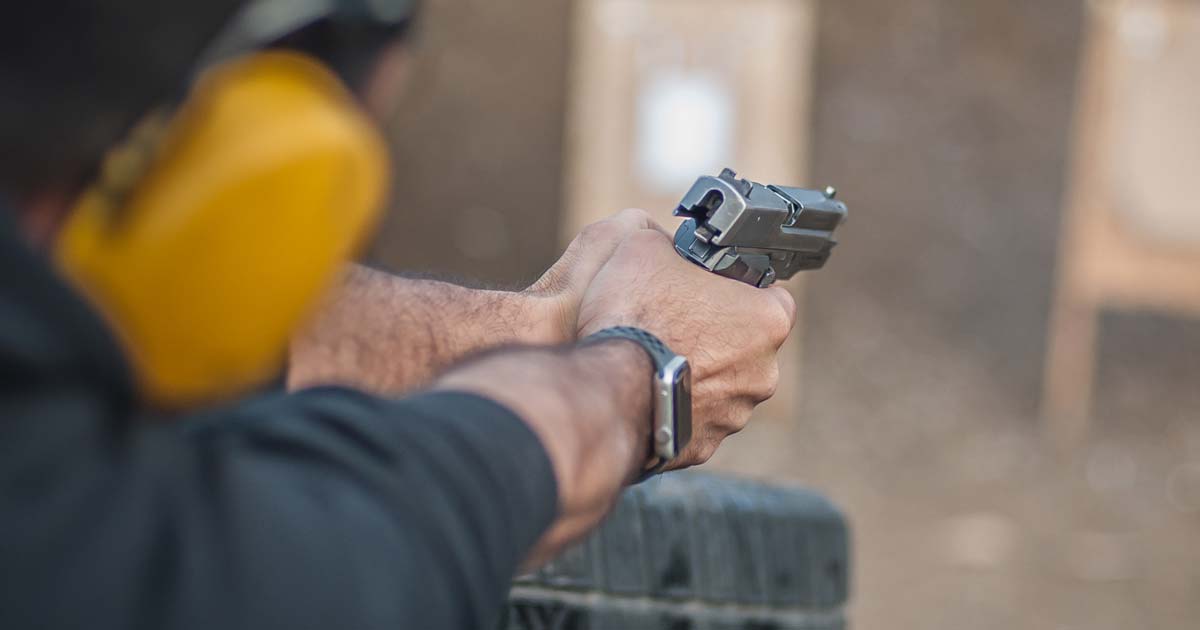
While active shooter situations are still statistically rare, they’re a crime that has grown in regularity over the last two decades. The FBI designated 24 active shooter incidents in 2024, down 50% from 48 in 2023 — but the five-year stretch from 2020 to 2024 still logged 223 incidents, roughly 70% more than the previous five-year period.
The number that should shape your training isn’t the incident count — it’s the clock. About three in four incidents ended before law enforcement arrived. Across 25 years of FBI data, roughly 69% ended in five minutes or less, and over a third ended in under two minutes. Even in school settings, where average police response in 2024 was an impressive one minute and 48 seconds, the average incident duration was three minutes and 18 seconds.
Do the math. Whatever happens in the first two minutes is going to be handled by the people who are already there. Being able to protect yourself from a violent attack or active shooter situation begins with having a good sense of what’s going on around you.
Things you should include in your drill.
- Teach your kids about Situational Awareness. We live in a society filled with distractions; this is especially true for the younger generation who seems to always have their heads buried in some sort of electronic device. Read through my article on preparing children for disasters, there’s a lot of good information in there that you can use during your preparedness drills.
- Know what gunshots sound like. This is especially important for school children who may have never heard a real gunshot. Take them to the range, and let them listen to what they sound like in real life. Indoors, gunfire often doesn’t sound like the movies — people routinely mistake it for construction, fireworks, or a dropped pallet, and that misidentification costs them the first thirty seconds.
- Use trips to the grocery store as a training opportunity. When out in public, take the time to use these occasions to point out things like exits and escape routes. Turn it into a game with younger kids — “how many ways out of this building can you find?” Talk to your family about what they should do if something happened while out in public, and go through the steps they should take to get out safely.
- Teach your children the difference between cover and concealment. There is a big difference between hiding behind a desk, and hiding behind a solid brick wall. When you’re out in public, ask your child to point out areas that would be able to stop a bullet, and where they can seek cover while waiting for the right time to escape.
- Drill the decision, not just the hiding. Run, Hide, Fight is a priority order, not a menu. The default that saves the most people is distance. Practice choosing: if the exit is clear, you go, and you don’t stop to grab your bag or find your friend first.
- Practice a rally point. If your family gets separated in a public place during a panic, where do they go? Pick one at the mall, at the ballpark, at church. Say it out loud every time you arrive somewhere new for a while, until it becomes reflex.
- Learn to stop bleeding. This is the single highest-value skill in this entire category and it’s the one most people skip. Take a Stop the Bleed course — they’re often free, they run a couple of hours, and they teach tourniquet use, wound packing, and direct pressure. Put a real tourniquet (CAT or SOF-T, not an Amazon knockoff) in your vehicle, your range bag, and your home kit. Then practice putting it on one-handed.
- Read through our article on surviving an active shooter situation; it will give you a good idea of what things you should be practicing.
A word on kids and this particular drill. Don’t run high-intensity, unannounced simulations on children. The research on this is fairly consistent, and school psychologists have been pushing back on the “realistic” school drills that involve blanks and fake blood for good reason — you can traumatize a kid without teaching them anything. For children, keep it conversational, keep it announced, frame it around exits and awareness rather than gore, and let them ask questions. The goal is a kid who knows where the doors are and trusts you, not a kid with a new anxiety disorder.
Home Invasion Drills
According to FBI data, there were 779,542 burglaries reported in 2024 — the lowest rate on record, down about 8.6% from the prior year and roughly 64% below 2005 levels. Around 405,776 of those hit residences. That works out to about one residential burglary every 78 seconds.
Two things about that data are worth internalizing:
One: it happens in daylight. Daytime residential burglaries (216,601) outnumbered nighttime ones (174,053). The Hollywood image of the 3 a.m. window-jimmy is the exception. The typical burglar walks up to the front door at 11 a.m. after watching you leave for work. Which means the family member most likely to be home alone during a break-in is a teenager on summer break — and that’s who your plan needs to account for.
Two: the national number means nothing for you. New Mexico’s burglary rate ran over 500 per 100,000 in 2024; New Hampshire’s was under 50. That’s a ten-fold spread. Pull your own city’s numbers from the FBI’s Crime Data Explorer before you decide how much this threat matters.
- Have a signal. You should have a predetermined signal that tells everyone in your home it’s time to act. This can be your home security alarm, someone yelling a predetermined word or phrase, or a loud whistle that everyone in the home can hear. Pick a word nobody says by accident.
- Have a route to safety. Everyone in the home should have a predetermined route to your safe room. This is especially important in homes where the rooms are on separate floors. In this case, the oldest child should be in charge of the younger children and should be able to make it to the safe room without a parent’s assistance. Drill that specific scenario — parent not available — because that’s the version where a plan actually earns its keep.
- Know what steps to take next. Once in the safe room, everyone should be acutely aware of what is in the room and what steps need to be taken to survive the home invasion. Children should be taught to be as quiet as possible while in the safe room, and each of them should be instructed to immediately call 911 from the safe room phone.
- Practice the 911 call itself. Most kids have never made one. They should be able to state the full street address, the city, and what’s happening — and know to leave the line open. Have them recite the address cold, without prompting. A lot of kids can’t.
- Drill the “I’m home alone” version. Doorbell at 2 p.m., stranger says he’s here about the water heater. What does your fourteen-year-old do? What does he do if the guy starts trying the handle?
- Include the dog, if you have one. A barking dog is one of the most effective deterrents there is, but only if you’ve thought about where the dog is and whether someone needs to control it.
- Harden the entry points first. About a third of break-ins come through the front door. Reinforced strike plates with three-inch screws, solid-core doors, a doorbell camera, and motion lighting will do more for you than any drill will — but do the drill anyway, because 27% of the time someone is home.
- Read our article on Preparing for Home Invasions.
Medical Emergency Drills
The most likely emergency in your house involves an ambulance, not a rifle. Drill it like it matters.
- Can everyone find the trauma kit and the first aid kit in the dark? Are they in the same place they were six months ago?
- Does everyone know where the AED is at their gym, school, and office?
- Is your medication list current, printed, and in a go-bag? Allergies, dosages, prescribing doctors?
- Does someone besides you know the door code, the alarm code, and where the insurance cards live?
- Have you practiced clearing a path for paramedics — unlocking the front door, penning the dog, turning on the porch light, sending someone out to flag them down?
- Is your house number visible from the street at night? Go stand out there and check.
Get CPR-certified. Get the whole family Stop the Bleed trained. It’s a few hours and it’s the highest return on time you’ll get in preparedness.
Building a Drill Calendar
Consistency beats intensity. One brutal all-day exercise a year does less for you than a short drill every month. Here’s a workable rotation — adjust it to your regional threats:
| When | Drill | Level |
|---|---|---|
| Monthly | Test all smoke/CO alarms | 15 minutes |
| January | Fire drill (announced) + winter power outage | Walkthrough |
| February | Communication drill — no cell phones | Live |
| March | Severe weather / tornado sheltering | Walkthrough |
| April | Get home drill + vehicle kit check | Live |
| May | Medical emergency scenario + kit inventory | Walkthrough |
| June | Fire drill (surprise, early morning) | Live |
| July | 24-hour summer grid-down weekend | Live |
| August | Home invasion / safe room drill | Walkthrough |
| September | Full bug out drill — load the vehicle, hit the road | Live |
| October | Great ShakeOut earthquake drill | Live |
| November | Document & financial readiness review | Tabletop |
| December | Year-end review: rotate supplies, update plans | Tabletop |
Two rules make this stick: put it on the actual calendar with a reminder, and keep each drill short. Twenty focused minutes that everybody completes beats a four-hour exercise that half the family bails on.
The After Action Review: Where the Real Value Is
Running the drill is maybe 40% of the benefit. The other 60% is the conversation afterward, and almost everybody skips it.
The military calls it an After Action Review, and the format is dead simple. Sit down within an hour of finishing, while it’s fresh, and answer four questions:
- What was supposed to happen?
- What actually happened?
- Why was there a difference?
- What are we changing before the next drill?
Ground rules that make it work:
- Rank comes off. If Dad blew the plan, Dad blew the plan, and the eight-year-old gets to say so. The moment the AAR becomes a lecture, your family stops telling you the truth, and you lose the entire point of drilling.
- Look for system failures, not people failures. If your kid couldn’t get the window open, the answer isn’t “try harder next time.” The answer is a different window, a step stool, or a different route.
- One or two fixes, not twelve. Pick the highest-impact problems and actually fix them before the next drill. A list of 30 action items is a list nobody does.
- Write it down. Keep a simple drill log — date, scenario, time to complete, what broke, what got fixed. Six months from now you’ll have documented proof of whether you’re actually getting better or just repeating the same drill and feeling good about it.
Track a couple of hard numbers over time. Evacuation time. Time to safe room. Time from “decision to leave” to “vehicle rolling.” Numbers don’t let you lie to yourself the way feelings do.
Common Mistakes That Make Drills Worthless
Only drilling the easy version. If every drill starts at 7 p.m. on a Saturday when everyone’s home, awake, healthy, and cooperating, you’ve tested nothing. Real emergencies come at 3 a.m., with one parent out of town, with a sick kid, in the rain.
Never drilling degraded. No power, no phones, no vehicle, one person injured, primary exit blocked. Introduce exactly one complication per drill — more than that and it stops being training and starts being a stunt.
Assuming the plan from three years ago still works. Kids get older and capable of more. Family members develop mobility issues. You buy a new car. You move a bedroom. Roads change. The plan has a shelf life.
Forgetting the people who don’t move fast. Elderly parents, infants, family members with disabilities, someone with a bad knee. If your plan assumes everyone can run down stairs and vault a fence, your plan is fiction. Practice the version with the wheelchair, the walker, the oxygen tank.
Ignoring pets. People die going back for animals. Every single time. Build the pet into the plan — carrier by the door, leash on the hook, assigned person — so nobody has to make that choice under stress.
Turning drills into a source of dread. If your family associates preparedness with getting yelled at, they’ll disengage and you’ll be planning alone again. Make it a competition. Time them and let them try to beat their record. Debrief over pizza. Let the kids design a scenario. Keep it serious in substance and light in tone.
Drilling in isolation. Talk to your neighbors. In a real event they’re your first responders, not the county. Know who’s a nurse, who has a generator, who has a chainsaw, who’s elderly and living alone. A block that has spoken to each other once outperforms a block that hasn’t, every time. Look into CERT (Community Emergency Response Team) training through your local emergency management office — it’s free in most places.
During an emergency situation, even the best plans can fail. Because of the unpredictable nature of most disasters, there’s probably a pretty good chance you’re going to have to make some changes on the fly. Conducting these routine training drills can help you identify problems before they actually become a problem.
Preparedness isn’t a shopping list. It’s not the pile of gear in your garage or the buckets in your basement. Those things are worth exactly as much as your ability to use them under pressure, in the dark, with your heart rate at 150 and your kids screaming.
Nobody rises to the occasion. You fall back on what you’ve practiced.
So practice.
Related Reading
- Threat Assessment: Identifying What You’re Actually Preparing For
- Emergency Evacuation Planning & Bug Out Plans
- Emergency Get Home Plans
- Emergency Communication: Making Contact During a Disaster
- Preparing Children for Disasters
- Surviving an Active Shooter Situation
- Preparing for Home Invasions
- SHTF Plan: Are You Ready to Survive Your Own SHTF Moment?
- Situational Intel: Knowledge is Power During a Crisis





The thought about being prepared is good. I notice no one has the time to take the classes and fill the lists. Most folks would rather pay someone else to take the responsibility to care for their emergency needs.
Big Jer
Retired Instructor for all of the above.