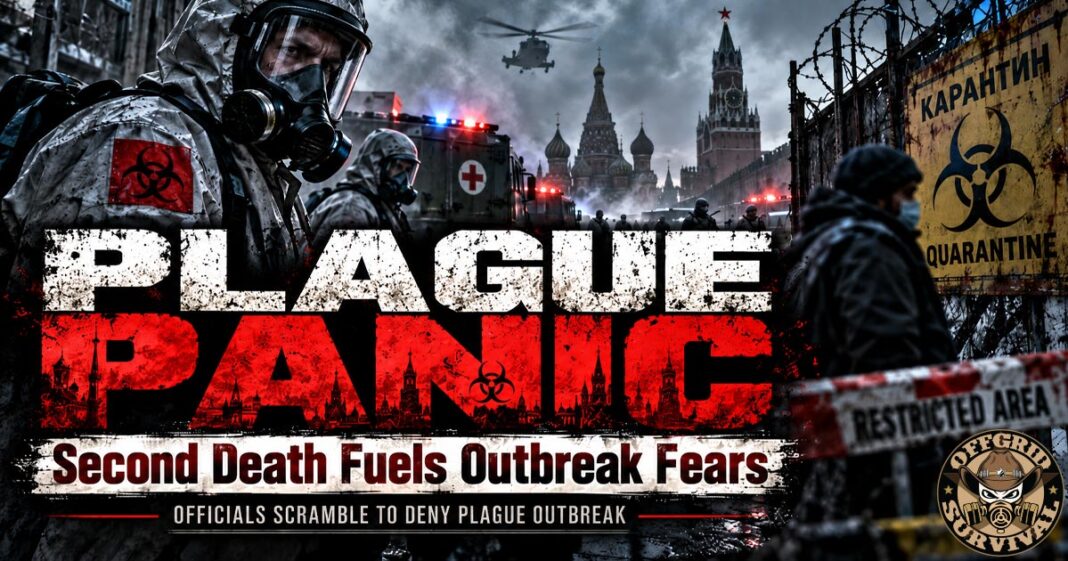
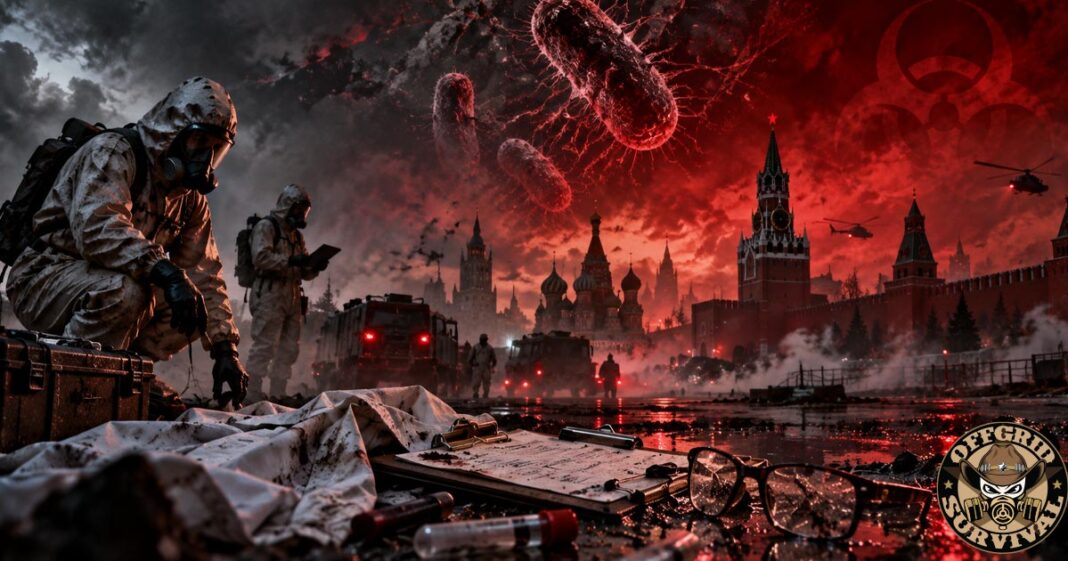
A 28-year-old lab technician at a Siberian anti-plague institute broke a test tube holding the bacteria that causes pneumonic plague on September 25. Four days later she was in the hospital with severe pneumonia, and by October 2 she was dead. Russian officials have since put nearly 200 people under medical watch, quarantined a hospital and canceled public events in Irkutsk. On Sunday, a Trump administration official told Axios the White House is monitoring the outbreak and “assessing options.”
Russia’s federal health agency still won’t call it plague. Just like in the beginning of COVID, the official line is “pneumonia of unknown etiology,” even after a neighboring regional leader publicly said she died of plague. We saw the same thing in early 2020, when a mystery pneumonia came out of Wuhan and the Chinese government spent weeks controlling the story instead of the disease. What worries me is whether Russia tells the truth fast enough for anyone to act on it.
Speed matters more with plague than it did with COVID. Plague kills faster, and it’s also much easier to cure. Untreated pneumonic plague kills nearly everyone it infects, often within a day of symptoms. Cheap, common antibiotics cure it if they’re given in time. For you, the risk from this single case is low right now. The bigger worry is the next outbreak closer to home, and whether your hospital and your government move fast enough when it comes.
What We Know So Far
The woman has been identified as Daria Shipilova, a technician at the Irkutsk Anti-Plague Institute. According to The Moscow Times, she reportedly told medical staff she accidentally broke a tube of live bacteria while collecting samples. She was admitted to the hospital in Shelekhov, a town near Irkutsk, on September 29, put on a ventilator, and died between October 1 and October 2.
So far, this is what has been officially reported:
- At least 197 people who may have had contact with her were placed in medical isolation, and more than 100 of them are in hospital wards rather than at home.
- The Shelekhov district hospital was put under quarantine.
- Irkutsk canceled planned public events, and law enforcement reportedly opened a criminal case into health safety violations resulting in death.
- Irkutsk Gov. Igor Kobzev said all known contacts are under observation, show no signs of illness and have tested negative. His statement didn’t mention that anyone had died.
- Alexei Tsydenov, head of the neighboring Buryatia republic, said she died of an unspecified form of plague.
- Russia’s federal health agency, Rospotrebnadzor, said she had pneumonia of unknown cause and that further testing found no microorganisms linked to her work.
- Five Siberian hospitals have been placed under a strict three-week quarantine lockdown. Five medical facilities in the Irkutsk region—including Irkutsk Municipal Hospitals No. 1, No. 3, No. 10, the Ivano-Matreninsk Children’s Clinical Hospital, and a regional maternity ward—have been locked down. No new patients are being admitted or released
One Russian official says plague. Another calls it a “particularly dangerous infection.” The national agency says it doesn’t know what killed her. But you don’t quarantine a hospital and isolate nearly 200 people over a normal case of pneumonia, so somebody there thinks it’s serious.
A few things are still unconfirmed. Her name, the broken tube and the ventilator come from the exiled outlet People of Baikal, the pro-Kremlin channel REN TV and Telegram posts, not from official statements. We also don’t know when doctors started antibiotics or whether they knew what they were treating. And there’s no confirmed second case. Posts claiming a new Black Death is spreading through Siberia are wrong. So far one person has died, and none of her contacts have tested positive.
How Plague Compares to COVID
Plague and COVID are very different diseases. The differences below come mostly from the World Health Organization’s plague fact sheet:
- How deadly: WHO says pneumonic plague is always fatal if it isn’t treated. Most people who caught COVID survived it.
- How fast: Untreated pneumonic plague can kill within 18 to 24 hours of the first symptoms. Incubation can be as short as a day.
- The cure: Recovery rates are high if treatment starts within 24 hours of symptoms, using ordinary antibiotics. In early 2020, doctors had nothing that reliably worked against COVID.
- How it spreads: Both spread person to person through respiratory droplets. But COVID moved quietly through people who felt fine, while plague patients usually get very sick very fast, which makes them easier to find and isolate.
- Vaccines: There’s no plague vaccine for the public. WHO only recommends one for high-risk groups like lab workers.
Antibiotics work on plague, so what kills people is time. If a doctor treats it as regular pneumonia, or officials take three days to decide what to call it, a patient can be dead before anyone gives the right drugs. That’s why the way Moscow is wording this matters.
Russia Has Covered Up Biological Disasters Before
Russia and the former Soviet Union do not exactly have a clean record when it comes to openly discussing biological accidents.
In 1979, anthrax spores escaped from a Soviet military facility in Sverdlovsk, now Yekaterinburg. Dozens of people died, but the Soviet government blamed contaminated meat rather than admitting there had been a release from a military biological facility. It took more than a decade before the truth was publicly acknowledged.
Russia has also previously gone after people for discussing suspected plague cases. In 2009, a medical student in Saratov was arrested after writing online about rumors of pneumonic plague. That history doesn’t prove officials are lying about what happened in Irkutsk, but it is more than enough reason not to blindly accept the first government statement that comes out.
The facts we know are already serious enough without inventing anything. A young worker at an anti-plague institute is dead. A hospital is under quarantine. Nearly 200 people are being monitored. One regional official says plague was involved, while the federal government refuses to confirm it.
The Risk to Americans Is Low, But the Lesson Isn’t
Right now there is no reason for Americans to panic over this incident. There is no confirmed outbreak, no confirmed spread outside the immediate area and no evidence that people in the United States are at risk from what happened in Siberia.
The bigger lesson is how quickly situations can change when information is incomplete.
Plague still exists naturally in parts of the western United States, where it is carried by fleas and wild rodents. Human cases are rare, but they do still happen. If someone becomes seriously ill after exposure to dead rodents, fleas or sick wildlife, that history matters. The earlier doctors consider plague as a possibility, the better the chance of treating it in time.
Preparedness has never been about assuming every scary headline means the end of the world. It is about having enough awareness and enough supplies that you are not forced to react at the same time as everyone else. A household that already has food, basic medical supplies, masks and necessary medications is in a much better position if officials suddenly recommend staying home or limiting contact.
Information is part of preparedness too. During any fast-moving emergency, official statements can be incomplete, social media can be full of garbage, and the truth usually sits somewhere between the two. The people who do best are the ones who know how to compare multiple sources, separate confirmed facts from rumors and make decisions before panic sets in.
Fuel and Supply Problems Are Already Here
One plague death in Siberia isn’t much of a direct risk to Americans. It would hit a lot harder if it spread, because the supply system is already short.
Diesel just hit a record $6.53 a gallon and the U.S. is heading into winter about 600 million gallons short. Russia, the same government now fumbling this outbreak, extended its diesel export ban while China stopped exports too. Texas has declared a diesel disaster with 16 trucking companies bankrupt and consumer confidence at a 12-year low. And this is the second outbreak scare of the year after the hantavirus cluster on the MV Hondius cruise ship, which grew to 13 cases and three deaths by late May.
Grocery shelves emptied in 2020 when trucks were still running and fuel was cheap. Quarantines this winter would hit with diesel already short and trucking companies already going under. As we wrote last month, the supply shocks from COVID never fully went away, and prices never came back down.
What to Watch Next
The biggest thing to watch now is whether any secondary cases appear among the people being monitored. If the nearly 200 contacts continue testing negative and nobody develops symptoms, this may remain a tragic laboratory accident with no wider public-health impact.

If additional cases start appearing, especially outside the original hospital or among people with no direct connection to Shipilova, the situation changes quickly.
For now, there is no confirmed outbreak. But when a worker at an anti-plague laboratory dies after a reported exposure, a hospital gets quarantined and Russian officials cannot agree on what killed her, it is worth keeping an eye on what happens next.