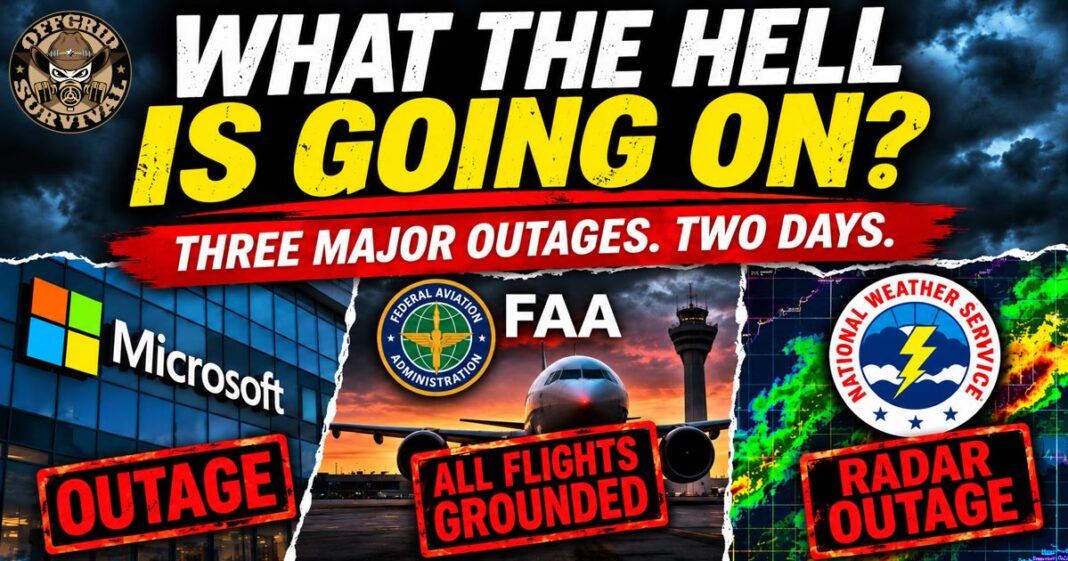
What the hell is happening to America’s critical infrastructure? In the span of roughly 48 hours, we’ve watched Microsoft suffer a massive outage, the FAA ground departing flights across the entire United States, and now the National Weather Service is reporting nationwide internet and communications problems affecting access to critical weather information.
On Friday, November 13, the National Weather Service confirmed it was experiencing widespread communications and internet problems that could prevent Americans from accessing weather products on its websites or cause outdated information to appear instead of current conditions.
The agency also acknowledged problems with its national radar website, radar.weather.gov. While this does not necessarily mean the physical weather radar network itself has failed, it raises serious questions about the public’s ability to access timely weather information when it matters most.
And the timing could hardly be worse.
Three Major Outages. Two Days. What the Hell Is Happening?
Earlier today, we reported that the FAA ordered a nationwide ground stop after a massive communications failure crippled America’s air traffic control system. Thousands of flights were disrupted as federal officials scrambled to determine what had gone wrong.
That came just one day after Microsoft went down, leaving millions without access to critical digital services.
Now, before the country has even had time to digest those failures, another federal agency responsible for monitoring dangerous weather is reporting nationwide communications problems.
To be clear, there is currently no confirmed evidence that these three incidents are connected or that they were caused by a coordinated cyberattack. But at what point do we stop treating these massive technology failures as isolated inconveniences and start asking some serious questions about the infrastructure running this country?
How Many More Warnings Do We Need?
The National Weather Service provides information used by emergency managers, first responders, airlines, businesses and millions of Americans trying to make decisions about dangerous weather. The possibility of outdated information appearing on official weather websites is particularly concerning because people depend on those reports to make potentially life-saving decisions.
We’ve spent years warning about America’s dependence on increasingly fragile digital infrastructure. From hackers targeting supermarket refrigeration systems across Europe to the growing threat of AI-powered cyberattacks, the warning signs have been piling up.
Now we’re watching major failures involving commercial technology, federal aviation communications and national weather information almost simultaneously.
Maybe these really are three completely unrelated failures. Maybe investigators will eventually find straightforward explanations for each one. But that doesn’t make the situation any less troubling.
When technology failures can disrupt air travel, lock people out of digital services and interfere with access to critical weather information, Americans ought to be questioning just how much of their lives depend on systems that can suddenly stop working without warning.
We keep being told that connecting everything makes our lives safer, smarter and more convenient. But every new outage raises the same question we’ve been asking for years: What happens when the technology holding everything together stops working?
This is a developing story. No connection between the outages has been established.