You’ve got your guns. Your pantry is stocked full of food. You’ve got so much gear your bags are ready to explode.
Now what?
That’s the question almost nobody actually answers. Buying gear feels like progress. It’s satisfying, it’s tangible, and it gives you something to show for your effort. Training doesn’t feel like progress the same way — it’s slower, it’s humbling, and it usually starts with you finding out something you thought you knew, you don’t.
But gear without training is just expensive clutter. Have you actually tested yourself? Have you run through real scenarios with the same stress, fatigue, and confusion you’d face in an actual crisis? Or does your preparation stop at the checkout page?
The Questions Most Preppers Never Ask Themselves
- Have you run a simulated scenario, start to finish, under real conditions?
- Have you tested your plans specifically looking for the weak points, instead of just hoping they hold?
- Do you know how to use every piece of gear in your bag — not “I read the instructions once,” but actually used it, in the field, more than one time?
If you’re being honest, most people stall out around question one. That’s the gap this article is about closing.
I love gear as much as the next person. But when it comes down to it, nothing replaces knowledge and old-fashioned repetition. To actually be prepared, you have to start practicing your skills somewhere other than your imagination.
Start Hiking and Backpacking — For Real, Not Hypothetically
The last thing anyone wants is to walk their way out of a disaster. But the better conditioned your body is for that scenario, the better your odds are no matter what you end up facing.
Hiking does double duty: it keeps you physically capable, which matters more in a survival situation than almost anything else on this list, and it stress-tests your bug-out plan before your life depends on it being right. We go deeper on exactly how to use backpacking as a dress rehearsal — testing your route, your pace, and your gear under real load — in Are You Actually Prepared to Bug Out? The short version: if you’ve never carried your full pack more than a mile from the truck, you don’t actually know what your plan requires of you.
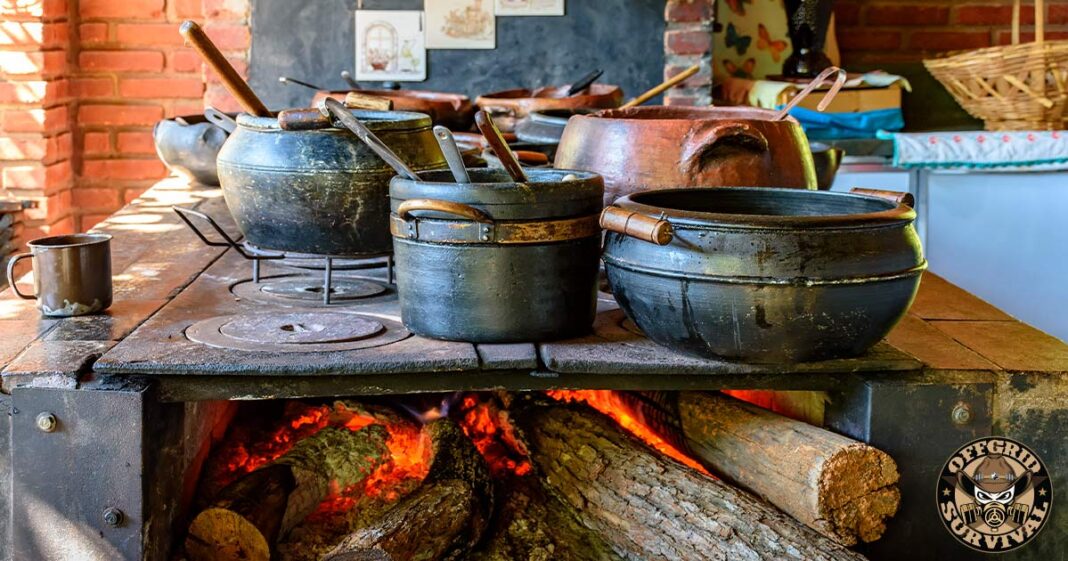
Build a Fire Pit in Your Backyard
A backyard fire pit earns its keep in more ways than people expect:
- It’s a low-stakes place to practice real fire-starting technique — not just with a lighter, but with the harder methods you’d need if the lighter failed.
- It’s a place to practice primitive cooking without the pressure of an actual emergency.
- It’s a genuine backup heat and cooking source if you ever lose power.
- It doesn’t look suspicious to your unprepared neighbors — which matters more than people think.
If you want to go past “I can light a campfire with a lighter,” our full breakdown on the art and science of fire building covers the harder methods worth practicing now, while it’s a weekend project and not a survival situation.
Shoot. Then Shoot Some More.
Whether it’s for hunting or self-defense, owning a firearm comes with a responsibility to actually train with it.
Here’s the uncomfortable truth: every year, gun owners are killed or seriously hurt in situations a basic level of training would have prevented — fumbling a safety, freezing under stress, not knowing their own weapon well enough to clear a malfunction in the dark. None of that is dramatic exaggeration. It’s the predictable result of buying a gun and never training with it under any real pressure.
If you can put the money toward it, take a class from a qualified firearms instructor. Not a video. Not a forum thread. An actual instructor who can watch you shoot and tell you what you’re doing wrong — because you almost certainly won’t catch it yourself.
Go Hunting and Fishing — and Expect to Fail Sometimes
Being able to provide food for your family isn’t something to leave untested. Even under ideal conditions, you’re going to come home empty-handed sometimes. That’s not a sign you’re doing it wrong — it’s the actual baseline of hunting and fishing, and the only way to find that out before it matters is to go now, while failure just means a quiet drive home instead of a hungry family.
The more you practice, the better your odds get and the faster you adapt when conditions aren’t ideal. Our Fishing, Hunting & Trapping section has the resources to start building this skill set from scratch.
The Part That Separates Real Preparedness From Cosplay
Here’s something worth sitting with: people who’ve actually been through real survival training — military survival courses, multi-day backcountry trips with minimal gear — will often tell you the same thing. You need very little to survive. What you actually need is the knowledge to use almost nothing effectively.
But that advice gets twisted into an excuse by people who’ve never tested it. There’s a real difference between a soldier on a 3-day escape-and-evasion course who knows backup is coming, and a parent trying to keep a 9-year-old fed, calm, and moving for three weeks with no support. Both situations call for real skill. They are not the same situation, and gear that’s “unnecessary” for one can be the difference between functioning and falling apart for the other.
The lesson isn’t “buy less gear” or “buy more gear.” It’s that the right amount of gear depends entirely on the skill behind it — and skill is the one thing you can’t buy, ship, or store in a Mylar bag.
Train Your Mind, Not Just Your Hands
Most preparedness content focuses entirely on physical skills and stops there. That’s a mistake. Panic, poor decision-making under stress, and the psychological toll of a real crisis have ended more survival situations than a lack of gear ever has. Our piece on the psychology of survival covers why controlling your fear, your emotions, and your ego is just as much a trained skill as fire-starting or marksmanship — and why most people never train it at all.
Situational awareness deserves the same treatment. It’s arguably the single most useful survival skill you can develop, and it’s completely free — no gear required, just practiced habit. We break down how to actually build that awareness, rather than just nodding along with the concept, in our guide to developing situational awareness.
Basic First Aid Isn’t Optional
If you’re stockpiling gear and skipping first-aid training, you’ve prioritized the wrong thing. Nothing replaces hands-on training from a real class, but our resource on essential first-aid skills for disaster medical emergencies is a solid starting point for the basics everyone should know before they need them.
You Don’t Need a Doomsday Mindset. You Need Reps.
None of this requires treating every weekend like a survival drill. It requires picking one skill off this list — fire, first aid, a single backcountry trip with a loaded pack, one trip to a real firearms class — and actually doing it instead of reading about it.

Test your gear before your life depends on it working. Test your body before it has to carry weight it’s never carried. Test your plan by actually walking it. And take your mental preparedness as seriously as your physical kit, because that’s usually what breaks first, not the gear.
For the full range of skills worth building — from situational awareness to wilderness survival to the 30+ self-reliant resources we consider foundational — our Survival Skills hub and our 30+ Self-Reliant Preparedness Skills guide are good places to keep building from here.
What’s the one skill on your list you keep meaning to actually practice and haven’t? Tell us in the comments — might be the push you need to finally go do it.


well, in a survival situation one must realize that a good shot will only get you soo far…What happends when you have nothing to shoot at? Ones survival relies on more than how well they know their gun and how close to the bullseye they hit. Yes this is a huge factor in self-defense and plays a great role in survival, but gathering and foraging are also key components to ones survival. Knowledge og edible plant and even insect in the area in which you live could save your life.
“People will do amazing things to ensure their survival.”
-knowledge is power
I have an idea. Why don’t we start a group where we go camping together and practice and share our camping, hunting and survival skills. I like to consider myself fairly self capable, but like everyone here I could always use more skills and advice.
I do have skills to share also: hunter and fisher, Army with 2 deployments, camper and firefighter paramedic.
That’s a great idea, Joe! I’d be the first to agree. The only problem is that with these blogs you could be in Alaska and I could be in Ontario. That sort of makes weekend warrior-ing together kind of difficult.
Hold on a bit Watchdog, Joe has made a very good point. Maybe all of us can’t meet up, but I’m sure we’ll have groups of two or three of us that live within a reasonable driving distance from each other, or could meet to camp somewhere along the midpoint.
I would be more than willing to do something like this, and to bring other survivalists I know. It just scares me that noone my age (I’m only 20) seems to know what to dowoot side of the comforts of a city. Sometimes I wonder if the younger generations even COULD survive, what with all the kids I see around here not knowing which end of a rifle to point down range (city kids that would probably die off without their precious phones and all).
David H. I am 18 years old, and ive been studying different survival techniques for a few years now. Just because you live in the city, doesnt mean youre worthless, haha– but I agree, a lot of people don’t know how to survive. But my brother and I would be more than willing to drive half point to meet up with other survivalists to obtain more knowledge; knowledge is power. Also, you don’t have to just survive in the country. In certain cases you might have to in urban areas as well.
Become your weapon..know it intimately..practice, practice, practice..be ready to, at a moments notice to break daily protocol in pull a ghost..disappear.. shit will hit the fan..when it does, be vigilant.!
They always say practice makes perfect. Just when you think you got your plan down. Test it again, and again. You wont really be prepared for an emergency unless you are constantly training.
Being in excellent physical shape eludes many otherwise well prepared people. Hiking is an excellent way to gain skills and keep fit
I agree. But hiking won’t be enough. You might have to run miles at a time at some point. You might have to be able to pull yourself over a cliff with your pack on. It just depends. But you cant really depend on walking with a 30-40 pound pack on as a great workout. Sure it will help keep you active but, you’ll need to do more than that.
When I was taught to hunt I fired only one shot every half hour whether with a rifle or a bow. The reason is this when you are hunting you don’t fire shot after shot. You get only one chance, make it your best. I don’t go through a box of ammo every time I practice at most I go through five rounds a month but then again I know my equipment and I rarely miss.
And remember to shoot from all ranges and manners of cover as well as shooting from the ground. Thats right in the dirt. Train as you fight. And when someone asks why you need an “assault rifle,” the answer is covering fire, reflexive fire, suppressing fire, and enough rounds to move or push to cover. Thats why. Oh and reloading is a bitch when crouching behind a car or hugging the ground.
Thought I would bring up a point that occured to me reading here. Our plan for bugging out involves a permenent place to hunker down. It is 400 miles away. I have seen comments about might have to rappel or climb hills/cliff, etc.
One thing I’m doing is obtaining topo maps and pre-planning several routes to our perm position. Along those routes I’m going to place caches of supplies buried in public parks out in the woods and record coordinates in GPS and hard copy. Will be able to re-supply food and ammo and have water sources. Hope to get as far as possible by vehicle but contingency planning dictates that we might have to walk door to door. My point is to know the terrain on your route in advance. I know there are no cliffs, major rivers to cross etc. on my route so lots of gear I don’t need to carry. Just saying.
Dont forget weather sapper. Check out what weather patterns are like along your planned route. It really dictates what equipment is essential during transpo. Theres a great book about hiking and equipment by ….cant remember his name…sorry TBI, but its published by national geographic. It gives a lot of great tips.
I think I’ ready could use more people my 22 yr old grandson and I practice regularly we swap back and forth on who is the best shot at 100 yds but we are more than effective (you wouldn’t walk away).We are working on our food supply live in the middle of 40 acres house can’t be seen from road and we have a 90 lb pitbull that doesn’t like strangers how do we rate? p.s. 2 ak’s 1 sks couple thousand rounds of ammo
If you own a weapon you better know how to service it. Better know how to trouble shoot it, repair it know what parts are it’s weak links. Please do not think equipment equals skills in the field. THEY DON’T ! You’d better learn to operate on Natures time not human time. An example would be ; An alerted deer doesn’t move until it is certain from where the alarm (noise , sight, scent , vibration,yes deer feel ground vibrations through their hooves )survival is important not getting comfortable or fed or any other human longing. Learn how to Man Track. I could go on and on.
prariewolf, thanks for the good tips, i need them.