
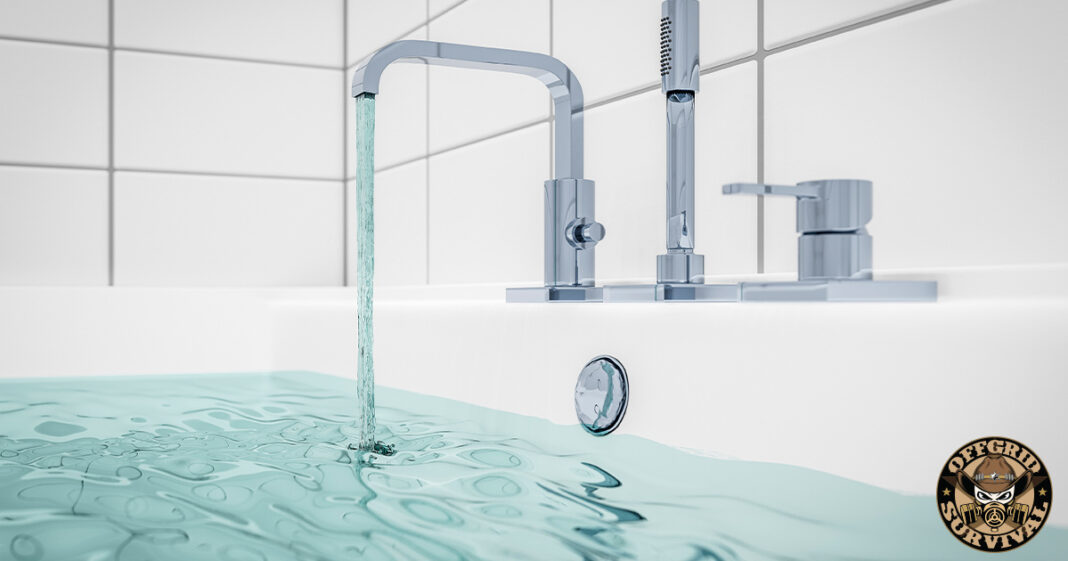
If a storm’s bearing down, a boil-water order just hit your area, or you can just feel that something’s about to go sideways, your bathtub is one of the fastest, highest-capacity emergency water reserves already sitting in your house. Done right, it can hold 50–100 gallons of backup water with about 15 minutes of setup. Done wrong — just plugging the drain and turning on the tap — you’re storing water in a container that’s full of soap residue, bacteria, and a drain that’s prone to leaking the second you’re not looking.
This guide covers how to actually do it right, plus the other “hidden” water sources in your home you should be tapping at the same time.
Why Your Bathtub Matters in a Water Emergency
Water is the single most urgent resource in any disaster. Boil orders and do-not-drink orders are common occurrences during natural disasters, and municipal systems can go down entirely during extended power outages, floods, or infrastructure failures. The standard guidance is 1 gallon per person, per day, minimum — more if you’re in a hot climate, have kids, pets, or anyone with medical needs. For a family of four, that’s 28 gallons just to cover one week.
Most people’s stockpiled water (cases of bottled water, filled containers) covers maybe a few days. A bathtub bridges the gap to a much longer timeline — fast, free, and using a container you already own.
The catch: a bathtub is a supplemental source, not your primary one. Tub drains leak slowly even when closed, tubs aren’t sealed or sanitized for drinking water storage, and you can’t move the water anywhere — you’re tied to your house. Treat it as a backup layer, not your whole plan.
Method 1: Use a Bathtub Water Storage Bladder (Recommended)
The cleanest, safest way to do this is with a purpose-built bladder liner — the most well-known being the WaterBOB. These are food-grade plastic liners that sit inside your existing tub, holding the water in a sealed, contaminant-free bag rather than directly against bathtub surfaces (soap scum, hard water deposits, whatever’s been scrubbed off bodies for years).
How it works:
- Lay the liner flat inside the tub
- Attach the fill hose to your bathroom sink or tub faucet
- Fill to capacity (most hold 65–100 gallons depending on tub size)
- Use the included siphon pump to dispense water when needed
Why it’s worth it over just filling the tub directly:
- Keeps water sealed and free of contamination
- No risk of drain leakage draining your supply overnight
- Includes a sanitary dispensing method (siphon pump) instead of scooping water out by hand
- Costs around $15–25 — cheap insurance for 65-100 gallons of backup water
Do this before the emergency hits, if you can. These liners take a few minutes to set up properly, and you don’t want to be figuring out the fill hose attachment while the power’s already out.
Method 2: Filling the Tub Directly (No Liner)
If you don’t have a bladder on hand, you can fill the tub directly — but a few things matter if you go this route:
- Clean the tub first. Scrub it out and rinse thoroughly before filling. You’re not trying to make it sterile, just removing soap film and residue.
- Don’t rely on the drain stopper alone. Most tub stoppers aren’t watertight long-term and will slowly leak. If you’re filling directly, check the water level periodically.
- Treat this water before drinking it. Water stored in an open tub (uncovered, exposed to bathroom air, potentially touched) should be purified before consumption — boiling, water purification tablets, or a filter rated for bacteria/protozoa. Don’t assume tap water sitting in an open tub stays drinkable indefinitely.
- This water is best used for sanitation, not drinking — flushing toilets, handwashing, cleaning — unless you’re treating it. Reserve your sealed, stored water (bottled or bladder-stored) for drinking.
Method 3: Your Water Heater Tank (Often Overlooked)
Most residential water heaters hold 30–50 gallons, and that water is typically clean and ready to use — no treatment needed if your water heater was filled from a safe municipal supply before the emergency started. This is one of the best “hidden” water reserves in a house and it’s frequently missed.
To drain it safely:
- Turn off the water supply at the main shutoff
- Turn off the gas supply to the heater (or flip the breaker if electric) — never drain a heater that’s still actively heating
- Open a hot water tap somewhere in the house first, to break the vacuum and let the tank drain properly
- Attach a hose to the drain valve at the bottom of the tank, or use a clean container
- Open the relief valve and drain valve to release water
This alone can cover one person’s drinking water needs for close to a month at the standard 1-gallon-per-day rate.
Other Last-Minute Water Sources to Tap
Once you’ve covered the tub and water heater, don’t overlook:
- Toilet tank (not the bowl) — the tank that refills after each flush holds several gallons of clean water, assuming you haven’t used in-tank cleaning tablets
- Ice cubes and freezer ice — often forgotten, easily melted down
- Pipes — opening the highest faucet in the house and draining from the lowest will let gravity pull remaining water out of your plumbing
- Canned goods liquid — not a primary source, but vegetable and fruit can liquid is drinkable in a pinch
Quick Reference: How Much You Need
| Household Size | 1 Week | 2 Weeks |
|---|---|---|
| 1 person | 7 gallons | 14 gallons |
| 2 people | 14 gallons | 28 gallons |
| 4 people | 28 gallons | 56 gallons |
A single bathtub bladder system alone can cover most of this for a family — which is exactly why it’s worth having one on hand before you need it, not after.
Water is the Source of Life: Don’t neglect it in your preps!
The moment you get advance warning of a storm, infrastructure threat, or boil-water order, your bathtub should be one of the first things you act on — it’s fast, free, and uses a vessel that’s already sitting in your house. Pair it with your water heater tank and you can realistically stretch a multi-week supply without spending a dime on bottled water. But treat both as backups to your actual stored water supply, not a replacement for one.






I have one of these and gave many away for Christmas. I took a small piece of PVC pipe and wrapped a few feet of gorilla tape to it and put in the box so you won’t have to take the time to go get it, or hold the filler to the tub spout while you fill up other pots or…
Set an alarm or make sure you check it so it doesn’t over flow though.
Pad the drain fitting, etc with a folded towel to prevent tearing
Don’t forget the water heater.
Turn off the water at the main and flip off the breaker/Turn of the gas to the heater.
Open the hot water spigot in a sink to avoid vacuum.
Open the relief valve at the bottom of the water heater into a container.
My water heater has fifty gallons. 30 to 50 gallons is the usual for water heaters.
Over a month of clean water for one person.