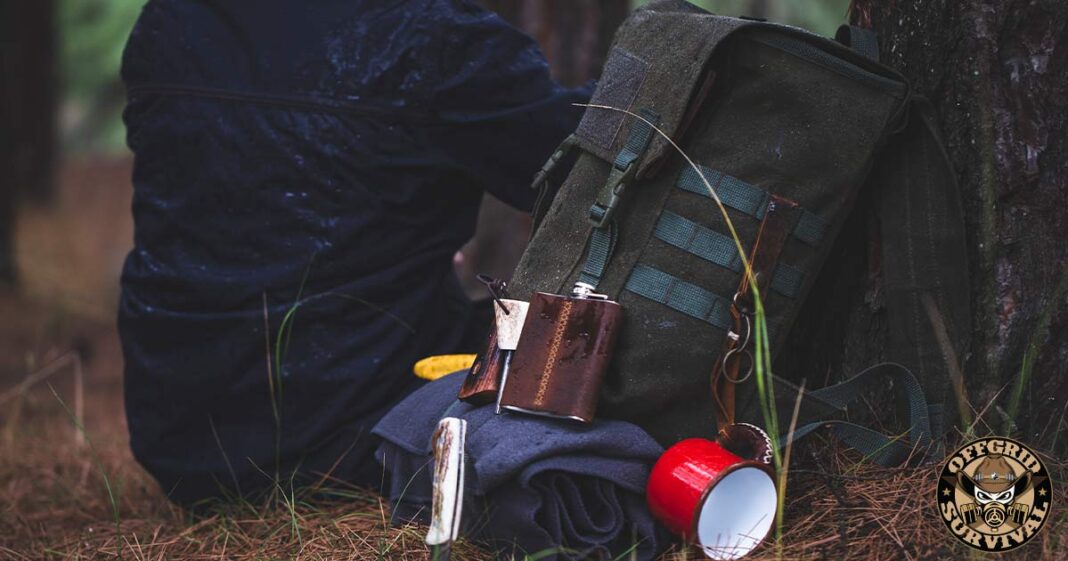
The basic idea behind a survival kit is pretty simple; it’s basically some sort of container, filled with the essential gear and supplies you need to survive an emergency situation. When you hear the term survival kit, you probably think of something relatively small — something you can grab quickly should a disaster or emergency situation occur.
While these small kits are great for everyday carry situations, you should also think about creating a larger kit for your home, vehicle, and anywhere else where you spend a good portion of time. These larger kits should be filled with the basic necessities to sustain yourself and your family over a long period of time.
A small kit answers the question “what do I grab on my way out the door.” A large kit answers a different question entirely: “what do I need to actually function for days or weeks if outside help doesn’t show up.” That’s a different design problem. You’re not optimizing for weight and speed anymore — you’re optimizing for completeness. The following items are essential to a good long-term survival kit, organized by category, with some context on why each one matters and what to actually look for.
First Aid Supplies
- Antibiotics
- Surgical blades
- Butterfly sutures
- Floss or fishing string to sew up bad cuts
- Gauze
- Antibiotic ointments
- Aspirin & ibuprofen
- First aid guide
- Splints
- Tweezers
- Scissors
- Fingernail clipper
- Alcohol & peroxide
A large kit’s first aid section needs to go well beyond a basic cuts-and-scrapes kit, because the assumption behind a large kit is that professional medical help may not be quickly available. Surgical blades, butterfly sutures, and floss or fishing line for closing wounds are there for exactly that scenario — a deep cut that would normally mean a trip to urgent care now has to be managed at home, at least temporarily.
A word on item one specifically, since it’s the one people get wrong most often: don’t stockpile antibiotics by buying unregulated, unprescribed products marketed for fish or other animals. They’re sometimes chemically similar to human antibiotics, but they come with no reliable guarantee of purity, correct dosing, or appropriate use for a specific infection, and taking the wrong antibiotic, or the right one incorrectly, can do real harm or mask a more serious problem. If you want antibiotics genuinely available for emergency use, talk to your doctor directly about your situation — many physicians are willing to prescribe a small emergency supply for people with real reasons (remote travel, off-grid living, extended backcountry time) once you explain your circumstances honestly. A handful of legitimate telemedicine services now specialize in exactly this kind of preparedness prescription. That route gives you something properly dosed, correctly labeled, and tracked for expiration, which matters far more in an actual emergency than having something on hand at all.
A laminated first aid guide is worth more than it looks like it should be. In a high-stress moment, even people with real first aid training can blank on dosages, wound care steps, or what to do for a specific injury, and having something physically in front of you to reference is genuinely steadying.
Water
- Bottled water (1 gallon per person, per day)
- Water purification tablets
- Wilderness water purifier
- Canteen or other containers for holding water
- Pot (to heat and sterilize water)
Water is the single most time-sensitive category on this whole list. You can survive weeks without food, but trouble starts within a day or two without water, especially in hot climates or under physical stress. The one-gallon-per-person-per-day figure is a baseline, not a ceiling — it covers drinking, but real usage climbs fast once you account for cooking and basic hygiene, so err toward more rather than less if you have the storage space.
Layering your water plan matters as much as the raw volume. Stored bottled water is your immediate supply, but it’s finite. A wilderness water purifier and purification tablets are there for when that runs out and you need to make questionable water safe to drink — they’re not redundant with each other so much as different tools for different jobs, since a purifier handles ongoing volume while tablets are a lightweight backup if your filter fails or clogs. A pot for boiling water rounds this out as the most reliable fallback method of all, since boiling needs no special equipment beyond heat and a container and works against essentially everything biological in the water.
Fire Starting Equipment
- Lighter (no need to make it hard on yourself; this is survival, not the time to show off your fire-making skills)
- Waterproof matches (dip the wood stick match heads in wax to waterproof)
- Fire steel
- Fire piston
- Tinder
Fire does more than keep you warm — it purifies water, cooks food, dries wet gear, provides light, and is a genuine psychological anchor in a bad situation. That’s exactly why this category leans toward redundancy rather than picking just one method. A lighter is the easiest, fastest option in good conditions, which is why it’s listed first rather than buried behind more “primitive” methods that look impressive but take real skill and calm hands to execute under stress. Waterproof matches and a fire steel are your backups for when a lighter fails, runs out of fuel, or gets wet and won’t spark. A fire piston is a more specialized, less common tool, but it works using pure compression and has no fuel to run out, which makes it a genuinely solid last-resort option if you’ve taken the time to practice with one beforehand.
None of this matters without dry tinder, though, which is the part people forget to actually pack. Commercial tinder, cotton balls soaked in petroleum jelly, or dryer lint stored in a waterproof container all work well and take up almost no space, and having reliable tinder on hand removes the single biggest variable in actually getting a fire started when it counts.
Signaling & Finding Your Way
- Compass
- Mirror
- Whistle
- Ham radio
- Cell phone
- Flashlight
- GPS
- Maps
- Aluminum foil
This category covers two related but distinct problems: knowing where you are, and being found if you need to be. A compass and physical maps of your area are worth having even if you’re confident in your GPS or phone, because both of those depend on batteries and signal that aren’t guaranteed in a real emergency. A GPS unit is convenient when it works, but it shouldn’t be your only navigation method.
On the signaling side, a mirror and whistle are simple, battery-free tools that can be used for a very long time without needing to be recharged or replaced — a mirror flash can be seen from miles away in good light, and a whistle carries much farther than a shouting voice for a fraction of the effort. A ham radio is a serious step up in capability for genuine long-range or grid-down communication, but it requires some upfront learning and, depending on what you’re transmitting on, may require licensing — it’s worth the investment if you’re serious about long-term preparedness, but it’s not a casual add-on. Keep your cell phone in the kit too, even knowing it may lose signal, since it still functions as a flashlight, camera, and offline map device even without a network connection. Aluminum foil earns its spot here as a genuinely useful multi-purpose item: it reflects light for signaling, can be shaped into a makeshift signal mirror, and (as mentioned elsewhere on this site) boosts light output at camp when placed behind a lamp or candle.
Food Procurement Items
- Knives
- Guns
- Slingshot
- Wire (to set snares and traps)
- Fishing line, hooks, and weights
A large kit’s food section is built around the assumption that stored food eventually runs out and you may need to actively procure more. Knives are the most versatile tool on this entire list, useful for everything from food prep to first aid to general camp tasks, which is why it’s worth having more than one and not relying on a single blade for every job.
Firearms and a slingshot both fall into the same general category — tools for taking small game — but they serve very different roles. A firearm is louder, faster, and more capable against larger game or in a self-defense context, but ammunition is finite and the noise can draw unwanted attention in certain situations. A slingshot is quiet, the ammunition is effectively unlimited if you’re willing to collect rocks, and it takes up almost no space, which makes it a smart complement rather than a replacement. Wire for snares and a basic fishing kit round this category out as passive food procurement methods — set correctly, they work for you while you handle other tasks, rather than requiring your direct attention the way active hunting does.
Shelter Items
- Small tent
- Sleeping bag
- Emergency space blanket
- Axe
- Saw
- 9×12 foot plastic painter’s tarp
- Nylon braided line
Shelter is about managing exposure, and exposure kills faster than almost anything else on this list in genuinely bad weather. A tent and sleeping bag are the most comfortable option if you have the space to store them, but a tarp and paracord are lighter, cheaper, and far more versatile — a tarp can be configured a dozen different ways depending on the weather and terrain, while a tent really only does one thing. An emergency space blanket is the most compact, lightest option of all and belongs in every layer of your kit, not just the large one, since it reflects a significant amount of body heat back at you in a genuine emergency.
An axe and saw matter more than people expect for a stationary, longer-term kit specifically, since they let you process firewood and building material rather than just relying on what you can gather by hand. If your kit is meant to support you for an extended period rather than just get you through a single bad night, these tools earn their weight.
Other Essential Items
- Survival candles
- Chapstick
- Needle and thread
- Personal locator beacon
- Flashlight/headlamp
- Bivy sack
- Gloves
- Hat (even in the desert, you need a nice wide-brim hat)
- Sunglasses
- Nylon braided line
- Large knife (machete or hatchet)
- Mini LED flashlight
- Fifty dollar bill (you never know!)
- Laminated survival guide
- Large rubber bands
- Plastic cable ties
- Plastic comb
- Hand sanitizer
- Duct tape
This last category is a catch-all, but don’t mistake that for “less important” — several of these items punch well above their size. A personal locator beacon is genuinely one of the highest-value items on the entire list if you can afford one, since it can summon real rescue independent of cell signal, which nothing else here can do. Survival candles and a headlamp give you light without draining a more critical battery-powered device, and a bivy sack is a serious weight-to-warmth upgrade over nothing at all if your kit doesn’t already include a full sleeping setup.
The small, cheap items matter more than their size suggests too. Duct tape repairs gear, seals wounds in a pinch, and has more uses than almost anything else in this list pound for pound. A needle and thread fixes torn clothing or packs, which matters more over an extended emergency than people expect. Cash, specifically smaller bills, is worth including because card systems and banking infrastructure are exactly the kind of thing that goes down during a real disaster, while cash works regardless. Sun protection — a real wide-brim hat and sunglasses — gets overlooked constantly because it doesn’t feel like “survival gear” the way a knife or a fire starter does, but sustained sun exposure without protection is a genuine, compounding problem over the course of a multi-day situation, not just a comfort issue.
Build this list out gradually rather than trying to assemble it all in one trip. A complete large survival kit represents a real investment of both money and time, and a partial kit you’ve actually built and checked is worth more than a complete list you haven’t gotten around to yet.


Plan to go off the gov grid. My wife is a nurse and I am a well versed outdoorsmen, but I need supplies for the high ground when it all goes bad.
I noticed in the past, about a year ago, some survival kits that were listed on this site. How do I find them again…I’d like to order in time for Christmas…
Thanks!
Major surplus in gardena calif prepper supplies