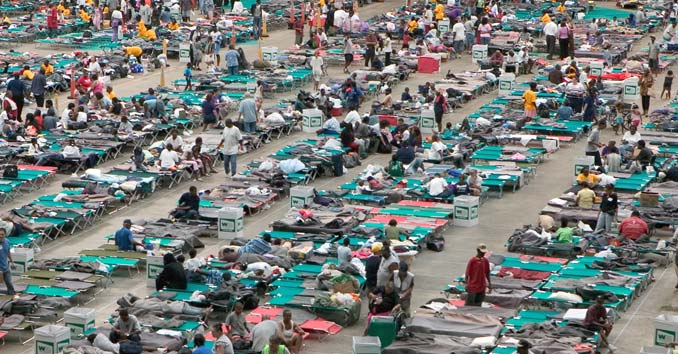
Check out any survival or prepper website, and I can guarantee you’ll find all sort of articles on prepping for disasters and what to do when a disaster strikes. Unfortunately, one important aspect is often overlooked, even by many of the so-called experts: How to prepare for Post-Disaster Problems.
What about the Aftermath?
While prepping for disasters is an important topic, one that we’ve covered numerous times here on OFFGRID Survival, you need to start putting some thought into what will happen and what you’ll do in the aftermath of a disaster.
What problems might you face post Disaster?
The Disaster Isn’t the Part That Kills You
When Hurricane Maria hit Puerto Rico in September 2017, the initial official death toll was 16. Then it went to 64. That number sat there for almost a year while politicians patted themselves on the back.
Then George Washington University finished its study. The real number was 2,975.
Almost none of those people were killed by wind. They died in the weeks and months that followed, because the grid was gone. Dialysis patients missed treatments. Oxygen concentrators stopped when the generator diesel ran out. Ambulances couldn’t reach mountain towns because the roads were buried. It took 328 days, roughly eleven months, before the last customers got their power back. Longest blackout in American history.
The storm killed 64 people. The aftermath killed almost 3,000.
That’s the whole point of this article. The disaster is the short part. It’s loud, it’s on TV, and it’s over in a day or two. What comes after is quiet, it’s boring, nobody films it, and it goes on for months. That’s the part that gets people.
Living for an extended time without Utilities
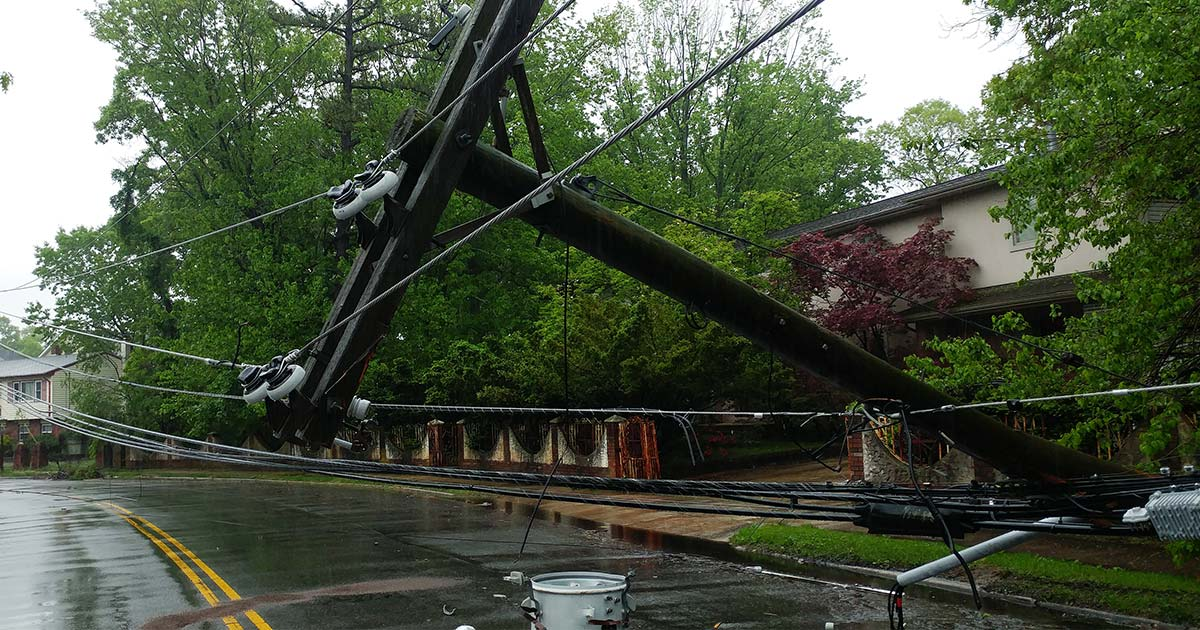
Once the main disaster dangers subside, a whole new set of challenges is likely to pop up. One of those challenges could be a total loss of utilities. Whether it’s damage to the power grid from a storm or natural disaster or a more serious problem like a terror attack or EMP attacks that causes long-term damage to the grid, you must be prepared to survive for an extended period of time without access to public utilities.
And the timelines are worse than most people think. DHS and the experts who testified to Congress have floated planning windows measured in months, while the official public-facing guidance still tells you to keep two weeks of supplies. Somebody’s lying, and it isn’t the engineers.
What does that mean?
- You need to be prepared to live without electricity for weeks, maybe months. After Hurricane Sandy, communities throughout the Northeast went without power for weeks, and in some areas, power was not restored for months because of the overwhelming damage to local infrastructure.
- Water, water, and then some more water! You need to plan for the possibility that your water could become undrinkable for some time. Make sure you have at least two weeks’ worth of emergency water on hand at all times, more if you have space.
- You need to have a Sanitation Plan. Think about it, if something goes wrong with your local water and sewer infrastructure, sanitation is going to be a huge issue, one that could kill more people than the initial disaster.
- You need to have ways to cook your food. Without electricity or gas, do you have methods to prepare your emergency food stockpiles?
The Water Thing Is Real: Ask Asheville
People nod along at the water advice and then buy two cases of Kirkland bottled water and call it done. Let me give you a real number.
Helene tore through Western North Carolina on September 27, 2024. Asheville’s water system got wrecked, and the North Fork reservoir turned to mud. Non-potable water (brown, sediment-filled, good enough to flush a toilet and not much else) didn’t come back to most of the city until mid-October, two and a half weeks later. The boil water notice wasn’t lifted until November 18.
Do the math. That’s 53 days. Roughly 100,000 people in a modern American city, hauling drinking water in buckets, for almost two months. In a city with a reservoir.
Texas got a different flavor of the same lesson in February 2021. Winter Storm Uri took down the grid, and then it took the water with it. Around 14.5 million Texans dealt with a water crisis, either burst pipes or boil notices. About half the state couldn’t drink what came out of the tap.
Two weeks of stored water is a floor, not a goal. Store more than you think is reasonable, know how to purify what you find, and have a filter that actually handles the nasty stuff, because post-disaster water isn’t just dirty, it’s mixed with whatever the sewer system coughed up.
The Generator That Kills Your Family
Here’s the ugly one nobody wants to think about, because it makes preppers look bad.
Uri killed 246 people in Texas, according to the state’s final count. Some researchers think the real number is closer to 750. Of the official 246: 161 died from cold exposure, and most of those were 60 or older, freezing to death indoors, in their own houses. Another 25 died from existing medical conditions that got worse when the power quit, things like missed dialysis. And 19 people died of carbon monoxide poisoning, because they brought a grill or a generator inside to get warm.
Nineteen people. Killed by their own backup plan.
The CPSC estimates portable generators kill somewhere around 85 to 100 Americans every single year, and that’s in normal times. A survey of 10,000 adults found that 62 percent of people believe it’s safe to run a generator in a garage as long as the door is open.
It isn’t. It’s not even close. One portable generator puts out as much carbon monoxide as hundreds of cars. Twenty feet from the house, minimum, exhaust pointed away, windows shut on that side. Buy a CO alarm with a battery in it and put one on every floor. That’s a $25 fix for the single dumbest way to die in an aftermath.
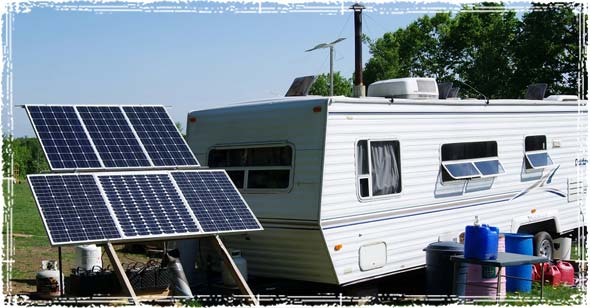
This is also the argument for solar and battery power over gas. It doesn’t need fuel you can’t buy, it doesn’t announce your address to the whole street, and it doesn’t gas your kids in their sleep.

The Stuff That Doesn’t Make the Checklist
Everybody has the flashlight and the canned goods. Almost nobody has thought about these:
- Medical devices. CPAP, oxygen concentrator, insulin that has to stay cold, a nebulizer for a kid with asthma. Look at Maria again. Those deaths weren’t rescues gone wrong, they were people who ran out of electricity. If your household has a device that plugs in and keeps somebody alive, that’s your first prep, not your last.
- Cash. Card readers need power and internet. Post-Sandy and post-Helene, plenty of stores that were open couldn’t take anything but paper. Small bills. Nobody’s making change for a hundred.
- Gas pumps. They’re electric. A full tank of gas at your house is worth more than a full tank at a station you can’t get to.
- Your phone is a brick. Cell sites have backup batteries good for a few hours and generators that run until the diesel’s gone. After that you’re on radio or you’re on nothing, which is why we keep hammering on staying informed when the normal channels die.
Resources to overcome this problem:
- Top Solar Generators, Power Packs, and Emergency Solar Solutions
- Natural Disasters: Emergency Preparedness Checklist
- Food Safety during a power outage
- Best Emergency Food: The Top Survival Food Supplies
- Long Term Water Storage: How to Store Emergency Water
- Cheap Off-Grid Power: Real Solar Setups Under $1,000
Living for an extended period of time without a grocery store.
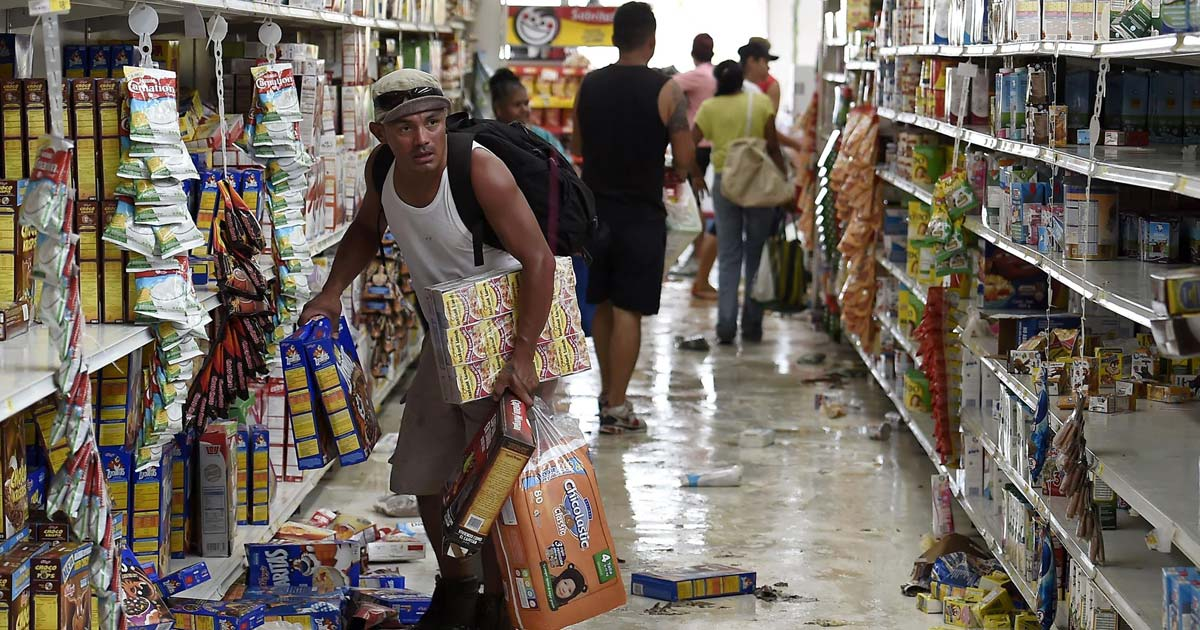
Depending on the disaster, there is a good chance local delivery services could be disrupted. Since most grocery stores no longer have local warehouses and depend on complex computer systems to manage their daily deliveries, anything from a power outage to road closures could wipe out your local store shelves in a matter of hours.
Most stores only have a three-day supply on hand at any given time; once people realize a disaster is imminent, supplies will be wiped out quickly. The recovery timeline for grocery disruptions after disasters can vary widely, ranging from days to weeks or even months, depending on the severity of the disaster and the extent of damage to the supply chain infrastructure.
Three days is the number people repeat, but it assumes normal buying. It’s not three days when everyone in town hits the store at once. It’s about four hours.
Nobody Has to Blow Anything Up
You don’t need an EMP to empty a store. You need a rumor.
May 2021, Colonial Pipeline gets hit with ransomware. The fuel was still in the ground. The refineries were fine. The pipeline was down for a few days and the billing system was the actual problem. Within 48 hours, gas stations across the Southeast were dry, not because of a shortage but because everyone drove to the pump at the same time and started filling trash bags with gasoline. A software problem at a company most Americans had never heard of turned into fistfights in station parking lots.
During Uri, 75 percent of Texans reported trouble getting food and 63 percent had trouble getting water. In Texas. Where the food is.
That’s the part people get wrong about supply chains. The system doesn’t need to be destroyed. It just needs to be interrupted long enough for people to panic, and then the panic finishes the job.
- Have a way to secure your own food; that means having at least a two-week supply of emergency food and water, knowing how to hunt and fish, and knowing how to exploit local resources.
- If you live in an urban environment, it’s even more important to know where and what your local resources are.
- Start a survival garden. Having a small survival garden is a great way to have what you need to survive when things go bad.
- Survival Food – 56 Long-Term Survival Foods and Supplies at the Grocery Store
- Know what actually stores for 25 years and what quietly rots in your basement, because a pallet of food you packed wrong is a pallet of nothing.
One more thing on the garden: a survival garden you start after the disaster is a hobby, not a food source. Seeds don’t care about your emergency. If you’ve never grown a tomato, the middle of a crisis is a hell of a time to learn. Grow something this year, badly, and fail while the grocery store is still open.
Preparing for Post-Disaster Violence
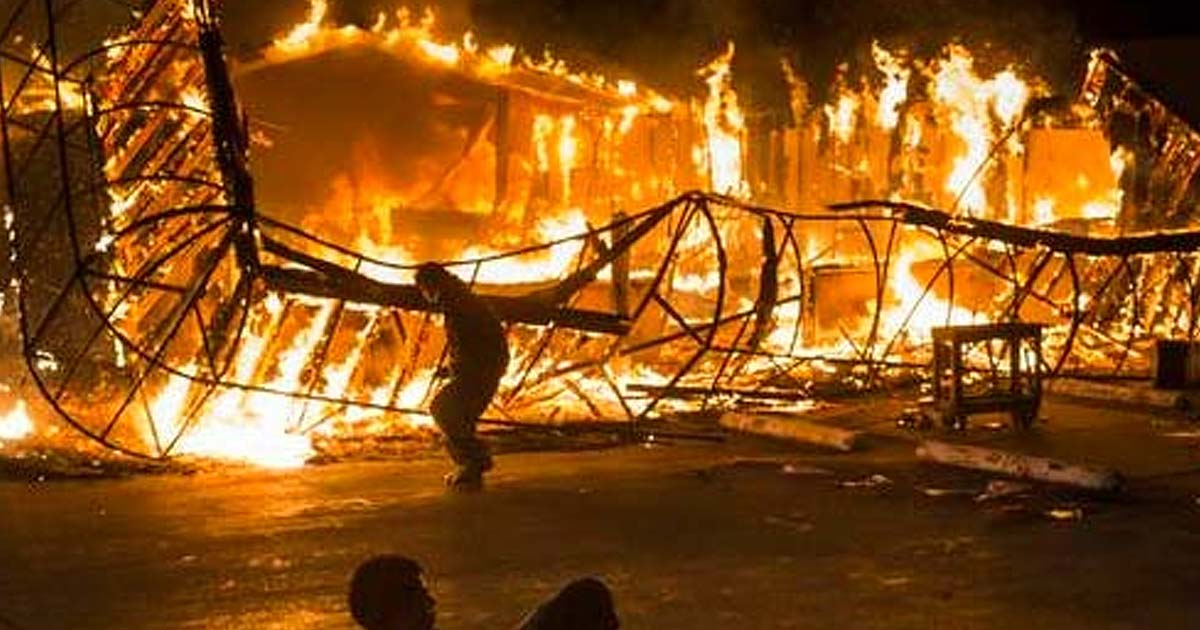
This is a big one! Today’s world is becoming increasingly unstable; every time you turn on the TV, it seems like some group is protesting something, taking to the streets to create chaos and fear, or burning down their own neighborhoods to push some ridiculous social agenda.
If you think things are bad now, just wait until you see what happens in the aftermath of a large-scale disaster. These same groups are going to be looking to take advantage of the situation; throw in the unprepared masses who failed to prepare for disasters, and you have a recipe for chaos.
Listen, we live in a world where even during the good times, chaos seems to rule the day. Just look at what happened in Baltimore and Ferguson, and then consider how in the last year there have been multiple people who have targeted and killed police officers simply because they were cops. What do you think these people, who are already mentally unbalanced, are going to do when the shit hits the fan?
Things you need to consider:
- People are going to be desperate; even your “normal” neighbors could become a threat once they realize they don’t have what it takes to survive.
- Criminals are going to be roaming the streets looking for easy victims. You need to know how to defend yourself!
- Social unrest is not just a possibility, in today’s world, it’s almost a guarantee. You need to be ready for looting and rioting, especially if you live in an urban setting.
- Home break-ins are going to skyrocket. One of the biggest problems during events like Hurricane Sandy and Katrina was people breaking into homes to steal whatever they could find. Many criminals thought it would be easy pickings because so many homes were left vacant after the evacuations; for those that stayed behind, the threat was very real and in some cases very deadly.
Understand Who Actually Shows Up
The Hollywood version of post-disaster violence is roving gangs with face paint. Reality is dumber and closer to home.
In New Orleans after Katrina, 249 officers left their posts. Not “were overwhelmed.” Left. The department’s own chief was organizing a tribunal for them before he resigned. One police chief described the city as being like Mogadishu. Whatever you think of the guys who stayed, the honest lesson is that the thin blue line got a lot thinner in about 72 hours, and the people who stayed behind in their homes were on their own.
After Sandy, the break-ins weren’t strangers parachuting in. They were locals who knew which blocks evacuated and which houses were dark. That’s the pattern in every one of these. The threat is proximity, not distance. It’s whoever already knows your neighborhood is empty.
Which is why the guy in the comments on this article years back had it right when he said start making alliances with your neighbors now. A prepper alone in a dark house is a target. Four houses on a street that know each other, have each other’s numbers, and can tell a neighbor from a stranger is a problem nobody wants to solve. You don’t have to like them. You have to know them.
What you need to do:
- If you don’t own a firearm, you need to consider the benefits of owning one, and you need to learn how to use it.
- Learn how to defend yourself with and without a gun. Having a gun levels the playing field, but there are times where you may not be able to get to it or be able to rely on it for your defense.
- Think about fortifying your home and making it harder for criminals to break into your house.
- Don’t advertise. The generator you can hear three blocks away, the only lit windows on a dark street, the guy hauling in cases of water in front of an audience. All of that is a billboard. Same reason we push gear that doesn’t scream look at me and what I’m carrying.
- Check out our articles on tactical self-defense!
If you want to dig deeper into this topic, a large portion of my book, The Ultimate Situational Survival Guide: Self-Reliance Strategies for a Dangerous World, deals with these issues. I dedicated an entire section to dealing with violence and the criminal threat.
Preparing for threats from your government.
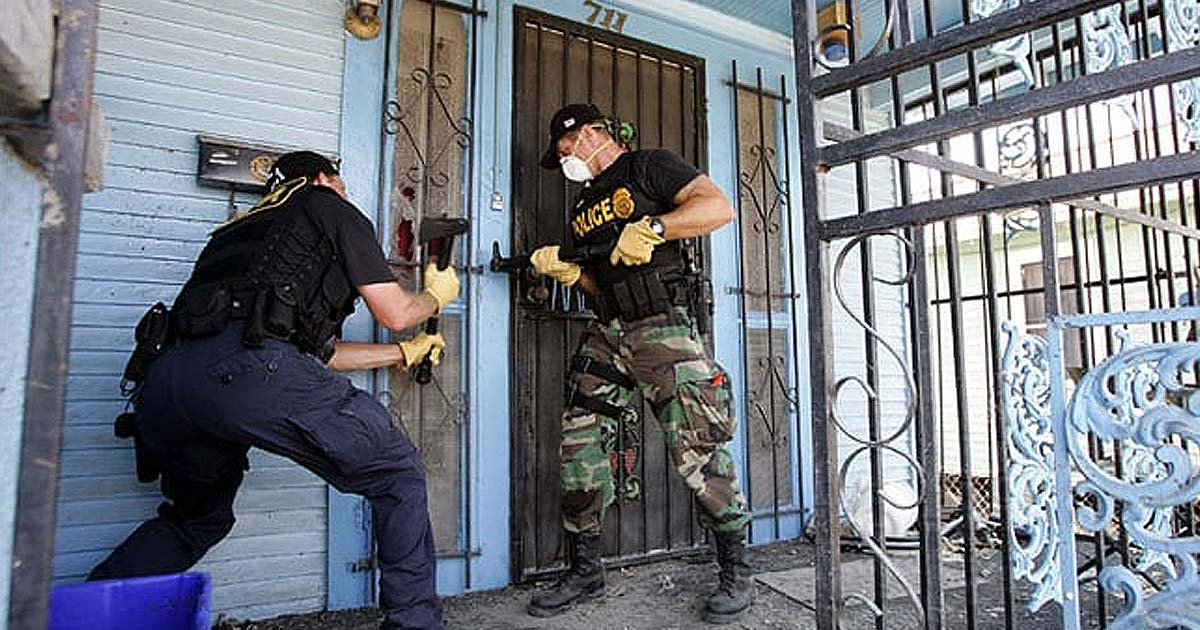
First off, since some people are a little sensitive these days, let me say this is not political; it’s reality. The simple fact is, once things go bad governments at every level are going to be a threat to your safety and security.
From incompetent government emergency planners, who seem to make every disaster so much worse, to scarier situations like gun confiscations, travel restrictions, mandatory curfews, and martial law, you need to be aware of the steps your government will take in response to threats.
- Don’t wait for the government to issue an evacuation order, by that time it’s usually too late.
- Don’t trust everything they say. They may have a fancy title, but in my experience with emergency planners, most are more worried about their cushy federal jobs than they are saving people.
- Be prepared for chaos! Just look at how the government responds to disasters that they know are coming, they usually make things even worse.
- Be prepared for crackdowns on your liberties.
This Already Happened, and They Wrote It Down
People call this paranoia. Fine. Let’s go to the record.
September 2005, New Orleans. Police Superintendent Eddie Compass tells the press that no civilians will be allowed to have guns, that only law enforcement gets to have weapons. His deputy, Warren Riley, told ABC News flat out that nobody would be able to be armed and that they were going to take all the weapons. Cops and National Guard went door to door taking legally owned firearms from people who had done nothing wrong, in a city where 80 percent of the ground was underwater and 911 didn’t exist.
The NRA and the Second Amendment Foundation filed on September 22. A federal judge granted a restraining order on September 23 and ordered the guns returned. Compass resigned four days later.
Here’s the kicker. Years later, the city was still sitting on roughly 1,200 confiscated guns. When they finally offered them back in 2006, you had to produce a bill of sale or an affidavit with the serial number. After a flood that destroyed 80 percent of the city. Think about the paperwork you keep in a filing cabinet in a house that no longer exists.
Congress responded with the Disaster Recovery Personal Protection Act of 2006, which became law as the Vitter Amendment to the DHS appropriations bill. Federal law now says they can’t confiscate lawfully possessed firearms during a disaster. Case closed, right?
In September 2017, with Irma bearing down, the governor of the U.S. Virgin Islands signed an order authorizing the National Guard to seize weapons and ammunition. Eleven years after the federal law was passed specifically to stop that.
That’s not a conspiracy theory. That’s documented reality. The law is a piece of paper. The order is a guy with a title and a bad week deciding what he thinks he can get away with, and by the time the courts sort it out, you’ve already spent three weeks in a dark house without your rifle.
Assume the Cavalry Is Late
Puerto Rico had 16 official deaths for weeks while people were dying in mountain towns nobody could reach. Death certificates were being filled out by hand because there was no power and no phones, and “natural causes” got written on a lot of them. The government wasn’t necessarily lying on purpose at first. It just had no idea what was happening in its own territory.
That’s what incompetence looks like at scale.
The Aftermath Will Try to Kill You With Boring Stuff
The other thing survival sites don’t talk about: most people who get hurt after a disaster get hurt cleaning up.
Chainsaws in the hands of guys who’ve never run one. Falls off wet roofs. Nails through boots. Cuts that get infected in floodwater that’s basically diluted sewage. Heat exhaustion because you’re doing manual labor in August with no A/C and you’re already dehydrated.
And there’s no ER, or there’s an ER with a four-hour wait and no power.
So:
- Know how long you can actually go without food, water, or sleep, because the people who make bad decisions on day nine are the ones who stopped sleeping on day three.
- Trauma kit, not a walmart kit. Tourniquet, pressure dressings, real gauze, and the training to use them. A box of Band-Aids and some Neosporin is a joke when someone’s leg is opened up.
- Boots. Not sneakers. Puncture-resistant sole.
- Gloves, eye protection, and a hard head about the chainsaw. If you’ve never run one, the aftermath is not your training course. Get some seat time now.
- Antibiotics conversation with your doctor, before you need it.
- Prescription buffer. Ask for a 90-day fill. Most insurance will do it if you ask right.
None of this is exciting. It’s the stuff that keeps you functional while everybody around you is getting slowly worn down, and being the functional one in a neighborhood of exhausted people is worth more than any piece of gear you own.
The 30-Day Gut Check
Forget the bug out bag for a second. Sit down and answer these about your actual house:
- It’s day 12 with no power. Where is your water coming from today? Not “I have water.” Today’s water.
- Where does your family’s waste go? Specific answer.
- Who in your house needs electricity to stay alive? What’s the backup, and how long does it run?
- How much cash is in your house right now, in bills under $20?
- Your street is dark and yours is the only house with a light on. What’s your plan?
- A cop shows up and says the whole block is being evacuated and you can’t take your guns. What do you say?
- Which three neighbors would you go to for help, and do they know your name?
If any of those got a shrug, that’s your next prep. Not another knife.
The most important thing is to have a plan. Having a plan to deal with these post-disaster threats can help minimize most of them and can assist in ensuring the safety of those you love.
The storm gets a name and a satellite photo and a week of cable news. What comes after gets nothing. No name, no coverage, no cameras. Just 328 days in the dark, 53 days hauling buckets, and a body count that shows up in a study nobody reads a year later.
Prep for the part with the name if you want. The rest of us will be getting ready for the part that doesn’t have one.
Related Reads:
- The DHS Power Grid Warning Washington Wants You to Forget: Prepare for Six Months in the Dark
- SHTF Plan: Are You Ready to Survive Your Own SHTF Moment?
- Situational Intel: Knowledge is Power during a Crisis
- Long-Term Food Storage: What Actually Lasts 25 Years (And What Rots in Your Basement)
- Martial Law in the United States
Get the Books:


I don’t know if they are available, a bug out bag that is also a life preserver or flotation device. Seems it would come in mighty handy in an area that floods.
HI B (From CA)
Have a look for backpacks that are also dry bags…There are a few yachting companys that make them and i know some of my mates who do white water rafting and canyoning here in New Zealand use them…They are super strong very waterproof and float very well too…I have a 30l one i always use when i sail offshore…so google, them or even look at Amazon as well…If you get stuck let me know and ill try help you out..Regards W
A barbecue, charcoal, and wood and an old fashion percolator. A large mortar and pestle to grind the beans. And a hand held mill to grind wheat berries into flour. In the country, it will be a lot different than in the city. Either way, instead of fearing how bad people will behave, it is better to start making alliances with neighbors now, so you can help each other when the bad times come. When FEMA shows up just tell them; “No thanks, we’ve got it covered”. Ha
HAHA! Ohhh that would really get Fema’s panties in a bunch.
Yep, they’d probably say “hand over what you’ve got”
Great advice!!
I would also like to add the question of the local prison population. How far are all detention facilities from your homestead? How long after each disaster before the prisons empty?
Refer to the clips after “I Am Legend” on the DVD . . . all pertain to disaster scenarios . . one specifically to EMP and prison population . . .
I’ve not seen this addressed anywhere so far.
I, personally, am sitting in a hot spot in the center of three prisons!!!
Screw the Feds
My advice is to relearn the skill set of the rural Americans of the 19th /early 20th Century … Make a conscience decision if you are going to be viewed as predator or prey.. We are just 9 meals from Anarchy and 90 from Cannibalism…Think I’m joking or over reacting .. I guarantee that before 30 days is up people will be eating people … Just a historical Fact ..
I agree, everyone should study survival skills while the grid is up and the computers are on!
Better yet, print off all the articles you can about everything you can think of and start a library so you will have this information when SHTF happens.
I’ve started my own and also started stock piling building materials, food, ammo, medical supplies, ect..
Time to get busy folks!
Already started my library, leaning the “old” skills, and fortifying home while looking for secondary location.
Already started my library, learning the “old” skills, and fortifying home while looking for secondary location.