
Remember when Americans were fighting over toilet paper at Costco?
For a few weeks in 2020, the country got a crash course in just how fragile the modern supply chain r–eally is, and just how eaily people can push things over the edge when they start to panic. A product nobody thought twice about suddenly disappeared, stores slapped limits on purchases, prices jumped, and people who had spent years laughing at the idea of keeping extra supplies at home were standing in line hoping somebody had restocked Charmin.
Well, here we go again. This time it isn’t toilet paper. It’s motor oil.
Costco has started limiting purchases of Kirkland Signature full-synthetic motor oil, with members restricted to two boxes every seven days. The price is arguably the bigger story. A 10-quart package that was selling for roughly $30 last year is now around $58.
That is damn near double.
Costco is also limiting purchases of Mobil 1, and this isn’t happening because everybody suddenly decided to change the oil in six cars this weekend. There is a real supply problem developing underneath the surface, and it connects directly to the energy crisis we have been warning about for months.
This Is What a Supply Chain Starting to Crack Looks Like
Synthetic motor oil depends heavily on Group III base oils produced from crude. More than 40 percent of the Group III base oils used in the United States are estimated to come from the Middle East, exactly where war, shipping disruptions and attacks on energy infrastructure have been hammering the petroleum market.
At the same time, refiners have another problem: gasoline and diesel are worth more money right now.
When diesel is selling for more than $6 a gallon and global fuel markets are screaming for product, refiners have every incentive to concentrate on gasoline and diesel instead of producing as much lubricant base stock. Motor oil gets squeezed from both ends. The raw material is harder and more expensive to get, while refiners have better-paying products competing for the same barrel of crude.
That is how you end up at Costco paying nearly twice as much for oil and being told you can only buy two boxes.
And Costco probably isn’t going to be the end of it.
Newsweek is already asking whether Walmart could be next. As of Monday, Walmart, Amazon and AutoZone had not announced Costco-style purchase restrictions, so nobody should claim Walmart is rationing oil yet. But they operate in the same market and buy products made from the same constrained supply of base oils.
Costco doesn’t have some special Middle Eastern motor-oil pipeline that nobody else uses. If the wholesale supply keeps tightening, everybody eventually pays.
Diesel Is the Part People Should Really Be Watching
The motor oil shortage is bad enough, but it is really a symptom of a much bigger problem.
We warned last week that the attack on Saudi Arabia’s East-West pipeline could make the fuel crisis significantly worse. Since then, the national average for diesel has climbed to roughly $6.23 a gallon, while Brent crude pushed above $109 a barrel.
Diesel matters because you don’t have to own a diesel truck to get screwed by diesel prices.
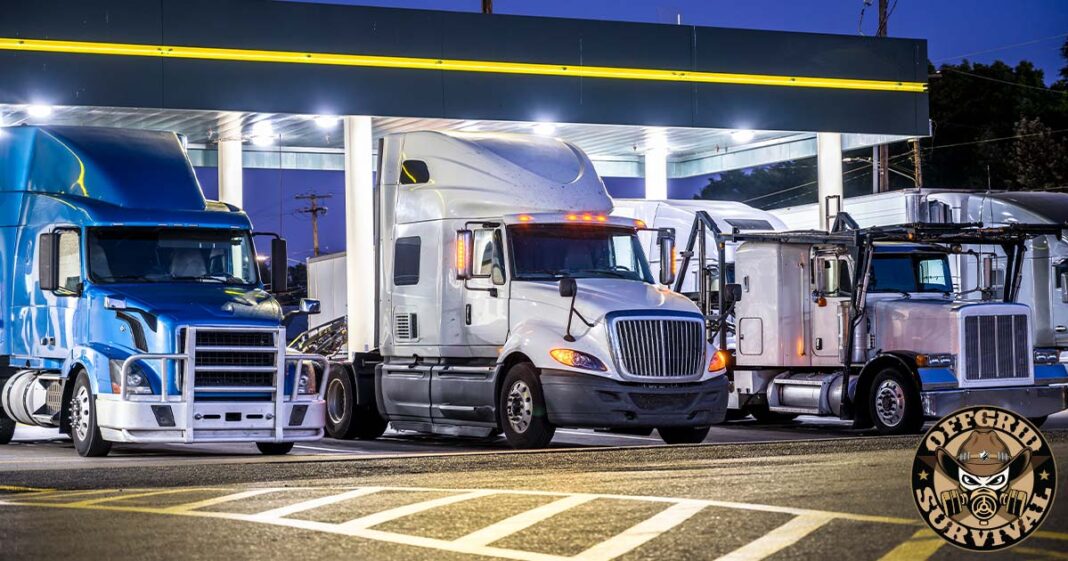
The semi bringing food to Walmart burns diesel. The refrigerated trailer behind it burns fuel. Farmers use diesel to plant, harvest and move crops. Construction equipment runs on it. Freight trains use it. Delivery companies use it. Mining operations, backup generators, heavy equipment and huge pieces of the country’s infrastructure depend on it every single day.
When diesel goes up 50 or 60 percent, those costs don’t stay at the truck stop. They eventually show up in meat, produce, appliances, building materials, medicine, Amazon packages and just about everything else that has to move from one place to another.
That is the part politicians almost never explain when they talk about inflation. Energy isn’t simply another line on your household budget. Energy is buried inside the price of virtually everything you buy.
We Apparently Learned Nothing From COVID
One of the biggest lessons from 2020 should have been that America’s just-in-time supply system works beautifully right up until something interrupts it.
Companies spent decades squeezing warehouses, inventories and spare capacity because storing extra stuff costs money. When everything is running normally, that system looks incredibly efficient. Products move from factories to ports to distribution centers to stores almost exactly when they are needed.
Then something goes wrong.

During COVID, factories closed and shipping backed up. Containers ended up in the wrong places. Ports jammed. Trucking was disrupted. People changed buying habits at the exact moment companies were least capable of responding. Suddenly you couldn’t find toilet paper, cleaning products, ammunition, computer chips, appliances and eventually even cars.
People treated it like some bizarre once-in-a-century event.
It wasn’t.
COVID simply exposed a weakness in our system that never went away.
Instead of lockdowns, we have wars, damaged pipelines, threatened shipping lanes, refinery problems and an energy market that is getting tighter by the week. The problem is still basically the same: remove enough supply from one important part of the system and the effects start spreading into places most people never expected.
Motor oil is a perfect example. Nobody watching drone strikes in Saudi Arabia six months ago was thinking, “I better buy oil for my Toyota.”
Now Costco is rationing it.
And Right on Cue, Trump Claims it’s all Fake News
As if on cue, President Trump jumped on Truth Social Monday to assure Americans that none of this is really his fault. Trump blamed the price increases Americans are seeing on Joe Biden and claimed that, with the “temporary exception of Oil,” prices are “coming down sharply.” He also predicted that oil will “drop like a rock” as soon as the war with Iran ends, which he again says “will not be long.”
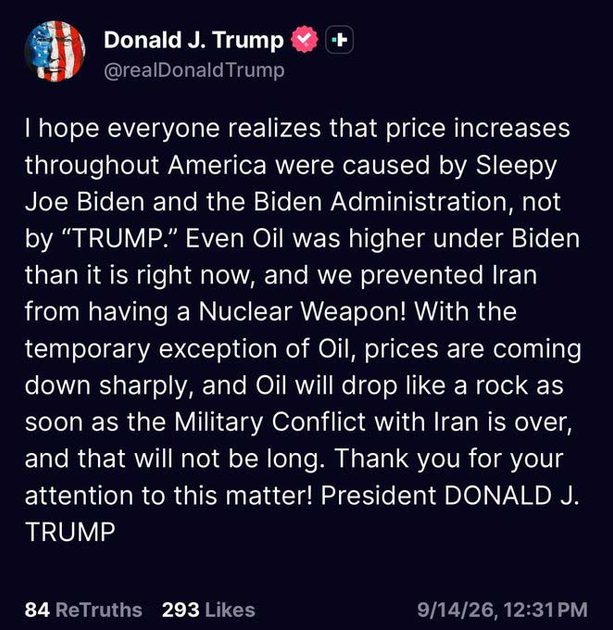
There are a couple of problems with that sales pitch. First, you cannot simply carve oil out of the inflation picture as if it is some isolated expense that only affects people filling up pickup trucks. Oil and diesel are buried in trucking, farming, manufacturing, construction, air travel, shipping and just about every physical product moving through the American economy. Brent crude was still above $107 a barrel Monday after attacks on Saudi energy infrastructure, while the Federal Reserve is staring at stubborn inflation and markets are now expecting another rate hike.
And there is an even bigger problem with Trump’s promise that this is all temporary: nobody knows when this war ends. Just a few days ago, Trump himself said oil prices might not come back down until after the November midterms. Now he is telling Americans the conflict “will not be long” and oil is about to collapse. Maybe it will. We certainly hope it does. But betting your family’s budget on politicians accurately predicting the end of a Middle Eastern war probably isn’t much of a preparedness strategy.
Biden deserves plenty of blame for the inflation Americans suffered during his administration, but that doesn’t magically make today’s prices somebody else’s problem. Trump is president now. The war is happening now. Diesel is above $6 now. Costco is rationing motor oil now. At some point, telling people everything is getting cheaper while they are standing in a store looking at a product that nearly doubled in price starts sounding less like economic analysis and more like Washington telling you not to believe your own damn eyes.
Are we headed towards Deeper problems or World War III
People imagine World War III as mushroom clouds, missiles flying over American cities and tanks rolling across Europe.
Hopefully it never gets anywhere near that point. But a major global conflict can wreck your standard of living long before anybody launches a nuclear weapon.
Close an important shipping lane. Destroy a refinery. Knock out a pipeline. Force tankers to take longer routes. Drive insurance costs through the roof. Pull millions of barrels of petroleum out of the global market. Suddenly something as boring as changing the oil in your car costs twice as much.
Then trucking gets more expensive. Food gets more expensive. Farming gets more expensive. Airlines raise prices. Manufacturers pay more for raw materials and shipping. Governments start releasing strategic reserves and talking about emergency measures.
This is what economic warfare and supply disruption look like in the real world. It isn’t always dramatic enough to make people run for the bunker, but it can bleed households dry one bill and one grocery trip at a time.
And the uncomfortable part is that the Middle East is only one fire burning right now.
Russia and Ukraine remain locked in a war that has repeatedly targeted energy infrastructure. Shipping routes have become military targets. Governments are pouring money into weapons. At the same time, we have some of the most powerful technology companies on earth warning that the AI systems they are building could eventually become dangerous enough to threaten humanity. We covered those warnings this weekend.
You don’t have to believe a killer AI is coming tomorrow to recognize the bigger problem. We are piling new risks on top of systems that are already far more fragile than most Americans realize.
Don’t Panic Buy. Stop Waiting Until Everybody Else Panics.
None of this means you should run to Costco and try to clean out the motor-oil aisle. The point is that by the time everybody is paying attention, the cheap inventory is usually gone, the limits are already in place, and you are buying whatever is left at whatever price somebody decides to charge.
That is exactly what happened after COVID. We were told the shortages, emergency surcharges and massive price increases were temporary. Then supply chains normalized, stores filled back up, companies figured out how to operate again, and somehow a hell of a lot of those prices never came back down. Once consumers prove they will pay the higher number, businesses have very little incentive to race back to the old one. A crisis becomes the excuse, the higher price becomes the new normal, and everybody is expected to forget what the same product cost two years earlier.
That is why preparedness matters. If you maintain your own vehicles, keeping the right oil and filters for the next couple of changes isn’t panic buying. Keeping food you already eat, basic household supplies, medications and other things you know you are going to use isn’t hoarding. It is buying yourself some breathing room before the next shortage gives retailers, manufacturers, governments and every middleman along the chain another excuse to tell you why everything suddenly costs 30, 50 or 100 percent more.
The lesson from COVID should have been painfully obvious: shortages eventually end, but the damage to your wallet has a nasty habit of sticking around. Inflation resets expectations, corporations discover what customers will tolerate, governments collect more tax revenue from higher nominal prices, and the average person gets squeezed from every direction while being told this is just the cost of doing business.
That is the part nobody likes to say out loud. When you have no запас, no alternatives and no ability to wait, they have you by the balls. You need the food. You need the fuel. You need the oil. You need the medicine. At that point, you are not negotiating anything. You are paying whatever the market demands because you waited until everyone else needed the exact same thing.
Five years ago it was toilet paper and disinfectant. Today Costco is rationing motor oil while diesel is pushing transportation costs higher across the entire economy. If energy keeps climbing and these wars keep spreading, motor oil is not going to be the last ordinary product that suddenly becomes expensive, scarce or both.
The whole point of preparedness is making sure you are not standing in line with everyone else when it happens.
Are you prepared for what’s coming?
Are you prepared for the economic chaos that seems inevitable? For many American families, the nightmare has already begun. Are you prepared for the economic chaos that seems increasingly unavoidable? For millions of American families, the nightmare has already begun. Since 2020, the dollar has been hammered, the cost of basic necessities has exploded, and household budgets have been stretched to the breaking point. Now the national debt has hit $40 trillion, and Americans are being forced to confront just how much purchasing power they have already lost.
To help you navigate these uncertain times, we’ve compiled some of our best tips and articles on preparedness and survival. These resources cover everything from building your emergency food stockpile to creating a comprehensive survival plan: We advise reading our article on Preparing for an Economic Collapse. We talk about the history of economic collapses, list the steps you need to take, and talk about what will most likely happen when the banking system goes down. You can read the article here.
Start Stockpiling Food: During any type of crisis, food and water are going to be some of the most important commodities you can have. Everyone’s going to want it, and that means there are going to be major shortages and supply chain problems. Now is the time to stock up on long-term food and water.
- Best Emergency Food: The Top Survival Food Supplies
- Survival Food – 56 Long-Term Survival Foods and Supplies at the Grocery Store
- Prepper 101: Your Survival Guide to Getting Started
- Long-Term Food Storage: What Actually Lasts 25 Years (And What Rots in Your Basement)
Grocery Options that ship right to your Home:
Invest in Long-term Consumables: Start stocking up on items that you know you’ll need and use in the future. By stocking up on food, water, survival gear & supplies, and bartering goods; you will have a nice stockpile of supplies that will help see you through almost any crisis situation. Another upside to investing in consumable goods is these goods are completely secure from financial market volatility, and will continue to hold their value after the collapse. In fact, most consumables will probably skyrocket in value in a post collapse world.
Start Cutting Expenses: Start cutting all nonessential expenses. From monthly cable bills, to your morning Starbucks, you really need to start paying attention to where your money’s going.





I know it’s highly unlikely, but you suppose recruiting 20 million illegal immigrants to cross the border and supplying their housing, food, health care, education etc. could be a huge part of our societal destruction plan? Iran has every intention of nuking us if they get the chance and a large part of our society is electing would be terrorists into office. It seems like we have a liberal survivalist here, be wary.