If you are just getting started — or even a seasoned prepper — making your way through all the information online can be overwhelming. Even on this site, we have over a decade of articles archived. For that reason, we put together this resource guide to help you navigate the world of emergency preparedness and answer the questions we get asked most.
This isn’t a gear list. It’s not a ten-step checklist some weekend survivalist put together to sell you something. It’s a framework for actually thinking through your preparedness, building real plans, and developing the skills to back them up. Use it as a starting point, then go deeper into the areas that apply to your situation.
Where Do You Start? What Threats Should You Be Preparing For?

That’s the million-dollar question — and the honest answer is that nobody can answer it for you. Anyone who tells you otherwise is selling something.
Preparing looks different for everyone. A family of four in coastal Florida faces radically different threats than a single person in a high-rise in Chicago or a homesteader in rural Montana. What they have in common is the need to actually think through those threats before the event forces the issue.
The things that shape your unique preparedness situation include your geographical location and the most likely threats based on your local environment, personal threats like job security or financial instability, medical considerations for anyone in your group, and the category of threats that nobody can fully predict. None of us know the future. What we can do is prepare for the most likely events based on historical patterns, local conditions, and honest self-assessment.
Here’s the thing most people miss: when you reach that metaphorical SHTF moment, there’s a very high chance the event will be hyper-personal or extremely localized in nature. A job loss, a freak winter storm that shuts down your city for a week, a house fire, or a regional event like a hurricane — these aren’t the Walking Dead. But they are things that can feel like an end-of-the-world situation when you’re living through them with no preparation behind you.
The goal isn’t to prepare for every possible catastrophe. The goal is to prepare well enough for the most likely scenarios that you’re not one of the people standing in a line for emergency supplies three days after the event.
Step 1: Perform a Survival Threat Assessment
Before you buy a single piece of gear or build a single plan, you need to know what you’re actually preparing for. That starts with a Survival Threat Assessment.
Grab a piece of paper and work through three categories:
Historical threats — What disasters have actually hit your town, region, and state over the last 50 years? Floods, hurricanes, tornadoes, wildfires, ice storms, earthquakes, industrial accidents — look at what has actually happened where you live, not what seems theoretically possible. The NOAA historical disaster database and FEMA’s disaster declaration records give you a solid factual foundation. Don’t skip this step. People consistently overestimate exotic threats and underestimate the mundane ones that actually hit their region on a regular basis.
Local crime and security — Take an honest look at crime statistics in your area and the areas you travel through regularly. What are the most common crimes? What’s the trend line — improving or worsening? What does civil unrest look like historically in your region? This isn’t paranoia; it’s calibration. Situational awareness starts with knowing the environment you’re actually operating in, not a generalized threat landscape.
Personal threats — These are often the most likely and the most overlooked. Job loss, medical emergencies, a family member with a chronic condition that requires regular medication, financial vulnerability, a local economy dependent on a single industry — these personal threat vectors are where most people’s actual SHTF moments come from. A sudden job loss with no emergency fund and no food supply is a genuine crisis for most American families. Plan for what’s most likely to hit you, not just what makes for the best story.
Once you’ve run through this exercise honestly, you’ll have a much clearer picture of what your preparedness energy should actually be directed toward.
Step 2: Do a Survival SWOT Analysis
A Survival SWOT Analysis is one of the most effective exercises in preparedness and one of the least used. SWOT — Strengths, Weaknesses, Opportunities, Threats — is a framework borrowed from business planning that translates directly to survival planning.
Strengths are what you already have going for you: existing skills, physical fitness, a well-stocked pantry, a rural property, a network of trustworthy people, relevant training or experience. Most people are stronger than they think when they actually write it down.
Weaknesses are the honest gaps: no stored water supply, medical conditions that require prescription medications, no physical fitness baseline, a household member with mobility limitations, no communication plan, no training in basic first aid. These are the areas that will kill you during an actual event. Identifying them on paper while you still have time to address them is the entire point of the exercise.
Opportunities are the gaps you can close with realistic action: a community garden plot, a neighbor who’s a retired medic, land available for a rural retreat within driving distance, the ability to get a ham radio license, a skill set that could be traded in a resource-scarce scenario.
Threats are what the threat assessment identified — the most likely events you’ll face based on location, personal situation, and history.
Do this on paper. Share it with your household. Update it once a year. It will tell you exactly where your next dollar and your next hour of preparation should go.
Step 3: Build Your Four Core Plans
Based on what you’ve learned from the previous two exercises, it’s time to build actual documented plans. Not mental notes. Written plans that anyone in your household could execute without you.
A Home Evacuation Plan — This is the baseline. What do you do if there’s a fire in the middle of the night? An earthquake that blocks your front door? A gas leak that gives you 60 seconds to get out? A home invasion? Your home evacuation plan covers the immediate exit scenarios and defines where everyone goes and how you account for everyone once you’re out. Run it as a drill with everyone in the household including children. Time it. You will find things you missed.
A Bug Out Plan — Your bug-out plan is an extension of your evacuation plan, scaled up to the scenario where you’re not just leaving the house but leaving the neighborhood, the city, or the region. Emergency Evacuation Planning: 60+ Preparedness Resources for Bugging Out covers this in comprehensive detail. The critical elements: documented routes (minimum three, from every likely starting point), a destination you’ve actually scouted, a bag that’s actually packed and tested, and a trigger framework — the pre-decided conditions that activate the plan so you’re not making emotional decisions in the middle of a crisis.

A Get Home Plan — This one gets skipped by most people because they’re thinking about home as the starting point. But what if the event hits while you’re at work? Stuck in traffic? Traveling? An event that strikes while you’re away from home could strand you miles from your family with no plan for reconnection. Your Get Home Plan should cover your most common away-from-home locations, the realistic routes home from each one, and what you’ll do if those routes are compromised. A basic get-home bag at your workplace — water, walking shoes, a printed map, a small first aid kit, some cash — closes most of that gap.
A Communication Plan — During any major disaster, cell networks fail or saturate within hours. That means the plan that relies on texting your family needs a backup. And a backup to the backup. Your Communication Plan should define designated meeting points that everyone knows without needing a phone, an out-of-state contact who can relay messages (often easier to reach than in-state contacts during regional disasters), and alternative communication tools — a ham radio, a satellite communicator, a weather radio at minimum. HamRadioPrepper.com is a solid starting resource if you’re new to emergency communications.
Preparedness Essentials: Five Articles That Will Anchor Your Thinking
If you’re new to the site or to preparedness generally, these five articles cover the most essential ground. Read them before you start spending money on gear.
- Emergency Evacuation Planning: 60+ Preparedness Resources for Bugging Out
- Prepping for Natural Disasters: Your Emergency Preparedness Checklist
- 32 Self-Reliant Resources: Preparedness Skills that Everyone Should Know
- 7 Things You Will Likely Lose During a Long-Term SHTF Disaster
- 8 Realistic Threats You Should Be Ready For
Understanding the Threats: What You’re Actually Preparing For
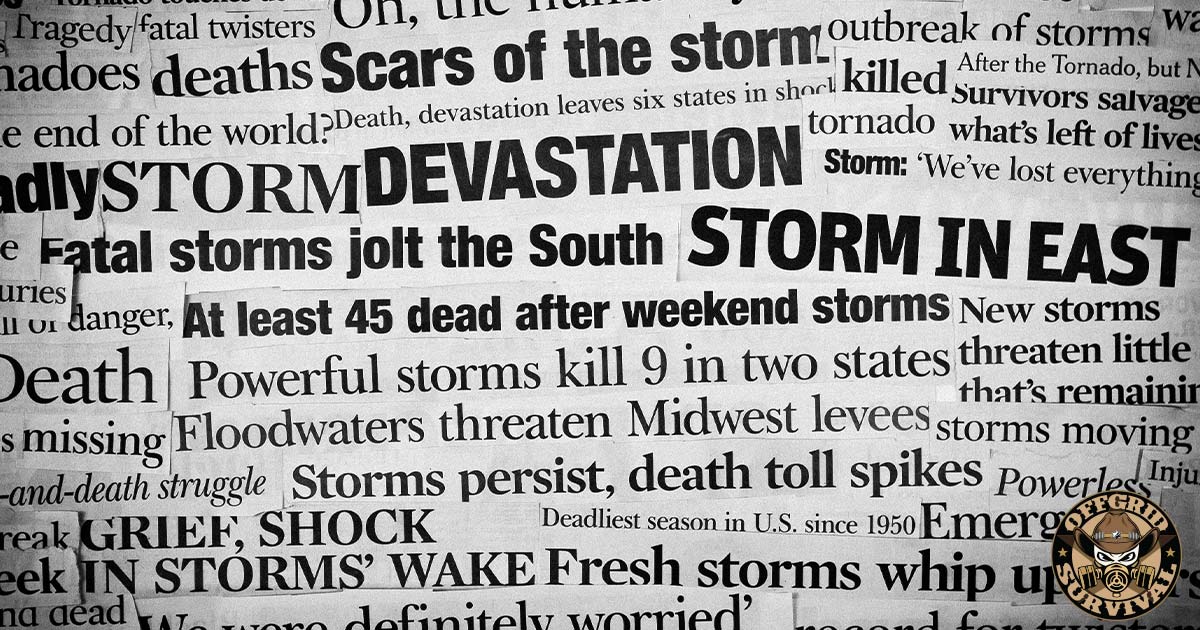
Most preppers have a vague sense that “bad things can happen.” That’s not enough. You need a working understanding of the specific categories of threats — what triggers them, how fast they develop, and what they actually look like on the ground — to build a plan that’s calibrated to reality rather than worst-case fantasy.
Natural Disasters — Hurricanes, wildfires, tornadoes, earthquakes, floods, ice storms, and winter grid failures are the most common SHTF events in American history. They are also the most survivable with adequate preparation. Your Natural Disaster Preparedness Checklist gives you the specifics. The consistent lesson across every documented natural disaster: the people who waited for official evacuation orders were the people who ended up in emergency shelters. The people who left 48 hours early went home to find their houses intact.
Grid-Down Events — A large-scale power grid failure — whether from an extreme weather event, an EMP, a cyberattack, or a cascading infrastructure failure — is one of the most consequential scenarios in preparedness because it doesn’t just shut off your lights. It kills water treatment, hospital systems, fuel distribution, supply chains, and communications simultaneously. Infrastructure threats to the power grid are documented, credible, and underplanned for by most households.
Water Supply Threats — Municipal water systems are more vulnerable than most people understand. Industrial accidents, infrastructure failures, contamination events, and deliberate sabotage have all made real headlines. Water as a Weapon: Preparing for Threats to Our Drinking Water is one of the most important reads on this site right now. If your water supply is compromised and you have no stored water and no treatment capability, you have roughly 72 hours before the situation becomes life-threatening. That timeline doesn’t change.
Economic Collapse — The warning signs of a systemic economic breakdown don’t arrive all at once. They accumulate over years and then hit fast. Hyperinflation, banking system instability, supply chain failures, and currency devaluation are all historical events that have happened to developed economies within living memory. The signs of economic collapse and the real state of U.S. debt obligations are topics we cover directly because they shape the threat landscape for every other category of preparation.
Civil Unrest and Riots — Urban civil unrest can escalate from contained to neighborhood-level dangerous with very little warning. Preparing for riots and civil unrest isn’t an extremist position — it’s pattern recognition from documented events over the last two decades. The standard guidance to “shelter in place and wait for things to calm down” has gotten people killed in neighborhoods where things didn’t calm down.
Pandemics and Disease Outbreaks — COVID-19 gave most people their first real-world experience with a genuine SHTF disruption. The lesson wasn’t just about the disease itself — it was about how fast supply chains break, how quickly shelves empty, and how little buffer exists between normal daily life and genuine resource scarcity. Pandemic preparedness deserves its own serious planning track separate from your other scenarios.
Prepping Drills: Your Plans Mean Nothing Without Training
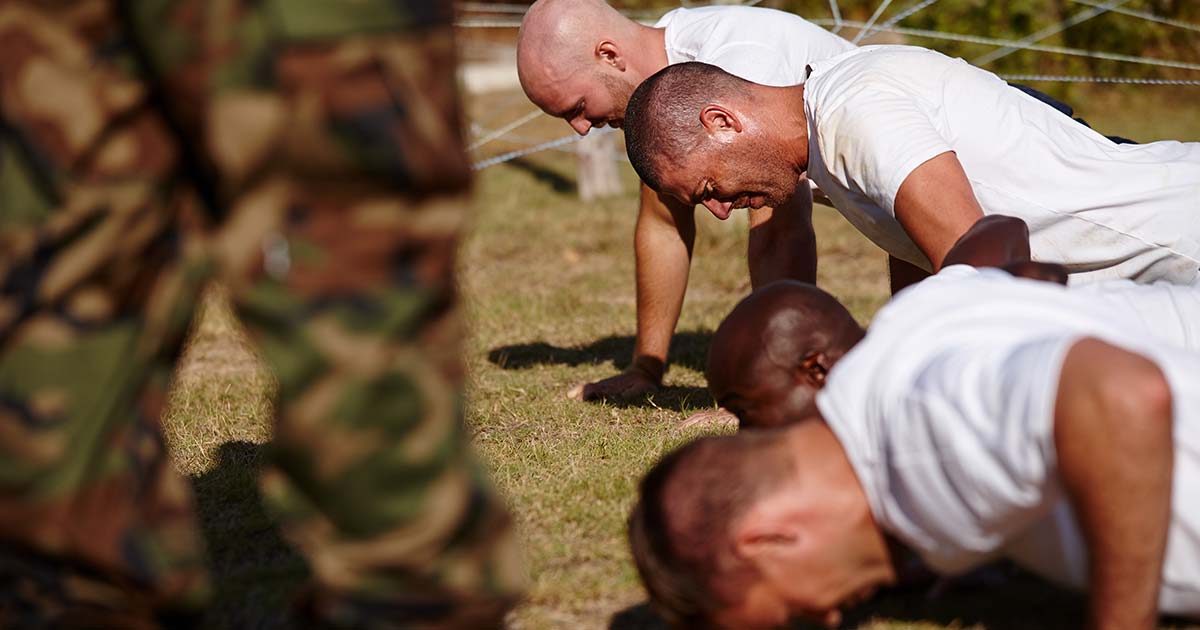
If you’ve built your plans and assembled your supplies, you’re ahead of the vast majority of the population. But a plan that’s never been tested is a theory, not a capability.
The only way to find out if your plans actually work is to run them — with the people who will actually be executing them, under conditions as close to realistic as you can create.
Make drills as realistic as possible. Shut off the power to your home. Turn off cell phones. Run through your home evacuation plan as if you’re actually doing it. Time yourselves. When you’re doing this for real, adrenaline is running and people are scared. The actions that felt obvious in planning will take longer, be noisier, and produce more disagreement than you expect. Better to find that out in the living room than in an actual emergency.
Run your evacuation routes. Don’t just plan them on a map — drive them. All of them. At different times of day. Find out where the traffic choke points are at 5 PM on a weekday. Find out where the road floods after a heavy rain. Find out how long each route actually takes versus how long you assumed it would. Run them with your family so everyone knows what to look for and where to go.
Test your communication plan without your phones. Can your family actually reach your pre-designated out-of-state contact? Does everyone know the physical rally points? Do your kids know what to do if something happens during school hours and you can’t reach them?
Test your gear in real conditions. The water filter you’ve never used outside, the camp stove you assembled once, the tarp shelter you’ve never set up in the rain — all of those are gear you can’t count on until you’ve used them. Going camping is one of the most practical preparedness training activities available. It puts you in conditions where your skills and gear actually matter, in a low-stakes environment where failure is instructive rather than fatal.
For more on this, our full guide to training and preparedness drills covers how to design realistic exercises for your household.
Survival Skills: What You Know Matters More Than What You Own
This needs to be said plainly because the gear industry doesn’t want you to hear it: your skills will outlast your equipment every time.
A quality water filter lasts 100,000 gallons before it needs to be replaced. The knowledge of how to purify water by boiling, solar disinfection, or improvised filtration never expires and requires no batteries. A ferro rod with 12,000 strikes is useful — but the person who knows how to start a fire with friction and a handful of dry materials doesn’t need it. Navigation skills make you independent of GPS. Food preservation skills mean you’re not entirely dependent on commercial freeze-dried supplies.
The 32 Self-Reliant Skills that everyone should know covers the foundational competencies that no piece of gear can replace. Build these first.
Medical training is the most underinvested skill area in the prepper community. Knowing how to treat a penetrating wound, recognize and manage shock, reduce a dislocation, splint a fracture, and handle a severe allergic reaction without immediate access to emergency services could save a life in almost any SHTF scenario. A Stop the Bleed certification is an afternoon. A Wilderness First Aid course is a weekend. Both are better investments than most gear purchases.
Physical fitness is a non-negotiable skill and the one most preppers defer indefinitely. Walking ten miles with a 35-pound pack is not something you can fake with good gear choices. If your bug-out plan requires moving under load across terrain, the only way to know you can do it is to have done it. Physical fitness is one of your top preparedness considerations — and it costs nothing but time and consistency to develop.
Knowledge preservation is a growing concern in an era where almost everything we know lives on servers somewhere. Building your own offline digital survival library — downloadable reference materials, printed manuals, the best survival books on your shelf — gives you access to critical information when the internet is unavailable. Don’t underestimate how much knowledge most people have offloaded to their smartphones.
Survival and Preparedness Books
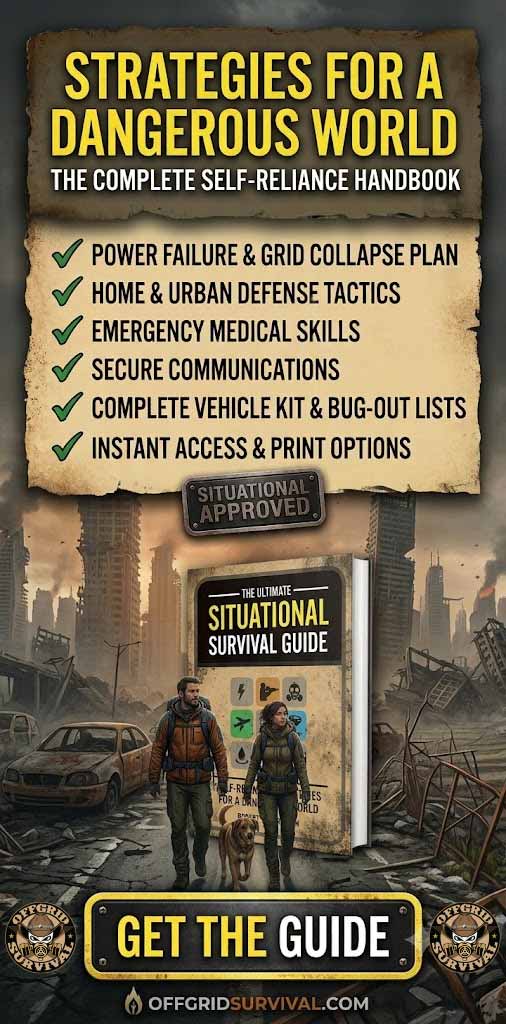
- The Ultimate Situational Survival Guide: Self-Reliance Strategies for a Dangerous World: Survival expert Robert Richardson, founder of offgridsurvival.com, gives you real-world advice on how to survive the very real dangers present in today’s society.
- SAS Survival Handbook: The Definitive Survival Guide: Now with added techniques for handling Urban dangers, the ‘SAS Survival Handbook’ is the complete companion for adventurers everywhere.
- The Encyclopedia of Country Living: This book has everything and is one of our favorite how-to books on self-reliant living.
- Emergency Power for Radio Communications: If you want to take your emergency communications to the next level, this ARRL book is a good start for off-grid Comms and emergency backup power.
The Ultimate in Preparedness: Going Off the Grid
Not everyone will get here, and not everyone needs to. But the endgame for a significant portion of serious preppers is a well-stocked rural retreat with independent water, power, food production capability, and enough distance from urban population centers to avoid becoming a target during a prolonged crisis.
What it means to live off the grid covers everything from finding land to powering your home to generating income outside the traditional system. It’s not a fantasy if you approach it as a planning problem rather than a lifestyle aesthetic.
Buying Rural Land: Safety Considerations When Purchasing Off-Grid Property — Living off the grid almost always means living on rural property, and rural areas present specific security considerations that urban and suburban preppers often don’t think about: distance from emergency services, road access issues in bad weather, the visibility of your property to travelers, and local community dynamics. Read this before you put down money on land.
Finding the Ultimate Bug Out Property or Survival Retreat — Location is the deciding factor. A property with unreliable water access, poor defensibility, or a location directly in the path of a likely population migration route during a crisis is a liability, not an asset. This article covers the specific considerations that separate a genuinely useful retreat from an expensive mistake.
RV and Trailer Living: The Nomad Prepper’s Way of Survival — For those who can’t or don’t want to commit to a fixed property, mobile living is a legitimate preparedness strategy. A well-equipped travel trailer or RV gives you mobility, independence from grid infrastructure, and the ability to relocate quickly. We cover off-grid RV living and backcountry camping in depth in this category.
Tactical Defense: The Part Most Guides Skip
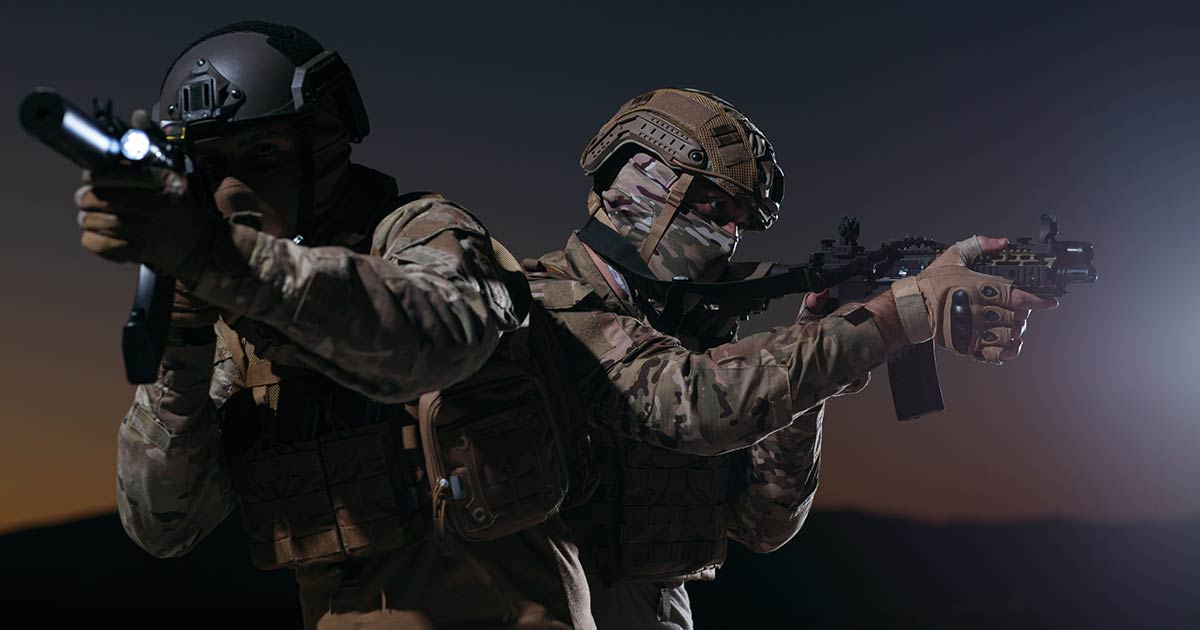
Preparedness without a security component is incomplete. This isn’t a controversial statement when you look at what actually happens during extended grid-down scenarios, civil unrest, or resource scarcity events. People who have supplies become targets. The degree to which that’s true depends on the severity and duration of the scenario, but ignoring the possibility is not a plan.
How to Protect Yourself by Developing Your Situational Awareness is the article to start with. Not firearms, not tactical gear — awareness. The ability to read your environment, identify threats before they materialize, and position yourself to avoid problems rather than respond to them is more valuable than any defensive weapon you could carry. Most dangerous situations have warning signs that go unread because people aren’t paying attention.
Stress Response Training: The Missing Ingredient in Firearms Training — If you own a firearm for defensive use and you’ve only trained at a static range, you haven’t trained for how you’ll actually need to use it. Stress response training teaches you how your body behaves under adrenal response — which is nothing like calm range shooting — and how to maintain functional accuracy and decision-making when your hands are shaking and your heart rate is at 180. This is the missing piece in most civilian firearms training.
Why a Shotgun Should Be Part of Your Home Defense Arsenal — Firepower and ease of use. A 12-gauge with buckshot is arguably the most effective and most forgiving home defense platform for most people. This article covers why and what to look for.
Best Takedown Rifles for Survival — A takedown rifle that fits in a standard backpack extends your defensive and hunting capability without adding significant weight or drawing attention. These are the options we’ve tested and recommend.
Prepper Gun Options: Your Firearm of Choice When the SHTF — Not a one-size-fits-all answer. The right weapon depends on your scenario, your skill level, your household composition, and your most likely threats. This article works through the decision matrix.
Prepper Gear: What to Buy, What to Skip, and When to Buy It
Here’s the part of prepping that gets the most attention and deserves to be put in its proper place.
Newbies — and some experienced preppers who should know better — get obsessive about gear. They accumulate storage units full of equipment, subscribe to every gear review newsletter, and spend more time optimizing their kit than actually developing the skills to use it. Then they realize they can’t start a fire in the rain, can’t navigate without a phone, and can’t walk five miles with a loaded pack without stopping.
Your survival gear is only as good as your training.
Fancy equipment in the hands of someone without skills is not preparedness — it’s expensive camping luggage. I’ll put skills up against gear any day of the week.
That said, gear matters. The right equipment makes everything easier, extends your capabilities, and in some cases provides backup when skills alone aren’t enough. The key is buying in the right order and for the right reasons.
If you’re brand new, stick to the fundamentals: Water, Food, Shelter, and Protection. These four categories are the foundation that everything else gets built on. If you have all four covered to a basic degree, you’re in better shape than the majority of the population. Add to them incrementally, based on what your threat assessment and SWOT analysis tell you are the actual gaps.
Water — Three days without it and the body starts to fail. A week and it’s over. At minimum: stored water (1 gallon per person per day, 2-week supply), a quality filtration system, and chemical purification backup. The Best Portable Survival Water Filters covers what actually works in the field. Our full breakdown on how to purify water without iodine tablets covers every method ranked by effectiveness.
Food — Start with a 30-day supply of food your family actually eats, stored in your home right now. Then extend. Freeze-dried long-term storage food (25-year shelf life), canned goods, bulk staples. Best Emergency Food: The Top Survival Food Supplies gives you the rundown on what’s worth the money.
Shelter — Both fixed (your home, hardened) and mobile (a bug-out shelter option). A quality tarp shelter in silnylon or Dyneema, 8×10 ft, weighs under a pound and deploys in under 60 seconds. In a bug-out scenario, that may be the difference between sleeping dry and sleeping in the rain with wet gear.
Protection — Both the situational awareness and the physical capability to protect yourself and your household. See the tactical section above.
Once those four are covered at a basic level, here are the gear categories that earn their spot:
- The Best Portable Survival Water Filters
- Best Emergency Food: The Top Survival Food Supplies
- Ham Radio — Emergency Communications
- Best Fixed Blade Survival Knives
- Top Solar Generators, Power Packs, and Emergency Solar Solutions
- 8 Tools Designed for Urban Survival
- Discreet Survival Backpacks for Bug Out Disasters
- Survival Lighters: The Top Weatherproof, Windproof, and Waterproof Lighters
- Best Tactical Flashlights
- Portable Backpacking Camp Stoves for Preppers
Prepper Resources: Don’t Take Anyone’s Word for It
No single source has all the answers. Anyone who claims otherwise is either naive or selling something. Do your own research, stress-test the advice you find, and build a plan that fits your specific situation — not a generic template.
Emergency Planning and Preparedness
- Our list of Recommended Survival Websites — Sites we actually read and resources our readers have recommended over the years.
- Prepper Website — A daily curated feed of preparedness articles from across the web. Useful for staying current on what the community is discussing.
- Ready.gov — The federal government’s emergency preparedness resource. Most of the guidance is frustratingly basic, but it’s worth knowing what’s there for the family members who won’t take preparedness seriously until the government tells them to.
Threat Maps: U.S. Natural Disaster Reference
Before you decide what you’re preparing for, look at what’s actually happened where you live. The following historical maps are some of the most useful tools for a realistic threat assessment:
U.S. Hurricane Tracks 1851–Present — Every storm that has made landfall or significantly impacted the continental United States. If you live anywhere on the East Coast, Gulf Coast, or the Southeast interior, this map tells you exactly what history says your region should be preparing for.
U.S. Seismic Hazard Map — The USGS seismic hazard maps show frequency and magnitude probability of damaging earthquakes by region. The Pacific Coast is obvious. What surprises most people is the New Madrid Seismic Zone running through the central U.S. — a fault system that produced the most powerful series of earthquakes in North American recorded history in 1811–1812.
NOAA Tornado Risk Map — Tornado Alley is well-documented, but the risk zone extends farther east than most people realize. Tennessee, Alabama, Mississippi, and parts of the mid-Atlantic all see significant tornado activity that doesn’t make it into the public mental map of tornado risk.
Use these maps when doing your threat assessment. Historical data is the most reliable predictor of future risk.
The Mindset That Actually Determines Survival Outcomes
Everything in this guide — the plans, the gear, the skills, the drills — is downstream of mindset. And mindset is the thing that’s hardest to sell and hardest to teach but makes more difference than any of it.
Maintaining a positive mental attitude during a survival situation is not an inspirational abstraction. It’s an operationally critical capability. People with equivalent physical conditioning and gear make wildly different decisions under stress based on mental state. Panic causes people to abandon working plans, misread their environment, make irreversible choices, and burn through resources in minutes that should have lasted days.
Mental preparedness is trainable. Drills build it. Camping and outdoor experience builds it. Honest self-assessment builds it. Reading case studies of how people have actually survived — and failed to survive — documented disasters builds it. This is the investment most people skip because it doesn’t produce anything to show at the end of an afternoon, but it is the variable that matters most when everything else gets hard.
Where This Leads: The Long View
Preparedness is not a destination. There’s no point at which you’ve done enough and can stop paying attention. The threat landscape shifts, your personal situation changes, your skills atrophy if not maintained, and new information makes old plans obsolete.
The people who are actually prepared aren’t the ones with the most gear. They’re the ones who have made preparedness a continuous practice — who assess, plan, train, test, and revise on a regular cycle. They’re honest about their gaps and systematic about closing them. They have a network of people they’ve actually vetted, not just a contact list. And they’ve made peace with the uncertainty that no amount of preparation fully eliminates, because that peace itself is a form of resilience.
Start where you are. Fix the biggest gap first. Build from there.
Survival and Preparedness Books
A good survival book doesn’t expire. It sits on the shelf without needing a power source, doesn’t require a subscription, and contains knowledge that was earned through actual field experience.
- The Ultimate Situational Survival Guide — Written by this site’s founder, Robert Richardson. Real-world advice on surviving the threats present in today’s society, not the apocalyptic fantasy scenarios that dominate a lot of prepper media.
- SAS Survival Handbook — The definitive field survival guide. Updated to include urban threat scenarios. If you own one survival book, this is the one.
- The Encyclopedia of Country Living — The bible of self-reliant homestead living. Food preservation, animal husbandry, water systems, construction — it’s all here. One of the most genuinely useful books in our library.
- Emergency Power for Radio Communications — If you’re serious about emergency communications and off-grid power, this ARRL publication covers the intersection of both in depth.