Before we get into what happened in Boulder City, let’s name the thing correctly. ~MAGA SOCIALISM~
The federal government took land supposedly owned by the American public, shut that same public out of the decision, and handed the property to a private investment fund out of Texas. Nevada then sweetens the deal with tax abatements for the data center industry, while the local utility prepares to spend billions building new gas turbines to keep the servers running. The hedge fund gets the asset, the technology companies get the electricity, and everyone else gets stuck paying higher utility bills while praying the grid doesn’t collapse during the next heat wave.
There is nothing free-market about this arrangement. It is government picking winners, transferring public assets to politically favored private interests, socializing the cost, and privatizing the profit. Conservatives spent the better part of eighty years screaming about that exact model whenever Democrats tried it. Apparently, all it takes to make socialism acceptable is a red hat, an executive order, and a few billionaires promising that the machines will eventually make our lives better.
That is what makes this story so infuriating. Millions of people thought they were voting for limited government, private property rights, local control, energy independence, and an end to Washington bureaucrats deciding what happens in their communities. Instead, they are getting public land deals negotiated behind closed doors for hedge funds and Silicon Valley companies that already have more money and political influence than most countries.
What Actually Happened And Why We are Getting Datacenters in a Desert
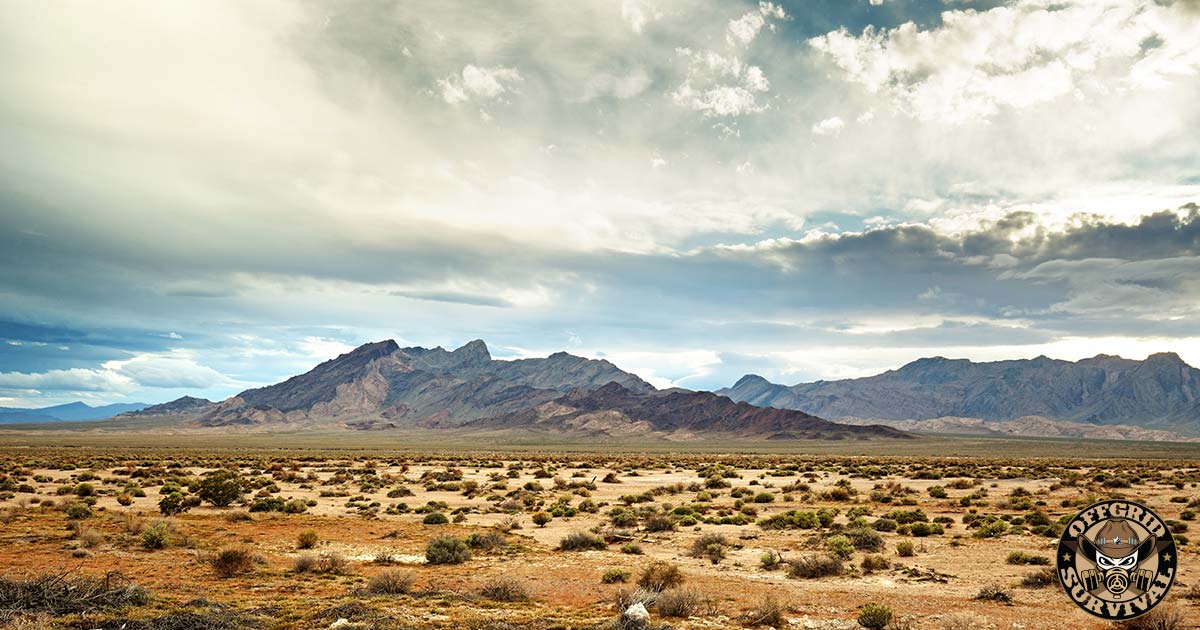
There was no new public comment period and no legitimate new environmental review for the data center proposal. There was no serious public discussion about the wisdom of putting a massive, power-hungry industrial facility in the Mojave Desert while the Southwest is already dealing with shrinking reservoirs, stressed electrical infrastructure, and communities being told to conserve water. The federal government simply decided the project needed to move forward and treated everyone living nearby as an inconvenience. THEY GIVE ZERO FUCKS ABOUT YOU!
BLM’s Nevada office even prepared a press release announcing the approval. Then somebody inside the agency apparently decided not to publish it. The public only learned about those internal communications because the emails became part of a legal case file obtained by former BLM official Mike Ford and later reported by the Las Vegas Review-Journal.
The way the government pulled this off should make anyone who claims to care about public land furious. The parcel was originally approved in 2023 for a solar energy project. The permit holder, Townsite Solar 2, is controlled by a Texas investment fund. Late last year, the company returned to BLM and said it no longer wanted to build the project the public had been told about. Instead, it wanted to construct a 170-megawatt AI data center.
A solar field and a data center are not remotely the same type of development. They have different water demands, different power requirements, different traffic patterns, different construction footprints, different backup systems, and completely different long-term environmental effects. None of that mattered. BLM took the environmental review performed for rows of solar panels and declared that it was somehow good enough to cover a giant industrial computing facility.
Mike Ford spent twenty-five years at BLM and previously directed public land policy for the entire agency. He called the decision ““an extraordinary and liberal interpretation of existing law and regulations” and said he had never seen anything like it during his career.
That is not some activist on social media complaining about paperwork. That is a former senior official who spent decades inside the agency saying the government bent the rules farther than he had ever witnessed. When the people who understand the process better than almost anyone are stunned by what happened, the public should stop accepting excuses about routine administrative updates.
Nevada Is 88% Federal Land, Which Is Exactly Why They Picked It
Nevada has one of the highest percentages of federally controlled land in the country. Nearly 88 percent of the state is controlled by Washington, which means the people who actually live here have limited authority over enormous portions of their own state.
The federal government calls it public land, but the word “public” does a lot of dishonest work in that sentence. The public did not approve this deal. The public did not get to vote on the change. The public did not get a meaningful opportunity to challenge the new proposal before it was approved. The public is apparently important when Washington needs someone to pay taxes, but not when a hedge fund wants eighty-eight acres and a dedicated power supply.
Nevada was not chosen by accident. It is the perfect testing ground for this kind of regulatory bait and switch because federal agencies already control most of the land. If the government can approve a data center by recycling a solar project’s environmental review here, the same trick can be repeated across Utah, Arizona, New Mexico, Wyoming, and the rest of the West.
Olivia Tanager of the Sierra Club’s Toiyabe Chapter warned that the approval could become a blueprint for future projects. The Center for Western Priorities called the deal a bait and switch, which is exactly what it looks like. The developer secured approval for one project, changed the plan after the difficult part of the permitting process was finished, and then convinced BLM to pretend the new development was basically the same thing.
The Department of the Interior says the approval is consistent with Executive Order 14318, which directed federal agencies to accelerate environmental reviews and identify federal land for data center construction. BLM Director Steve Pearce described the project as responsible stewardship of public land for present and future generations.
Responsible stewardship apparently now means handing public property to a hedge fund while excluding the public from the decision. That is not stewardship. It is a land transfer wrapped in government language vague enough to hide what is happening.
The Water Number Went Up 22 Times and They Used the Old Review Anyway
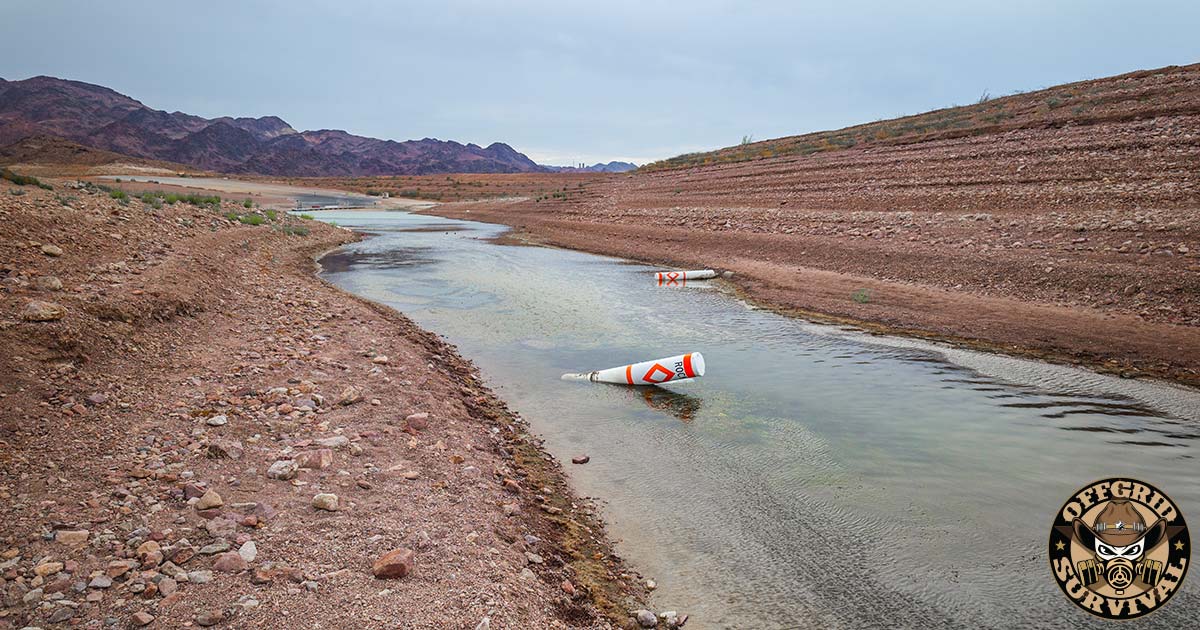
The original solar project was expected to use roughly twenty-five acre-feet of water during construction. The data center proposal requires more than 560 acre-feet.
That is more than twenty-two times the water demand, yet the federal government continued relying on the environmental review written for the solar project. This is happening near the Colorado River and Lake Mead, the water system supporting roughly forty million people across the Southwest. The same government officials constantly warning residents to shorten their showers, replace their lawns, and conserve every possible gallon apparently lose all concern about water the moment a major investment fund walks through the door.
We have been covering the collapse of the Colorado River system for a while. 40 Million People, One Dying River, we laid out the scale of the disaster threatening the region. In our reporting on Glen Canyon Dam’s dead pool problem we covered the backup systems that failed the first time officials seriously needed them. Two weeks ago we wrote about Kearny, Arizona nearly running dry while the Gila River ran right That is the Southwest in 2026. Towns are told there is not enough water. Farmers are told to cut production. Families are ordered to conserve. Then an AI company shows up and suddenly government officials discover hundreds of acre-feet of water nobody was supposed to ask questions about.
The developer says the facility will use closed-loop cooling with treated wastewater rather than drinking water. That sounds reassuring until you look beyond the talking point. Closed-loop systems generally require more electricity than evaporative cooling, and Nevada is increasingly planning to generate that electricity with methane gas turbines. Those turbines also consume water, meaning the demand does not disappear. It simply gets moved somewhere else in the system where it is easier to ignore.
The Sierra Club and the Center for Biological Diversity also raised concerns about desert tortoise habitat. Their July 27 appeal argues that BLM violated the Endangered Species Act, the National Environmental Policy Act, and the Federal Land Policy and Management Act. In other words, they are not claiming the government forgot to initial a form. They are accusing the agency of bulldozing through several major federal protections to get the project approved.
NV Energy Already Cut Off 49,000 People to Make Room
It would be easier to dismiss this as one questionable project if the Boulder City data center were the only one coming. It is not even close.

NV Energy says it has received inquiries from proposed data centers requiring a combined twenty-two gigawatts of electricity. Nevada’s entire electrical system currently peaks at roughly 8,500 megawatts. The data center industry is asking for nearly three times the peak demand of the whole state, and these are not homes or stores that use less electricity overnight. Data centers operate around the clock, every day of the year, with no real seasonal slowdown and no ability to simply shut down when the grid becomes strained.
The Desert Research Institute examined twelve proposed projects in northern Nevada and estimated they could require approximately 5,900 megawatts. That is about 2.8 times the generating capacity of Hoover Dam.. We are talking about an industrial expansion so large that one dozen projects could consume several Hoover Dams’ worth of electricity.
Data centers currently represent about 5 percent of NV Energy’s electricity sales. The utility’s own 2026 resource plan projects that number could climb to 64% by 2046. In northern Nevada, data centers could consume 82 percent of electricity sold by the utility.
Read that again and consider what it means. The power grid people depend on for air conditioning, hospitals, schools, water pumping, refrigeration, emergency communications, and basic survival could soon exist primarily to serve privately owned server farms.
To feed that demand, NV Energy wants to build approximately 1.2 gigawatts of new methane gas generation. The utility’s filing makes clear that much of this construction is being driven by data center demand. The companies create the need, the utility builds the infrastructure, and ratepayers are expected to absorb the cost through their monthly bills.
This is not some theoretical problem twenty years from now. NV Energy has already told Liberty Utilities that it plans to quit supplying power to the Lake Tahoe region after May 2027. Approximately 49,000 customers will have to secure power elsewhere because NV Energy says it needs the capacity for growth elsewhere in the system, including the enormous data center campuses operated by companies such as Google, Apple, and Microsoft east of Reno.
Forty-nine thousand people are being told the power arrangement they relied on is ending while technology corporations lock up the available capacity. Residents who lived in the region long before the server farms arrived are now treated as an outdated use of electricity that can be pushed aside.
We have already covered why analysts expect portions of the grid to face serious shortfalls by 2029. We have also covered government warnings advising Americans to prepare for extended power disruptions while the official public recommendation remains laughably inadequate. Data centers are an enormous new load being dropped onto a system that was already behind on generation, transmission, transformers, and basic maintenance.
These Guys Say This Stuff Out Loud — THEY SEE YOU AS A VIRUS!

Former Google CEO Eric Schmidt was asked about the massive electricity demand created by AI and the likelihood that it would blow through climate targets. His answer was essentially that the world was not going to meet those targets anyway, so society should build the technology now and hope AI eventually invents a solution. Schmidt also operates an artificial intelligence drone company, so his enthusiasm for giving machines more energy, authority, and access should not surprise anyone.
Sam Altman dsaid, “We see a future where intelligence is a utility, like electricity or water, and people buy it from us on a meter.”. Think about the arrogance behind that model. These companies scraped books, artwork, news articles, research papers, websites, forum discussions, photographs, and decades of human knowledge without paying the people who created most of it. Now they want to repackage that stolen collective knowledge and charge the public every time someone uses it.
Oracle founder Larry Ellison was even more direct while discussing artificial intelligence surveillance. He said Citizens will be on their best behavior because we are constantly recording and reporting everything that’s going on. He did not describe that as a dystopian danger. He presented it as a benefit.
That is the mentality driving this buildout. These people do not view you as a citizen whose consent matters. They view you as a user, a data source, a monthly payment, a potential security risk, and eventually a behavior pattern to be monitored and corrected. That’s the same machine we wrote about in Surveillance Grid Nobody Approved, where 96,000 cameras went up across the country without a single real public vote.
We covered that worldview in “AI Billionaire Psychopaths See You as a Virus” and “Digital Cage.” The Boulder City decision is not an exception to the pattern. It is the physical infrastructure required to make that system possible: government land, government-approved permits, government tax breaks, public utilities, public water, and private control.
Not one of these executives has offered a convincing explanation of what the people living next to the facilities receive in exchange. The data centers do not employ huge numbers of local workers once construction is finished. They do not create vibrant commercial districts. They do not build communities. Residents get transmission lines, backup generators, truck traffic, water demand, and higher utility costs while the financial benefits flow somewhere else.
The Hardware Inside Is Scrap in Three Years
Almost nobody talks about the short life of the hardware going into these facilities, but it may be the most important part of the entire scam.
Nvidia releases new chip architectures on an aggressive schedule, often every eighteen to twenty-four months. Data center GPUs operate under extreme workloads, running hot and continuously. Microsoft CEO Satya Nadella openly acknowledged that he did not want the company stuck depreciating one generation of hardware over four or five years when newer systems could make that equipment economically obsolete much sooner.
At the same time, the largest technology companies have been extending the assumed useful life of their servers and networking equipment on paper. By changing depreciation schedules from three or four years to five or six, companies can reduce annual expenses and report higher profits. Some equipment categories have been stretched even further.
Investor Michael Burry, who became famous for anticipating the 2008 housing collapse, has argued that the largest hyperscale technology companies could understate depreciation by roughly $176 billion between 2026 and 2028. His argument is straightforward: the equipment may be economically useful for only two or three years, while the accounting assumes it will produce value for twice that long. The difference between those two timelines gets reported as earnings until reality finally catches up.
That leaves three different clocks running inside every one of these data centers. The chips may become obsolete within a few years. The accounting books pretend they will remain valuable much longer. Meanwhile, the concrete building, substation, pipelines, transmission lines, and gas generation facilities are expected to last for decades.
Roughly $450 billion a year is currently being poured into artificial intelligence hardware and infrastructure. If demand slows, financing tightens, or the technology fails to produce enough revenue to justify the spending, the losses will not arrive gradually. Companies will be forced to write down billions of dollars in obsolete equipment, just as the telecommunications industry was forced to write down enormous investments after the dot-com bubble burst.
The damage will not remain contained inside Silicon Valley. These companies now carry a huge share of major stock indexes, pension funds, mutual funds, and retirement accounts. A large portion of recent market gains depends on investors believing that AI spending will continue growing and eventually produce profits large enough to justify the cost. If that story cracks, millions of ordinary Americans will discover that their supposedly diversified retirement funds were heavily exposed to the same small group of companies.
The buildings will not disappear after the bubble breaks. The public land will remain transferred. The water allocations will remain committed. The transmission lines will remain standing. Nevada ratepayers could spend decades paying for gas turbines constructed for data center customers that no longer exist.
That is the likely end result if the AI boom collapses: an enormous empty warehouse filled with obsolete silicon, sitting on land that used to belong to the public, connected to infrastructure the public is still being forced to pay for. And a lot of people who thought their 401k was fine. We covered that side of it in Job Loss Is the Most Likely SHTF Event You’ll Ever Face.
Boulder City Is Actually Fighting It

One encouraging part of this story is that opposition to the project does not fall neatly along the usual political lines.
The Boulder City Council voted unanimously on July 14 to appeal the approval. On July 27, the Sierra Club’s Toiyabe Chapter, the Center for Biological Diversity, and several local residents filed a separate appeal with the Interior Board of Land Appeals.
Representative Dina Titus also sent a letter to Governor Joe Lombardo asking him to suspend data center tax abatements. Her office calculated that if the project had been built on Boulder City property, the city could have collected approximately $2.3 million each year. Because the facility is being placed on federal land, that revenue instead goes to Washington.
Boulder City still gets the water demand, the electrical demand, the construction traffic, and the long-term industrial footprint. Washington gets the money, the hedge fund gets the asset, and the data center industry gets another subsidized project. Titus has requested a response by August 10.
When a city council, local residents, environmental groups, former federal officials, and a member of Congress all find themselves opposing the same project, perhaps the problem is not partisan politics. Perhaps the deal is simply indefensible.
“I’ve heard myriad warnings about the negative impacts hyperscale AI data centers have had on small towns across the United States, but have yet to find a single town whose residents have thanked their government for bestowing one of these industrial behemoths upon them,” local business owner Brynn DeLorimier said.
“I believe placing such a facility in a water-starved desert where we see increasingly hot summers year over year is about the most shortsighted decision any level of government could possibly make. We don’t want to see our utility rates skyrocket while our property values plummet, we don’t want to see our tourism industry destroyed, we don’t want to see our water supply contaminated, and we don’t want the natural beauty of our desert to turn into an industrial wasteland,” DeLorimier said.
Where That Leaves the Rest of Us

Every warning we have published about the Colorado River, the electrical grid, artificial intelligence, federal land control, and corporate surveillance is part of the same larger story. The public is being pushed farther away from decisions that directly affect its land, water, power, privacy, and future.
Boulder City is what that loss of control looks like when it stops being theoretical. It is 88.5 acres of desert that Americans supposedly own, transferred through a June decision the government did not want to publicize, for a data center filled with hardware that may be obsolete before the end of the decade.
The people living nearby were not treated as owners of the land. They were not even treated as meaningful participants in the process. They were treated as obstacles that needed to be bypassed so the deal could move forward.
If a Democratic administration had taken federal land, skipped public review, handed it to a Texas hedge fund, subsidized the project with tax breaks, and forced utility customers to finance new fossil-fuel power plants to support it, the conservative media would call it a federal land grab, corporate welfare, and socialism.
They would be right.
Changing the name on the executive order does not change what happened. Putting an American flag behind the podium does not turn government favoritism into capitalism. The public lost control of the land, the corporation gained a valuable asset, and the public will be expected to pay for the infrastructure.
That is not limited government. It is not private enterprise. It is not America First.
It is the government helping a politically connected industry strip-mine the West for land, electricity, water, tax breaks, and public money while telling the people who live there to shut up and be grateful for progress.
Related reads:
- 40 Million People, One Dying River: The Biggest Water Disaster in America Is Coming
- Southwest Water Crisis: An Arizona Town Nearly Ran Out of Water This Month
- Colorado River Apocalypse: Inside Glen Canyon Dam’s Dead Pool Problem
- Two Government Reports, One Answer: The Grid Runs Short by 2029
- The DHS Power Grid Warning Washington Wants You to Forget
- DIGITAL BLACKOUT: One Server Farm in Oregon Just Shut Down Payments for Half the Country
- AI Billionaire Psychopaths See You as a Virus
- Mythos AI: The Doomsday Weapon That Cripple Infrastructure, Banking & the World!
- Digital Cage: How Trump’s Policies Are Accelerating Technocratic Control
- They Built the Matrix, We Walked In
- Surveillance Grid Nobody Approved: How 96,000 AI Cameras Went Up Without Asking
- Job Loss Is the Most Likely SHTF Event You’ll Ever Face