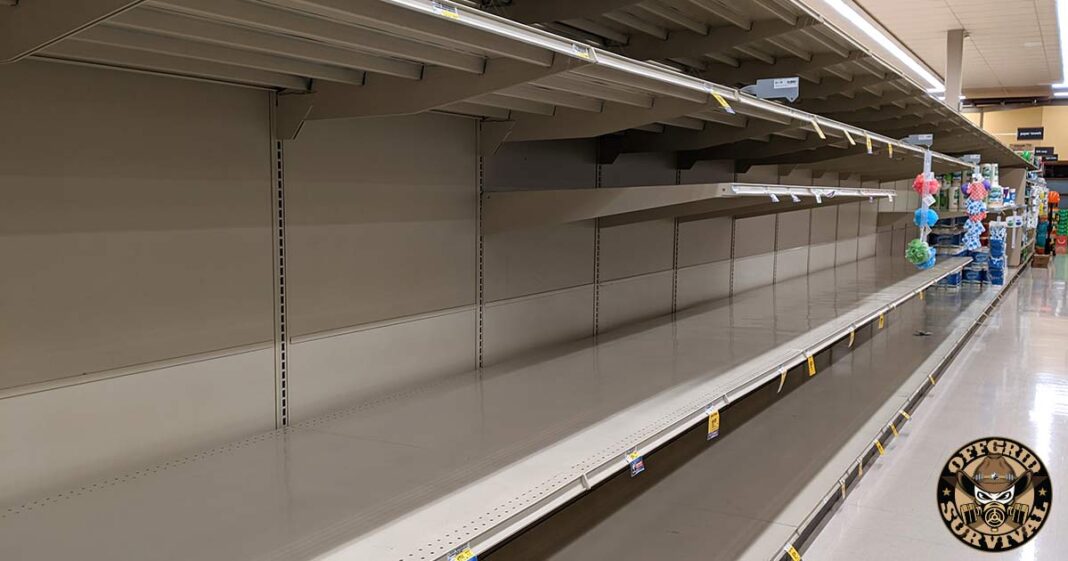
Every single time, the warning comes early. Every single time, most people ignore it. And every single time, the same images show up on the news a few days later: empty shelves, gridlocked highways, and people who swear they had no idea it would be this bad.
This isn’t a one-storm problem. It’s not something that happened once, to one city, a long time ago. Look back at the last twenty years and you’ll find the same story playing out again and again, in different states, with different names, and the same ending: people who waited, and paid for it.
This is why we prep.
A Twenty-Year Pattern of “We Had No Idea”
Hurricane Katrina — 2005. New Orleans Mayor Ray Nagin issued a mandatory evacuation the day before landfall. An estimated 1.2 million people got out. Tens of thousands of others didn’t, or couldn’t — many of them poor residents with no car and nowhere to go. They ended up packed into the Superdome and the convention center, where food and water ran out fast in 90-degree heat. More than fifty levees failed. Eighty percent of the city went underwater. By the time it was over, nearly 1,400 people were dead and it stands as the costliest natural disaster in U.S. history. It took three days for the National Guard to arrive in force. Three days, while people sat on rooftops waiting for a rescue that wasn’t coming fast enough.
The man running FEMA at the time, Michael Brown, had run horse-show associations before this job. Days into the crisis, with people still stranded on rooftops and dying in the Superdome, President Bush told him on camera, “Brownie, you’re doing a heck of a job.” Brown was pulled off the response within the week and resigned soon after. When he testified to Congress, he spent most of it blaming Louisiana’s governor and New Orleans’ mayor instead of his own agency. Nobody in that chain took the failure seriously enough to fix it before the warning signs were already on the news.
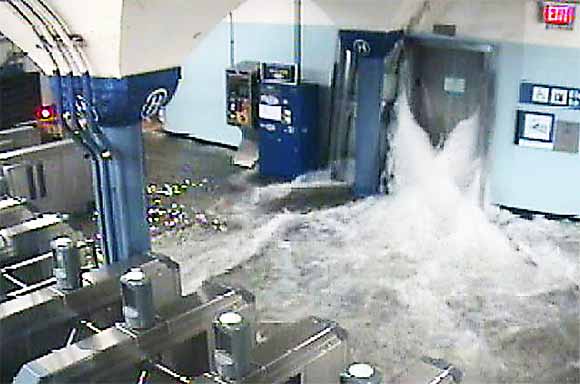
Hurricane Sandy — 2012. The “Superstorm” battered the East Coast after a full week of warnings — and most people still treated a coming hurricane like an inconvenience instead of a threat. Grocery shelves across the Northeast were stripped bare 24 to 48 hours before landfall. Millions lost power, some for weeks. In the aftermath, entire neighborhoods were left without heat, water, or supplies, with no real timeline on when things would return to normal — and thousands of people who’d had nearly a week’s notice were still asking, in real time on social media, whether they should “probably hit the grocery store.”
On Long Island, more than a million customers lost power and some waited over two weeks to get it back. The utility responsible, LIPA, had been warned about exactly this after Hurricane Irene the year before and hadn’t fixed its system or its customer communications. Hundreds of residents eventually showed up to protest outside LIPA’s offices. New York’s governor at the time called the response “unacceptable” and the state attorney general issued subpoenas to both LIPA and Con Edison over their storm preparation. LIPA’s chief operating officer resigned by the end of the year. The warning about the storm had been accurate for a week. The warning about the utility’s readiness had been sitting unaddressed for over a year.
Winter Storm Uri / the Texas grid collapse — 2021. This one didn’t even need a coastline. A multi-day arctic blast knocked out roughly 40 percent of the state’s power generation capacity in a matter of hours. At the peak, more than 4.5 million Texas homes and businesses had no power — in freezing temperatures, for days. Nearly half the state lost water service as pipes froze and treatment plants went offline, triggering boil-water notices for around 12 million people. Officials eventually linked at least 246 deaths to the storm, most from hypothermia. Texas’ grid operator later admitted it came within four minutes and thirty-seven seconds of a total statewide blackout that could have taken weeks to fix. This wasn’t a hurricane zone getting hit by a hurricane. This was a modern, wealthy state’s infrastructure failing in real time because almost nobody — utilities included — had prepared for the cold to actually arrive.
The fallout named names. ERCOT’s CEO, Bill Magness, was making over $800,000 a year and was fired within two weeks of the blackouts. Seven ERCOT board members resigned, most of them within days, and reporters noted that nearly all of them didn’t even live in Texas. The head of the state’s Public Utility Commission, DeAnn Walker, resigned the same week after admitting under questioning that she hadn’t fully understood her own agency’s authority over the grid. A third commissioner was forced out weeks later after a leaked recording caught him telling out-of-state investors he was working to protect their profits from the very price spikes that buried Texans in surprise electric bills. The grid had nearly failed completely — and the people in charge of preventing that were, by their own later admissions, not ready for it either.
The Maui wildfires — 2023. Red flag fire warnings were issued before the blaze even started. When it did, it moved through Lahaina so fast that survivors described having only minutes to run. Hawaii’s outdoor warning sirens — the same system residents had been trained for decades to listen for — never sounded. Power and cell service went down across the fire zone before alerts could reach many of the people who needed them. More than 100 people died, thousands of structures burned, and entire blocks of a 150-year-old town were gone in a single night. Survivors said the smoke was the first warning some of them got.
Maui’s emergency management administrator, Herman Andaya, was asked at a press conference whether he regretted the decision not to sound the sirens. “I do not,” he said. He defended it by saying the sirens were mainly for tsunamis and that sounding them might have sent people fleeing toward the fire instead of away from it. He resigned less than two weeks later, citing health reasons, after records surfaced showing he had downplayed the siren system’s usefulness for years before the fire that killed his own neighbors.
Four different disasters. Four different decades within this one. Four entirely different parts of the country. And the same failure point every time, twice over: the public didn’t act on a warning that turned out to be accurate, and the people whose actual job it was to be ready — emergency directors, grid operators, utility executives, agency heads — weren’t either. Most of them kept their jobs through the warning. Almost none of them kept their jobs through the aftermath.
An Epidemic of Unprepared People
Scroll through the footage from any of these events and you’ll see the same thing. People filming bare shelves like it’s a shocking discovery. People saying they “should probably” stock up — hours, sometimes minutes, before it’s too late to matter. People who had a week of notice and used six days of it to do nothing.
By the time you’re standing in a grocery store fighting strangers over the last case of water, it’s already too late. You’re not prepping anymore. You’re panicking. And panic isn’t a plan — it’s what happens when you never had one.
None of this is new information, either. After Katrina, after Sandy, after every winter storm and wildfire and grid failure in between, the after-action reports say the same thing: warnings were issued, warnings were accurate, and most of the damage came from people and systems that weren’t ready to act on them. Resignations and firings happen after the fact. They don’t refund the two weeks LIPA customers spent without power, and they don’t bring back the people who died waiting for a National Guard convoy or a siren that never sounded. Accountability is a press conference. Preparedness is the thing that actually keeps your family fed, warm, and alive while everyone above you figures out who to blame. The storms get new names. The lesson doesn’t change.
Preparedness — It’s Actually Pretty Simple
Without overcomplicating it, preparedness is something almost anyone can do. How far you take it is up to you. But at the very least, every person should take the following steps to put themselves on the right side of that pattern.
- THE BASICS: Have at least two weeks’ worth of food, water, and emergency supplies on hand at all times. That means stocking up now, long before any danger is forecast — not after the first watch or warning goes up, when shelves are already being stripped.
- Evacuation Planning: Have an evacuation plan, and start putting it into motion the moment it looks like you could be affected. If the disaster misses you, chalk it up as a mini vacation. If it hits and you didn’t leave, you might be chalking it up as something a lot more permanent. The choice is yours — but it has to be made before the roads are gridlocked.
- Emergency Go Bag: Keep a bug-out bag filled with everything you and your family need to survive a disaster, and have it ready to grab at a moment’s notice. Lahaina residents didn’t get hours. Some got minutes.
- PREPARE NOW: Take preparedness seriously, starting today, not the day a storm gets a name. Despite the mainstream media’s attempts to make preppers look like a bunch of whackos, the moment something like this happens, those “whackos” are usually the first people their unprepared friends and family call for help. Stop caring about what others think, and start caring about the health and safety of your own family.
The names of the storms will keep changing. The pattern won’t — not until enough people stop waiting for the warning to feel real before they act on it.



100% agreed. People think that we are crazy, but when things like that happen (and they happen) they come to us seeking for help and resources. Here in Brazil we do not have tornados or earthquakes, but we prepare anyway, thats the right and smart thing to do.
Greetings from Brazil.
Having had to deal with multiple hurricanes here on the gulf coast, we are always prepared and preach it to everyone who will listen. I’m sorry to see people suffering, but really?!? You were told to prep, you didn’t; you were told to evacuate, you didn’t, you were told to have a plan, you didn’t and now?!? Good luck!
The old saying ‘youtag can lead a horse to water but you cant make them think to drink.’ Comes to mind.
People have looked at me like I’m crazy but damned if they don’t call me before hurricane Sandy asking “hey do you have any extra C or D batteries cause everywhere is all sold out?” HAH! I did have myself a mini vacation during the hurricane and it was fantastic knowing that me and my family were as secure and ready as possible. Thanks Off Grid Survival. Keep spreading the word. You literally save lives by it.
I would like to remind people we already said we told you.
The it misery is about to be compounded by tress facts.
1 next weeks elections
2 thanks giving is coming up.
3 black Friday is coming.
4 Christmas is coming.
Lots of folks lost everything they had. How about a charity drive for them? This storms damage hits at the wrong time for anyone.
Another example of the ignorance of NYC
Thanks for this article. It might actually convince my wife to get on the prepping bandwagon. She agrees in theory, but hasn’t committed to taking any real action and thinks we’re “already ready”. But the fact is our household is ready for nothing more serious than about a week of snow days. It’s hard to prep when you have to drag your spouse along.
Amen.
I had a moment of pride tonight when a friend of ours out on the west coast asked my husband how we weathered the storm, and my husband smiled and said, we did great cause my wife is a prepper. I’ve been trying for years to get my husband to understand just why it is so important to prep, and because of this storm, he now gets it fully.
I stopped keeping gas on hand, It was a pain and the smell plus it did not feel safe to have the two 7 gal cans hanging around. now that I see the problems back east, I will be rethinking this. to all the east cost be safe you are in my prayers,you will get threw this.
Go propane 20lb tank goes as far as 10 gal gas. It’s also more stabile and doesn’t get stale after a year.
lowes sells propane generators for same price as gas justdon’t stock as many
I use a 6.5k diesel generator and keep a 55gal drum filled at all times. I love diesel for the power, sound, low consumption compared to gas. The fuel is easy and safer to store.
truth plainly displayed yet some horses will never drink the water and will die from either dehydration or lead poisoning.
I watched a woman on t.v. last night saying she had gone through her batteries and was now relying on candles. WT*? Did she leave her flashlights burning ALL night? She then proceeded to say she could NOT find her bathroom in the dark. What?? Could not find her own bathroom in her own house? That is really pathetic.
Many people have homes that are intact, yet have NO water, very little food and little to no supplies. They had a more than a WEEK to prepare. And they did nothing? They are now b*tching and expect FEMA and the Red Cross to take care of them. PATHETIC.
I was having this very conversation with a family member today. We live in inland CT, and escaped relatively unscathed compared to the people only 25 miles away on the coast, many of whom lost everything. She simply could not fathom this happening to us, it’s always going to be some other “poor soul” that goes through it. So when I bought up basic prepping, it simply did not register. In fact, she was telling me how wonderful it is that FEMA takes care of people by handing out food and water in these situations. The message I got from her was that we don’t need to take care of ourselves, that’s what government is there for. You simply cannot get through to some people. The lights are on but nobody’s home. I hate to say it, especially about family, but they get what they deserve.
It’s simply not real to most of the population. During and immediately after the storm, Twitter and Google filled up with people making jokes, fake pictures of the storm, and open plans to go looting – as reports of people dying were coming out with the same hash tags that those people were using, so you know they saw it. Some businesses were rolling out Sandy special sales as well.
Until it happens personally to them, they emotionally regard it just like sitcoms and political speeches – just media for them to consume. It’s entertainment or opportunity, not a warning of the future.
I so agree with everything here that has been wrote.
As a society we are addicted to comfort and convenience and we are slowly suffocating in that comfort zone. The mindset that people have about the Government/FEMA riding in a white horse to take care of them, really??? I agree they had plenty of time to get better prepared or evacuate, they chose neither. Hurricane Sandy has just reminded us of the responsibility we have to ourselves and family to be prepared for the unexpected.
The Disney movie WALL-E comes to mind when reading your post. Addicted to comfort and convenience and suffocating in that comfort zone.
I totally agree. I have been considering what I need to do to prepare myself and my family for a disaster such as this and the hurricane as brought this to my mind again. There are many good Survival Schools around…I am considering Sigma III Survival School
Thank you. This is the very reason I started prepping. I live in a far more hurricane prone area of the country than NY/NJ and what happened up there will sooner rather than later happen here. Enjoy you site, lots of useful info, Thanks again.
NYC is the greatest example of a society of necesity. People like to have a scape goat…where’s FEMA, where’s the Government, where’s the military, where’s the Red Cross….those people that are pointing a finger at those agencies and other that should be helping, remember that you have three fingers pointing back at you. Austerity is good for the soul.
The is why I’m such a big advocate of preparing for man made and natural disasters. If we all prepare for these event, our lost will drastically be reduced.
It’s not bad to prepare early, it is better to prepared than to be panic in the end. If you go to the grocery store some of the people use to do panic buying which is for me is not advisable. Better buy only things that you need, enough only of what you need and enough for your stocks, beacause when you panic buy you did’t even know that you are already buying goods that are about to expire which is a waste of money. So just relax while preparing and be mentally and emotionally prepared.