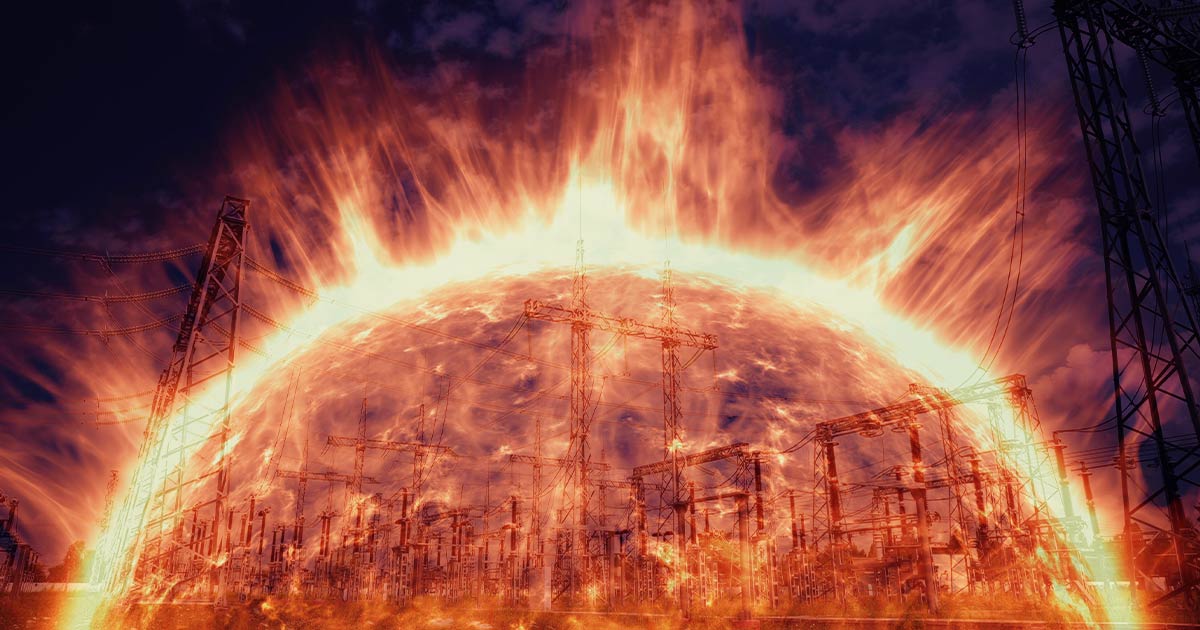
The mainstream media has been buzzing with headlines about the sun “waking up.” NASA scientists say solar activity is ramping up again after decades of decline, sparking talk about solar storms, flares, and the risks they pose to our way of life.
But here’s the truth: the sun has always cycled through active and quiet phases. What’s happening now isn’t a shocking new danger—it’s the same 11-year solar cycle that’s been observed for centuries. The real story isn’t whether the sun is active. It’s how vulnerable our modern society has made itself to the kind of space weather that’s been hitting Earth for as long as humans have been alive.
So what does all this talk about solar storms really? Here is what’s really happening with the sun, what it means for communications and technology, and most importantly, what it means for preppers. We’ll also look back at history, including the infamous Carrington Event, and connect the dots between solar threats, EMPs, and the fragile state of America’s power grid.
Solar Cycles: The Sun’s Rhythm
Since the 1700s, scientists have recorded the 11-year sunspot cycle—a rise and fall in solar activity that brings more sunspots, flares, and geomagnetic storms during active years, and relative quiet during lulls.
- Solar Cycle 24 (2008–2019): Weakest in a century.
- Solar Cycle 25 (2020–present): Activity trending upward, as expected.
- Solar Cycle 26 (expected 2029–2032): Next transition.
What’s different today is that during the last cycle, many scientists thought we were headed for a “grand minimum” like the Maunder Minimum (1645–1715)—a long period of very low solar activity. Instead, activity has picked back up. That’s not “apocalypse weather.” It’s simply the sun’s natural ebb and flow.
Why does this matter? Because the media loves to use scientific surprises as scare tactics. What’s happening right now is completely consistent with the patterns we’ve observed for centuries. It’s not the end of the world. But it does matter for the systems we rely on.
The Carrington Event: When Space Weather Gets Serious
We can’t talk about solar danger without mentioning the Carrington Event of 1859. This massive geomagnetic storm fried telegraph lines, shocked operators, and lit up the night sky with auroras visible as far south as Cuba.
Back then, the damage was mostly limited to telegraph systems. If a Carrington-level event hit today, the consequences would be devastating. NASA estimates it could cause $2 trillion in damage in the first year alone and take years to recover. Satellites, GPS, banking systems, transportation networks, and power grids could all fail. Urban centers—completely dependent on fragile infrastructures—would become deathtraps.
This isn’t speculation. It has happened before. It will happen again. The question is whether we’re prepared.
Ham Radio and the Solar Connection
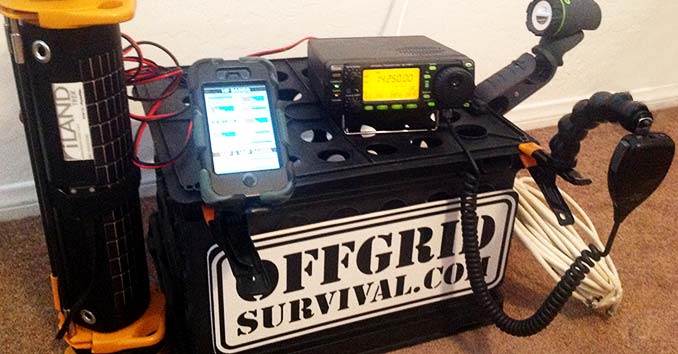
Hams know solar activity isn’t all bad. In fact, solar storms often make HF radio propagation better. Higher solar flux means stronger signals, farther reaches, and bands opening up that were dead during the quiet years. DXers love solar maximum.
But there’s a flip side: strong solar flares and geomagnetic storms can black out bands completely. HF can go silent, satellites can glitch, GPS accuracy drops, and comms can become unreliable.
Let’s break it down band by band:
– HF (3–30 MHz): Most affected. Can see worldwide propagation during solar peaks but complete blackouts during strong storms.
– VHF/UHF (30 MHz and above): Less affected but can experience satellite disruption.
– Satellites/GPS: Highly vulnerable to ionospheric disturbances, leading to navigation errors.
For preppers, ham radio isn’t just a hobby—it’s a lifeline. Understanding solar conditions can mean the difference between staying connected or being cut off.
The Real Problem: A Fragile Power Grid
Here’s where the danger lies—not in the sun itself, but in our crumbling, overextended, and highly vulnerable power grid.
We’ve already covered this in depth on OffGridSurvival here: Power Grid Threats: EMPs, Terror Attacks and Grid Failures. The short version? Our electrical system is a patchwork of outdated transformers and transmission lines, many of which are decades beyond their intended lifespan. Even a minor solar storm can strain it. A major one could break it.
And the sun isn’t the only threat. Cyberattacks, terrorism, and even simple equipment failure have caused massive blackouts in the past. From the Northeast Blackout of 1965 to the 2003 failure that left 55 million in the dark, history shows how fragile the system is. Now add in the risk of an EMP or a Carrington-class solar storm, and you have a recipe for nationwide collapse.
We’ve also warned in our piece Protecting Yourself from Attacks on the Power Grid: Urban Centers Will Become Deathtraps. The reality is simple: cities cannot function without electricity. When the grid goes down, food, water, fuel, and law and order all follow.
What Are the Odds?
Let’s be clear about what we’re facing:
- Minor storms: Common every cycle. Disrupt comms, cause auroras, usually no big deal.
- Moderate storms: Every few years. Can cause power fluctuations, satellite disruptions, GPS failures.
- Carrington-level events: Rare, but inevitable. If not in our lifetime, then in our children’s. When—not if—it happens, it will be catastrophic.
Politicians and media talking heads will tell you they’re “studying the problem.” Meanwhile, nothing is being done to harden transformers, secure substations, or protect satellites.
The Real Takeaway…
When it comes to solar storms, EMPs, or even routine blackouts, the lesson is the same as almost any other preparedness threat: you can’t count on the grid, the government, or anyone else to save you. Panic solves nothing, but preparedness gives you options. If the lights go out for a few hours, you’ll be comfortable. If they stay out for weeks or months, you’ll still be standing while everyone else scrambles. The basics—food, water, power, security, and communication—are what separate survivors from victims.
Create an power outage emergency kit:
First, make sure you have an emergency kit ready to go, not just for threats from the sun but for all threats! It’s important to have a kit that you can easily access in case of an outage. The kit should include necessities such as flashlights, candles, batteries, a first-aid kit, a radio, a cellphone battery charger, and extra clothing or blankets. Remember to pack enough supplies for everyone in your home and ensure the kit is stored safely.
- Best Tactical Flashlights: Our Favorite Tactical Flashlights Reviewed
- Survival Lighters: The Top Weatherproof, Windproof, and Waterproof Lighters
- The Best Portable Survival Water Filters: Ensuring you have Safe Drinkable Water
- Prepper 101: Your Survival Guide to Getting Started
Have a backup power source:
Invest in a backup power source like a portable generator or solar panels. If you are investing in solar panels, then make sure they have enough capacity to power your essentials, such as your refrigerator or medical equipment.
Stock up on non-perishable foods:
During an outage, your fridge and freezer won’t be able to keep food cold, so be sure to stock up on non-perishable foods. Canned foods, granola bars, and crackers are all excellent options. It’s also important to keep a supply of safe drinking water on hand.
- Best Emergency Food: The Top Survival Food Supplies
- Long Term Water Storage: How to Store Emergency Water
- Survival Food – 56 Long-Term Survival Foods and Supplies at the Grocery Store
Secure your home:
Before an outage occurs, make sure your home is secure. For example, trim branches close to power lines, secure outdoor furniture, and close all windows and doors. If you have a garage, make sure it’s locked, so that you don’t have to worry about intruders.
- Home Security: Protecting Against Garage Door Break-Ins — A Favorite Entry-point for Thieves
- Home Safety: Security Tips for Staying Protected In Your Home
- Are you Welcoming a Home Invasion? Five ways you Could be Inviting a Burglar into your Home
- Prepper Guns: Why a Shotgun should be part of your Home Defense Arsenal
- Shortwave Frequency List: International Shortwave Radio Frequencies to Monitor These aren’t “nice-to-haves.” They’re the difference between surviving weeks in the dark or becoming another statistic.
- Check out our article on emergency communications during disasters.
- Communications Monitoring: The Importance of Radio Monitoring and Intelligence Gathering During Crisis Situations
So should you Worry?
The media will keep shouting panic headlines about solar storms because fear sells. But the truth is simpler: the sun runs in cycles. What makes those cycles dangerous today isn’t the sun—it’s us. We’ve built a society so fragile, so dependent on just-in-time systems and a failing grid, that even a natural event we’ve known about for centuries could wipe it out.
Preppers already know what that means: don’t wait for NASA or politicians to save you. Prepare for the grid to go down, because whether it’s a solar flare, an EMP, or political incompetence, sooner or later it will.
The Carrington Event taught us that nature doesn’t care about our timelines or our technology. History is full of reminders: hurricanes that level cities, earthquakes that strike without warning, pandemics that shut down economies, and blackouts that leave millions stranded in the dark. Every generation faces its own version of disaster, and every time, the people who do best are the ones who prepared beforehand.
Panic never helps. Politicians will point fingers, experts will argue on TV, and the media will try to scare you into paralysis. But none of that keeps your family fed, your water clean, or your lights on when the systems we depend on fail.
Preparedness is the only thing that matters. Whether it’s a solar storm, an EMP, a cyberattack on the grid, or a natural disaster closer to home, the same principle applies: don’t wait for help, be ready to help yourself. Stock supplies, build skills, and have a plan. That’s the real difference between being a victim of the next crisis—or surviving it.



Good and thorough article – I’ll be listening for y’all on 10 meters!
i have been preparing since i was nine years old> dad was an army ranger> he taight me everything i need to survive> i have everything> I’m> i”m alone know>> my neighbors call me chicken little>>when i say some day it will fall> if things do go bad should i share my resources with the stupid and unprepared> or tell them to kiss my ass> when the want food and water?