This is probably one of the top questions I receive, but the answer to that question isn’t always that easy, and even the term “going off the grid” can mean a million different things to a million different people.
If you are planning on completely cutting yourself off from the grid, then you need to consider what that really means.
Living off the grid means:
- Disconnecting from the electric and communication grid.
- Having a way to get water that does not rely on the municipal water supply.
- Having to deal with your own waste and sewage.
- Being able to heat and cool your home without being hooked into natural gas lines.
- Dealing with local zoning laws and legal issues.
You also need to understand that this is a huge lifestyle change.
Let’s face it; most people are not ready to live off the grid. The average American household now uses somewhere around 10,500 kilowatt-hours of electricity a year, and the average American family uses more than 300 gallons of water a day at home — somewhere in the neighborhood of 110,000 gallons a year. If you’re planning on living the same lifestyle that you’re currently living, you’re probably not ready to go off the grid – unless you have an unlimited amount of money to spend on completely retrofitting or replacing everything in your home with off-grid alternatives.
While living off the grid might not be possible for everyone, more and more Americans are choosing to unplug. Solid numbers are hard to pin down, since plenty of off-grid households intentionally stay off official records, but estimates currently put the number of fully off-grid homes in the U.S. somewhere between 180,000 and 750,000, with most serious estimates landing closer to a quarter million. Whatever the true figure, the trend line is up, not down, driven largely by the falling cost of solar equipment and rising frustration with utility bills.
So what does it mean to truly live off the grid?
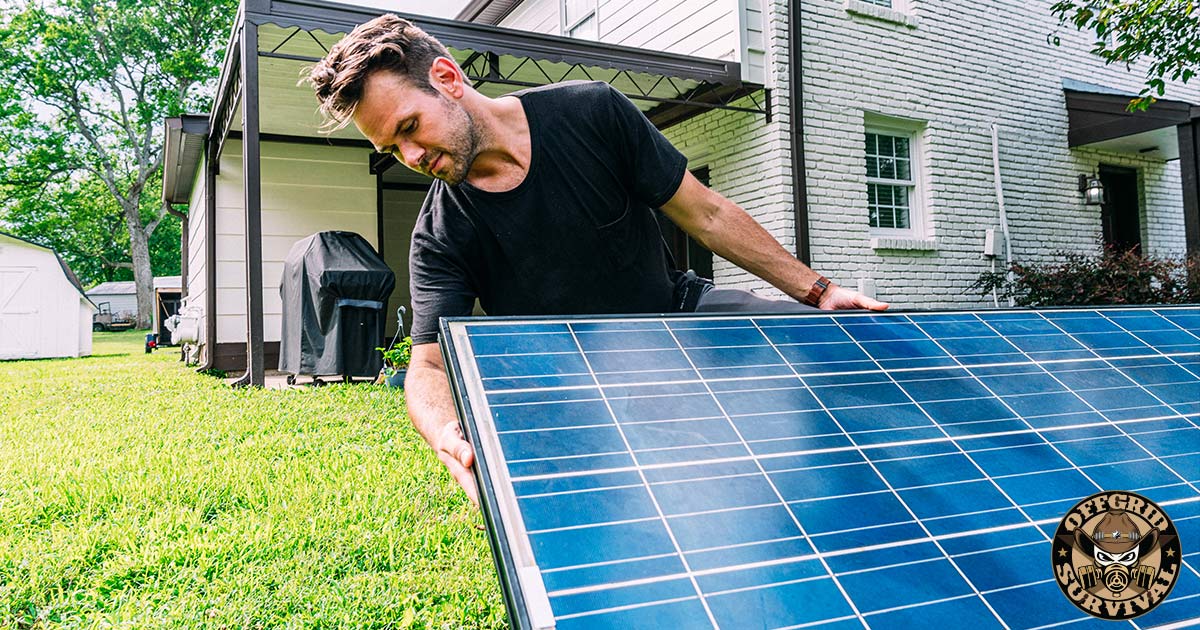
Well, it’s not quite as simple as running a couple of light bulbs through a solar panel. To truly say you are living off the grid, you need to find a way to generate your own power, water, heat, and yes even things like your cable TV and internet.
It also helps to think of “off the grid” as a spectrum rather than a single switch. On one end you’ve got people who are 100% disconnected — no utility hookups of any kind, generating every watt and every gallon themselves. On the other end, plenty of people run what’s sometimes called a “hybrid” or “half on, half off” setup: still tied to the grid as a backup, but covering most of their day-to-day power and water needs independently. There’s no wrong answer here. Most people who eventually go fully off-grid get there by passing through a hybrid stage first, not by flipping a switch overnight.
So how do start to unplug?
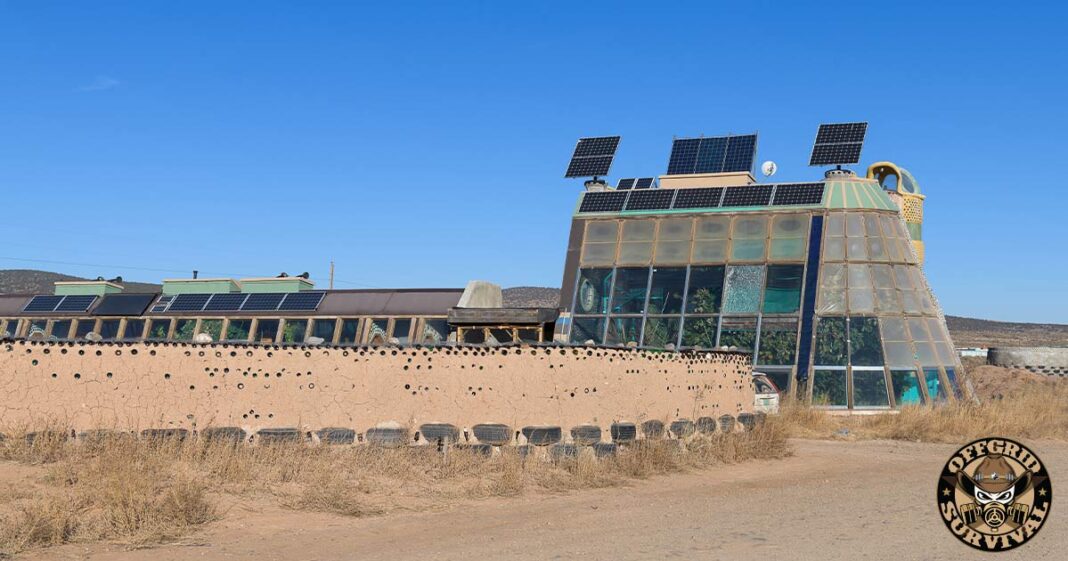
Slow and steady wins the race. While pulling the plug may seem like a pipe dream, there a few things you can do while you wait for your earthship to be built. Most of us waste more than we actually use; being mindful of how you use your resources is the first step towards energy independence.
- Turn it Off – Sounds simple, but simply remembering to turn off your computers, lights, and other electrical items can dramatically reduce the amount of power you use.
- Use Power Strips – Turing it off doesn’t necessarily mean it’s really off. Did you know that a lot of the electrical gadgets in your house are probably still using power even when they are turned off? By plugging them into a power strip you can cut off their power supply by simply flipping a switch.
- Pull water from thin Air – Believe it or not, you can actually generate fresh drinking water from the air in your house. Check out this cool piece of technology that produces water from the humidity in the air. The Atmospheric Water Solutions G2C Aquaboy Atmospheric Water Generator
Beyond those first easy steps, a few other moves go a long way before you’ve spent any real money on solar or wells:
- Audit your actual usage. Most utility companies let you see your hour-by-hour or day-by-day electric and water use online now. Pull up a few months of data before you assume you know where your usage is going — it’s almost always different than you’d guess, and you can’t size a solar or water system correctly without a real baseline.
- Fix leaks before you do anything else. A single leaking toilet or dripping faucet can waste thousands of gallons a year, which is wasted capacity you’d otherwise have to generate or haul yourself once you’re off municipal water.
- Practice with small systems first. A single solar panel running a lamp, phone chargers, or a small fridge teaches you more about how solar actually behaves — cloudy days, battery drain, inverter quirks — than reading ten articles about it will.
- Get a composting or low-flush toilet for a trial run, even while you’re still connected to sewer. It’s one of the bigger mental adjustments people underestimate, and it’s cheap to test before you commit.
How to find the right Off-Grid Land:
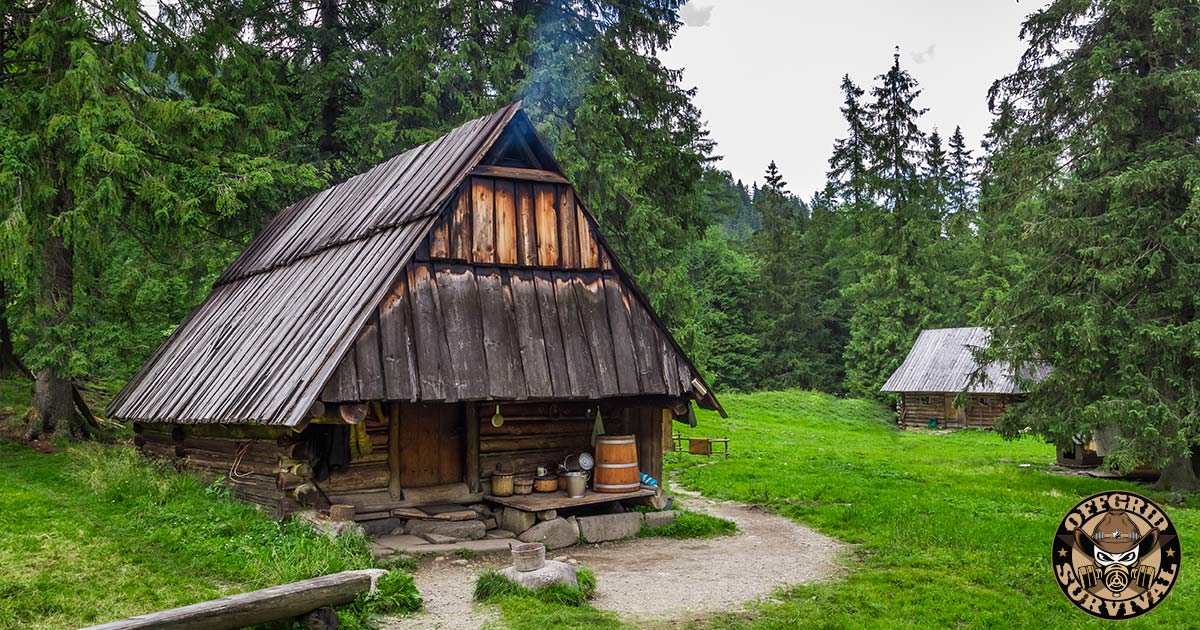
Because of zoning issues, and the fact that more urban areas area cracking down or even making off-grid living illegal within the city, most people are going to have to look for at least a semi-rural piece of land. When it comes to finding that piece of land, there are a number of considerations that you need to be aware of.
- Access to emergency services is something you need to investigate before choosing a piece of land.
- Investigating possible dangers located near your land is something you can’t take lightly.
- Understanding zoning issues, building laws, and the legality of living without being plugged into the local grid.
A few more things worth digging into before you put money down on a piece of land:
- Water rights are not the same as land ownership. In a lot of western states, the water under or running through your property may legally belong to someone else, or be subject to separate water rights you’d need to secure. Don’t assume a stream, spring, or even a well automatically comes with the land.
- Solar exposure and microclimate matter as much as acreage. A beautiful piece of land tucked into a north-facing valley can be a poor solar site. Check sun exposure across all four seasons, not just the day you toured it.
- Road access and easements can quietly limit what you’re allowed to build. Land that’s legally landlocked, or only reachable by an easement someone else controls, creates problems that have nothing to do with off-grid living specifically but will absolutely affect your ability to live there.
- Talk to the county before you buy, not after. A phone call to the local planning and zoning office, asking specifically about off-grid construction, alternative wastewater systems, and minimum dwelling size requirements, can save you from buying land you can’t legally build what you want on.
For more information on how to find the right piece of property, check out our article on how to safely buy rural land.
What about internet access?
Yes, believe it or not, you can have the internet and still technically live off the grid. It’s not going to be easy, and it is going to cost some money to get started, but it is possible.
From running your internet connection through a simple cell phone connection to setting up your own WIFI hotspot or satellite connection, there are a number of ways to get online. Satellite internet in particular has changed a lot over the past several years — newer low-earth-orbit satellite services have made rural and off-grid internet dramatically faster and more reliable than the older geostationary satellite options that used to be the only choice, though it does mean budgeting for the equipment and a power draw that your solar system needs to account for. To find out what options you have, check out our article on Off-Grid Internet Access.
Prepping Considerations when Living Off the Grid:
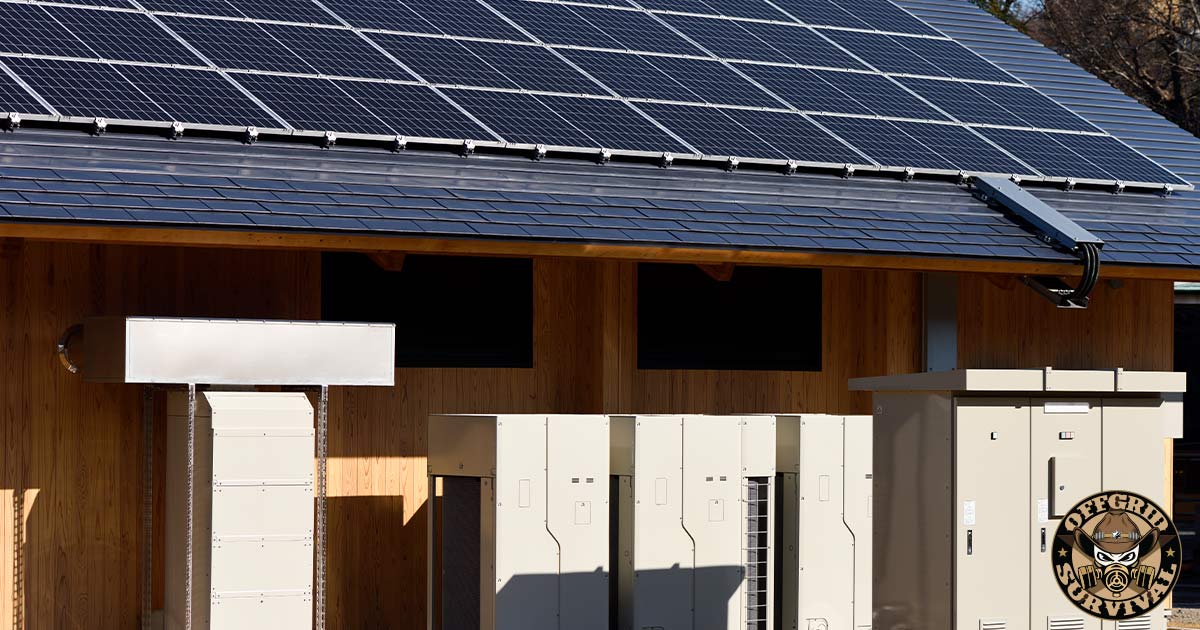
Since one of the primary goals of this site is helping people become better prepared, and since a lot of preparedness minded people are often the ones who are looking to cut their ties to the grid, preparedness is a big factor when building this type of property.
- The further you can get away from a major city, the better off you’ll be during a major collapse or SHTF situation.
- A good reliable water source is one of the most important considerations when selecting any piece of land to build on.
- You need to find an area that lends itself to the self-reliant lifestyle. Your land needs to be able to grow food, give you the ability to raise livestock, and it needs to be in a climate that allows you to take advantage or the local resources throughout the year.
A few additional considerations worth thinking through before you commit to a property:
Plan for aging in place, or for not being able to. A homestead that depends on you personally hauling water, splitting wood, and climbing onto a roof to clean solar panels works great when you’re 35. Think through what that property looks like when you’re 65, or if you’re ever injured or sick for an extended stretch.
For information on what type of things you need to be looking for, check out our article on Building the Ultimate Survival Retreat.



Yes, I’m a realtor w/a great 60 acre parcel in the middle of the Kootenai National Forest of far NW Montana. Property has a 41KW Canyon River Hydro Power Plant. Enough to power up to 5 homes. Completely off grid.
I live in far north queensland, Australia. I bought 5 acres of rainforest last year and am building an offgrid cob house. Running minimal 12volt/solar system, gravity fed water, gas cooking & refrigeration and made my own compost toilet. We just have candles/fire at night instead of lights and because the weather here is tropical we don’t have to worry about heating, although I’ve bought a pot belly for this winter. Hoping to get cob walls up soon….I’m a single mum with two young kids, if I can do it, anyone can !!! Love your website, great information, thanx Susie
Hello…
I have caught myself in a situation.
I had no idea of the laws and I put a cabin on 35 achers with porta potty with proper desposial. I have 3ponds for fishing and swimming, caves for exploring, rocks for climbing and many full of quartz, larger natural spring, fruit trees and gardens to come… I could go on but I’m getting side tracked here…
Help… What to do…
I left the city after my sons tragic death, I am trying to live off the grid…
However health department is trying to tell me I can’t stay in my new home without plumbing.
I have a indoor porta potty for emergencies that gets desposied of in my outdoor porta John that is maintained weekly by the company I rent it from. However for the health department I am in the wrong. I simply want a simple stress free life and let me point out this is privately owned land…
Thank anyone who can help I really don’t know what to do and scared because I can’t afford to fight nor is my health as good as it was in my younger years. The city holds to much pain for me, what to do where to turn???
In Alabama
health dept still bugging u put up a gate..lock..change address to po..or fed ex box..ups box..neighbor realitive.etc..tell them go to hell..lol..clasify it as storage..building..i live in new mex..its mandatory for septic for houses..if they find out..u built one..
Living off the grid is one of the best ways of life we live 10 miles from town and the only ones out here we haul our own water use solar for power and have a three bed room home you wouldn’t believe how peaceful it is being alone yes it can cost you just much as living in town with the travel expenses and propane but in the end its worth every dime Arizona is the best place to do this you can buy land thru the county for about 450 bucks for a 1 1/4 acreage of land theirs no trees just peer vacant land you can drill 200 feet to the water and your good to go so not all people living off the grid is insane if anything were more sane then most because if something happened in the big city were the guy you can came to for survival because we can get er done
I thought about living off the grid myself. Tired of dealing with the crap I deal with in the city. Tired of the way people treat me differently then everyone else. To be honest id rather be completely alone isolated and off the grid completely.
I love the idea of not funding national grid and the post office. Hell post office is useless to me because I can’t even pick up my package when its there when I want to. They have taken that freedom away. The fact that some person has control over my stuff I paid for with my money bothers me. Id rather stop funding these people. Live off the grid where no money is spent anylonger. Forging for my food sound a lot better then allowing someone to tell me what to eat and when to eat etc.. The best part of it all is I’m by myself and Dont have to deal with anyone. I’ll have full control over my life rather then trust people who don’t know what the hell they are doing to my life. I’ve lost trust in people because most of them Dont know what the hell they are doing. They most certiantly not making my life any easier. I’m basically better off living off the grid forging etc.. To me it would feel no diffetent then the situation I’m in now
Hey William, are you seriously thinking about going off the grid in the near future or sometime early next year? I would love to chat more with you if this is something you’re seriously considering in doing.
-Jeanette
I’ve been living off the Grid for over 22 months now here in FL SOLO. Kinda like camping in the beginning on raw wooded land from the 1st day I closed on the property, then spent 6 months clearing and cleaning up the area from over growth. After 2 months living in a 5 x 10 utility trailer, and all my stuff stored in a storage facility. I bought a couple of New portable Shed buildings and placed them on cement blocks. Cost $10K The one 12 x 24 I fully built out like a tiny house, complete with kitchen, Lofts, bedroom and dining office area. It has all the electrical insulation, finished oak flooring and everything just like a house complete with fuse box on 110 electric. I put about $5K in finishing the inside. NO Permits needed for that since they are (PORTABLE) Key word there.
Electricity: Then I got a 1200 Watt Ground mounted Solar system (4x 300 watt 6-6 ft x 3-6 ft panels) facing directly south, and it can produce about 4 kWh of electric daily, everything I need for small fridge, all lights, running satellite internet all day, and a small 5 Cu Ft Freezer. Solar cost $5K I need just a little more power to fully run the freezer so it is idle at the moment. But that DC power from the 8x 6V batteries goes to the inverter and supplies 110 electric to my cottage. This can also run a small new A/C wall unit to take the heat off. I also installed a ceiling exhaust vent that moves hot air out at the top. This is Florida you know.
I also have full plumbing, and will get my well dug soon and connect it from a gravity tank for in-building running water. That too will be completely run on 12V solar, and 12V pump that can pump water 130 ft from bottom of the well to the tank in the air. Water for me now, is just buying and keeping on hand about 10x 2.5 Gal spicket water jugs, and I usually try to keep at least 10 to 12 cases of bottled water on hand 32 per case. The biggest user of water is doing dishes. Boil hot water drip soap on the dishes, then pour some hot water on top. wash and rinse in cold water to remove suds. Poof clean drip dry. For a shower, Poke a few holes with a nail I the cap of a bottle of water set in the sun on a dark black surface like a trash can and you have instant hot water shower, squeeze the bottle and instant shower. I can shower with just 2 bottles of water easy.
Trash? Anything plastic or aluminum (80% of my trash) I separate and haul off for free to the local recycling center, No charge. The rest 20% I use a burn barrel and burn about once every 2 months when my trash bin fills up. Also free.
Toilet and waste? Use a port-a-potty- 5 gal bucket with a toile lid and multiple layers of grocery store plastic bags. Fits perfectly. Also free. Dump the waste in a trash barrel with a lid. When that is full dig a hole and bury. It will all break down in the plastic bags. I am in the process of digging a septic with drain pipes. No stinking permit, really?
The key is off grid living is far away from spying eyes from any road. I live in a private subdivision private roads, and private dirt roads with several locked gates and no trespassing signs. Nobody but my neighbors know I am here. OPSEC is key. Anybody trespassing get shot. And we are running out of places to bury the bodies. Ha, just kidding. So I have not had any utility bills in 22 months, taxes are $110 per acre for a few acres, cheap. I can shoot guns on my property, I have hunted, bow hunted, deer turkey, raccoons, and have plenty of fresh water as I own half the lake and canal. Its all peace and quiet, tranquility and nature to relax you. Anybody thinking about living Off-Grid? What are you waiting for? I will eventually build a full size house here Grid tied, bit for now this is considered a hunting / fishing camp and nobody in my neck of the woods bothers nice folks like us.
It seems to me you are not living off grid , maybe irresponsible, why are you buying bottled water in plastic.
Also you are burying human waste in plastic bags that wont compost for about 100 years.
It seems to me if you want to live off grid ,you should be earth friendly. there are other ways ,in the words of someone much more responsible than me ……LEAVE NO FOOTPRINT.
Wonderful!!! You’re Living The Dream!