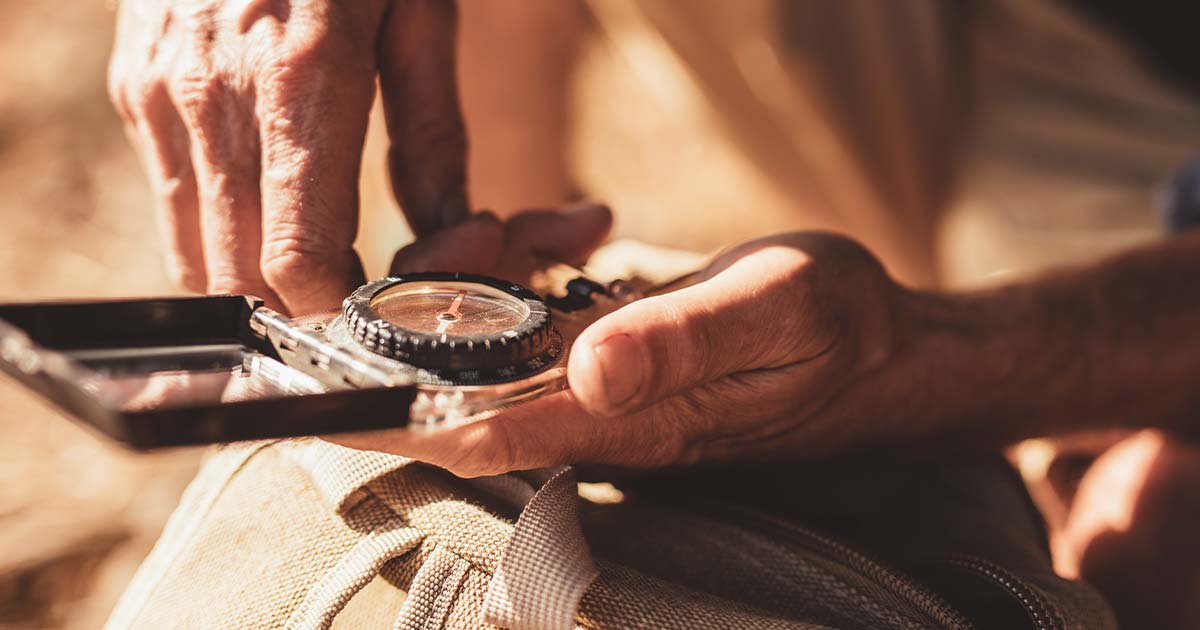
Learning how to use a compass and map is an essential skill for anyone who loves the outdoors, enjoys hiking or backpacking, or wants to be prepared for emergencies in the wilderness or during a bugout situation when the grid goes down. While modern technology has given us GPS systems and other digital mapping tools, knowing how to navigate with a compass and map is a fundamental skill that can be a lifesaver when technology fails or when the grid goes down.
The step-by-step basics of how to use a compass and map.
Get Familiar with Your Compass
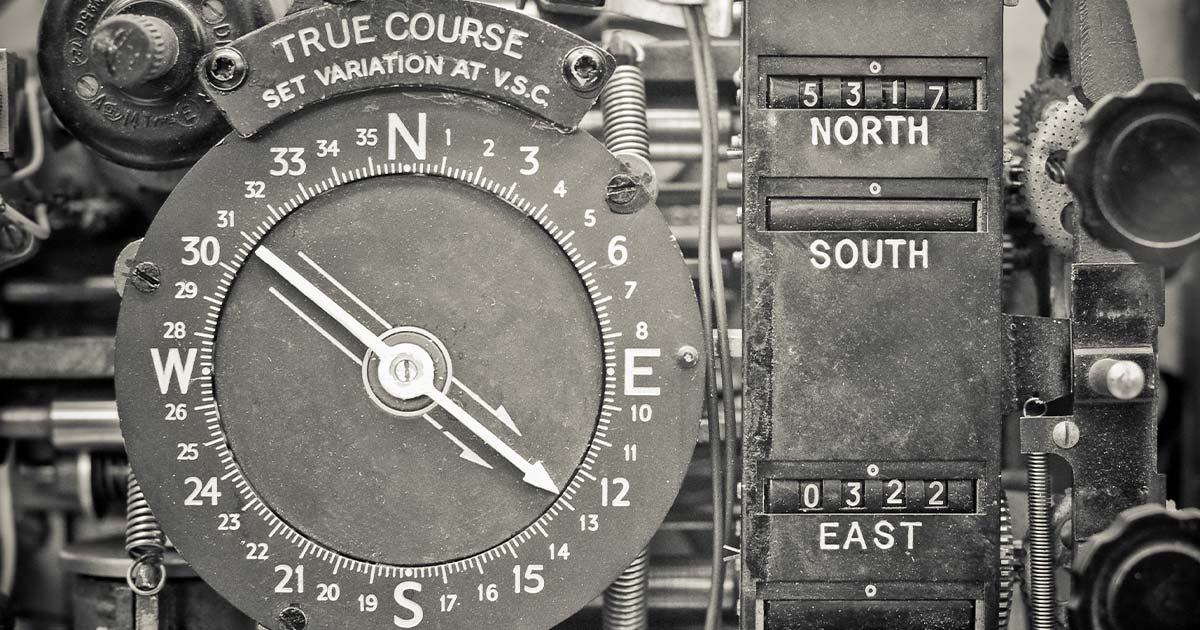
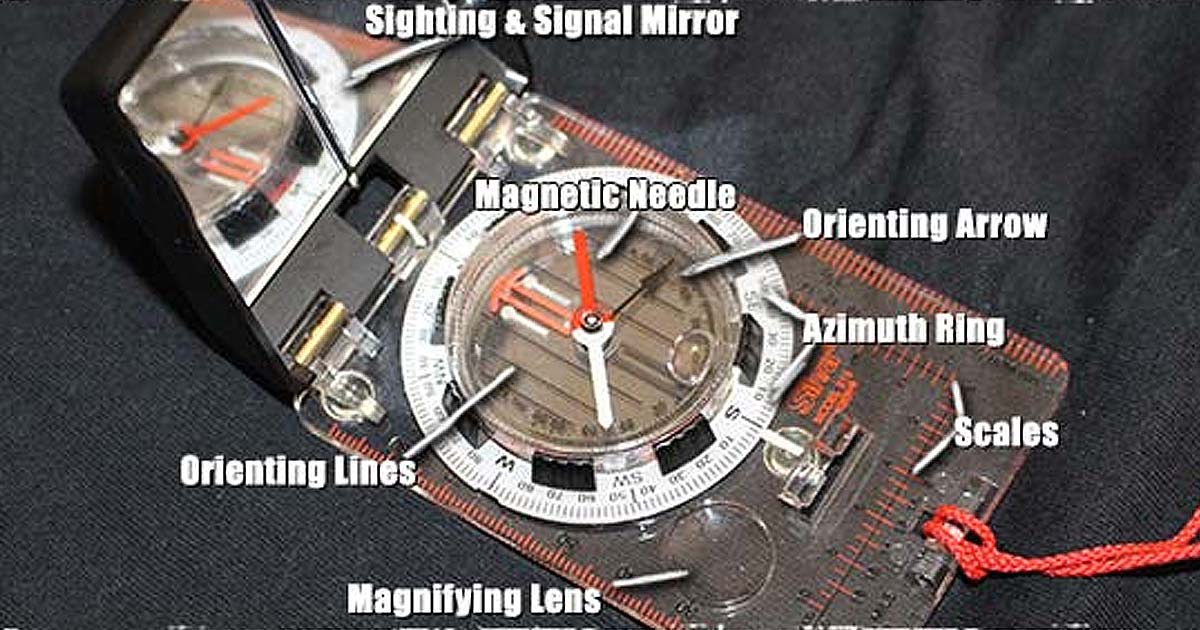
Before you start using your compass, getting familiar with its different parts and functions is essential. Your compass will have a magnetic needle, a rotating bezel, and a baseplate with a straight edge. Take the time to understand how the needle works, how to adjust for declination, and how to use the rotating bezel to take bearings.
Orient Your Map
Once you have your compass ready, it’s time to orient your map. Lay your map flat on a surface, and place your compass on top of it, with the edge of the baseplate lined up with the direction of travel you want to take. Make sure the compass is parallel to the map’s north-south grid lines. Next, rotate the map and compass together until the magnetic needle is aligned with the map’s magnetic north. The map is now oriented, and you can use it to navigate.
Take a Bearing
Hold your compass level in front of you to take a bearing, with the baseplate pointed in the direction you want to travel. Rotate the bezel until the index line lines up with the north end of the magnetic needle. Your bearing is the number on the bezel that lines up with the index line. Keep the compass level and turn your whole body until the north end of the needle is aligned with the index line on the bezel. You are now facing in the direction of your desired destination.
Follow Your Bearing
With your compass and map properly oriented, and your bearing determined, you’re ready to start navigating. Follow the bearing you have taken by keeping the compass level and walking in the direction of the north end of the needle. Use terrain features like hills, valleys, and rivers to help you stay on course. Periodically check your compass to ensure you follow the correct bearing.
Adjust for Declination
Declination is the difference between true north and magnetic north. In some areas, this difference can be significant and throw off your navigation if not considered. Many compasses have a declination adjustment feature that allows you to compensate for this difference. Check the map legend for the declination in your area, adjust your compass accordingly, and orient your map again.
GPS is Helpful; Knowing how to use a Compass & Map Can be a Lifesaver
Learning to use a compass and map is a vital skill for anyone who spends time outdoors or wants to be less dependent on technology. With practice and patience, you can become proficient in navigating with a compass and map and be prepared for any situation.
I’m all for using technology in the pursuit of being prepared; but counting on a GPS device as your primary means of navigation is not only foolish, it could cost you your life.
If your Batteries die or the GPS device becomes damaged or lost, what are you going to do? A good old fashion Compass, combined with the knowledge of how to use it can be a lifesaver during an emergency. It’s something everyone should have in their bug out bags, and it’s something everyone should learn how to use.
Parts of a Compass
Best Compasses on the Market
Suunto MC-2G Navigator Compass
The Suunto MC-2G Navigator Compass is a high-quality compass for serious outdoor enthusiasts. It has a large, easy-to-read sighting mirror and a rotating bezel to take accurate bearings. The compass is also equipped with a clinometer, which can be used to measure slopes and angles. The Suunto MC-2G is also adjustable for declination, making it ideal for use in areas with significant magnetic variation.
The Brunton TruArc 15 Compass is another excellent option for outdoor enthusiasts. It has a global needle that can be used anywhere and an adjustable declination scale for use in areas with significant magnetic variation. The compass also has a sighting mirror and a clear baseplate with a magnifying lens for increased accuracy.
The Silva Ranger Compass is a popular choice among hikers and backpackers. It has a clear baseplate with a magnifying lens and a sighting mirror for increased accuracy. The compass is also adjustable for declination and has a luminous bezel for low-light conditions.
The Suunto A-10 Compass is a simple, reliable compass perfect for beginners or those who want a basic compass for hiking and camping. It has a clear baseplate with a magnifying lens and a fixed declination correction scale. The compass is also lightweight and compact, making it easy to carry in a backpack or pocket.


Likewise never rely on a map and compass. Your map may get wet and fall appart and your compass may get broken or lost.
Having multiple redundant means of navigation is best. Compass map and GPS is better than two compass’ and two maps (or two GPSs)
Technology is great, but having an actual map and compass can’t be beat. The gps isn’t going to work if satellite systems are down. Also, I like to drive around town and “get lost” so I can find new ways to get home or out of town if needed.
Great website btw, it’s great information to be prepared for whatever emergency.
PD