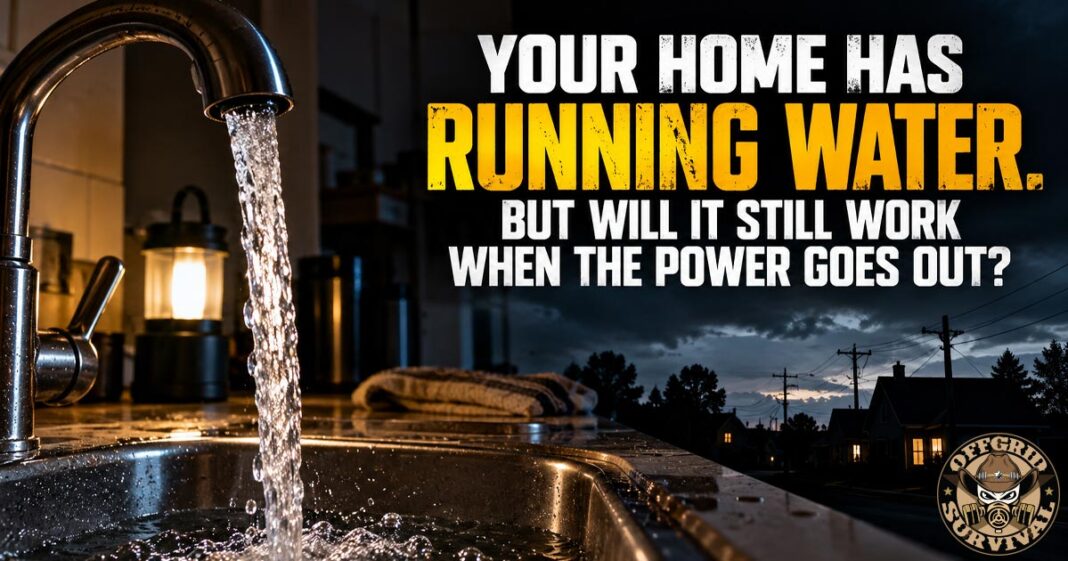
The power goes out. The air conditioner shuts off, the refrigerator goes quiet, and half the neighborhood is standing outside trying to figure out what happened. You walk over to the kitchen sink, turn the handle, and the water comes out like nothing happened.
That’s where a lot of people stop thinking about it. The power is out, but the water still works, so there must not be a problem.
Except running water at 9 a.m. doesn’t guarantee you’ll have it at 9 p.m. Water treatment plants, pumping stations, private wells, high-rise buildings, and even parts of the sewer system depend on electricity. Some have backup generators. Others rely on stored water and gravity. How long they can keep operating depends on the system, the damage, and how widespread the outage is.
The question isn’t just whether your faucet works when the lights go out. It’s how long it’ll keep working, whether the water is safe, and what you’ll do when it stops.
Will the Water Shut Off When the Electricity Goes Out?
Not necessarily. If you’re on city water, your faucets may work normally through a short power outage. Water utilities often use elevated storage tanks, reservoirs, backup generators, and interconnected pumping systems to maintain pressure. Your house doesn’t need electricity to let pressurized city water flow through ordinary plumbing.
If you’re on a private well with an electric pump, it’s another story. Once the pump loses power, it can’t bring up more water. You may get some water out of the pressure tank, but that reserve won’t last long under normal household use.
Here’s the basic breakdown:
| Water supply | What to expect during an outage |
|---|---|
| City water with functioning storage and pressure | Faucets may continue working normally. |
| City water dependent on pumps that lose power | Pressure may decline or disappear once available storage is used. |
| Private well with an electric pump | Only the water already held under pressure may be available unless the pump has backup power. |
| Apartment building with electric booster pumps | Upper floors may lose water even while lower floors still have it. |
| Gravity-fed private tank | Water may keep flowing if the tank is high enough and the plumbing doesn’t need a pump. |
There’s no universal number of hours that city water will last during a blackout. A utility with ample storage and working backup power may continue serving customers throughout the outage. Another system could lose pressure much sooner.
Why City Water Often Keeps Running
Think about the water towers you see along highways and outside small towns. Their job isn’t just to hold a bunch of water. By putting water high above the ground, the utility can use gravity to maintain pressure in the pipes below. Pumps fill the tower when power is available; the stored water can then keep flowing even when those pumps temporarily stop.
That tower is often all that stands between a town and dry faucets. This summer, a cyberattack shut down the controls for the well and treatment plant in Braham, Minnesota, and the town spent several hours living on whatever was left in its water tower. We covered it in Cyberattack Hits 30 Minnesota Water Systems as FBI Warns Attacks Have Spread Across Seven States.
Not every city uses a visible water tower. Some rely on tanks positioned on hillsides, underground or ground-level storage combined with pumps, and separate pressure zones. In hilly cities, one neighborhood may have entirely different pumping needs than the next.
This also explains why the person across town might still be taking a shower while your faucets have gone dry. You may be served by different pressure zones or pumping stations, even though you pay the same water utility.
Utilities prepare for outages, but backup power isn’t magic. Generators need fuel and maintenance. Damaged electrical equipment needs repairs. If roads are blocked or a regional emergency disrupts fuel deliveries, keeping pumps running becomes more complicated. That’s why an extended outage deserves more attention than a brief neighborhood blackout.
If You Have a Well, Find Out What Powers the Pump
Well owners are much more directly tied to the electric grid. Most residential systems use a submersible electric pump to bring groundwater into the house and maintain pressure. No electricity means no pumping unless you have a properly installed backup power source.
You might still get a few flushes or a little water from the faucet because of the pressure tank. But don’t look at a 40-gallon pressure tank and assume you’ve got 40 gallons waiting to be used. Part of that tank is occupied by compressed air, and the amount of usable water depends on its pressure settings and design.
For someone on well water, a backup way to operate the pump is often more valuable than another shelf full of survival gear. Start by finding the pump’s voltage, running load, and startup requirements. Many residential well pumps use 240 volts, and motors can draw considerably more power at startup than during ordinary operation. A small generator or portable battery station that runs your refrigerator may not run your well. If you’re going the battery and solar route, run the numbers first with How Many Solar Panels and Batteries Do You Actually Need to Run Your Home?, then compare options in Top Solar Generators, Power Packs, and Emergency Solar Solutions.
Have a qualified electrician install the proper transfer equipment if you’re going to power the pump from a generator. Never backfeed a house through a homemade cord. Run fuel-burning generators outdoors, at least 20 feet from windows, doors, and vents, to reduce the risk of carbon monoxide poisoning.
If you’re planning for a long outage, also think beyond the pump. You may need spare fuel, a way to maintain the generator, and drinking water already stored in case the pump or well system fails for reasons unrelated to electricity.
Apartments Can Lose Water Before the Rest of the City
Living on city water doesn’t mean your apartment is protected. In taller buildings, municipal water pressure may not be strong enough to reach the upper floors. Electric booster pumps are often used to push the water higher. Some buildings also use rooftop storage tanks.
When those pumps quit, people on the upper floors may lose water pressure while residents closer to the street still have running faucets. A building’s emergency generator doesn’t necessarily solve the problem unless the domestic water pumps are connected to it.
Ask building management a specific question: Do the water booster pumps and sewage pumps have emergency power? Knowing that the elevators or emergency lights have generators doesn’t tell you anything about the plumbing.

City dwellers should also know where else they could get water if the building goes dry. Our guide to urban water sources covers where to look before everyone else in the building starts looking too.
Will Your Toilet Flush Without Electricity?
Usually, yes. A standard gravity-flush toilet doesn’t use electricity. If the tank is full when the power goes out, you can normally flush it once even if your water supply has stopped.
After that, you can manually refill the toilet tank or pour water into the bowl to trigger a flush. This is one reason to store separate water for sanitation. You don’t need to waste clean drinking water every time somebody uses the bathroom.
There is a catch, and it’s a serious one: a toilet that flushes is not proof that the sewer system is working. City sewage systems often use electrically powered lift stations to move wastewater uphill. Homes with basement sewage ejector pumps or certain septic systems have their own electrical dependencies. If pumps fail and the system backs up, flushing more water down the drain can make the mess worse.
If the local utility reports a sewage failure, or you see wastewater backing up into tubs, toilets, or floor drains, stop using the drains and follow local instructions. For longer outages, have a portable camping toilet or an emergency bucket-toilet setup available, along with heavy-duty bags, gloves, toilet paper, and handwashing supplies. Waste handling and disposal should follow local health department guidance.
What About Hot Water and Showers?
If the water pressure is still there, you may be able to shower during a power outage. Whether it’s a hot shower depends on the heater.
An electric tank water heater won’t make more hot water until power returns, but the water already heated in the tank may stay warm for a while. Some older-style gas tank heaters can keep operating without household power. Other gas models need electricity for electronic controls or venting, and most tankless heaters need electricity even when they burn gas.
If you rely on a well and the pump isn’t running, the water pressure is the problem regardless of what heats it. Likewise, powered water-treatment equipment, including some ultraviolet disinfection systems, may stop working. Don’t assume untreated well water is safe just because you can still get it through a faucet.
Is Tap Water Safe to Drink During a Blackout?
Losing power doesn’t automatically contaminate the water supply. A properly functioning utility may continue providing safe drinking water throughout the outage. But a major pressure loss, treatment failure, flooding, or damaged mains can change that quickly.
Normally, water inside distribution pipes is under positive pressure. If that pressure drops, contaminated water can potentially enter through leaks and damaged connections. That’s one reason utilities sometimes issue boil-water advisories after major disruptions.
Pay attention to alerts from your water provider, city, and local health department. And understand the difference between a boil-water advisory and a do-not-drink or do-not-use notice. Boiling can kill disease-causing microorganisms, but it does not remove gasoline, heavy metals, and many other chemical contaminants.
For a typical boil-water advisory involving microbial contamination, the EPA recommends a rolling boil for one minute, or three minutes above 5,000 feet elevation. Always follow the specific instructions issued by your utility or health department. If you can’t boil, How to Purify Water Without Iodine Tablets: 5 Methods Ranked by What Actually Works covers the backups.
Don’t put blind faith in the filter on your refrigerator or a cheap camping filter, either. Filters remove different contaminants, and not all are designed to handle viruses or chemicals. Know what yours actually does before relying on it in an emergency. Our rundown of the best portable survival water filters lists what each one is rated to remove.
What I Would Do While the Faucets Are Still Working
If an outage looks like it’s going to last, and your utility says the water is safe and hasn’t asked customers to conserve, take advantage of the working supply. Fill clean, food-grade containers with drinking water. Fill a separate container or bathtub for flushing toilets and washing up. Regular bathtub water should be treated as nonpotable unless you’ve used a suitable clean, food-safe liner like the bathtub storage bladder we recommend.
Don’t wait until your water pressure is falling to realize that you’ve got nothing stored. And don’t fill drinking-water containers from a suspect supply if there’s a contamination notice. Water collected during an advisory may need treatment or may be unusable, depending on the warning.
There’s another job worth doing on an ordinary weekend: find your house’s main water shutoff valve. Know how to turn it off before an earthquake or broken pipe forces you to figure it out in the dark. If the valve is seized, have it repaired rather than forcing it.
Also check the water heater. A conventional tank heater may contain 30 to 50 gallons or more of water, but accessing it safely isn’t as simple as opening a drain valve. The water may be scalding hot, sediment may be present, and the heater must be shut down according to the manufacturer’s instructions before draining. Never turn an electric heater back on while its tank is empty. Don’t drink water from a home heating boiler or radiator system.
How Much Emergency Water Do You Need?
Federal emergency guidance generally starts at one gallon per person per day for at least three days. That’s a minimum for drinking and limited basic needs, not enough to carry on with ordinary showers, dishes, laundry, and toilet flushing.
For practical preparedness, I’d rather have two gallons of potable water per person per day where space allows, plus additional nonpotable water for sanitation. More may be needed in extreme heat, for pets, or for people with medical needs. If someone in your house depends on medication or medical equipment, read Most Prepping Plans Assume You Are Healthy and Alone. Most Households Are Neither. The amount you can realistically store depends on your home and the number of people living in it.
For a family of four, two gallons per person per day works out to 56 gallons for one week or 112 gallons for two weeks. That’s before setting aside anything for flushing toilets. Water also weighs about 8.34 pounds per gallon, so 112 gallons is roughly 934 pounds of water, not counting the containers. Location and floor load matter if you’re thinking about large storage barrels.
Commercially bottled water is an easy starting point. Food-grade storage jugs and barrels are useful for larger reserves; our long-term water storage guide covers which containers hold up and which ones to skip. Sanitize containers before filling them, keep them sealed, and store them away from chemicals and excessive heat. The CDC recommends replacing water you’ve filled yourself every six months.
If you’re serious about getting through a longer disruption, don’t store everything in one enormous container. Smaller jugs are easier to move, share, and use without contaminating the rest of your supply.
Four Things to Check at Home Before the Next Outage
1. Figure out where your water really comes from. City water customers should know their utility and where to get emergency notices. Well owners should find their pump information and learn what backup power would actually take.
2. Identify anything between the water source and your faucet that needs electricity. This includes booster pumps, ultraviolet disinfection equipment, water-treatment controls, septic pumps, and basement sewage ejectors. If you aren’t sure what equipment you have, get someone qualified to identify it rather than experimenting with electrical panels or pumps.
3. Put drinking water and toilet water in two different categories. Keep sealed drinking-water reserves. Have a separate plan for washing and flushing. You’ll burn through a small drinking-water supply fast if you’re treating every gallon as interchangeable.
4. Plan for the sewer failing, not just the faucet. You can live without a shower for several days. Living with sewage backing up into the house is another matter. Know what kind of wastewater system you have and keep a basic emergency toilet option.
It’s also worth having a battery-powered radio and a reliable way to receive local utility notices. A prolonged blackout can interrupt the internet, cell service, and the other channels people normally depend on to find out whether their drinking water is safe. Situational Intel: Knowledge Is Power During a Crisis walks through where to get information when the usual sources go dark.
Don’t Find Out How Your Water System Works in the Middle of a Blackout
Most short power outages won’t shut off city water, and there’s no reason to assume every blackout is going to turn into a water crisis. But there’s a big difference between losing electricity for an hour and losing it across a region for several days.
If you’re on a well, you already have a direct dependence on electricity. If you’re on municipal water, you’re depending on a much larger system of pumps, storage, treatment facilities, and backup equipment you don’t control. Either way, keeping a few days of water on hand is cheap insurance against a problem you can’t fix by flipping a breaker.
Find out what supplies your home, what needs power, how you’ll get drinking water if the pressure drops, and what you’ll do if the toilets can’t be used. Those answers will do you more good than another closet full of equipment you haven’t tested.
Ready to Go Further? Build a Water Plan That Outlasts the Tap
This article covers the first hours and days of an outage. If you want a plan that holds up for weeks, these are the guides I’d read next, roughly in this order.
Store enough to ride it out
- Long Term Water Storage: How to Store Water Long Term Without It Going Bad covers barrels, bottles, rotation and the containers that fail quietly. It also lays out how long Texas and Asheville actually went without safe tap water.
- Storing water in your bathtub shows how to turn a tub into a sealed, drinkable reserve when you get a few hours of warning.
Make questionable water safe
- The Best Portable Survival Water Filters explains what each filter is rated to remove, so you’re not trusting a straw with a chemical problem.
- How to Purify Water Without Iodine Tablets: 5 Methods Ranked by What Actually Works ranks boiling, filters, UV, chlorine dioxide and solar disinfection.
Keep the pump and the fridge running
- How Many Solar Panels and Batteries Do You Actually Need to Run Your Home? is where to start if you want to size backup power for a well pump.
- Top Solar Generators, Power Packs, and Emergency Solar Solutions compares the hardware.
- Cheap Off-Grid Power: Real Solar Setups Under $1,000 will keep lights, a radio and a fridge going. Be aware that these budget builds won’t run a 240-volt well pump.
Know why the system can fail
- Cyberattack Hits 30 Minnesota Water Systems as FBI Warns Attacks Have Spread Across Seven States
- AI Insiders Expect a Cyberattack on Banks, Power or Water Within 12 Months
- Water as a Weapon: Preparing for Threats to Our Drinking Water in Conflict
- Infrastructure Threats to Our Drinking Water: What the Government Isn’t Telling You
- The DHS Power Grid Warning Washington Wants You to Forget: Prepare for Six Months in the Dark
- Power Grid Threats: EMPs, Terror Attacks and Grid Failures
Plan past the faucet
- Urban Resources: Finding Food & Water During a Long-term Disaster is for city dwellers who can’t store 100 gallons.
- How Long Can You Actually Survive Without Food, Water, or Sleep? explains why water comes before everything else on your list.
- Prepper Communities: Building a Survival Network in Troubled Times matters because the neighbor with a well or a generator is worth knowing before the power goes out.
- Offline Knowledge Hubs: Building Your Own Digital Survival Library keeps this kind of information on hand when the internet is down.
- Best Survival Books: Top Prepper Reads to Master Survival is the paper backup.